Mt. St. Helens, a mountain in the volcanic Cascade Range in southwestern Washington State, was always thought to be on the verge of significant volcanic activity, and one day when I was in school in March, 1980, my fourth-grade teacher wheeled a teevee cart into the classroom. She plugged it in and started tuning to one of the local stations, which was carrying the event live. An earthquake had jolted Mt. St. Helens, and the mountain was now venting steam from its summit.
If it seems odd that this was on local news, at the time my family and I were living in Hillsboro, OR. We were about sixty miles away from Mt. St. Helens. We had day-tripped there a few times. I don’t remember much of those day trips, but I remember the mountain being a lot less of a jagged peak than Mt. Hood, which so famously looms over the Portland skyline. Mt. St. Helens was more graceful, a rounded cone.
I remember watching that exciting footage from the summit of Mt. St. Helens with my classmates, although we were all thinking the same thing, having seen so many movies of volcano eruptions from places like Hawaii: “Where’s the lava?” Over the next few weeks we heard about more earthquakes and bulges and things called lava domes. Maybe there’d be lava eventually!
Scientists seemed more and more convinced that a major eruption was likely, and an unlikely local folk hero turned up in the news in the form of an old guy who owned a lodge on the very slopes of the mountain. His name was Harry R. Truman, and he refused to leave his beloved mountain. He was staying right where he was, with his cats. I honestly don’t recall if Truman genuinely believed that the mountain wouldn’t kill him, or if he couldn’t bear leaving it. Given what the mountain looked like for him and what it would look like very soon, I almost can’t blame him.
The big blast that everyone was awaiting finally came, forty years ago today, on May 18, 1980. There was no lava, just an enormous earthquake followed by a landslide that took away one entire side of the mountain. And then? Ash and steam and smoke, in a cloud miles high. More than fifty people were killed in that blast, including Harry R. Truman, whose lodge was buried under hundreds of feet of mud and ash and rock and debris.
The scale of destruction is astonishing for me to contemplate to this day. On May 18, the winds were out of the west, so we in the Portland area were spared large amounts of ash-fall. Not so later follow-up eruptions; I remember hosing an inch of ash off our driveway one morning. It was a fine, heavy, gray powder that covered everything. I also remember one day when some friends and I were playing outside and someone’s father told us that Mt. St. Helens was erupting again. We rushed to the best vantage point in the housing development, just beyond a stand of trees at the eastern end, and there we saw something that looked very much like this (in fact, it may well have been this):
Although from where we were, we couldn’t see the mountain itself. Just this gigantic tower of ash rising into the sky.
Mt. St. Helens continues to be somewhat active to this day, though nothing like what happened in 1980 has happened since.
I remember reading, years later, that as enormous as the devastation was–entire forests leveled, lakes literally sterilized, thousands upon thousands of animals dead–the region came back to life far faster than anyone ever expected. There are fish in Spirit Lake again, and forests are slowly coming back. The evidence of the eruptions still exists, though; Mt. St. Helens will never again be that graceful rounded cone, but a marred shell of a crater, and to this day the waters of Spirit Lake are partially covered by a solid carpet of destroyed trees, blasted from their roots.
Mt. St. Helens and its eruption rank among the most amazing things I’ve ever lived through (weird phrase, that, since it implies that it was somehow an ordeal in which I took part), and it is thus far the largest natural event I’ve ever witnessed. It was, quite simply, stunning. I’m glad I got to see it…from a distance. And upwind.
(Images from Wikipedia: here, here, and here. The title of this post quotes the radio transmission sent by geologist David A. Johnston, to his USGS colleagues. Johnston was encamped six miles away from Mt. St. Helens on May 18, and in this transmission he became the first person to report that the eruption was happening. Johnston was swept away and killed by a lateral blast seconds later, and his remains have never been found.)
Fifty years ago today, a Saturn V rocket blasted off from Cape Kennedy Spaceport. The destination of the three-man crew–astronauts Jim Lovell, Fred Haise, and Jack Swigert–in the command module perched atop the rocket was the Fra Mauro Highlands on the moon. They never got there. A faulty wire in the service module’s oxygen tanks sparked during a routine stirring operation, and the resulting explosion forced the deactivate of the service module’s engines and the reliance on the lunar excursion module as a de facto lifeboat, as NASA shifted from a lunar landing to an earthbound rescue operation. Even though the mission’s stated purpose of landing on the moon was a failure, the space agency’s brilliant work in overcoming one obstacle after another in order to bring the three astronauts safely back to Earth was one of the great success stories of teamwork and technical know-how in history. The mission was Apollo 13. You may have heard of it.
At age forty-two, Jim Lovell was the most traveled man alive. With three spaceflights under his belt, he had racked up 572 hours and nearly 7 million miles, more than any other astronaut or cosmonaut. For many men that would have been enough, but not for Jim Lovell. From the day he joined the astronaut corps in 1962, his ultimate goal had been to command a lunar mission. Command was even more important to Jim Lovell than landing on the moon, and most veteran astronauts felt the same way. When [Frank] Borman turned down Deke Slayton’s tentative offer to fly the first lunar landing it had everything to do with the fact that he had been the commander of Apollo 8. If Lovell had any disappointment about his commander’s decision, it vanished when Slayton assigned him to lead Neil Armstrong’s backup crew. Within weeks after Armstrong’s team came back from the moon, Lovell and his crew were training for their own landing.
By the spring of 1970, most of Lovell’s colleagues from the second astronaut group had moved on to other things. Neil Armstrong had disappeared into the world of postflight P.R. that greeted him on his return from Apollo 11; it seemed unlikely that he would fly again. Jim McDivitt had traded the demands of flying Apollo missions for the equally demanding job of preparing for them, as manager of the Apollo Spaceflight Program Office in Houston. Tom Stafford, though, still on flight status, had replaced Al Shepard as chief of the Astronaut Office, and wasn’t scheduled for another mission. And Frank Borman had begun a new life as a vice president with Eastern Airlines. One day Borman came by for a visit while Lovell was in the simulator, and he seemed glad to be free of the training grind. “Jim,” he said, “aren’t you tired of this? I wouldn’t want to go through this again.”
Lovell couldn’t have felt more differently. This was his seventh time around, counting the stints on backup crews, and even now his appetite for spaceflight was undiminished. He himself described it as an addiction. He could have gone on until NASA said he was too old to fly ano more, but he know that when he came back from Apollo 13 he would face a long wait, perhaps several years, before he flew again. Well aware of the astronauts still waiting for their first flights, he decided he would not get back on line for a fifth. Apollo 13 would be a great finale to a long spaceflight career.
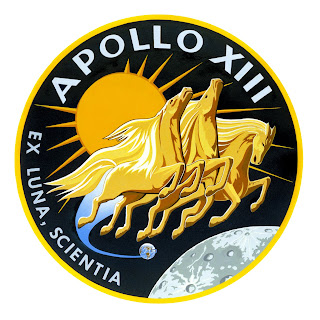
Like every commander, Lovell wanted his mission to stand out, but he couldn’t see why people would remember the third lunar landing. And that was fine with him. He wanted badly to land on the moon, and he was glad for the chance to make a contribution to science. The Apollo 13 mission patch read “Ex Lune, Scientia”–From the moon, knowledge–and Lovell thought of that when he christened his lunar module Aquarius, after the god of the ancient Egyptians who brought life to the Nile Valley (not to mention the popular song from the Broadway musical Hair). The command module Odyssey, meanwhile, took its name not only from Homer’s epic work but from Arthur C. Clarke’s science fiction vision of space travel. When Lovell was back on earth, he would find irony in odyssey’s dictionary definition: a long voyage with many changes of fortune.
First off: thus far, everyone at Casa Jaquandor is fine.
So, as of this writing, we’re roughly one month or so (however you choose to measure such things) into Covid-19’s grip on American life. This is roughly about when, in March, I started to think that maybe this wasn’t going to simply be one of those diseases that comes and goes but doesn’t amount to a whole lot. But looking at the timeline, by the 5th of March, the World Health Organization hadn’t even classified Covid-19 as a pandemic yet. That wouldn’t happen for another six days. On March 12, Tom Hanks announced that he and his wife, Rita Wilson, had tested positive for the virus while filming a movie in Australia; right around the same time, American sports leagues began canceling events, flirting with the idea of playing in empty venues, and then eventually postponing seasons altogether. From my vantage point, it seems deeply strange that these events aren’t even four weeks behind me yet.
You may or may not remember that my day job is in facilities maintenance at a large grocery store. As the food business is considered “essential,” for obvious reasons, we are not threatened with closure, which means that unless I get sick or things in the world deteriorate to the point where we do have to close (and in that case, we’d probably be looking at some kind of apocalyptic horror kind of thing), I still have a job and am earning money. The Wife also still has her job, as she can work from home (and really, how fortunate are we right now that she ended her long career in restaurant management a year-and-a-half ago!), and The Daughter has her part-time job. We’re OK. In terms of a direct hit to our lifestyle, this crisis isn’t really that big of a blow to us. We’re all pretty introverted, and mostly we stay at home anyway, except for occasional treks out to stores or restaurants. We’ve bought some takeout food, and since I’m at The Store anyway, I do my shopping on my work days, thus making extra trips on the weekends unnecessary. When we are out and about (and when I am working), we’re observing every precaution regarding social distancing and constant handwashing that we can. It seems to me that we are very well positioned to get through this mess.
There are some unfortunate sides of this, obviously. At least one of our favorite restaurants has closed “temporarily,” and we fervently hope that they can reopen once the danger has passed. This is by no means a lock, however, and it would be especially tough for us because The Wife is celiac and finding restaurants that make good gluten-free food is always a challenge. Also, as it’s become clear that this pandemic is not going to be over before May, a number of events in that month–including two that we attend each year–will not be happening. Rochester’s Lilac Festival and Buffalo’s Nickel City Con, both in May, are now officially canceled. The Nickel City Con cancellation is especially hard for me, because that was where I was going to launch The Savior Worlds (The Song of Forgotten Stars, book 4). The next event on which we have our gaze focused is my brother-in-law’s wedding in Idaho, which is scheduled for the first week of June. We’re hoping, but not optimistic. Meantime, we stay home, we cook, we read and watch our teevee shows in streaming. And we still go on walks with the doggos; at least outside is not denied us! Cane and I still do our weekly nature walks at local parks. We’ve seen more people out and about in the parks lately, which is expected, and not only that, but more people are venturing off the main roads and paved areas for the trails in the woods. Maybe more people will find themselves back in nature as they can’t go anyplace else.
And at least this happened when (a) it’s spring after a mild winter, so being outside is an option, and (b) when we’re living in a house! That’s a huge blessing for us. I can’t imagine how this long period of social distancing bordering on (if not being actual) quarantine feels for people in apartments.
If you’re wondering what it was like working in The Store through all this…it’s been surreal. As the threat started to settle in and the panic buying set in, The Store’s sales doubled in a day. It was a Thursday and it was astonishing. The only thing I’ve ever seen that rivaled it was back in 2014 when The Store was closed for four days after that seven feet of lake effect snow buried Buffalo’s Southtowns, and then everybody dug out and The Store reopened. This was truly breathtaking as all the paper products and cleaning supplies and gigantic amounts of the actual food were cleaned out in a matter of hours. I worked an extra day that week to assist with restocking on a Saturday morning, when The Store had already changed its hours from 24-hours-open to opening at 6:00am and closing at 11:00pm just to give everyone a fighting chance to regroup. At 6:10am I pulled an entire pallet of toilet paper onto the sales floor. By the time I got the pallet to the aisle 17 where the TP goes, there was only a third of the pallet left. I just dropped the entire pallet right there and went back for the next one.
TP continues to be an issue, along with paper towels and facial tissue; cleaning supplies are also only starting to filter back onto the shelves. Hand soap and hand sanitizer are also very hard to come by (we have plenty of soap and we don’t use sanitizer at home). Those first days, the pasta and pasta sauce were obliterated, as were the dairy supplies. Fortunately, I had just bought three dozen eggs and half-and-half and what cheese we needed days before, and supplies are slowly coming back as we get to needing more of that kind of thing. Also, this is an area where The Wife’s celiac disease is a kind of weird pseudo-blessing: the regular pasta was completely gone, but the gluten-free pasta, in another part of the store? Untouched. We’ve never come close to running out. In fact, as I’ve been shopping of late, I’ve been buying heavy on certain staple items. (It also helps that as an employee, I can actually go in and do my shopping before The Store even opens. Hey, we have to eat too, and my management has been very understanding of the reality that in this environment, oftentimes employees are finding essential items long gone by the time they get to shop if they wait until the ends of their shifts.)
I’ve noticed that a lot of people have no real appreciated for how supply chains work in large retail. Our stores got hammered, with sales doubling in a time that can be meaningfully expressed in hours, so of course the orders went way up; within days the warehouses were emptied. Then the warehouses passed along huge orders to the suppliers and manufacturers, who don’t maintain huge back inventories because it’s just not cost effective to do so. Demand shot up so high that supply on some items is still likely to not rebound for another week or two. Most of the people I’ve talked to during this crisis have been understanding and not jerks at all, but still, there’s a frightening degree to which the average person is unaware of the gigantic infrastructure that exists to keep them able to get to a grocery store to buy milk and bread.
And that was just the first blast. As the “shelter in place” orders came down, and as the magnitude of what has been unfolding settled in, The Store has changed dramatically. Gone are many of the large displays that filter customers in one direction or another, forcing them to look at some nifty thing we want them to buy; the recommendations for social distancing demand us to open up as much space as we can. Self-serve food bars? We had more than a dozen of these. They are all shut down now. Too risky. Same thing with the bulk foods. The cash register area had to be reconfigured with stanchions and barrier-lines, to force customers into queues, in order to minimize the length of time a customer is standing near a cashier. Just this past week, we installed Plexiglas barriers for added protection. More and more customers are wearing masks and gloves as they shop. And more and more are showing awareness of other peoples’ personal spaces, which is a very welcome development.
That’s where we are right now. I do have some politically-natured thoughts on all this, but I’ll save those for another post. For now, April is upon us. It will likely be worse than March was…but as they sing at the end of Les Miserables:
For the wretched of the earth,
There is a flame that never dies;
Even the darkest nights will end and the sun will rise!
Did you keep your New Years’ resolutions, and will you make more for next year?
My resolutions never change much: “Read a lot, write a lot, eat healthier, walk more, listen to more music.”
As these go, not bad! The toughest one is “eat healthier,” which is a back-end kind of thing: I have no problem finding newer healthier foods to like. It’s staying away from the less-than-healthy ones that tends to trip me up! This is something I need to work on big-time.
As for the rest, it was a decent year. I wrote a fair amount (though a lot of my writing time this year was spent on editing existing manuscripts, so drafting was on the backseat for a chunk of the year). Reading was a constant, and I really have made effort to listen to more music!
Did anyone close to you give birth?
As the set of “people who are close to me” continues to age, I expect this answer to remain fairly constant: no one close, though some friendly coworkers and online acquaintances had babies, so yay!
Did anyone close to you die?
Two brothers whom I count among my best friends lost their mother this year in a frighteningly short battle with cancer–in fact, it was so short that it wasn’t even much of a battle. She didn’t even get to suit up to fight the damned thing. That was terrible. She was a terrific woman and her passing has left a big gap in the lives of a lot of people.
What countries did you visit?
Real ones? I never left the US. False ones? Plenty! I spent a lot of time in my own fictional realms of Emmenmore and Lazony, and hopefully you’ll get to read about them in 2021!
What would you like to have in 2020 that you lacked in 2019?
Well, I have to wait until November for this, but I really hope to have a President-Elect.
What was your biggest achievement of the year?
I continued to develop relationships online and off, especially with people at The Geekiverse, where I continue to write articles and attend events. I had two signing events, one being at Nickel City Con, the area’s biggest pop-culture convention. What fun that was!
What was your biggest failure?
I can talk about usual stuff like how I kept eating way too much sugar, but I’ll go with something very specific because it just keeps sticking in my brain. Back in March I was asked to work a shift at a different location of The Company, because that location’s person in my position was on vacation and they really needed some stuff done. One of the jobs was caulking the outer edges around a wall-mounted urinal, and…I completely screwed up the job. I didn’t test the caulk I used first (it was a brand I hadn’t used before), so I wasn’t prepared for the ghastly ease with which it exploded from the tube when I applied pressure to the gun handle. I did what I could to minimize it, but what I should have done was just putty-knife it away and redo it. Unfortunately by this time it was the lunch hour and I was in the way of customers, so I just cleaned it up as best I could and left it. At the end of the day I left a note of apology for my total bungling of the job for my counterpart. I remain embarrassed about it now, nine months later. It goes to show that sometimes it’s not the complicated jobs that screw you up: it’s the simple ones that you should be able to do in your sleep.
On a less serious note, given my personal branding I am likely the only person on Earth for whom this counts as a “major failure,” but…2019 was the first calendar year since 2010 where at no point did I receive a pie in the face.
I know. I’m as confused as you are.
What was the best thing you bought?
Two pairs of vintage overalls! Actually, I bought several pairs of vintage overalls in 2019 (I’m increasingly drawn to the vintage side of the clothing world), but these two pairs stood out strongly: a pair of raw-denim Lee hickory stripe overalls, and a pair of Gap overalls from a product line called “Oil Can,” which I knew nothing about.
Whose behavior merited celebration?
It was a rough year for public behavior, wasn’t it? In specific I’d say Greta Thunberg, the teenage activist from Sweden who has been working hard to focus humanity’s attention on the increasingly disastrous climate change problem.
And thanks to the Democrats in the House of Representatives for impeaching the worst President in American history.
Whose behavior made you appalled and depressed?
Republicans don’t really have it in them anymore to appall or depress me. Their ongoing fealty to Donald Trump and their dedication to pursuing the most odious set of policies ever continues to disgust, though.
Where did most of your money go?
Books, booze, going to movies, food, gifts, and vintage overalls.
What did you get really excited about?
Seeing My Fair Lady on the big screen! And Stranger Things 3.
Compared to this time last year, are you happier or sadder?
A bit happier. The Wife changed careers in late 2018, leaving a lucrative but deeply draining restaurant management career for banking work. The difference in her mental outlook, and therefore mine, is amazing.
Thinner or fatter?
About the same, give or take a pound or two. I need to make a concerted effort in this matter.
Richer or poorer?
Jury’s out on that. (Same as last year.)
What do you wish you’d done more of?
As always, reading, writing, and walking. (Same as last year.)
What do you wish you’d done less of?
Eating crap that doesn’t make me feel good. I need to adopt a more selective approach to the things I eat for flavor alone, and I’ve actually been making headway in that regard.
How did you spend Christmas?
With family.
Did you fall in love in 2019?
Of course! Love actually is all around.
How many one-night stands?
Ha! I’m not telling you that!
What was your favorite TV program?
We loved Stranger Things 3 and Dead To Me on Netflix, and we’re enjoying the new ABC detective series Stumptown, which is based on a series of graphic novels that I liked a great deal.
Do you hate anyone now that you didn’t hate this time last year?
Me level of disgust for the Republican Party continues to bury my Anger needle in the red, so.
What was the best book you read?
Here are the books I rated with five stars on Goodreads in 2019:
(That last one I only gave four stars, but it should have been five. It’s an amazing history of the United States, written just last year by an author I’ve only recently discovered.)
What was your greatest musical discovery?
A heavy-metal prog rock band called Ayreon. They’re fascinating.
What did you want and get?
An impeachment.
What did you want and not get?
A new former President. And Les Miz tickets. (It played in Buffalo in mid-December, which is the last time I can afford theater tickets.)
What were your favorite films of this year?
Avengers: Endgame and Knives Out. (My long-form review of Star Wars: The Rise of Skywalker will have to wait for 2020, but…I am more and more of the opinion that it was not good.)
What did you do on your birthday?
Same as every year: I likely worked, and then a few days later went on vacation for our yearly trip to Ithaca.
How would you describe your personal fashion concept in 2019?
Heh! It’s just not changing, folks.
What kept you sane?
As an American, right now I’m just holding my breath before the final plunge.
Which celebrity/public figure did you fancy the most?
The afore-mentioned Greta Thunberg. Generations to come are not going to look with kindness upon my generation or the one before, and we’ve got it coming.
What political issue stirred you the most?
Of all the ones out there, climate change continues to be the big one, the changing of the game that we’re completely ignoring.
Who did you miss?
Carrie Fisher.
Tell us a valuable life lesson you learned in 2019:
Read a lot, write a lot. Listen to music. Go for walks and look at sunsets. Take all the pictures you want. Learn new things and try new stuff. If you have a dog, take him for walks. Buy books for your daughter, even when she complains that she likes to pick her own books (let her do that, too). Nothing fits your hand so well as your lover’s hand. Eating out is fine, but learn to cook things, too. Have a place to go where they know you and what you order. Don’t be afraid to revisit your childhood passions now and again; you weren’t always wrong back then. Overalls are awesome, it’s OK to wear double denim, and a pie in the face is a wonderful thing!
If you take selfies, post your six favorite ones:
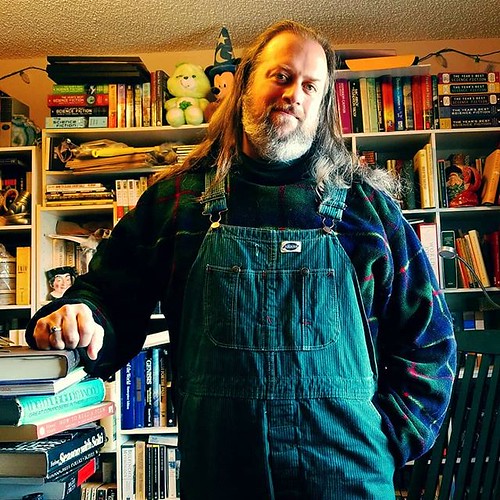
That last one is my favorite self-photo of this past year. I just really like the way that photo turned out. I took this one while off by myself at this place on the shores of Canandaigua Lake that breeds African violets, while The Wife was perusing the plants.
Quote a song lyric that sums up your year:
Sometimes this is easy, sometimes less so. But with the decade ending along with the year, I’ll go with Freddie Mercury and friends, in their end credits song to Flash Gordon, “The Hero”:
So you feel that you ain’t nobody
Always needed to be somebody
Put your feet on the ground
Put your hand on your heart
Lift your head to the stars
And the world’s for your taking
All you gotta do is save the world!
So you feel it’s the end of the story
Find it all pretty satisfactory
Well I tell you my friend
This might seem like the end
But the continuation
Is yours for the making
Yes you’re a hero!
And with that, here comes 2020 and the 20s with it. Let’s do this!
Wow, another decade is in the books. We’re on to the Twenties.
My feelings on the Teens are rather mixed. Societally, worldwide and nationally, I think 2010-2019 represent at best a series of missed opportunities and at worst some serious regressions. But for me personally? The decade was pretty damned good, for the most part. I got ahead professionally at The Day Job, and my writing career continued to advance, even if it took routes that I didn’t entirely expect when 2010 dawned. But this was the decade I got back to hard-core fiction writing after the emotional upheavals of the Aughts made writing deeply difficult.
In 2010 my attitude was, “I wonder if I can write that space opera book.” As 2019 exits, I’ve published three of the books in that series with the fourth coming right along for release in 2020. I’ve published the first book in another series, and I currently have four other novels drafted and awaiting my push into the world. I was a lonely blogger, and now I’m kind-of still that…but I’m also a writer for The Geekiverse, where I get to geek out about things of my choosing.
I launched my official author site as well, ForgottenStars.net. I haven’t been nearly as consistent as I should have been with that space, and even now I’m struggling to figure all that out. Hopefully in 2020 I’ll start to “get my shit together” a bit on that score. I’m trying to add some structure to my creative life, because I’m finding as I get older that the scattershot approach isn’t nearly as conducive to getting things done in a productive way as it was when I was younger.
As far as my “personal brand” goes, I guess it stayed pretty much the way it always was. Books, music, movies, food, drink, nature, occasional travel, and let’s not forget the bib overalls and the pies in the face! I probably have to admit that at this point I am a collector of bib overalls (when you set up eBay email alerts for specific things, it’s time to admit that you’re collecting them), and I continue to find delight in getting hit in the face with a pie.
Anyway, I’ve been photographically documenting my adventures for years, first on Flickr and then more recently on Instagram. Here is a small selection of the goings-on of the last decade. Lots of nature, and overalls, and dogs and cats, and pies! These are not presented particularly chronologically.
I also occasionally make videos and post them to YouTube. I’ve thought about “vlogging” in the past, but I’ve never really found the time or motivation to get into all that (though I don’t rule out appearing on other peoples’ shows and such). Mostly my videos are just forays into me getting hit with pies. Here are the ones I made in the 2010s (links only–I don’t want to take up a ton of space embedding them all):
Goodness, that’s a lot of pies in my face in the 2010s, especially when I consider that I didn’t even get pied in 2019. I suppose I could stop, but where’s the fun in that!
Anyway, those are my thoughts on the decade that’s just ending. Let’s bring on the new one. Even if my 2010s weren’t that bad, the world needs a better decade. Badly. And it’s in our hands to make it happen, folks. So let’s get it done!
Here is a selection of my favorite posts from the last ten years. How much longer will this go on? Who knows! I’d like to get back into more essay and photo content around here than the YouTube music selections, so here’s hoping.
In all honesty, I don’t use my Official Site as strongly as I should, because I’ve never really figured out a focus for it. That’s something I hope to do in 2020.
I have also been writing for the last few years for The Geekiverse. Here is a selection of my output:
Eighteen years. I wonder what we have learned, if anything; how we’ve grown, if at all; if we’ve changed in the ways we needed to change.
I wrote this story not long after the events of 9-11-01. It is not the story I would write today. How could it be? I was on the cusp of turning thirty, and at that point the scope of an attack of that magnitude was nearly impossible to process.
The City of Dead Works
There is never any rest for me, the Ferryman of the Dead.
I pole my barge across the black waters and up to the pier. So many wait this time, many more than usual. I wonder what has happened, what event has sent me this many. “Come aboard,” I say. “I will take your coin for passage.” One by one they file past me, each handing to me the coin that they never knew they had. It is the coin which determines where they shall be taken to rest, its metal shaped and determined by life. The coins of these dead are gold, every one of them purest gold. Six thousand come aboard my barge, and each has passage for the farthest and greatest of destinations. In that moment I know that something truly dark has happened; the gold coins are always forged in moments of darkness. I am the Ferryman. I can give them no answers to what lies behind their haunted, questioning eyes. I can only take them on this, the last of all journeys.
When they are all aboard I take up the pole and push away from the pier. The barge always feels the same, no matter how many stand upon its decks. Whether six or six thousand, it is all the same to me. I guide us out onto the River Styx. Some of the people look worried, but there is no need for fear. This river can do them no harm. They are already dead.
This is to be a long journey, I know – it always is, to this destination. As I guide the barge through the black waters, I look on the faces of those who have come to me. As different as these people all look, they all have the same expressions of shock, disbelief, and withering sadness. Here is a man of business, talking into a cell phone. He is trying to call someone, anyone, who will tell him that it’s all a dream, that it didn’t happen, that he didn’t die in a blast of fire, smoke, glass and steel. There is a mother who is explaining to her daughter that they won’t be going to Disneyland after all. And there, a group of firemen stand together, realizing that soon they will meet all their brothers-in-arms who have gone into the infernos before them. So many now – colleagues once in business and now colleagues in death, people who have never before met but now have the gravest thing in common. As the current takes hold, I look back at the pier. There are more gathering there. There are always more. They will wait. Time does not exist for the dead.
“Please,” a young man says as he turns to me, “I have to go home to my daughters.”
“You are going home now,” I reply. “To the home where all eventually return.” Two black rocks slide past on either side, the rocks that mark the passage of the circling Styx.
“When?” Her voice pleads, and yet there is no solace that is mine to give.
“I cannot say,” I reply. “The Ferryman has no hand in Fate.”
The tears come then, tears from the six thousand that run over the gunwales and into the river which has been fed by tears for centuries. All tears are born in the River Styx.
“Where will you take us?” someone asks.
“To the place you are promised,” I answer. I recall the words of a poet: Will there be beds for all who seek? Yea, beds for all who come.
One our left we approach the Hills of the Damned, an endless stretch of shattered lands which reach away into the blackness. The waters echo with the cries of all those who have been taken to the Hills for the agony they have brought on the living. I consider the bag of six thousand gold coins, and I realize that I will have to journey to the Hills this day. There will be a person, perhaps more, who will pay me with a coin of black tin; but not on this journey. As the hills recede behind us, the unending cries of the damned become fainter and fainter until they are drowned out by the lapping of the waters upon the sides of the boat and the marker stones that we pass. The six thousand fall silent, each realizing that it is not a dream. I would offer solace, but as ever I cannot. I am the Ferryman.
We come around a particularly dark bend, and before us lies a very wide expanse of water, as if the Styx has become an ocean – which in some sense it probably has. And beyond that expanse are the thousands of twinkling lights that I have come to know so well. One man, a fireman, sees them too. “What is that?” he asks.
“It is the City of Dead Works,” I reply. The lights of the city glow on the horizon, and every one of the six thousand turns toward them as the Styx impels us onward. As we come ever closer to the city, the glittering lights reflect off the black water.
“I don’t understand,” someone else says. “The City of Dead Works?”
“Aye,” I reply. “Behold!”
From behind us, golden light: the Sun of the Dead is rising as it always does when the dead come near the City. Above us the firmament is turning purple, then blue; soon the light of the Sun will illuminate the City of Dead Works. As the sky lightens, the true scope of that city becomes plain: it stretches away into the land, farther than any eye could see. Not even the highest-soaring raven, cavorting in the breezes and zephyrs of the dead, could take it all in. It is bigger by far than any one city ever built by the hand of men, because it encompasses some part of all of them. Perhaps it is bigger than all of the cities ever built. Now the sun’s first rays come up behind us, and the first buildings can be seen down by the water.
“That one looks Egyptian,” a woman says.
“The Great Library of Alexandria,” I tell her. “Once the greatest repository of learning the world had ever seen, now only a memory to the living and a reality only to the dead.”
A man points to a building high upon a rock. I nod.
“The Temple of Solomon,” I say.
“There are ships in the harbor,” says another. Thus for him I name the ships: Arizona, Indianapolis, Lusitania, Bismarck, Wilhelm Gustloff, Cap Arcona. And many, many others. I scan over the impossibly vast city and spot Dresden, as it was; and beside it the cities of Hiroshima and Nagasaki. And how many smaller villages, tucked into the hills beyond the City? None can say. The Sun of the Dead shines upon those hills now, and the great stone statues in the likeness of Siddhartha Gautama.
“I don’t understand,” a young man says. “Why this City? Why here?”
I only shake my head as we continue to float by the City. I do not point out the fairly small, nondescript office building that sits near the water. It is not a particularly remarkable building; nor was it, really, until the fuse was lit. The six thousand almost don’t recognize it.
Almost.
Not one word is uttered as we slide past the Alfred Murrah Federal Building. Then we turn away from the City of Dead Works, and head again down the waters of the Styx toward distant hills and the place where these people will join their brethren.
“Who lives in that city?” It is a priest in a fireman’s coat.
“No one lives there,” I tell him. “The City of Dead Works is not for people. It is for the buildings and the ships. It is for the books and the music, the sculptures and the paintings which are gone forever. It is for everything destroyed by craven people in the name of foolish wars, for everything judged forfeit in the face of transitory desires.”
The Styx takes us into the Golden Hills. Soon we will be there, and the six thousand will go where they belong. And then the Styx will complete its circle, taking me back to the pier where more dead await.
“We will be there soon,” I say. “Soon we will be at the Elysian Fields, where all heroes go – for that is what you all are. It is what you have bought with your lives, with the shaping of your coins into gold.” No one replies. We near the last bend now, and before us lie the Elysian Fields, where peace reigns and where heroes dwell; where all is light and voices are always raised in song. The Sun of the Dead shines warmly on Elysium.
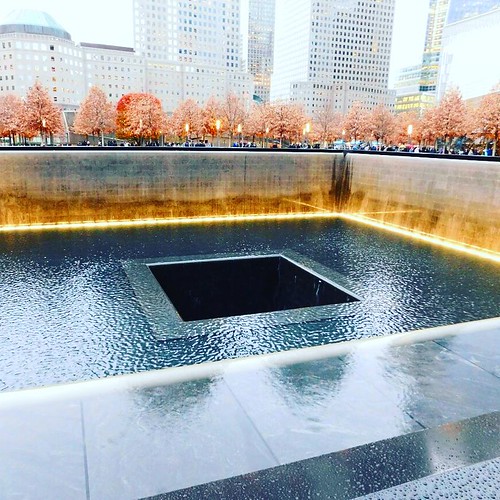
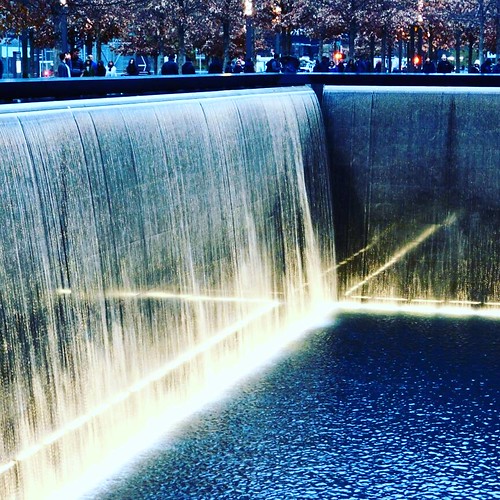
But they do not see it. They, the six thousand, all gaze back behind us upon the City of Dead Works. It will soon be behind us forever as we round the last bend of the River Styx into Elysium. I know they all need one last look upon that City, and I do not grudge them that. For myself, I do not look back; the eyes of the Ferryman are ever forward. But I know. I know that the City of Dead Works is different now. I know that it has changed. I know that the people who come with me now to Elysium, the dead around me, look back on the two soaring towers of steel that now rise above the City where there had been no towers before.
I know these things.
I am the Ferryman of the Dead.
Finally, music. I was unable to listen to any music at all for several days after the attacks, until I finally put on this recording of Elegy, a wind ensemble composition by Mark Camphouse. It is one of the most haunting, meditative, and ultimately affirming works of music I know. I offer it not quite in remembrance or observance of 9/11/01, but rather as a meditation on the sadness of that day and as a balm for its passage.
An annual reposting of some things pertaining to Memorial Day. First, a remembrance of a soldier I never knew.
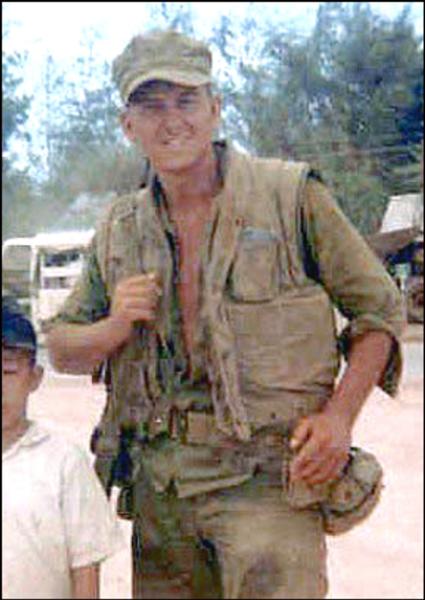
Fifteen years ago I wrote the following on Memorial Day, and I wanted to revisit it. It’s about the Vietnam Veteran whose name I remember, despite the fact that I had no relation to him and clearly never knew him, because he was killed four years before I was born.
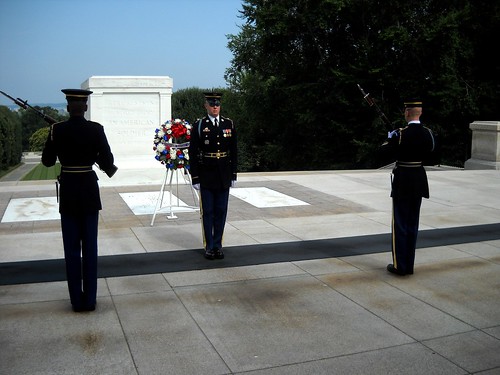
Memorial Day, for all its solemnity, has for me always been something of a distant holiday, because no one close to me has ever fallen in war, and in fact I have to look pretty far for relatives who have even served in wartime. Both of my grandfathers fought in World War I, but both had been dead for years when I was born. I know that an uncle of mine served during World War II, but I also know that he saw no action (not to belittle his service, but Memorial Day is generally set aside to remember those who paid the “last full price of devotion”). My father-in-law served in Viet Nam, but my own father did not (he had college deferments for the first half of the war, and was above draft age during the second). So there is little in my family history to personalize Memorial Day; for me, it really is a day to remember “all the men and women who have died in service to the United States”.
One personal remembrance, though, does creep up for me each Memorial Day. It has nothing at all to do with my family; in fact, I have no connection with the young man in question.
When I was in grade school, during the fall and spring, when the weather was nice, we would have gym class outdoors, at the athletic field. On good days we’d play softball or flag football or soccer; on not-so-good days we’d run around the quarter-mile track. But the walk to the athletic field involved crossing the street in front of the school and walking a tenth of a mile or so down the street, past the town cemetery. I remember that at the corner of the cemetery we passed, behind the wrought-iron fence, the grave of a man named Larry Havers was visible. His stone was decorated with a photograph of him, in military uniform. I don’t recall what branch in which he served, nor do I recall his date-of-birth as given on the stone, but I do recall the year of his death: 1967. I even think the stone specified the specific battle in which he was killed in action, but I’m not sure about that, either.
That’s what I remember each Memorial Day: the grave of a man I never knew, who died four years before I was born in a place across the world to which I doubt I’ll ever go. And in the absence of anyone from my own family, Mr. Havers’s name will probably be the one I look for if I ever visit that memorial in Washington. I hope his family wouldn’t mind.
I looked online and found these images, first of Mr. Havers’s obituary and then of Mr. Havers himself. The things you remember. I wonder what kind of man he was. He has been gone for more than half a century. His name is not forgotten.
Mr. Havers’s service information can be found on the Virtual Vietnam Wall here. He was born 14 October 1946 and died 29 October 1967, in Thua Thien.
Next, my annual repost for Memorial Day.
Know, all who see these lines,
That this man, by his appetite for honor,
By his steadfastness,
By his love for his country,
By his courage,
Was one of the miracles of the God.
— Guy Gavriel Kay
“The Green Field of France”, by Eric Bogle
Well, how do you do, young Willie McBride,
Do you mind if I sit down here by your graveside?
And rest for awhile ‘neath the warm summer sun,
I’ve been walking all day, and I’m nearly done.
I see by your gravestone you were only 19
When you joined the great fallen in 1916,
I hope you died quick and I hope you died clean
Or, Willie McBride, was it slow and obscene?
Did they Beat the drum slowly, did they play the fife lowly?
Did they sound the death-march as they lowered you down?
Did the band play The Last Post in chorus?
Did the pipes play the Flowers of the Forest?
Did you leave a wife or a sweetheart behind
In some faithful heart is your memory enshrined?
And, though you died back in 1916,
To that faithful heart are you forever 19?
Or are you a stranger without even a name,
Enshrined then, forever, behind a glass pane,
In an old photograph, torn and tattered and stained,
And faded to yellow in a brown leather frame?
Did they Beat the drum slowly, did they play the fife lowly?
Did they sound the death-march as they lowered you down?
Did the band play The Last Post in chorus?
Did the pipes play the Flowers of the Forest?
The sun’s shining down on these green fields of France;
The warm wind blows gently, and the red poppies dance.
The trenches have vanished long under the plow;
No gas and no barbed wire, no guns firing now.
But here in this graveyard that’s still No Man’s Land
The countless white crosses in stand mute in the sand
To man’s blind indifference to his fellow man,
And a whole generation who were butchered and damned.
Did they Beat the drum slowly, did they play the fife lowly?
Did they sound the death-march as they lowered you down?
Did the band play The Last Post in chorus?
Did the pipes play the Flowers of the Forest?
And I can’t help but wonder, no Willie McBride,
Do all those who lie here know why they died?
Did they really believe when they answered the call,
Did they really believe that this war would end wars?
Well the sorrow, the suffering, the glory, the pain
The killing and dying, was all done in vain,
For young Willie McBride, it all happened again,
And again, and again, and again, and again.
Did they Beat the drum slowly, did they play the fife lowly?
Did they sound the death-march as they lowered you down?
Did the band play The Last Post in chorus?
Did the pipes play the Flowers of the Forest?
(NOTE: This is a repost of last year’s Pi Day post. I didn’t get a chance to generate any new content–i.e., shoot a new video in which I get a pie in the face in the midst of a lesson about Pi–this year, but hey, last year’s video is still pretty funny, if I do say so myself!)
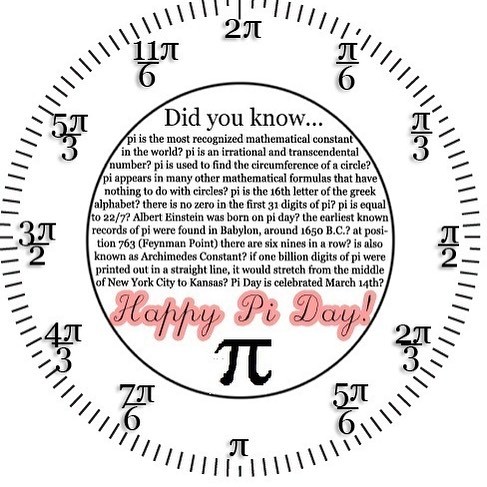
It’s Pi Day, everyone!
It is also Albert Einstein’s birthday and, sadly, this year’s edition marks the passing of Stephen Hawking, about which I’ll have more to say later. But for now, let’s celebrate Pi!