“When the fall is all there is, it matters.” (from THE LION IN WINTER)
I am disgusted by the Supreme Court’s ruling. I, like everyone else, knew it was coming, but the awful thing is no less awful for all the foreknowledge in the world.
I support reproductive rights for all persons, period. I reject the notion utterly that protecting a fetus is the most important thing in the world. (In fact, I’m not terribly convinced that protecting a fetus is all that important at all.)
I don’t know where we go from here, but I know it’s to a deeply ugly version of America that I have no desire to see or live in. We all have to act if we don’t want America’s bible-waving minority to force this country back to a time when abortion, birth control, and homosexuality are all illegal. And make no mistake: they’re not stopping at Roe. They’ve got the taste for blood, they think victory is in hand, and they’re coming.
Right now, the fall is all there is. But there’s a lot of future left. So let’s get up.
(I will reject any comments that try to argue in favor of what this Court has done. Not interested.)
Sheila and Roger have Judy Garland posts up, and I could hardly fail to do the same. Garland was born 100 years ago today, and how much poorer our world would be without that voice, that marvelous alto of hers–full-throated, just this side of operatic, so marvelously resonant, her way of hitting a pitch just under and then sliding into it like a resolution all her own, and of course that perfect shimmering vibrato she used to equally perfect effect in song after song after song throughout her too-brief life.
Judy Garland was one of the greatest things about being human in the 20th century and beyond.
I saw these two tweets the other day, in reaction to Elon Musk’s widely publicized dictum that his employees have to put in their 40 hours a week at the office, no ifs ands or buts, no refunds returns or exchanges, that’s just the way it is, because something something gazpacho:
I like it when someone comes along and succinctly says something that I’ve been struggling to crystalize in my own mind. Elon Musk is largely feted because he’s apparently a vanguard of our wonderful future…or, at least, that’s the pleasant veneer that has been applied to him. But when you really get down to it, that’s not at all what he is. He’s just a rich capitalist with a shiny thing to sell. That’s it. That’s all he is, all he ever was. He stands on the shoulders of giants and with his piles of money convinces millions that he got there by virtue of some special genius unique to him.
But then he says stuff about his businesses and how he wants his employees to behave and be forced to work, and you get a glimpse under the hood. And you realize there’s nothing new there at all: he’s nothing more than a railroad tycoon, maintaining absolute control over his giant well-moneyed empire.
Elon Musk is no futurist. He has said nothing about improving the human condition in any way other than the same old idea that rich people should just be allowed to keep doing rich people things, that humanity is best served by letting rich people prosper and that their underlings should be happy to work, work, work for the greater glory of The Company and the CEO.
Elon Musk’s future is pretty much the same as the world we’re in now, only with different insignias in chrome on the backs of the cars. It’s a world where the pursuit of wealth is the paramount human concern, where the entire economy is propped up on the illusion of work as the paramount function of the individual, where life must be earned through work. There is nothing new under the sun in Elon Musk’s worldview. Nothing at all.
We need better futurists.
UPDATE: I wrote this post yesterday and scheduled it for this morning. Then, I see this:
The way Elon Musk wildly vacillates between “Rich Capitalist Overlord Who Demands Loyalty And Labor From His Underlings” and “Aging Stoner Using Star Trek Action Figures To Play-act His Future Visio” really ought to give more of us pause….
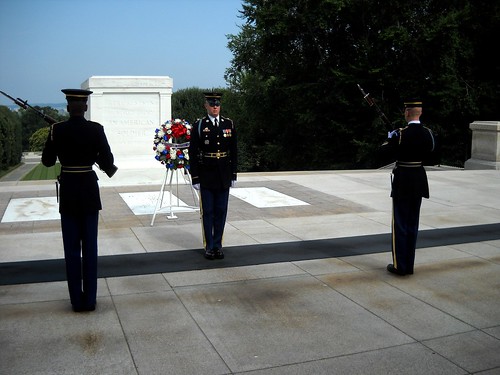
Here is my annual reposting of some things that pertain to Memorial Day. This particular year’s iteration of this day gives me pause to consider my sense that many of the things for which the men and women we honor today fought and died may be slowly, or quickly, passing into memory. I hope not….
First, a remembrance of a soldier I never knew.
Fifteen years ago I wrote the following on Memorial Day, and I wanted to revisit it. It’s about the Vietnam Veteran whose name I remember, despite the fact that I had no relation to him and clearly never knew him, because he was killed four years before I was born.
Memorial Day, for all its solemnity, has for me always been something of a distant holiday, because no one close to me has ever fallen in war, and in fact I have to look pretty far for relatives who have even served in wartime. Both of my grandfathers fought in World War I, but both had been dead for years when I was born. I know that an uncle of mine served during World War II, but I also know that he saw no action (not to belittle his service, but Memorial Day is generally set aside to remember those who paid the “last full price of devotion”). My father-in-law served in Viet Nam, but my own father did not (he had college deferments for the first half of the war, and was above draft age during the second). So there is little in my family history to personalize Memorial Day; for me, it really is a day to remember “all the men and women who have died in service to the United States”.
One personal remembrance, though, does creep up for me each Memorial Day. It has nothing at all to do with my family; in fact, I have no connection with the young man in question.
When I was in grade school, during the fall and spring, when the weather was nice, we would have gym class outdoors, at the athletic field. On good days we’d play softball or flag football or soccer; on not-so-good days we’d run around the quarter-mile track. But the walk to the athletic field involved crossing the street in front of the school and walking a tenth of a mile or so down the street, past the town cemetery. I remember that at the corner of the cemetery we passed, behind the wrought-iron fence, the grave of a man named Larry Havers was visible. His stone was decorated with a photograph of him, in military uniform. I don’t recall what branch in which he served, nor do I recall his date-of-birth as given on the stone, but I do recall the year of his death: 1967. I even think the stone specified the specific battle in which he was killed in action, but I’m not sure about that, either.
That’s what I remember each Memorial Day: the grave of a man I never knew, who died four years before I was born in a place across the world to which I doubt I’ll ever go. And in the absence of anyone from my own family, Mr. Havers’s name will probably be the one I look for if I ever visit that memorial in Washington. I hope his family wouldn’t mind.
I looked online and found these images, first of Mr. Havers’s obituary and then of Mr. Havers himself. The things you remember. I wonder what kind of man he was. He has been gone for more than half a century. His name is not forgotten.
Mr. Havers’s service information can be found on the Virtual Vietnam Wall here. He was born 14 October 1946 and died 29 October 1967, in Thua Thien.
Next, my annual repost for Memorial Day.
Know, all who see these lines,
That this man, by his appetite for honor,
By his steadfastness,
By his love for his country,
By his courage,
Was one of the miracles of the God.
— Guy Gavriel Kay
“The Green Field of France”, by Eric Bogle
Well, how do you do, young Willie McBride,
Do you mind if I sit down here by your graveside?
And rest for awhile ‘neath the warm summer sun,
I’ve been walking all day, and I’m nearly done.
I see by your gravestone you were only 19
When you joined the great fallen in 1916,
I hope you died quick and I hope you died clean
Or, Willie McBride, was it slow and obscene?
Did they Beat the drum slowly, did they play the fife lowly?
Did they sound the death-march as they lowered you down?
Did the band play The Last Post in chorus?
Did the pipes play the Flowers of the Forest?
Did you leave a wife or a sweetheart behind
In some faithful heart is your memory enshrined?
And, though you died back in 1916,
To that faithful heart are you forever 19?
Or are you a stranger without even a name,
Enshrined then, forever, behind a glass pane,
In an old photograph, torn and tattered and stained,
And faded to yellow in a brown leather frame?
Did they Beat the drum slowly, did they play the fife lowly?
Did they sound the death-march as they lowered you down?
Did the band play The Last Post in chorus?
Did the pipes play the Flowers of the Forest?
The sun’s shining down on these green fields of France;
The warm wind blows gently, and the red poppies dance.
The trenches have vanished long under the plow;
No gas and no barbed wire, no guns firing now.
But here in this graveyard that’s still No Man’s Land
The countless white crosses in stand mute in the sand
To man’s blind indifference to his fellow man,
And a whole generation who were butchered and damned.
Did they Beat the drum slowly, did they play the fife lowly?
Did they sound the death-march as they lowered you down?
Did the band play The Last Post in chorus?
Did the pipes play the Flowers of the Forest?
And I can’t help but wonder, no Willie McBride,
Do all those who lie here know why they died?
Did they really believe when they answered the call,
Did they really believe that this war would end wars?
Well the sorrow, the suffering, the glory, the pain
The killing and dying, was all done in vain,
For young Willie McBride, it all happened again,
And again, and again, and again, and again.
Did they Beat the drum slowly, did they play the fife lowly?
Did they sound the death-march as they lowered you down?
Did the band play The Last Post in chorus?
Did the pipes play the Flowers of the Forest?
The Wife and I are traveling this weekend, spending a few days in the Finger Lakes. We got back to our rented cottage yesterday, when I found a Direct Message from a Facebook friend. It was something along the line of “I hope it didn’t happen in YOUR workplace, and I hope you’re OK.”
I had no idea what he was talking about.
I learned quickly.
No, that was not my workplace. I do work in a Buffalo area grocery store, but not that chain and not in that area. It’s appalling nonetheless, on so many levels. I’ve often thought about what it would be like when it happened where I work. Not if, but when. I know every way out of my building, every place I can hole up if I can’t get out, every object I might use if defense becomes necessary.
I shouldn’t have to think like this.
But that’s not even the worst of it, is it?
It’s an entire community of human beings, specifically targeted again. Reminded that they will always be targeted, again. Reminded of this country’s long ghastly history of this stuff, again. Confronted by our nation’s abject refusal to admit its past and atone, again.
That’s all we do in this country: it’s just one big litany of again. Again. Again.
No horror, no injustice, no violent outcome is ever enough for us to collectively say, “No more.” We will be back about our business by, oh, I don’t know. Dinner time today, I guess.
I don’t have anything insightful to say about this. I have no suggestions for a way forward, because even if I did, we very clearly don’t want a way forward. We’re not interested. At this point, the warp and weft of America isn’t fate, nor is it judgment handed down from on high. It’s a choice.
We are the country we have chosen to be, and I see no reason to believe we are going to choose to be anything other than this.
And that is how America will fade into history.
I often wonder these days about Roman citizens around the year, oh, 350CE. Or 400. Maybe even a bit later.
The commonly accepted date for the fall of the Roman Empire is 476CE, but it’s not as if there was some grand proclamation in Latin officially ending the Empire. It just withered, and that’s when historians generally agree that beyond that point, with the deposing of that last Emperor, that nothing existed that could be meaningfully called “the Roman Empire”.
But I wonder about the citizens who lived in Rome not long before that. Did a Roman potter in 422CE sense that it was ending? A fisherman in what is now Napoli? A seamstress in modern-day Tuscany? Did they have some feeling that the Empire in which they lived was soon to be history?
And if they did, did it feel something like what it feels to be an American now?
In recent weeks in New York, the masks have been coming off. The Governor dropped her mask mandate several weeks ago (minus a couple of exceptions), and most counties have followed suit. My employer, The Store, kept its own masking policy for employees in place…until yesterday, when masks were made “optional” for employees who are fully vaccinated and boosted.
I’m still exercising my option to wear the mask, and I plan to keep doing so until the policy is revised to forbid them.
Why? Well, I set out my reasons for simply not minding masks back in September, and my opinion has not changed. I do not hate wearing the thing. Most times I forget it’s even on after a few minutes, and at this point I feel weird without it. But it’s not just that: I like being at an even lower risk of either contracting or giving someone else COVID. And moreover, I like the fact that I have not had a cold in more than two years.
I’m not a sickly person in general, but in “normal” years I could usually count on getting “the bug that’s going around” a couple times a year. From the first scratchy throat to the final cough clearing up would usually take around a week to ten days, and while it wasn’t debilitating, it wasn’t fun, either. And with masking and maintaining a healthy distance from most folks, I haven’t had a single cold since sometime in 2019. I like that.
And you know what else I like? I still like not being told to smile. I live in a world that overvalues the smile, with the expectation that everybody must have a giant permagrin at all times. The removal of masks has reminded me of this, as one of the biggest selling points is “Now I can see everybody smiling!” With a mask on, I smile as much as I ever did…but with the mask, my nonsmiling moments aren’t nearly as frequently assumed to be angry moments.
Honestly, I’ve reached a point where noses and mouths look odd to me. I’m fine looking people in the eye, not having my mood judged, and not having spent money on NyQuil or Mucinex since Josh Allen was a rookie. So yeah, I’ll be keeping my mask on a while longer, if you don’t mind.
Actually, I’ll do it if you do mind…and really, that might be another incentive to keep wearing it. I mean, if you saw Ron DeSantis yelling at some kids to take their masks off the other day…well, screw that guy and anyone who thinks like that.
March 4 was the original date mandated by the US Constitution for the commencement of Presidential terms, which means that March 4 was Inauguration Day. This was later changed with the 20th Amendment, which moved the Presidential term of office’s beginning to noon on January 20, and there it has remained ever since.
This means that today is the 181st anniversary of perhaps the most infamous of Inaugural ceremonies (well, prior to the one that unfolded on January 20, 2017, that is). I’m talking about the swearing in of President William Henry Harrison.
President William Henry Harrison. His legacy, unfortunately, lives on mostly as the answer to questions in Trivial Pursuit and JEOPARDY!.
President Harrison was the paternal grandfather of a later President, Benjamin Harrison, and he was also the last President born initially as a subject to the British Empire. Until Ronald Reagan, Harrison was the oldest man ever elected President. But what happened at that inauguration on March 4, 1841 that was so infamous?
He gave the longest Inaugural Address in history. It was over 8000 words long, it took him two hours to deliver, and he refused to dress warmly for the weather, which was cold and damp.
I own a book of Presidential history that includes the texts of all the Inaugural addresses (up to, I think, Barack Obama’s first), and here’s the text of President Harrison’s speech:
Imagine standing there for two hours in wet cold drizzle listening to this! Imagine standing there for two hours in wet cold drizzle, with no overcoat, delivering this speech! A stemwinder, it ain’t.
And from this, Harrison went on to a very long (three hour) parade, and then he attended Inaugural Balls late into the night. So of course…he caught cold.
The cold became pneumonia.
President Harrison became, one month later, the first President to die in office. This resulted in a Constitutional crisis because the Founding Fathers hadn’t specified exactly how presidential succession, outside of an election, was supposed to work. (Quite honestly, there’s really way too much ambiguity in our nation’s founding documents for me to worship the guys who wrote them all that fervently, but that’s just me.)
Harrison’s successor, John Tyler, is also mainly known for being a trivia answer: the first Vice President to become President, a President who was elected to the Confederate Congress later on, and–as of this writing, anyway–a President who was born in 1790 but who, thanks to an apparent habit of men in his line to father children late in life, has a living grandson to this day.
More recently, I noticed several years ago, when I was obsessively listening to Lin-Manuel Miranda’s great musical Hamilton obsessively, that for scansion purposes, “William Henry Harrison” has the same number of syllables as “Alexander Hamilton”! This has led me to try to get Mr. Miranda’s attention on Twitter now and again:
So far, Mr. Miranda has resisted my suggestion…but I know it has to be eating away at him! It just has to!
There’s a thing that might be happening today, or it might not, and absent confirmation by the person who can confirm whether the hoped-for thing is in fact happening today, I will keep my reaction noncommittal. Moreover, everyone acting as if the thing that might be happening today actually is happening today would do well to listen to the wisdom of Mr. Toby Ziegler in this West Wing clip.
Or, failing that, Professor Jones’s wisdom from this scene in Indiana Jones and the Last Crusade:
INDY: Well? We made it!
PROFESSOR JONES: When we’re airborne, with Germany behind us, then I’ll share that sentiment.
I watched the Blue Origin flight yesterday, in which William Shatner joined three others in the very short up-and-back-again space shot yesterday in Jeff Bezos’s interestingly-shaped spacecraft. I have to admit to a certain amount of cynicism as I’ve watched the breathless reactions in recent years to the achievements of a tiny handful of ultra-wealthy white men who have apparently decided that the best thing to do with their vast sums of money, sums that it seems to me a sane society would make it impossible to accumulate in the first place, is to replicate things that the United States government did sixty years ago.
I don’t even mind, really, that this is the way it’s shaping up. The really ground-breaking stuff, the envelope-pushing stuff, needs to be done at the government level, because that’s still the level that can operate in the amounts of capital needed to do the experimental work. If the rich then want to test the waters that have already been explored, that’s great. And that’s what’s been happening…only with a sense of worship about what the Bezoses and the Elon Musks of the world have been accomplishing. I’ve even heard it suggested that maybe now we can just do without NASA entirely, get government out of the space game, and let “Private enterprise” or “the Free Market” or “capitalism” get about the work of really making space exploration happen.
As always, to this I say, “Bollocks.”
But…but!
On the other hand…a spaceship launched yesterday, and it blasted a capsule into space. Then the launching craft didn’t just tumble back to earth to be swallowed by the sea; it fired its thrusters again, extended four landing legs, and landed right where it started. Meanwhile the capsule completed its trajectory, entered space, arced back down, and parachuted back to earth.
The passengers (I trouble to call them “astronauts”, in all honesty) climbed out then. Three of them hugged and high-fived and cheered and hooted and hollered and sprayed each other with champagne. But the fourth? He, Mr. Shatner of Star Trek (and others) fame, stood off to one side, as if gathering his emotions. This flight had moved him deeply; you could see it in the way he stood. Then he started talking, and said, among other things:
“I mean, the little things, the weightlessness, and to see the blue color whip by and now you’re staring into blackness. That’s the thing. This covering of blue is this sheet, this blanket, this comforter of blue around that we have around us. We think ‘oh, that’s blue sky’ and suddenly you shoot through it all of a sudden, like you whip a sheet off you when you’re asleep, and you’re looking into blackness – into black ugliness. And you look down, there’s the blue down there, and the black up there, and there is Mother Earth and comfort and – is there death? Is that the way death is?”
Look, I can be as cynical as anyone about rich people and them treating space like it’s their playground and ignoring the problems of the world and the fact that they profit greatly on some pretty nasty labor practices. But…there’s still space! My heart will never not thrill to a rocket ship blasting away from Earth, or to space passengers disembarking their spacecraft after returning to Earth. And I will never not be moved to hear those returning to Earth talking about the planet’s blue blanket.
Great human achievements are never just so…but they are still great.
Oh yeah, this is supposed to have some music, isn’t it? It’s a Something for Thursday post. Here’s a suite from Bill Conti’s score to The Right Stuff.