A to Z: XYZZY

Wow, we’re almost done with this whole thing. Pretty cool! It’s been fun thus far, and I look forward to next year’s edition. I’ve only missed one prescribed day thus far, which was yesterday, but as the Challenge does not include Saturdays, I can catch up right here and then finish up with Y and Z tomorrow and Monday. As for X, let’s talk about magic words, of which XYZZY is one!

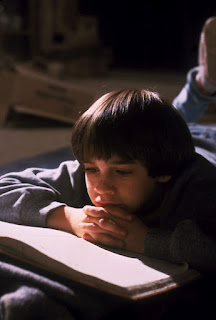
XYZZY? What’s that, you may ask? Well, many moons ago, fantasy adventure games on computers had no graphics, so everything was done via text. (Insert voice of Peter Falk as the Grandpa in The Princess Bride here: “When I was your age, TV was called ‘books’.”) The computer would give you a textural description of where you were, what you could see, hear, and smell, what you could pick up, what directions you could go, and so on. And then you would tell the computer what you wanted to do. These were called “text adventures” back then, although as time went on they would come to be known as “interactive fiction”. There were quite a few of these games around in the 1980s, and to this day, there’s a small but active subculture still producing these with vigor. I haven’t played one in years, but I lost a lot of time as a kid doing so.

The great classic of the genre is probably Zork!, but the original, the one that started it all, was a game called Colossal Cave (or just plain Adventure on some systems). This game started you outside a little house in a forest. As you explored, you’d find an empty stream bed. You’d follow the empty stream bed, to a steel grate that was locked. After figuring out how to open the steel grate, you would enter the Cave via the grate. And thus the tale begins, in which you explore Colossal Cave to find things like canaries in cages; a magical rod; treasures like rubies and golden eggs, the goose that laid the golden eggs; a snake barring your way; a dragon barring your way someplace else; a bridge blocked by a troll who demanded payment for passage; and if you weren’t careful, a maze of twisty little passages, all alike. The object of the game was to recover treasures from the Cave and bring them back to the little house. However, there were puzzles galore here: Some treasures couldn’t be easily transported. Others had puzzles of their own, like how to get to them. And that troll…you had to pay him a treasure in order to pass the bridge, but if you do that, he keeps the treasure…and you can’t win the game unless you return all the treasures to the little house. What do you do? Hmmmm!!! (To this day, I remember the feeling of triumph that came over me when I solved that particular puzzle. That, and the one about getting past the Dragon.)

But anyway, getting back to the original topic here, there are special locations within the cave, from which you can teleport yourself back to the little house, through use of a magic word, and one of these magic words was XYZZY. This served as a way to escape danger quickly (the few villains wandering the cave can’t follow you to the little house), and as a shortcut so you didn’t always have to type out all the directions back to the little house from the cave entrance; just get back to one of the magic-word enabled locations, say the word for that location, and poof!, you’re there. Drop the treasure in the house and then go back and keep exploring.

Colossal Cave was, to a certain degree, a grab-bag of tropes from classic fantasies, adventure stories, and fairy tales. There were allusions to The Lord of the Rings, as well as things like Jack and the Beanstalk. Magic words fit right into this, as magic words abound in fantasy. They are a very old staple of the genre, all the way back to the Arabian Nights (which I really need to blog about, having read a selection of its stories recently), and the “Open Sesame!” of “Ali Baba and the Forty Thieves”. The idea of magic words is very, very old, and in fact, it has in some ways become so much a part of the greater notion of magic that a lot of times, magic words aren’t described as such at all. They become, in the parlance of Advanced Dungeons and Dragons, the ‘verbal component’ of a spell: the mystical-sounding mumbo-jumbo that a wizard must utter in order to get off a fireball or magic missile.

These kinds of magic words are an extremely important component of the magic system of the Harry Potter books. Over the course of the stories we come to know a good deal of the spells that the wizards in that world use, mainly by way of the words used to cast them. We learn that proper pronunciation is very important (“It’s Levi-O-sa, not Lev-i-o-SA!”), and through these words, we’re able to tell what the various wizards are up to, merely by the words they use. One of the key flaws, I think, in the last of the Potter films is that the final confrontation between Harry and Voldemort is dialogue free, including their final spells against one another; in the books, Harry explains to Voldemort precisely why he’s about to lose the battle, and Voldemort tries anyway, while in the movie, Harry doesn’t explain what’s happened until afterwards. And there’s a real sense of fittingness in the book, when Harry is able to ultimately defeat Voldemort with Expeliarmus, which he learned way back in the second book.

The Lord of the Rings has its share of magic words and incantations. The most notable is probably when the Fellowship is trying to enter Moria via the secret door, and Gandalf tries every magic word he can think of to get the doors open. But it turns out that the Dwarves enchanted the door to open with only one word, and they inscribed the word itself right on the door, but in such a way as to make you not realize that was the word at all. The magic-words thing is more inconsistently handled in the movies; Gandalf and Saruman’s battle in Orthanc is incantation-free, but they both shout incantations into the sky while the Fellowship is trying to climb over Caradhras. And when Arwen crosses the river with Frodo and the Nazgul are threatening to follow, Arwen begins uttering words in Elvish, and you know that, well, “shit’s about to go down”. But when Gandalf returns as Gandalf the White, he uses magic without any incantation whatsoever. I don’t know that JRRT ever had in mind any kind of rigid ‘magic system’, complete with rules for magic use, that all the “How to Write Fantasy Books” articles and books say that you need to have.

In Star Wars, however, there is no hint of magic words, no incantations needed to invoke the Force, at all. For a story that is as steeped in the tropes and traditions of mythology as Star Wars is, this fascinates me. The Force has no ‘verbal component’ at all, so far as I can see.

So, what magic words have I forgotten or omitted for reasons of space, and what favorite magic words of yours are there?

Share This Post

A to Z: Universes

Way back when, movies and teevee shows and books and whatnot used to be pretty much self-contained items. But nowadays, in a lot of cases, as specific movies and teevee shows and books and comics branch out into multiple sequels and spinoff series and all of their sequels, what becomes important isn’t so much the original story. Instead, the entire setting of the story takes primacy. Thus, a Universe is born.

At what point does a fictional setting become a universe? Star Wars takes place a long time ago ‘in a galaxy far, far away’, but at what point did it become possible to talk about the Star Wars Universe? My guess is that it was when other stories started to be told there, other than the original three movies. The emergence of the Star Wars universe seems to me to have arisen in the mid-1990s, when, on the heels of Timothy Zahn’s Thrawn Trilogy, a whole bunch of new books started coming out…and then comics…and then games…and all this before the Prequels started even shooting. Star Wars had become a Universe.

The same thing happened to Star Trek, when it went from being the adventures of a specific crew of a specific ship to also including the adventures of another crew, 80 years later, and then the adventures of the crew of a space station, and then the adventures of…you get the point.

And then there are the big comics publishers, Marvel and DC, both of whom have their own universes. All their respective superhero books take place in the same world, so that there can be crossover appearances that take characters from one book into another. It’s not enough to have Spiderman having his own adventures; no, every so often he has to have a run-in with, say, Daredevil or the Hulk or whomever. Most times this is just fun name-dropping, but it’s also a subtle way for the comics companies to cross-market their other books, the ones you might not be reading.

Famously, the DC Universe became extremely cluttered and complicated over the decades, until the point where the Powers-That-Were decided to do a big storyline in which the entire universe would basically be re-booted. Apparently this didn’t take, as there have been several reboots since the original Crisis on Infinite Earths. Meanwhile, Marvel’s Universe, while not so complex, was still plenty crowded — which allowed Marvel to make money a few times by putting out a Complete Guide to the Marvel Universe, or something like that, which was basically an encyclopedia of just about everybody. And Marvel, too, had its Giant Enormous Crossovers, which they called Secret Wars.

In Firefly, the characters actually refer to their Universe, by calling it “the ‘Verse”. Oddly, nearing ten years after the show’s brief run, the Firefly universe is among the most beloved and yet least explored; all we have are fourteen teevee episodes, a movie, and three graphic novels. That’s it.

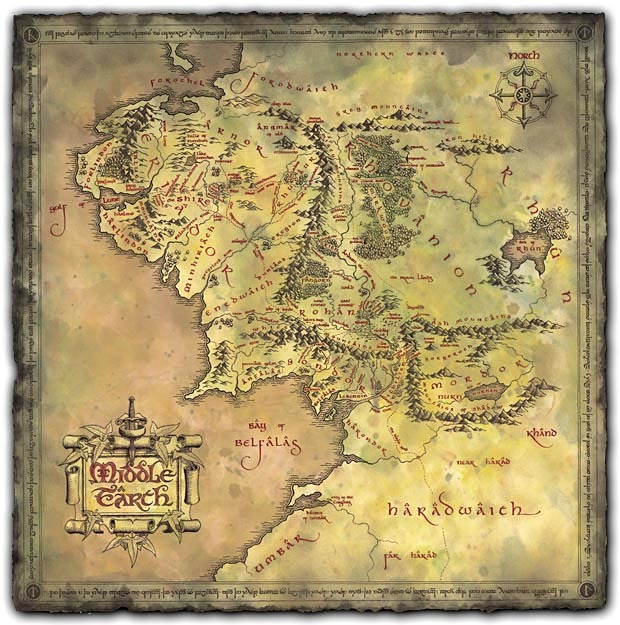
So, what’s the difference between a Universe and a ‘World’? For instance, nobody talks about the Lord of the Rings Universe. They refer to its world, or even to the world by its name, Middle-Earth. A Universe seems to me a primarily science-fictional concept, and needs more than one planet to be properly a Universe. But why a Universe, and not a Galaxy? Well…who knows? I personally like the word “Galaxy” better, but what if you start mucking around with black holes and stuff in other Galaxies? What if you start to dink around with multiverses? Aieee! It makes the head explode!

Share This Post

“Who are you?” “No one.” “A lie.”

God, what a slog.
I was really hoping that my original impression of this novel, way back when, wouldn’t hold true this time around. When I first read Feast, it had been a few years since I’d read A Storm of Swords, so a lot of the finer points of the various plotlines were not at all fresh on my mind. I chalked up my impression partly to that…but now that I’ve read the entire series in the last few months, I still think this book is a giant slog. Parts of it are really good. Parts of it are duller than ditchwater. Too much of it is duller than ditchwater. My view of these books as a reasonably high-quality fantasy soap opera is more and more ingrained in my head. Here’s how I described that, in the afore-linked post:

When I was a kid, I actually became for a time a huge fan of General Hospital. This was back when each summer would have a long and sometimes “action-packed” tale involving spies and espionage and intrigue of such nature, usually featuring characters like Robert Scorpio and his former wife Anna, who were both also former agents of the WSB (World Security Bureau), when they’d square off against the nefarious agents of the enemy DVX. As these storylines wended their way through the summer months, lots of other characters would see their own lives intersect with the “main summer storyline”. This was all usually quite a bit of fun, but there were characters I didn’t really care about, and thus their bits in the storyline tended to slide beneath my radar. And not all of the show’s characters would be involved in the “main summer storyline”, so once a week — usually on a Tuesday or Wednesday — there’d be an episode of GH that served only to catch us up on the characters who had nothing to do with the fun stuff. These episodes were largely boring as hell; I was watching the show for Robert Scorpio’s heroics and whatnot, and I didn’t really care one whit about Steve Hardy’s son’s relationship problems or the various infighting of the Quartermaine clan or the trials-and-tribulations of hooker-turned-straight Bobbi Whatshername. But that was the price to pay for the good stuff.

So GRRM’s massive fantasy series is getting kind of like that. Each chapter is told from the viewpoint of a different character, with that character being named in BIG LETTERS at the top of each chapter, so as soon as one chapter ends, you know just by looking at the next page where you’re going next in the story. This is classic soap opera structure, and in the first two books it was extremely effective, but I’m finding that now as we’re into our fourth book here, it’s all starting to feel the same way it felt when I’d watch GH all those years ago. “Oh, cool! An Arya chapter! Her story’s interesting!…Oh, bugger, another chapter about Sansa. Snore.” If ASoIaF were to be filmed, I think it should be as a soap opera, titled Westeros!. And if they change actors, a voiceover guy could intone, “The part of Jaime Lannister will be played on this episode by….”

In Feast, George RR Martin found himself in a bit of a quandary. He was writing the fourth book in this series, with all the characters present, but it quickly became – surprise, surprise – too long. So he had to cut it in two. But that presented its own structural problem.
Consider, say, The Empire Strikes Back. Suppose, for whatever reason, that George Lucas and company had decided that the movie was too long and needed to be cut in half and released as two movies. Now, what you might suppose he would do is, well, pick a point halfway through and chop it in two right there: maybe just after Han and Leia and friends take up refuge in the asteroid and Luke meets Yoda.
But Martin didn’t want to do this. He felt, as he indicates in his afterword, that he found it preferable to “tell all the story for some of the characters, instead of some of the story for all of the characters”. So: imagine an Empire Strikes Back that follows Luke, and Luke exclusively, all the way to the end of the existing story…and then another one, a while later, that tells what Han and Leia and Chewie and C3PO were doing while Luke was doing all that other stuff. That’s what Martin does here. Does it work? Well…meh.
The problem is, as I note in my soap-opera metaphor, that telling part of the story is only partly satisfying. Of the four best characters in this series – Jon Snow, Tyrion Lannister, Arya Stark, and Daenerys Targaryen – only Arya appears in this one. Who is left to follow, then, over the course of almost 700 pages? Well, there’s Jaime Lannister, who continues to be interesting, although he suffers from blockheaditis. There’s Samwell Tarly, whose stock is rapidly rising in my estimation, although his story in this book largely consists of riding a boat and mooning over a girl. Cersei Lannister becomes a viewpoint character, but she does not become sympathetic at all, as Jaime did in the previous book. Sansa Stark is around, but her story doesn’t really go anywhere of great interest. Brienne of Tarth is here, but her story is really problematic.
And then there’s new stuff. Martin devotes a bunch of chapters to the royal succession of the Iron Islands, the seafaring, Viking-like society off the coast of Westeros. I remember this stuff being fairly interesting before, but this time it was just there. And there was a whole storyline involving Arianne, Princess of Dorne, that was…well, I guess I should just be blunt here. I didn’t care about it at all.
Of the stories presented in Feast, the only one that really works is Arya’s, and it suffers from feeling a bit shoe-horned in here. Martin’s apparent focus here is in depicting the events in Westeros basically south of The Neck (a narrow area of the continent between the North and the South, not quite narrow enough to be an actual isthmus), and yet, we have Arya, who is in Braavos, the city across the sea. And her story ends over a hundred pages before the book does.
I think that points up my increasing problem with this series: it’s becoming so big and epic that there is almost no sense of structure at this point. Aside from just a couple of points, there’s just not that much evidence to be had that we’re building toward anything. (Those two points? The fact that two of the factions in this book are apparently setting their eye on the dragons they’ve heard about in the East.) I don’t feel like I’m reading a story; I’m reading, well, a soap opera, with the feeling that I could leave off for a year or two and just start watching again and there everyone will be, give or take a character or two.
Random notes:
:: I have to admit that part of my distaste for large parts of this book have to do with the constant drumbeat of sex. Sex, sex, sex, sexity sexy sex. And none of it is, well, good sex, either. It’s all lust and rape and a bizarre fascination on Martin’s part with the word “nipple”. There’s constant probing of “the secret sweetness”, comment on how wet women are “down there”, and…I’m sorry, maybe I’m a bit of a prude, but this book is loaded with passages like this, and I felt my eyes rolling each and every time. Cersei dabbles with lesbianism, just out of curiosity (and decides that she’s grossed out by it, after). Samwell Tarly loses his virginity. Jaime constantly mopes over the fact that his sister hasn’t been faithful to him. Littlefinger seems to be coming on to Sansa, who points out numerous times that she’s a real maiden, flowered and all. Cersei sets a trap for a rival, which involves having the pious priests probe the girl’s privates to see if her ‘maidenhead’ is intact. And don’t get me started on Brienne, whose every interaction with another person must apparently begin with the other person telling her how ugly she is, and more than a few people telling her “What you need is a good raping!”. (I am not making that up.)
I haven’t much enjoyed the sexual parts of these books, but in Feast, it all becomes downright creepy. Maybe GRRM is exploring this all as a theme – how the lives of millions are affected by the sex lives of the few in power – and I believe firmly that depiction is not the same thing as approval. But, does there really have to be this much creepy sex? Really? None of it is even steamy sex – aside from Sam’s drunken lovemaking with Gilly, all the sex in this book, and most of it in the entire series, is violent sex that sounds more painful than anything else.
:: I like Brienne of Tarth a lot as a character. But her story sucks. It’s just her, wandering around, asking people if they’ve seen Sansa Stark, being told how ugly she is, and her pining for poor dead Renly Baratheon. Her final cliffhanger? That’s as purely a soap-opera moment as I can think of. You can practically see the show freeze-framing on that moment.
:: One of the rules of soap operas is that if you didn’t see the body, the person ain’t dead. Therefore, I do not believe that either of the Cleganes has died. (And in the case of Sandor, that would be a shame, as I was finding him a highly compelling character.) We’re also told that Davos Seaworth has been murdered, but I’m going to hold that in abeyance, as well.
:: Poor Theon Greyjoy. He was a viewpoint character in Book II, and now he hasn’t been seen at all in Books III or IV.
:: If you’ve ever watched any soap opera for any length of time, you’ve seen an instance of the producers introducing a new location – a new place in town, for instance – where all the characters claim to have been going for years but which we’ve never seen before. I kind of felt like that with Dorne. Yes, there have been a few characters from that region in the first few books, but now, suddenly, we had to spend a lot of time there, for reasons I’m not entirely sure of.
:: I’m being pretty hard on this book, but I really did find it a slog and at times a not terribly interesting read. I’ve read that at one point, GRRM was planning to execute a ‘time slip’ in between Books Three and Four, which means that he was going to skip over all the stuff that’s happening in this book (and in what has become the fifth book). Obviously, I won’t know until much later on – if ever, as I’m still unconvinced that this series will ever be finished – but maybe it’s the case that the conclusion of this saga makes the events in this book seem more important in retrospect. For now, it bothers me that for a great deal of A Feast for Crows…I found myself not caring.
Oh well. One book to go, and then I’m caught up. At least that one will be totally new to me.

Share This Post

A to Z: North!

Direction is always important…and in a lot of fantasy, specific directions carry with them specific connotations. Such as North.

finding north

North is often portrayed as cold and desolate and lonely. Just about every fantasy that I know is set in the northern hemisphere of its particular planet, so north really does tend to be a land of cold and, sometimes, a land of unknown. In some cases, the North is where Evil lives: Guy Gavriel Kay’s The Fionavar Tapestry puts Rakoth Maugrim’s fortress up north, just below the “Ruk Barrens”, which are endless lands of ice. In Tigana, he flips things around – it’s the warm lands that are in the north, and to the south are the snowy mountains. But it’s easy to miss this geographic flipping.

George RR Martin uses the North as a source of cold grim things, as well; in fact, it could very well be that the main existential threat of his books is coming from the North, beyond the Wall that was built thousands of years ago to hold the North at bay.

I don’t recall what is in the far north in Stephen R. Donaldson’s “The Land”, the setting of his Thomas Covenant books, but he does invert things a bit by placing Revelstone, the chief fortress of his forces for Good, in the northern part of The Land, while Foul’s Creche – the stronghold of villain Lord Foul – is in the east.

For JRR Tolkien, the north seems to have been also a source of cold, of snows, and of dark things. In the north is the kingdom of Angmar, whose Witch King would later come to serve Sauron as Lord of the Nazgul. The North is never really visited in The Lord of the Rings; it is a location of legend more than action of the story. But it’s not only a source of grim things, for the Rangers of the North are also there, protecting the Shire and from their number comes Aragorn, heir to Isildur and rightful King of Gondor.

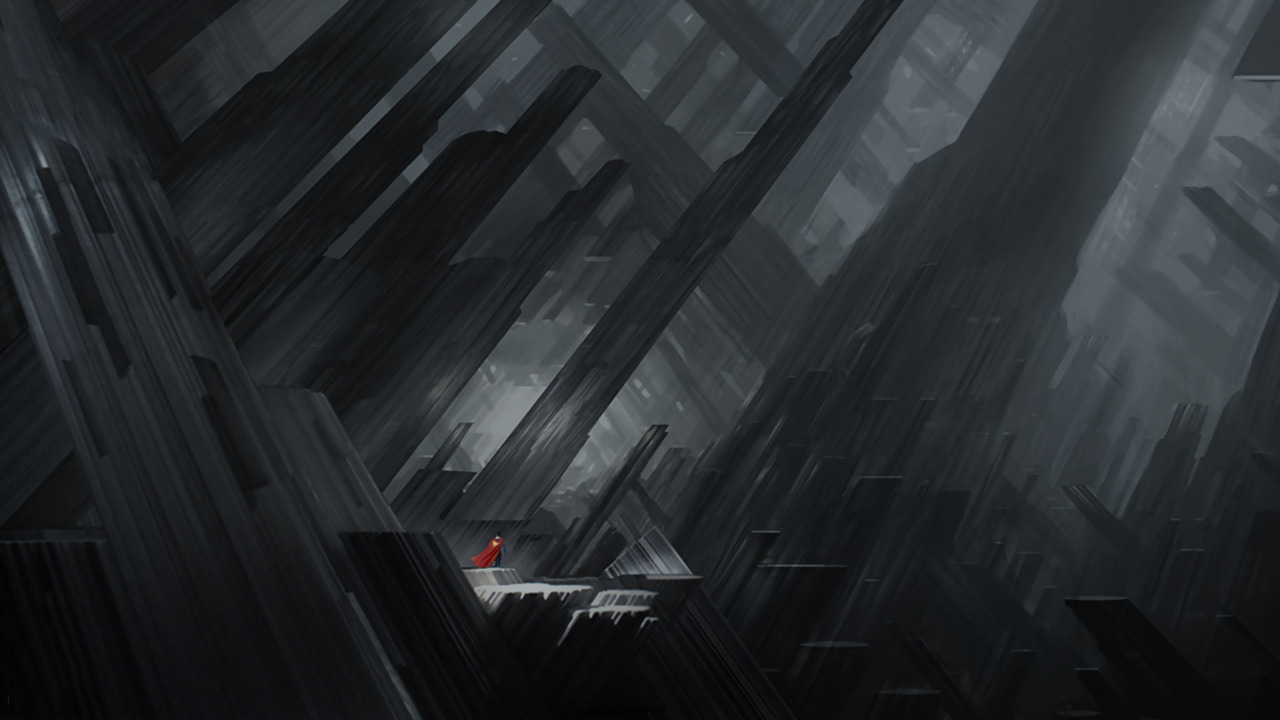
The North is not always a source of darkness, cold, villainy, or evil. For Superman, the North is a place of quiet and contemplation, where he goes to rest. It is in the North that he builds his Fortress of Solitude, his unearthly home on Earth.

How do you see the North? Cold and desolate and full of dark beings? Or stark and majestic and a place of enormous solace?

Share This Post

A to Z: Lancelot

One thing I noticed in all my years of reading Arthurian fiction was that Lancelot is an awfully hard character to pull off.

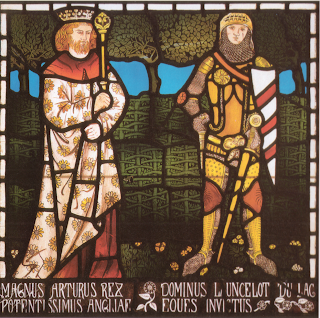
Lancelot, for those not ‘in the know’, is the magnificent knight from France who comes to Camelot to serve King Arthur and sit the Round Table. Lancelot is the greatest knight anywhere (well, until Galahad shows up); no one can best him in any test of skill, and what’s more, he’s morally pious to the point that being around him is a real downer. At least, he’s those things until he meets the Queen, Guinevere, and falls in love with her. This would be bad enough, but she falls in love with him, too. Lancelot and Guinevere carry on an affair that eventually becomes the moral crisis that causes the Knights of the Round Table to splinter, and in the end brings about the end of King Arthur’s reign.

Now, depending on which version of the tale you read or watch, it’s not all the fault of Lancelot and Guinevere. Many tellings of the story also include Arthur’s magical seduction by his witch sister, Morgause, who bears a son, a force for malevolence named Mordred. In these tellings, it’s Mordred who finds out about Lancelot and Guinevere and forces their affair into the open, in turn forcing King Arthur to choose between enforcing his morality or allowing his deepest friend and wife to go free.

The problem with Lancelot, then, is two-fold. First, you have to establish that he’s virtually perfect, which makes it nearly impossible to sympathize with him. Then you have to make him sleep with his best friend’s wife, which also makes it nearly impossible to sympathize with him. This is why, when I’ve read Arthurian fiction, it’s the Lancelot character who usually suffers the most, and in reality, this is why I can’t honestly even recall a book where Lancelot comes off very well at all. T.H. White’s The Once and Future King probably does it best of anybody, but even for him, Lancelot comes off feeling a bit unreal.

Lancelot’s origins are hazy, but that’s to be expected, as the origins of the entire Arthurian corpus are pretty hazy; the Arthurian legends – the “Matter of Britain” – were not so much created as they accrued over time, gathering bits and pieces from other, older legends and myths and folk tales. Back when I was studying Arthuriana a lot, I started to realize that I was finding that older material more and more compelling – tales such as the Welsh Mabinogion and other parallel stories.

Why has the definitive Lancelot not yet turned up? I think it’s probably part of the same reason that a definitive telling of the entire Arthur story hasn’t turned up. The story is not a story, but rather a collection of interrelated stories, a grab-bag of tales, told in many different styles over the centuries. As for poor Lancelot himself, he’s a tough nut to crack because he’s a jerk in two different ways and if there’s one thing we like, it’s to see a jerk get his comeuppance. But we also don’t like to see jerks take good people down at the same time, which is why the tale of King Arthur is such a tragedy.

As I note, Lancelot is a deeply troublesome character to pull off. Most authors, I have found, choose to make Lancelot less than perfect, and merely a likable guy and a very good knight. They also try to soften Guinevere’s appearance of fault by making her more sympathetic — possibly by making her marriage to Arthur an arranged marriage, so that while she honors him and may even love him after a fashion, he never has her heart. Making everyone sympathetic in a tragic story that involves moral failure is not an easy thing, and to my experience, no one has quite pulled it off.

Ultimately Lancelot seems to be a reminder that our greatest dreams for ourselves may well be unattainable, and that our hubris often contains the very seeds of its own downfall. King Arthur forms the Round Table out of a desire to have a peaceful realm where justice is served by all his knights, but along comes Lancelot, ostensibly the man most ideally suited to this lofty goal – and he’s the one who sets in motion the events that will eventually destroy the Round Table and cost Arthur himself his life (or, at the very least, see him carried off to Avalon).

Share This Post

A to Z: Incunabulum

Books abound in fantasy and science fiction. The book is a central plot device or Maguffin or important element in so many stories that to catalog them all would be an exercise in utter futility. But let’s explore some anyway, in this entry. Behold the Incunablum!

Strictly speaking, an incunabulum (plural incunabula) is a book printed in Europe before 1501. According to Wikipedia, this is an arbitrary distinction, which is why I can get away with it here. But it’s a cool word, and it kind of connotatively suggests not just any old book, but rather the types you see a lot in fantasy: big, heavy tomes with lots of pages between leather covers. A locking clasp is also good; witness Indiana Jones’s Bible in Raiders of the Lost Ark.

Books are so often important objects within fantasy and SF stories that I can only offer a smattering here. The Neverending Story is a great example (even if I don’t like the movie all that much), in which the act of reading a story and the act of being in a story are melded into one. Books are a constant thing in the Gothic YA novels of John Bellairs; in one, the young hero’s adult friend is a literature professor, while in another, the adult companion is actually a librarian.

Books are the ultimate symbol, I suppose, of education and learnedness. Showing a person surrounded by stacks and stacks of books is almost a cliché for “This person is smart!” But it can also be shorthand for “This person is really eccentric!” — hence all the somewhat dotty wizards and witches in fantasy literature who are forever losing themselves in the pages of their tomes. And books can also establish one more facet of someone’s ass-kickingness:

Magic books? Those can be found, too. A magical book is at the center of Lloyd Alexander’s Prydain Chronicles, which begins with The Book of Three. Books are the magical gates between worlds in the computer game Myst. Books as central organizing principles of civilization? The original series Star Trek episode “A Piece of the Action” gives us a society that has organized itself around the rules of a civilization they read about in a book they recovered from a crashed starship. Unfortunately, the book was about mob men of Prohibition-era Chicago. This notion would later be repeated in the Next Generation episode “The Royale”, in which some well-meaning aliens construct a ‘world’ for the sole human survivor of a crashed spaceship on their world; they assume that the crappy novel he’s reading is an accurate depiction of human society, so they create that novel’s setting for him. (This is one of my favorite episodes of the series, although it doesn’t seem terribly popular.)

And books can be key moments of villainy, too. George RR Martin has well established King Joffrey’s colossal sociopathic status by the time we get to A Storm of Swords, but that doesn’t stop Martin from giving us a scene where Joffrey receives a very rare book as a wedding gift, and then uses another wedding gift – a sword of Valyrian steel – to chop the book in two. When someone points out that there were only four existing copies of that book in the world, Joffrey shrugs and says, “Now there are three.”

I could go on and on, but I’ll stop there. But remember: books rule!

Share This Post

A to Z: Horses

If there’s an animal more suited to heroism and derring-do than the horse, I don’t know what it is. Horses abound in fantasy and in science fiction. If you want a big heroic moment, you can do it without having a horse there…but a horse or two really helps.

Horses aren’t just well-suited to heroism. Horses lend themselves to tearjerking, too; if you want the audience to sympathize for the main character, well, just kill his poor horse, and that’ll do it. Dances With Wolves starts to become gut-wrenching when Cisco, John Dunbar/DWW’s horse, is killed out from under him.

Horses are, of course, a major factor in The Lord of the Rings. You have Gandalf, claiming for himself Shadowfax, the greatest of all horses, and one of the most heroic moments in the story – book and film – comes when the Riders of Rohan, a culture devoted to the horse, finally arrive on the scene at the Battle of the Pellenor Fields. Even the hobbits get into the horse act, with their use of ponies; Sam’s beloved pony Bill, who gets turned away at the Mines of Moria, is long-missed, and Sam’s relief many months later to discover that Bill has turned up back at Bree is a wonderful moment. And in truth, the fact that the Fellowship is mostly horseless seems to put them at a psychological disadvantage already, before they ever set out from Rivendell.

LOTR also gives us evil horses, in the black steeds that the Nazgul ride in the first half of The Fellowship of the Ring. In the film, Peter Jackson depicts this by use of close-ups of the horse, from strange angles, shots of the spittle dripping from the horse’s mouth, and so on. And when the power of the river is unleashed against the Black Riders, the foaming waters take the form of white horses.

On the flip side of that particular coin we have the sacred horses of Stephen R. Donaldson’s Chronicles of Thomas Covenant, the ‘Ranyhyn”. These horses are larger than their Earthly equivalent, and they are somehow in touch with “Earthpower” – the magic inherent to the world – and will not allow anyone to ride them that they themselves do not choose. One of the most potent moments depicting the power of Thomas Covenant comes when Covenant, as an act of atonement, commands the Ranyhyn to visit Lena, the girl he raped earlier.

Great horses are the key plot point of Guy Gavriel Kay’s brilliant novel Under Heaven, when a distant princess decides to gift a relatively minor man with two hundred fifty of her great horses, an act which sends shockwaves across the dynastic rule of Kitai (GGK’s medieval China). And let’s not forget the Firemares of Krull!

Horses in SF? Well, there are horses aplenty in Firefly, which is fitting as the show is essentially a space western. There are no horses, per se, in Star Wars, but the Tauntauns of The Empire Strikes Back are rather horselike. In Star Trek V, there are beasts on Nimbus III (the “Planet of Galactic Peace”) that aren’t horses, but might as well be. (I think they’re there because William Shatner, who directed that one, is a noted horse enthusiast.) Shatner’s equestrian enthusiasm would be indulged again in Star Trek Generations.

Not SF or fantasy, but here’s a scene from a good movie called Hidalgo, which has Viggo Mortensen playing a guy who, along with his horse Hidalgo, enters a race across the Sahara. I like this scene because it shows the beginning of the race…and what happens once the racers are out of sight of the people watching them start.

All hail the horse!

Share This Post

A to Z: Florin

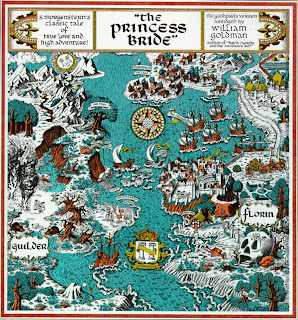
Stories have to take place somewhere, don’t they? In the best of tales, the someplace is almost as important as what goes on there. Heck, there are times like The Lord of the Rings when the setting is, or seems, more important than the tale. The rule of thumb holds: if the setting isn’t memorable, then the tale of the fantastic isn’t going to be, either. Conversely, if you have a really good tale, your setting’s going to be good. So, it stands to reason that one of the greatest of all tales – a tale featuring fencing, fighting, torture, revenge, giants, monsters, chases, escapes, true love, and miracles will take place in a very special realm indeed. Hence Florin, the land of The Princess Bride.

We don’t learn a whole lot about Florin as a country, really. What we know is that it is a monarchy, ruled currently by a very old King and Queen, with a nasty Prince waiting in the wings. Florin is the sworn enemy of Guilder, a nation that lies across the sea. Florin is largely agrarian, and yet it has a number of notable geographic features, such as the enormous Cliffs of Insanity and a horrible place called the Fireswamp. Florin is also the location of vicious sea creatures like the Screaming Eels, and the rumored ROUS’s that dwell in the Fireswamp.

The people of Florin don’t appear to be terribly wealthy, and the castle itself looks fairly spartan in its appointments, so it’s to be assumed that Florin doesn’t have much of a standing army. This likely explains why the elite of Florin seem to prefer schemes against Guilder to open wars of conquest. The latest such scheme, hatched by Prince Humperdinck, involved his murder of his own wife and framing Guilder for it. This plan turned out to be overly complicated, to the point where Humperdinck had to claim that it was a major reason for his being ‘swamped’, and in any case, Humperdinck failed to take into account the power of Twoo Wuv…er, True Love.

Florin’s greatest achievements as a nation may well end up being the fact that the Greatest Kiss of Them All took place there, and its placement of the phrase “As you wish” among the most powerfully romantic things one can say to one’s lover.

Huzzah for Florin!

(image credit)

Share This Post

A to Z: Elphaba

There’s a certain subgenre in which existing, famous stories are retold from the inside-out. I’m not sure what this genre might be called, but when it’s done well, it can be a lot of fun. There’s a great example in Star Trek: Deep Space Nine‘s “Tribbles and Tribulations”, which has the DS9 crew time-travel back so they are actually inside the events of the TOS episode “The Trouble with Tribbles”. The second Back to the Future movie does this as well. And then there’s the Tom Stoppard play Rosencrantz and Guildenstern Are Dead.

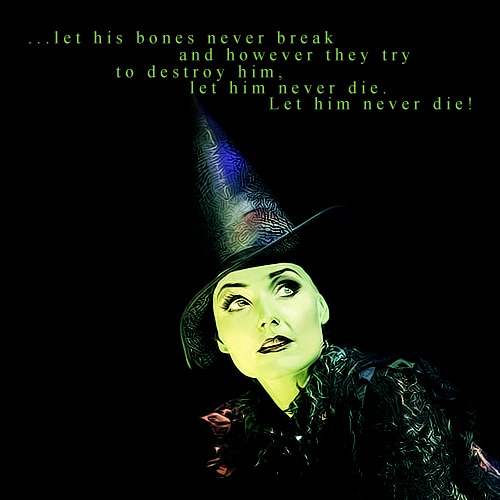
For these kinds of stories to work, the original story has to be fairly well-known, so the audience can notice when the events of the original are shown, but with the shift in point-of-view. One of the most famous recent examples of this kind of meta-story is the book Wicked (and its sequels), and its subsequent Broadway adaptation. It gives us The Wizard of Oz, from one possible viewpoint of the Wicked Witch of the West, whose name is revealed to be Elphaba. So there’s our ‘E’!

I haven’t read the books, so my only acquaintance with this character comes via the show, which I saw last year and blogged about here. Wicked, the show, takes sufficient liberties with the characters and the original story that I can’t honestly say that I’ll be thinking of that tale lurking in the corners next time I watch The Wizard of Oz. But as a meta-story, it’s a lot of fun, and in providing a sympathetic Elphaba, we get a good illustration that we’re all the heroes of our own stories. The really memorable villains aren’t always the ones who act the most evil, but rather the ones who are genuinely committed to their own causes and who really believe themselves to be on the side of the righteous.

Here’s Elphaba and Glinda in the big Act One showstopper, “Defying Gravity” (embedding disabled). Elphaba is played by Idina Menzel, and Glinda by Kristen Chenoweth. (Menzel had apparently suffered an asthma attack minutes before going onstage to do this, which is why her breathing in this performance is so pronounced.)

Trivia: Elphaba’s name came about by sounding out L. Frank Baum’s initials.

Share This Post

Stop that, George.

OK. I’m about a quarter of the way through A Feast for Crows on the re-read, and of course, I’ll have more to say about it when I’m done. But I’ve just read the chapter featuring Asha Greyjoy, and got smacked in the face with this (A ‘maester’ is a man who has undergone a high degree of formal education, so an ‘archmaester’ is an extremely learned man, in service to a King or Lord.):

Archmaester Rigney once wrote that history is a wheel, for the nature of man is fundamentally unchanging.

Fantasy readers will be put in mind of The Wheel of Time, the long fantasy series mostly written by Robert Jordan…which is a pseudonym for a writer named James Oliver Rigney. Really, GRRM? A damned in-joke? GAHHHH!!!

(No, it’s not a big deal, but it did throw me right out of the story.)

Share This Post