

How many coffee-brewing methods does one geek need, anyway?!


So, let’s talk about coffee!


I was slow to arrive at coffee, though I think I was always going to get there. I’ve loved the smell of coffee ever since I was very young; I remember making my mother let me take a nice, deep whiff from the Folger’s can every time she went to make a pot, even if I didn’t like the taste initially. It takes time to come around on a lot of flavors, especially the bitter ones, and I didn’t really start shifting toward drinking coffee until college, when the flavor of coffee finally enticed me by way of Coffee Haagen-Dasz ice cream.

And now, years later, I’m a nut about coffee, which means that I have no fewer than four methods of brewing in regular use at Casa Jaquandor, and I’m intrigued enough by several others that I might, just might, look into them someday. But for now, here are the means of coffee prep in my house!

Automatic Drip

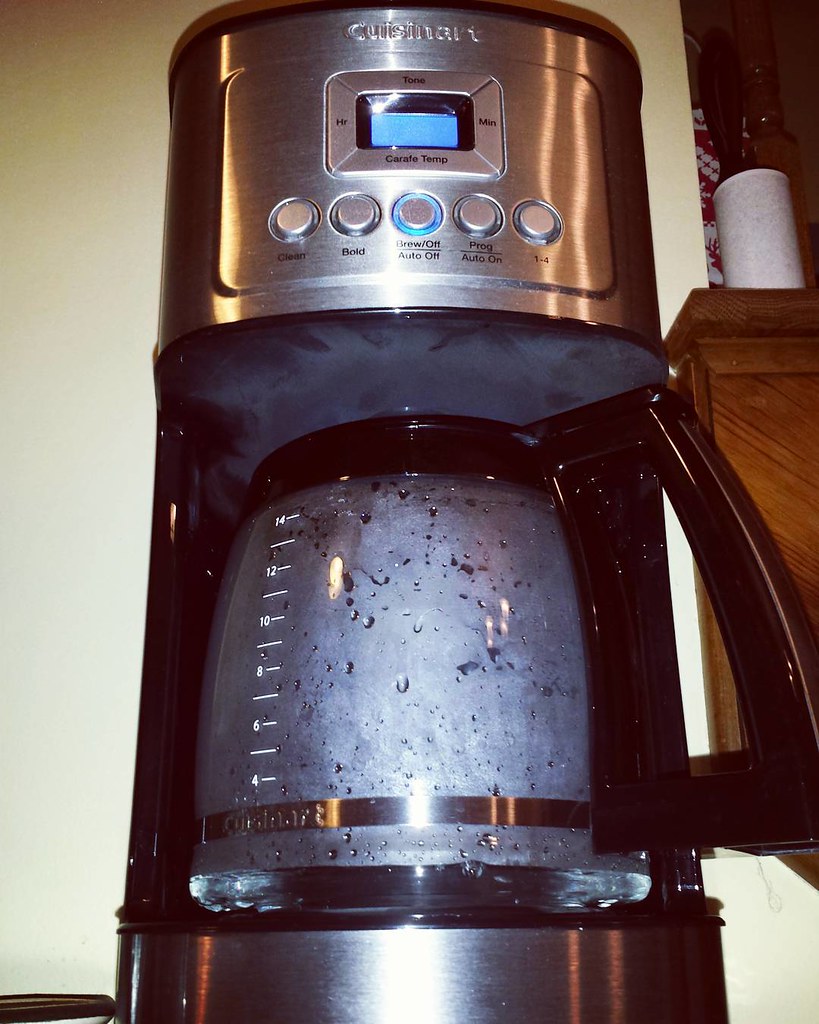
Now, I personally don’t drink a lot of coffee from this machine (it’s the source of The Wife’s daily coffee), but it does make a nice cup. Ours is a Cuisinart with reusable gold mesh filter, a programmable timer, and several temperature settings. Lots of coffee partisans look down on the drip machine, but I honestly think they do just fine for day-to-day coffee.


Pourover

This is the method I use most frequently for my own personal daily coffee. I have two devices for the pourover method: a small brew basket for single cup brewing, and a larger pot for if I need more than a single cup at once. I’ll brew the coffee into the big pot and then pour it into a thermal carafe for hotkeeping. (If ‘safekeeping’ is a word, why not ‘hotkeeping’? Anyway….) This is all very simple. You put a filter in place, measure in your ground coffee, and then you pour boiling water over the grounds. It’s basically the drip machine method, but executed manually. It also works better than most drip machines because you get to properly control the water temperature; many drip machines just don’t get the water hot enough.

If you’ve heard of a “Chemex pot”, my larger pot is pretty much that, only it’s not the Chemex brand. You don’t need to pay a lot for a specific brand name all the time!

French Press

I don’t use this as often, but it makes delicious coffee with quite a different mouthfeel than the pourover. French press coffee isn’t filtered, so a lot more of the oils from the bean end up in the final product, and all that direct contact between the water and the grounds makes for a stronger flavored brew. I own two French presses, one for whole pots and one for individual servings. Admittedly, I don’t use the smaller one very often at all, but I love the larger one. (And that reminds me: as I write this I need to clean my French press, since I used it yesterday morning and didn’t get around to cleaning it! The biggest drawback of the French press is likely that it’s harder to clean than the other methods here.)

Moka pot

And then there’s this gadget, which uses steam pressure to make very concentrated, strong coffee that’s quite similar to espresso in flavor. In fact, some folks refer to this pot as a “stovetop espresso maker”, which some other folks claim is inaccurate because of some stuff involving the proper levels of pressure under which the steam is forced through the coffee. I had to do a bit of research before I used this pot (how-to videos on YouTube are great!), and it’s not hard at all! The most counterintuitive thing about the Moka pot is that you don’t want to put cold water in the boiling chamber; the time it takes to heat the water to boiling ends up heating the grounds, which can make your brew taste burnt. You’re actually instructed to boil the water first in a kettle before adding it to the boiling chamber, and then you put the whole kaboodle on the burner! It’s neat the watch the coffee bubble up and out of the little tower in the pouring chamber, and I quite like the resulting coffee. (And I do get lazy on the whole ‘boiling the water first’ thing, sometimes using hot water from the tap.)

I only use the Moka pot for an afternoon cup of coffee during the cooler months. It doesn’t make a big enough cup for “morning coffee”, at least not for me. But it delivers a nice strong cup of espresso-style coffee!

So that’s all I have right now for hot coffee-brewing methods. I do have a countertop espresso brewer someplace, but it’s in the garage as it never really made it to my normal-use coffee rotation. I’m also intrigued by a gadget called the “Aero Press”, and there’s a thing called “Vietnamese coffee” that also intrigues (from what I understand, it’s basically a drip filter of a special make). I wouldn’t mind trying these, but space for kitchen gadgets is a concern, as is expense. (Not that these things are super expensive, but my desire to try each of these has not yet overridden my “Do I really wanna spend $20 or $30 on another coffee method just now?” thinking.)


I have, to my knowledge, never tried coffee brewed in a percolator. And honestly, from what I’ve read, I don’t particularly plan to. I’m told that you can make good coffee in one, but honestly–I have all these other ways of making good coffee.


“But wait! What about cold brew coffee?


I’m glad you asked!


I do like cold-brew coffee, which I keep on hand during the warmer months so I can enjoy a cold coffee beverage on occasion. I used to make my cold-brew in a large glass carafe that I have and use for several applications, because it’s really easy. You don’t need a special contraption for making cold-brew coffee; you just need a vessel for ground coffee and enough water for brewing (recipes containing amounts abound online). The issue that I ran into was draining and filtering the coffee out: this can become a pain that takes a long time, as you run the coffee through a strainer or a coffee filter. I’m not sure if it’s a temperature thing or some other factor, but cold-brew coffee does not filter out nearly as quickly as hot coffee will.

So, I bought a cold-brew coffee pot. It’s a simple concept, really: it’s just a glass carafe with a lid, but there’s also a wire-mesh basket that goes inside. You fill the basket with your coffee, put that in the carafe, and then pour in enough water to cover. You do this slowly, giving the coffee basket a quick spin a few times to make sure the water saturates the grounds, and then you just let it sit on the counter for 18-24 hours. (I always go 24.) Then you just lift out the mesh strainer-basket and hold it up to drip out for a minute or two, and what’s left in the carafe is your cold-brew coffee concentrate.


I like to mix this stuff with milk and maybe a bit of chocolate syrup. Sometimes I also shake in one scoop of protein powder, but not always.


And finally, a shout-out to the unsung hero of all this: my electric kettle, which I use for boiling water quickly. Stove-top kettles used to be my jam, but not anymore. I am all about the speed and ease of the electric kettle, which makes my coffee and tea adventures an absolute breeze. I used to use a stove-top kettle for boiling water, but it takes way longer than an electric one to get the water to a boil.

So there it is: Coffee at Casa Jaquandor! Note that I do not own a Keurig machine, and nor do I have any intentions of owning one of those. They seem like a wasteful pain to me, a unitasker that just takes up a constant supply of counter space and involves waste in the form of all those little cups. Also, as brewing is cooking, I prefer to have as much control over things as I can.

So that’s how I make my coffee. How do I take it? Most of the time, with cream (half-and-half, really) or black. While I used to put quite a bit of sugar into my coffee, I no longer use any sweetener at all. Coffee is one of the few areas of my culinary life where I’ve pretty much conquered my sweet tooth.


Now…what about mugs? And what about the other great hot beverage, tea?


Those are other posts. For now….


Share This Post

The Strooping of the Waffles! (Or is it the Waffling of the Stroop?)

 So, like many others in this COVID hellscape, the search for entertainment of a more cheerful kind, to take our minds off the dystopian virus-afflicted nightmare world in which we live, has led us to The Great British Baking Show. (Yes, I know that the BBC’s actual title for the show is The Great British Bake Off, but I live in America where Pillsbury has a trademark on the term “Bake Off” so the show has to be called something else, because heaven forbid we get in the way of somebody’s ability to make a buck while doing nothing at all, so Great British Baking Show it is for capitalism-addicted America.) I can, and might, wax poetic about the show at some point in the future, as we’ve now watched five seasons of it on Netflix, but for right now, I’m just going to talk about one item.

If you haven’t watched the show, it’s a cooking competition of the “Start with a dozen folks, make them cook stuff, judge them and eliminate one each week until you’ve got a champion” variety. It’s a lot more cheerful and kind-hearted than, say, Hell’s Kitchen, which is nice. The format each week is the same: the bakers are given three challenges, the second of which is a “technical” challenge in which they are instructed to bake something they may or may not have made before, which tests specific technical skills, and for which they are given a recipe with many key details left out. They are given the ingredients they need, and the first step might be “Make a dough with the ingredients.” That sort of thing.

One week, the technical challenge was to make Stroopwafel cookies (“biscuits” in British lingo). These are some of my favorite cookies (“biscuits” in British lingo). They’re a thin sandwich cookie (“biscuit” in British lingo), consisting of two waffles with some caramel syrup in the middle. I always figured they were made using two separate waffle cookies (“biscuits” in British lingo), but when the GBBO folks made them, it turned out that they only make one waffle for each Stroopwafel, and then they actually have to cut it laterally into two waffles, which are then used to make the sandwich! This takes some knife skills that I will admit that I do not have, and neither did some of the GBBO bakers, which is what made the Stroopwafel a good challenge.

Of course, the process for making Stroopwafels has been mechanized for scale, as it would have to be, since you can buy Stroopwafels in just about any grocery store these days. I found a video of the process, from the bakery attendant scooping dough into the machine to its final emergence as a complete cookie (“biscuit” in British lingo). I had to watch this video five or six times before I finally spotted the point at which the waffles are sliced laterally across their width. Let me know if you figure it out sooner! (Actually, don’t let me know, because then I’ll feel dumb.)

By the way, Stroopwafels go wonderfully with coffee (and, likely, tea). They make small ones, about the size of a silver dollar, but if you get the full-size ones, about four inches across, you can actually sit them atop your mug so they absorb some of the radiant heat energy from your hot beverage. The caramel gets all soft and the waffle takes on the heat and…well, that’s just a great cookie (“biscuit” in British lingo).

And also by the way, what do British people call the thing that Americans call biscuits, the salty buttery glob of wondrous flakeyness that pairs so beautifully with fried chicken? Just wondering….

Share This Post

Orange Soda

 A favorite treat of mine is orange soda, but it’s on my list of tastes that I rarely indulge because it’s just not super-healthy. (OK, it’s not really healthy at all, but you know what I mean.)

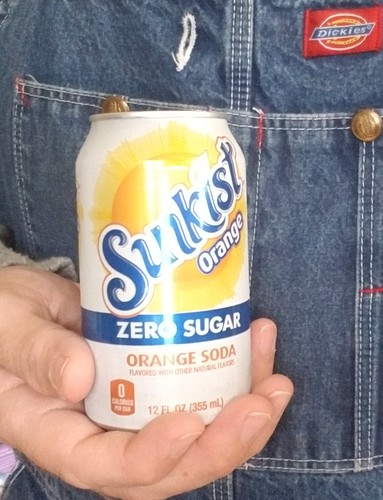
But now…orange soda is back on the menu! Behold!

Sunkist Zero

I saw this product at The Store a couple weeks back and tried it first in a two-liter bottle, in case I didn’t like it. And now, we are finishing our first twelve-pack.

The whole “Zero Sugar” thing is really something to behold the last few years. So-called “diet sodas” have been pretty dodgy for years, but now they’re really starting to get the flavors close to the real thing. Coke Zero is more Coke-like than any diet incarnation of the stuff ever, and Sunkist Zero is incredibly close to the sugar-laden original.

Not that artificial sweeteners are super for you either, so it’s not like I’m going to be indulging this stuff by the boatload either (my go-to these days for fizzy is sparkling water), but damn, am I happy to be able to enjoy orange soda again!

Share This Post

Of Arm Jabs and Soup Memories

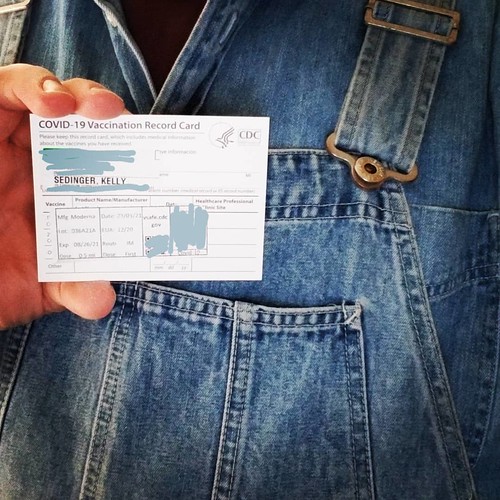
Now begins the last two-week wait! #VaccinationAchievementUnlocked #EffYouCovid

Yesterday I got my second injection of the Moderna COVID-19 vaccine, which means that in about two weeks, when my immune system has had time to do all the processing work it has to do, I’ll be fully vaccinated against this fecking pathogen. Get your vaccinations, folks. The sooner we all get it done, the sooner this thing can be pushed to the area of “annoying problem” and not “all-consuming threat”.

My experience was pretty mild, compared to most. The first shot left me with a sore shoulder, and it wasn’t even sore all the time, just when I moved it in certain ways or exerted it. It felt roughly like the soreness that follows a tetanus shot (my memory of which was pretty fresh, having received that particular booster back in January). I had heard that the second shot tended to provoke stronger reactions in people, ranging from more persistent shoulder soreness to the body enduring what is essentially a simulated bout of influenza for a day or two. 

Well, my shoulder did get more sore than last time. Last night, I could lift my left arm (where I got both shots) about this far before I got a nice stiff bolt of pain that made me wince:

OK, now my left arm (into which went The Vaccine) is getting sore, and my range of motion is less. Hmmm! #EffYouCovid #VaccinationAchievementUnlocked

I took today off from work (at work’s strong encouragement to do just that) just in case I had it rough. Luckily, I did not have it rough. The shoulder is still sore, though that is slowly fading, and as I write this I can lift my left arm without wincing, though not without a bit of pain. I didn’t suffer much by way of accompanying aches or pains, nor did I have any nausea or fever or other flu symptoms. What I did have can be described as a persistent fatigue that left me with not a great deal of enthusiasm for daily tasks. It was comparable to two feelings: one is the fatigue I feel two days later after a really bad night’s sleep. When I sleep really badly–say, only getting three hours of sleep in total–it doesn’t usually affect me much the next day, but the day after that is usually grim. If my sleep Sunday night into Monday is godawful, then I’ll get through Monday just fine, but Tuesday will be a brain-fog of a day, no matter how well I sleep Monday night into that Tuesday. That’s how it kind of feels today.

The other thing I’d compare this feeling to? A light hangover. Not a rip-snortin’ hangover where I want to wear sunglasses and massage my own temples all day someplace in the silence of a Buddhist monastery, but just that general sense, again, of brain-fog and lack of enthusiasm, focus, motivation, or anything like that.

As I write this, it’s mid-afternoon and that feeling is mostly gone, too. Yay!

Did I prepare for this whole ordeal at all? Well, a little. I made sure to sleep really well each day the last several nights, and yesterday I drank three cups of green tea and doubled up my daily doses of Vitamins C and D. I also doubled up my daily low-dose aspirin, but I did not take any ibuprofen or acetaminophen prior to the fact. I try to avoid those until I’m really hurting. Oh, and I drank more water than usual yesterday, and I generally am very good about staying hydrated.

I have no idea if those things helped, in all honesty, but here I am, coming out of the fog.

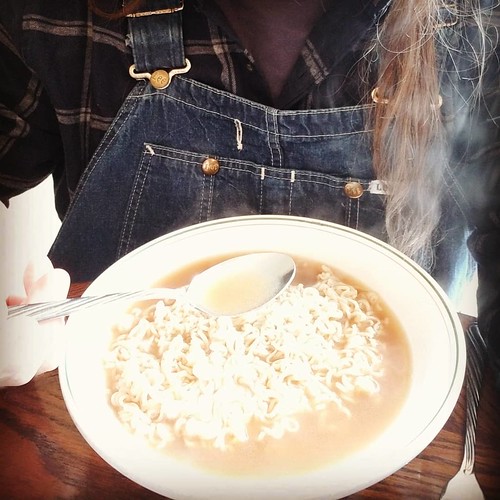
The feeling of a light hangover, though, had another effect: it hit my appetite in a big way. I expected this, too, so the other day I stocked up on my favorite salty soup of choice for such moments: Ramen noodles!

Post-vaccine ramen. It's what the body wanted. #yum #ramen

It’s funny how some people get through their Ramen-fed college years never wanting to touch Ramen again, while some, like me, never lose their taste for the stuff. I indulge my Ramen fondness relatively rarely (look at the sodium content on the label and you’ll see why), generally only having Ramen maybe three or four times in a year. But there’s just something about a really salty and hot soup that always helps me recover from the low-grade arse-kicking of a mild hangover.

And that brings me (in very long-winded fashion, I admit) to the “Soup Memories” part of the title of this post. The beef flavored Ramen was great! I’ve loved Ramen since I was very young, when my parents would serve it up with buttered rye crisp on the side. (And it had to be the rye crisp that came in big circles with a hole in the middle, from which you would break an uneven piece. The nice square stuff of today, in neat rectangular packages? I’m sorry, but it’s fine and it’s very not right.) And sometimes I’ll make chicken-flavored Ramen and add a fried egg to it. I was skeptical of that at first but then I tried it one day, and when you break the yolk into the soup, you get this wonderful creaminess that’s pretty great.

Yes, Ramen is good for the light hangover. But sadly, the greatest light hangover treatment in soup form is no longer available, because in 2010 the folks at Campbell’s discontinued it.

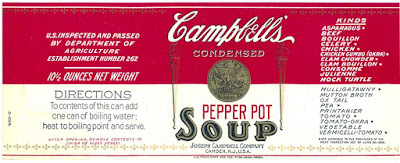
I’m talking about this:

Pepper Pot soup.

Ahhh, this stuff. Another flavor of my youth that’s likely gone forever, at least as I remember it. I should make my own sometime–recipes abound, you know!–and obviously, homemade will be better than some condensed canned soup. But, well…as Jeff Smith (I know, I know) told us many times, food and memory are inextricably bound together. I remember many a time, as a kid and later in college and beyond, opening the can and dumping the congealed contents into the sauce pan, adding the can of water, stirring the thing as it heated and the congealed contents…um…uncongealed.

Pepper Pot soup is a regional thing, in the Campbell’s incarnation based on a soup that was popular for many years in Philadelphia. As one of its main ingredients is beef tripe, I assume that it was basically a stew or soup that originally rose as a peasant dish whose main grace was using up bits of the cow that were generally last to be consumed. The local Philly lore has Pepper Pot soup having been a significant part of the diet that got General Washington’s soldiers through that winter at Valley Forge. Other food historians I’ve perused believe that Pepper Pot was the inevitable result of the mixing of cultures–including the slave cultures–in the original colonies. Note the branding in this old advertisement, with the tricorn-wearing men (I’m assuming women found Pepper Pot equally nourishing, but we couldn’t really advertise that back when, could we?):

What does it taste like? In the Campbell’s version, it was basically a beefy broth with some vegetables, little bits of tripe (usually cut very small, I didn’t even know what they were until many years into my regular eating of the stuff), a pleasing dose of salt, and a very pleasing–and warming–dose of pepper. It’s one of those soups that intensely satisfies, not just when you’re having soup because soup sounds good or because it’s one of the courses, but when you’re in that kind of place when your body is saying Give me SOUP.

Unfortunately, Pepper Pot soup’s fortunes have declined badly in the last twenty years:

By the late twentieth and early twenty-first centuries, Philadelphia pepper pot fell out of favor, although it continued to be made by home cooks. Many institutions that had served it as a staple dish, such as the Four Seasons Hotel and the Union League of Philadelphia, removed it from their menus.  Campbell’s and Old Original Bookbinder’s, a food division created by a restaurant of the same name in Philadelphia to sell packaged versions of their soups, condiments, and sauces, also stopped selling canned pepper pot by 2018.

This seems to me a pity. Food is memory, remember…and I’m going to have to figure out how to make it on my own, because I’m wanting to taste it again, and now it’s because I miss the flavor, and not because I’m getting hung over on any kind of regular basis!

Share This Post

Snack Time!

 Boy, the snack aisle at the grocery store is quite a place, isn’t it? I remember when there was a lot less variety down that aisle. I remember a time before every conceivable flavor of chip or cracker. I remember a time before Cool Ranch Doritos, when Ruffles were a new thing, and when Cheez Balls were the new miracle snack.

Of course, the drive for snack food innovation continues with new flavors of various salty snacks showing up pretty regularly! Some of these I try willingly, while others I…don’t. (I don’t care how many people tell me that Cappuccino Lay’s Potato Chips tasted good, when they were around; no way was I trying that shit.)

But here are a couple of recent samplings of mine:

Snacks (for the blog)

Pringles are nifty because they’re not quite a chip, right? They’re just different enough, in texture and in that saddle shape, to scratch the “crunchy and salty” itch in a way that regular potato chips don’t. And for years, there was only one flavor Pringles, but those quickly diversified. Nowadays there are a number of “standard” flavors that stick around, while other new flavors show up and usually disappear pretty quickly. One of these is out now: Rotisserie Chicken Pringles.

Are they good? Well, yes…in the sense that you can eat them without hating yourself. They do taste vaguely “chickenish”, as if the chips were seasoned with the flavoring packet from some chicken-flavored Ramen noodles. I don’t get that they’re particularly rotisserie chicken flavored, though. They’re edible and pleasing enough, but they’re certainly not memorable enough to turn to on a regular basis, for me. They’re a solid “OK, good enough.”

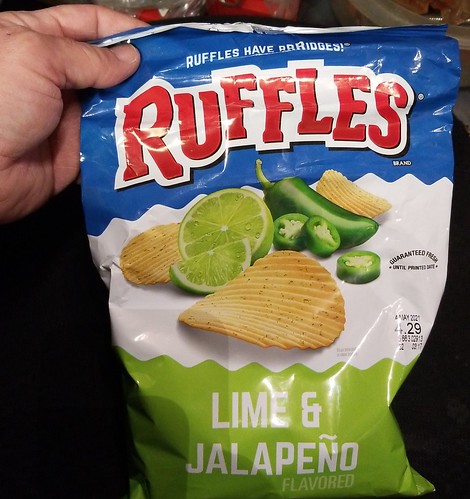
But then there are these:

Snacks (for the blog)

These…just don’t work. Not for me.

Lime and jalapeno should work, and they probably do work together, but the problem is the medium here. A potato chip by itself brings its own flavor to the party, and in that context, the lime and the jalapeno flavors just don’t go well with fried potato. As a result the chips taste constantly…off, as if the mouth can’t quite figure out what’s going on in the flavor department. Ruffles has a lot of terrific flavors out (try the Queso flavor! Those rock!), but this is a misfire.

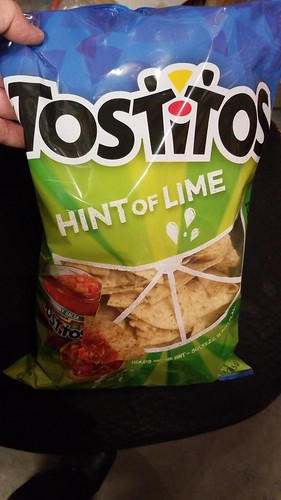
However, it’s not all bad in the lime department:

Snacks (for the blog)

Now, I suspect the lime-and-jalapeno combo would work in a tortilla chip, a corn chip, because there’s not as much strong flavor to work against the two “guest” flavors. There’s no jalapeno here, just lime, and like the package says, it’s not a strong dose of lime. The “Hint of Lime” is pretty accurate, so you get the crackle of the corn tortilla chip followed by the lime flavor that lives somewhere south of the salt, with the effect…well, let’s just say that when I get back to making margaritas, I’ll be enjoying them with these chips. These are terrific! My only complaint is that they are just a bit too salty. I’ll bet that lime flavor adds a nice accent to whatever salsa or picante sauce one uses as a dip. (I had them dry with my sandwich at lunch.)

So, what salty snacks are on your menu these days?

Share This Post

What to do with Wodka!

Hmmm. Cranberry wodka. What to do with wodka! #yum #vodka #candyisdandybutliquorisquicker

 For Christmas, a good friend gave me a bottle of cranberry vodka. This confused me, because my experiments with mixology have to date made very little use of vodka, which is not my favorite spirit, in all honesty. I’ve only even bought one bottle of vodka in my life! It’s a 375ml bottle of Smirnoff which I have had in the cupboard for several years. I only bought it because I wanted to taste a Vesper in the actual recipe invented by Mr. Bond (though in reality, you can’t even taste that anymore, because Kina Lillet no longer exists, but that’s a rabbit hole for another time).

This Cranberry vodka is quite lovely, though! Cranberry is a favorite flavor of mine, and this stuff tastes strongly of it. While I’m not about to drink this vodka straight, I will use it in the occasional mixed drink, because it is tasty. I may feel the need to look into other flavors; the brand is Deep Eddy, a distillery from Austin, TX.

For example!

Wait! I know what to do with the cranberry wodka! (And my pinkie is well out of the way, the angle makes it look like I'm about to do bodily damage) #yum #mixology #candyisdandybutliquorisquicker

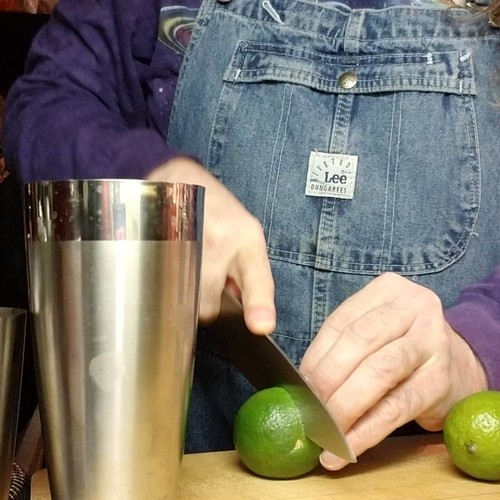
I mixed in my new Boston shaker cup the following:

Ice

1oz Cranberry vodka

1oz Orange liqueur

Juice of one lime

All this I shook up, and then strained into a glass with ice; then I topped off the glass with club soda and gave the whole kaboodle a stir. Here’s what all that looks like (videos have sound, beware!):

Mixing drinks!

Mixing drinks!

And, here’s the result!

My cranberry orange spritzer. Tasty and satisfying! See my IG stories on how to make it. #yum #mixology #vodka #CandyIsDandyButLiquorIsQuicker

I found this a delightfully sour and fizzy drink! It actually wasn’t that fizzy at all, since by the time I went to top it off with club soda, there was only room for about two ounces of it.

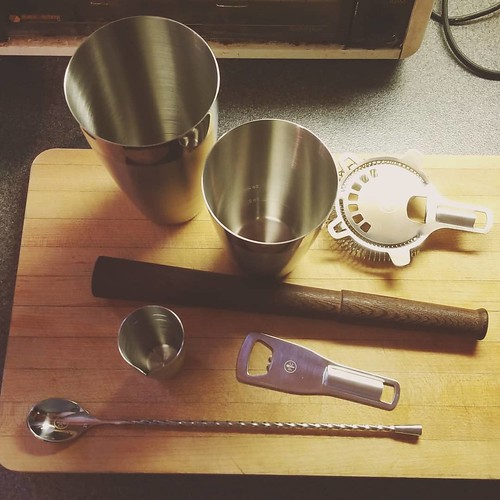
Oh, by the way! The Wife gave me a new bartending set for Christmas, after she noticed that my existing cocktail shakers were starting to get a bit worn out and dingy. I’ll make many a fine drink with this set (though I’ll need to grab another shaker, because one shaker is a bummer when I’m making drinks for two).

The Wife gifted me this Pampered Chef bartending set. Time to up my cocktail game! #yum #mixology #CandyIsDandyButLiquorIsQuicker

Share This Post

On Jeff Smith, problematic people, food, and memory


A favorite cookbook

 Back when I was in college, I decided that I needed to start learning to cook. One of the cornerstones of that effort was to buy all the cookbooks by Jeff Smith, also known by his PBS brand name “The Frugal Gourmet”, and read them cover to cover while also cooking quite a few of the recipes. I learned a hell of a lot about cooking in that way (“Hot wok, cold oil, foods won’t stick!), and while I think Smith’s notions about food and peacekeeping were a bit out there (one of his last cookbooks has a very odd passage in which he envisions Bill Clinton and Saddam Hussein cooking together), I very much agree with his insights about food and memory. There’s a reason why, when a beloved elder dies, a lot of times those left behind despair over being able to replicate their best dishes. “It’s good,” we say. “I’ve got it pretty close, but there was something she did that I can’t quite get my finger on.”

I still own most of Smith’s output to this day, and a few of his recipes are in my permanent rotation. I have never stopped reading them or even watching some of his shows which have shown up on YouTube, even though…

Sigh.

Smith, it turned out, was really not the kindly pastoral gentleman he portrayed on his shows. I don’t really want to get into that here, but suffice it to say that there were accusations of sexual improprieties in the late 90s that brought his career to a slamming, screeching halt. If you search around the Internet, you can find other testimonials about Smith that are, shall we say, less than flattering. He may have spent many years not even living with his wife (speculations as to why that may have been abound), and he seems to have been an unpleasant fixture in the Seattle food scene toward the end of his life. Again, I don’t want to get into that.

It all comes back as we have discussions in society today, quite repeatedly, about what we do when people we admire, especially the creative folks whose works have touched and shaped us, turn out to not only be very human, but very disappointingly human, at that. JK Rowling turns out to be transphobic to a deeply creepy degree. Isaac Asimov…well, rumors abounded about his conduct at science fiction conventions for years, and they don’t seem to have gone away despite his being dead for nearly thirty years. Marion Zimmer Bradley’s private life was appalling, and Orson Scott Card turns out to be deeply homophobic. Michael Jackson.

We all have to struggle with to what degree our artistic heroes were real people who committed acts ranging from missteps to simply awful deeds. I’ve known this for years, since I obsessively read about music history as a kid. My favorite composer, Hector Berlioz, was an addict and a manipulative stalker weirdo. Robert Schumann obsessively pursued a girl who today would be a minor and basically forced her to give up almost all of her own musical career outside of helping to perform and advance his works. (Clara Schumann was, by all accounts, an amazingly talented woman who might well have become a beloved composer in her own right, had husband Robert not dominated her so completely.) Richard Wagner? Well, as David Dubal writes in The Essential Canon of Classical Music, in reference to Wagner’s “Siegfried Idyll”, a gorgeous piece he wrote as a wedding gift for his wife, “That this man, capable of such emotion, was enraged at Bismarck for not burning Paris to the ground will always tantalize and disturb.”

So…back to Jeff Smith, among whose cookbooks is the one pictured above, a quite wonderful volume of Christmas recipes and ruminations about our modern Christmas. (Well, not quite our modern Christmas! This book is almost thirty years old.) Smith presents an entire Christmas menu, based on those present at the Nativity: dishes for Joseph, for Mary, for the Innkeeper (whom Smith believed has gotten kind of a bum rap over the years) and the tax collector. There are dishes for the Wise Men, for the angels, and even for the donkey (who gets “Straw and Hay”, which is now one of my best pasta dishes). The book has cookie recipes, recipes for mincemeat pie and two kinds of fruitcake–I want to like fruitcake but I can never get there!–and more. He finally presents several complete Christmas dinner menus…and the photographs throughout are wonderfully colorful, as well. There’s a reason I love this cookbook: it’s the kind of cookbook you can thumb through with pleasure, in addition to having good insights on food.

In the middle of the book comes this section, about Christmas traditions. This has been one of my favorite pieces of Christmas writing ever since I bought this book in the 90s, and if it is coming from someone who would later turn out to be quite a lot less than the sum of his parts, well…that’s frankly the case with most art, isn’t it? It’s up to us to decide how much these things bother us, and which things are our personal dealbreakers.

Our Family Christmas

From THE FRUGAL GOURMET CELEBRATES CHRISTMAS


Our family traditions came about in much the same way as did your family traditions…they just sort of happened.

Patty and I originally made a prime rib of beef for Christmas, and then the boys came along. Somehow Patty got into the roast goose routine, and we enjoyed that for years. As the boys grew, we began to celebrate one of the Christmas menus that follow, and then on Christmas Day I would prepare a full Norwegian smorgasbord with baked beans, potato salad, several different kinds of herring, luncheon meats, special breads, fish balls in cream sauce, cold salmon or lox, lefse, Christmas bread, and, of course, the leftover roast beef or goose from the night before. We still do that.

Last year I did a Swedish meal of pickled pork. The Paulina Market in Chicago makes a Swedish pickled fresh ham that is just terrific. So, now we all have a new favorite dinner. The boys side with the goose, Patty with the roast beef, and I go for the pickled ham. Now what do we do?

One year I suggested to Jason that we make some changes in our Christmas dinners. Try something new. He was quite young at the time, but his response meant that we had established some family traditions that he wanted to maintain. I was so touched by his insight that I wrote the following letter to him, a letter that was circulated by the Roman Catholic parish in Chicago. You will probably recognize your own family in this letter.

My dear Jason,

I probably came very close to violating the meaning of tradition when I suggested that we try something a bit different this year. You are happily bound up in memories of Christmases past, and I expect that I will hear you say, “Dad, can’t we have real dressing? I mean the old kind. After all, it is Christmas!”

You are right, son, it is Christmas. And on the day of the Mass, the feast of Christ, I should not go around breaking family traditions.

But I must consider anew the meaning of the Feast of the Christmas, and I think you and I should think about it together.

The term feast is very much involved with the meaning of memory. We feast because we remember certain events in our lives; sometimes wonderful events, sometimes painful events. That seems to be the way it has been with man- and womankind for a long time.

Christmas for me as a child was very different from our Christmas now. We would travel to greet my father’s family at his mother’s house, your great-grandmother, Nettie Smith. Oh how sad I feel that you did not know this tough old girl. She was a member of the state legislature and she was a left-winger from the start. But in the kitchen she was just terrible. She cooked turkey in the Old Testament style, burning the poor thing on the altar until smoke drifted up to heaven. Then, to the table it would come, though it was so dessicated, so dried out, so tasteless, that I could not understand why someone else in the family did not cook the bird instead. You know why they did not? Because it was job traditionally reserved for Gramma. To this day, when I eat dried-out turkey, I think of her…and how much I miss her.

Christmas morning in my family was wonderful. World War II was in the midst of every event, and candy and sugar were hard to find. One Yule morning my mother, your Grandma Smith, brought us to the table and presented us with marzipan candy shaped like eggs and bacon. My brother, Greg, sister, Judy, and I were amazed that Mom could find such things.

Some of our Christmas traditions are a bit strange, I will admit. But they are our traditions, our family. Each year we carefully unpack the papier-mache manger figures we made together when you and Channing were tiny children. And each year we spend precious time gluing the poor shepherd boy back together. Would it not be much more practical simply to go out and buy a new creche, a new king, a new Christ child? Ah, now, my boy, we are speaking of utter heresy, of violations against the meaning of our past…and I suppose therefore, our future.

A true feast actually has nothing to do with what you eat…but with what you remember. Many families in this nation have no traditions at all, few roots, and thus, few feasts. I am for feasting and celebrating in such a way that we will always remember we are a family. Sometimes I know that it is tough having me for a father, since I always want to add sherry to a gravy that you find perfectly in order already. Or I want to put mushrooms in a dressing, and you claim that they taste like dirt.

So, now, back to the kitchen. We have much to prepare before the star grows bright over the manger and you and I come to the creche, dazed by what we find, but carrying two gravies. One with mushrooms, and one without.

I love you,

Dad

Christmas is as much a time of memory as it is of anything else, and food is memory.

Share This Post

“Let’s go to The Roxy”

I may not remember the first place I ate a lot of my favorite foods, but I remember a lot of early favorites. Pizza? The ones I remember are Pizza Caboose in Hillsboro, OR and Rocky Rococo’s in La Crosse, WI. I have no clue at all when or where I tried my first cheeseburger, but it was probably McDonald’s or a chain in the northwest called Burgerville USA. I do, however, recall my first chicken wing (other than as part of a KFC bucket). It was this place:

That’s The Roxy, an old dive bar in Olean, NY.
The other day I was scrolling through a Facebook group I had found dedicated to old photos and memories of one of my hometowns, Olean, NY. It’s fascinating to look at the town’s history, even if I haven’t lived there in almost twenty years. Olean is a city in New York State’s “Southern Tier”, although it really isn’t much of a city anymore, as decades of population drain have taken their toll. While I grew up as a child in the town of Allegany, a smaller town just west of Olean, I eventually lived and worked in Olean when The Wife and I got married, and Olean was my home from 1997 to the end of 2000.

By the time my family and I moved to the Olean area in 1981, the region’s decline had begun, though maybe at that time it wasn’t quite obvious yet. Olean still had several factories and lots of shops and even its own shopping mall, though it was on the smallish side. There were three supermarkets and a well-regarded university, and there were a lot of bars. Lots of bars. I remember that a lot of those bars were not “possessively” named, meaning, a bunch weren’t named as a person’s name in the possessive. There was a place called Sullivan’s, and another dive bar called Buzzy’s, but mostly the bars in Olean as I recall were “The Something”. The Burton. The Village Inn. The Other Place. The Royal Ednor (not to be confused with The Royal). The Edgewood. The Birdcage. And, The Roxy.

As I scrolled through that Facebook group, suddenly I stopped dead because I saw that photo. The Roxy.

When I say that I ate my first chicken wing at The Roxy, it was my first chicken wing in the “split-wing” way, with the wings cut at the joints and the wing tips discarded, so what you end up with are a little drumstick and a “flat” (which is basically the forearm of the wing). I knew none of this wing-prep lore when we were preparing to move from Oregon to Western New York in 1981; all I knew was that my father said cryptic things about how we’d be eating chicken wings soon. My father actually lived in Olean on his own for one full semester in spring 1981, while my mother, sister, and I finished out the school year in Hillsboro, OR. So by the time we came along, my father already knew Olean pretty well, and he’d found this bar where I’d have my first chicken wings.

Now, I don’t really know how or why that first wing experience ended up happening at The Roxy. It didn’t make a whole lot of sense, really; we lived in Allegany, west of Olean, where The Roxy was on Olean’s East side. Now, in 1981, wings weren’t quite as ubiquitous as they are now, but still, lots of places had decent wings. Why that bar, all the way on Olean’s east side? No idea, then or now. But that place was pretty cool, and in all honesty, I do kind of miss it.

The Roxy had two rooms: a dining room to the right when you went in, and the bar on the left. It was a blue-collar type of joint, which makes sense since it was right across the street from one of the local factories (a tile factory, if I remember right). Sometimes we’d sit in the dining area, other times in the bar, and I think they had other food there–maybe they even had a menu!–but for me, The Roxy was all about the wings.

And yet…I would soon discover, when I tried wings at other places, that what The Roxy served weren’t actual “Buffalo” wings at all.

There are a great many ways to prepare chicken wings, but only one way to prepare Buffalo wings: They are fried unbreaded and then tossed in a sauce that is made of hot sauce and melted butter. To serve them, you dump them into a bowl or bucket or basket lined with wax paper. The Roxy’s wings were breaded, though, and they came with the sauce on the side, not smothered on the wings themselves. And they were arranged nicely on a plate, like wheel spokes, around the little paper ramekin that had the sauce in it. You dipped the wings in the sauce to taste as you went. I want to say that a regular order of wings had fifteen in it, but I might be misremembering on that point.

When I discovered actual Buffalo wings later that same summer, I actually didn’t like them as much as The Roxy’s. At some point we stopped going out all that far for wings; maybe the place changed ownership or even closed. The bartender was a crusty old woman with a three-packs-a-day voice who had a wicked sense of humor, as I recall. Good times!

I looked at Google Earth the other day to see if the building still existed. I knew that it stopped being The Roxy at some point in the 1980s, and as of the last time the Google Mobile rolled through there, at least the building itself was still standing. It’s a Hibernian Lodge now, though. I have no idea what the Hibernians are or what their thing is.

If anyone affiliated with The Roxy ever reads this, thanks for the wings! Oh, and for the pinball machine that gave out free games like candy. That was fun, too.

Share This Post

Not even a pandemic can stop summer!

True, the pandemic has put the kibosh on a lot of things we normally do this time of year: no trip to the Sterlink Renaissance Festival for us, nor will there be an Erie County Fair. But we still eat like it’s summer, though! Every year when the ripe tomatoes start showing up at the Farmers Market, it’s BLT time.

Since work I have: walked doggos, listened to 1/3 of #folklore, eaten this BLT, and quaffed this beer. #ahhhhh #yum #blt #beer
Sweet corn can’t be far behind!

Share This Post

You say tomato, I say….

Tastes change as we get older, don’t they? There are many foods I loved as a kid that I find myself kind of grossed-out by when I sample them as I get older (most of it mass-produced sweet shit, so this isn’t a bad thing). On the flip side, there are quite a few foods that I disliked in my younger years that I find myself coming to like a great deal. Many of these are vegetables, which is a good thing! I don’t see myself ever turning the corner on broccoli–that one will always be a bridge too far for me–but over the last ten to fifteen years I’ve taken more and more a liking to olives, mushrooms, and even asparagus! Preparation helps a lot: I’m not likely to ever like steamed asparagus much, but grilled asparagus, brushed with olive oil and dusted with kosher salt prior to grilling? That’s good stuff.

But today, I’m talking about the tomato.
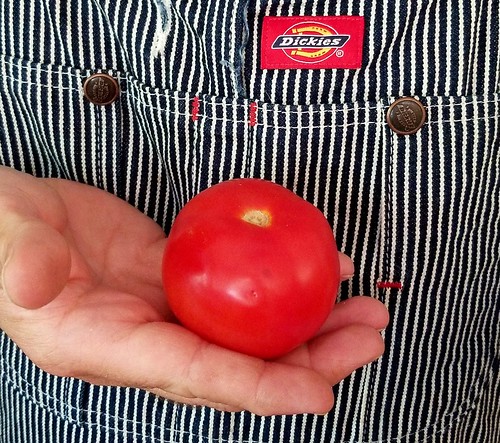
Tomato!
Like most people in this country, tomato-based stuff has always loomed large in my diet: pasta sauce, pizza sauce, and yes, ketchup. (I use ketchup less now than I once did, but I still like it on a burger and it’s my dip of choice for fried potatoes of all kinds.) But raw tomatoes? I was always a hard “Nope” on those. I remember getting frustrated with my parents when they’d take my sister and I out for pizza and then order raw tomato slices as one of the toppings. Whenever I went to Subway or Burger King, I always ordered my sub or Whopper with no tomatoes.
I’m not sure really when I started reversing course on this stuff, to be honest. It’s not a new development. At some point…I dunno, maybe I got a Whopper with the tomatoes left on and I didn’t feel like complaining and I just went with it. Or I tried the tomato-and-onion vinaigrette thing that comes as a side dish with the Chiavetta’s Barbecue Chicken dinner at the Erie County Fair and liked it. Or…well, I don’t know. Most likely The Wife, observing one of her family’s food traditions, decided on August to make BLTs for dinner, and I decided to just go ahead and try the tomato on the thing instead of just going with a BL, and discovered that it was actually good.
On reflection, it’s interesting to note how many of my food-opinion reversals have arisen because I didn’t want to be a pain in the ass to The Wife, who was being nice enough to make dinner. So, long story short, I’ve enjoyed raw tomatoes for a while now. (Although I haven’t tried raw slices on my pizza. Maybe I should!)
One thing I never tried before, because I didn’t know it was a thing, was the Tomato Sandwich. I’d never heard of such a thing until a week ago when I read this article on Food 52:

The tomato sandwich is, in my opinion, both under and over-appreciated, depending on the camp you fall into. Some just don’t appreciate the magic of a perfect tomato sandwich, while others, like me, think about it more often than is technically healthy. (I figure if fantasizing about tomato sandwiches is among the worst of my vices, I’m probably okay.) When tomato season is in full swing I tend to have a tomato sandwich for lunch at least three days a week. 

It’s nothing fancy, but over the years I tweaked until I came up with the tomato sandwich that best suits my taste: two pieces of whole grain toast spread with mayo and stuffed as generously as possible with slices of ripe tomato, plus some salt and coarsely ground black pepper.

I saw that linked on social media, read the article, and immediately thought, “I gotta try that.” As luck had it, I read that article last Saturday morning, before our first trip of the season to the Hamburg Farmers Market (opened a month later than usual due to the damnable COVID-19), and when I saw a vendor selling tomatoes, I bought a couple because I just had to try that sandwich. How simple a concept, how elegant a recipe! Toasted bread, mayo, tomato slices, salt, and pepper. Even though the tomatoes aren’t in season yet–I assume that Market vendor grew them in a greenhouse–I went full-speed ahead. I got the tomatoes home, sliced one on my mandoline, and assembled the sandwich.
Then I ate it so quickly I didn’t even think to get a picture of it until I was done and basking in the heavenly flavor.
So here is yesterday’s tomato sandwich. I had to make another one as soon as we got home again from the Farmers Market, this time having bought a quart of tomatoes.
Yet more food of recent days! I have discovered tomato sandwiches. Thick tomato slices, mayo, kosher salt, pepper, all on toasted wheat bread. I am now wondering if my favorite part of the BLT for all these years has actually NOT been the bacon. #yum #san
This sandwich is utter heaven. The salt and the pepper and the mayo combine with the juices of the tomato to make the most wonderful sauce for the toasted bread, and of course there’s the delightful coolness of the tomato slices themselves. After eating my second one of these in a week, I find myself wondering if in all the years of having BLTs each August during tomato season, my favorite part of the sandwich has actually not been the bacon after all.
All hail the mighty tomato!

Share This Post