There’s honestly not a great deal I can say about this work that hasn’t been said before and better. It’s one of the towering masterworks of all of music, and likely of all human art. The Seventh is that extraordinary. In this work you encounter the type of perfection that makes you marvel the notion that it emerged from a human mind at all.
Setting aside all that, Beethoven here crafts a work that seems to contain nearly every human emotion in its pages, with the gorgeous meditation that opens the work, the profound depth of the second movement, and the last two movements that abound in dance rhythms. Beethoven’s Seventh Symphony is one of those works of art to which I turn when I am feeling generally down about the human race. We have the capacity to do this, why not better?
My very favorite passage comes early in the first movement (3:30 in the first movement), and may well be the single finest transitional passage in all of classical music. The orchestra seems, just for a second or two, to be bogging down in bar after bar of dueling scales, when they all seem to get stuck on the same note, handing it back an forth between the flutes and the violins. A rhythm haltingly emerges…and then takes over as Beethoven slides into a melody of pure delight.
And amazing, he does it again, this time letting that same rhythm come boiling up and out of the orchestra’s depths (start at 7:30). Beethoven is so good at building up to something, isn’t he? You can always feel his energy gathering. There’s no mistaking with him, none at all, that something is coming.
Here’s the Seventh.
Is the Seventh Beethoven’s greatest symphony? Now that’s an interesting question. I discussed this once with someone on a Usenet group, and the case in the Seventh’s favor is extremely compelling. Next week, we’ll wrap up Beethoven with the other contender to the title of Greatest Beethoven Symphony.
And now, we come to the Colossus that overshadows pretty much the entire history of the symphony since he put his pen to paper: Ludwig van Beethoven, whose nine symphonies represent one of the greatest of all human artistic achievements. I’m not going to feature all nine in this space — we’ll just do four, over this and the next three weeks. And where else to start than Beethoven’s beginning, his Symphony No. 1 in C Major.
At this point, Beethoven is still very much the Good Little Classicist, still standing firmly in the tradition of Mozart and Haydn, which is why this symphony clocks in at a nice and respectable 25 minutes. You can already hear hints of the independent streak that will lead Beethoven in deeply original and fascinating directions, such as his substitution of a forceful scherzo for the usual minuet. He hasn’t quite started to quite push against the boundaries yet, but you can tell that the boundaries won’t hold him back. This genial work is where it starts.
Pay special attention to the opening of the fourth movement, which is one of my favorite moments in all of classical music. Beethoven has the orchestra flirt with the major scale, making the music sound almost tentative, as if the orchestra itself isn’t sure of what to do — and then they hit on one of Beethoven’s most effervescent melodies as all the confidence comes flooding back. It’s one of the most charming moments in music I know, and it stands against the usual stereotypical picture of Beethoven as the moody genius shaking his fist at the heavens.
A special word about the performances I will be using for the Beethoven portion of this feature: they are all taken from the complete cycle of Beethoven symphonies performed at the BBC Proms concerts in 2012, with Daniel Barenboim conducting the West-Eastern Divan Orchestra. This group is a youth orchestra comprised of students of Middle-Eastern background, and it was created not so much to promote peace as to demonstrate the kind of cooperative effort that is the true basis for peace. Maestro Barenboim has said of the orchestra:
The Divan is not a love story, and it is not a peace story. It has very flatteringly been described as a project for peace. It isn’t. It’s not going to bring peace, whether you play well or not so well. The Divan was conceived as a project against ignorance. A project against the fact that it is absolutely essential for people to get to know the other, to understand what the other thinks and feels, without necessarily agreeing with it. I’m not trying to convert the Arab members of the Divan to the Israeli point of view, and [I’m] not trying to convince the Israelis to the Arab point of view. But I want to – and unfortunately I am alone in this now that Edward [Edward Said, Barenboim’s partner in forming the orchestra] died a few years ago – …create a platform where the two sides can disagree and not resort to knives.
I don’t know to what degree an orchestra can help foster peace, but this is a wonderful orchestra. Their sound and musicianship is as professional as any I’ve heard. More on the orchestra’s background here.
Last week’s inaugural Symphony Saturday post featured one of Mozart’s youthful works. This week, we turn to what might be his greatest symphony, the Symphony No. 41 in C Major, K 551. Mozart died just three years after completing this work. Mozart’s death at the age of 35 is, perhaps, a canonical example of an artist dying young, but while the world was surely deprived many amazing works that went uncomposed after his passing, it surely cannot be said that Mozart did not fulfill his staggering potential. Indeed, the artistic heights he achieved in his last few years on Earth were so lofty that one wonders how he could possibly have continued growing had he lived.
The Symphony No. 41, sometimes subtitled the “Jupiter” symphony (a title not given the work by Mozart), is Mozart’s longest symphony, and technically, his most perfect. There isn’t a single note out of place in this entire work, and the whole thing builds so amazingly toward that great final movement, a wonderful classical fugue. Whenever I hear this symphony, I wonder, where could Mozart have possibly gone as an artist after this?
Here’s something new I think I’ll try doing: a weekly exploration of the world of the symphony.
In discussions of music I’ve had through the years, one topic that comes up a lot within classical afficionadoes is just what classifies a work as a “symphony” anyway. It’s generally thought of as a large-scale work for full orchestra — but then, there are symphonies for chamber orchestra, symphonies for winds, and the like. It’s generally thought of as a work in four movements — but then, you have symphonies by Sibelius with one movement, symphonies by Berlioz with five, a symphony by Schubert with two, and…so on and so on. It’s thought that the first movement of a symphony is supposed to follow the general requirements of “sonata-allegro” form, a requirement that is almost completely ignored by a bunch of symphonies I can name off the top of my head.
Some symphonies can be heard in their entirety in the time it takes me to shower. Others, though, last longer than half the time it takes to roast your Thanksgiving turkey. Symphonies are large-scale orchestral works — except for the ones that add chorus, or voices, or soloists. I had a guy complain once on one of the film music boards I frequented years ago that Howard Shore’s “Lord of the Rings Symphony” — the two-hour long program Shore arranged of his LOTR scores after the third film came out, which was performed all over the country — “isn’t a real symphony”. When I asked why, out came all the objections above, which I then followed with every counterexample I knew.
Point is, the “symphony”, as a concept, seems as flexible and changeable as the “poem” or “novel”. Ultimately, if the composer calls it a symphony, then, well, it’s a symphony. Artistic nomenclature doesn’t work like biological classification, no matter how much we all might wish it did. Just ask any fantasy or science fiction fans to define the genres, and you’ll see what I mean.
So anyway, we’ll start with one of the short ones, from fairly early on in the period when the “symphony” started to settle into something of a regular form. This is the Symphony No. 25 by Mozart, in G minor. It’s one of only two symphonies he wrote in a minor key (the other being the magnificent No. 40, also in G minor). Mozart was only 17 years old when he wrote this work, which is famous for its opening bars (used as opening credits music for the film Amadeus), but is also loaded with typical Mozartean confidence, charm, and his restrained but very clear drama.
Here we have a typical four-movement structure, with the opening movement in sonata-allegro form, followed by a slow movement, a minuet movement, and closing out with a forceful allegro finale. It’s as good a starting point to the world of the symphony as I can think of. To my ears, this work always sounds surprising and fresh, no matter how many times I hear it; those opening syncopations and Mozart’s way of alternating between moments of high drama and lingering lyricism always captivate. Enjoy!
Next Saturday we’ll flash forward in Mozart’s life to the very end.
The other night, The Wife and I enjoyed a too-infrequent opportunity to attend a performance of the Buffalo Philharmonic Orchestra. We count going to the BPO as one of our favorite things about living in this region, and it’s a shame that we haven’t been able to attend in a couple of years. But the stars aligned, in the form of a marketing person with the orchestra offering tickets in exchange for a blog post. So here’s the blog post!
Kleinhans Music Hall is one of Buffalo’s most iconic buildings, and it really stands apart from just about every other place in the area. There’s nothing else like it. Kleinhans soars with curves that invite and pull you in. I always feel that there’s something almost femininely seductive about Kleinhans. The place radiates warmth, and the sense that it exists solely to enshrine something beautiful.
The beautiful something Kleinhans enshrines is, of course, the BPO itself. The orchestra’s sound is lush and luxurious. Sonically, the orchestra seems to me – if I might draw what may be a very bad metaphor – rather like dark chocolate, deeply rich and complex, built on a foundational bass that rises up and through all the other voices, into the sopranos of the violins. The orchestra’s sound is particularly suited to the larger-scale orchestral works of the late Romantic period and beyond, which comprised the main portion of the program.
Attending an orchestral concert in person is always thrilling, and there are no aspects of it that I don’t enjoy immensely, even the pre-concert warming-up by the musicians, during which the entire orchestra gradually filters onto the stage. In this way you get to hear tiny “previews” of the music to come as the musicians riff on portions of the scores that they either like to play a lot (or, perhaps, have slight difficulty with), and the entire room fills with more and more sound as the musicians arrive. It’s also lovely to watch the camaraderie amongst the BPO members; hands are shaken, shoulders are slapped, grins are exchanged, and laughter is heard. There’s always a keen sense that these aren’t just professionals doing a job, but friends coming together to work their magic.
The concert led off with Georges Enescu’s Romanian Rhapsody #1, which long-time readers may recall as one of my very favorite classical works ever. The Rhapsody is little more than a collection of folk tunes and drinking songs, colored by a Gypsy-feel; it’s a work that contrasts lyrical song with rhythmic dance, and Maestro JoAnn Falletta conducted the work with all the vigor I expected. In truth, I was given a choice of concerts to attend, and this work’s presence on the program led me to choose this one. (Last week was Vivaldi’s The Four Seasons. That was not going to happen.)
The Eastern European feel of the program continued with the next two works, both composed by Hungarian composer Bela Bartok. Now, Bartok is one of the big “gaping holes” in my personal musical knowledge. Fact is, beyond the fact that he was Hungarian, I know nothing about Bartok much at all, and I have heard very little of his music – his famous Concerto for Orchestra, to name one. I’ve also heard several of the pieces from his Mikrokosmos for solo piano, mainly because that work was one of the prime fascinations of one of my college professors, back in the day. Here we had two works: a two-movement piece called Two Portraits (apparently written in the aftermath of a failed love affair), and a twenty-minute tone poem called Kossuth (inspired by the life of a Hungarian revolutionary and folk-hero).
For me, these works were the highlight of the program. I honestly don’t know of any real reason why the music of Bartok has evaded me; certainly I haven’t made any particular conscious decision to avoid Bartok. Somehow my own musical explorations have never led to him, though, and on the basis of these two dramatic and emotional works, I see that this is something I should address. Bartok does not wear his lyricism on his sleeve, but he does infuse his work with a great deal of drama, heightening the tension at key points in his scores. I’m reminded of the close of the first of the Two Portraits, a slow work featuring solo violin and the orchestra. At the end, the soloist soars to a pianissimo leading tone, almost refusing to finally settle into the resolving tonic, before ultimately doing so. The music felt like a sigh.
Kossuth, the tone poem about the revolutionary leader, is full of military clangor and sounds of march and battle. As the revolution itself – in 1848 – was unsuccessful, the work ends on a solemn tone. But this was nevertheless a sharply dramatic work that put the entire orchestra on display, particularly the low brass. As always, the orchestra’s lower registers are always powerful and sonorous.
After the intermission, it was time for a complete change of pace, and I must admit that I found this programming a bit odd. After an hour of nationalistic music from Eastern Europe, our attentions turn to…Ludwig van Beethoven. This change in mood, from complex post-Romantic orchestral writing to pure Classicism, didn’t really work for me – especially since the work in question, the Piano Concerto #2 (which, as the program notes indicate, is actually the first piano concerto Beethoven composed), springs from his early years, when he was still in the process of shaking off his Mozartean roots. I suppose a case can be made that the Beethoven is there to contrast with the earlier music, but in all honesty, I so enjoyed the mood of the program’s first portion that to step back into classical music’s mainest of mainstreams felt…I don’t know. Safe, perhaps. I don’t want to sound too disappointed here — Beethoven is Beethoven, after all, even if it’s from his generally less-familiar-to-casual-audiences earlier period, before he was the Beethoven of lore, the deaf composer defiantly shaking his fist at the heavens even as he sets Schiller’s Ode to Joy — but for me, the mood of this concerto clashed with the mood of the earlier works. Perhaps a Shostakovich concerto, perhaps?
Of course, the concerto was played wonderfully. The soloist was pianist Simone Dinnerstein, whose touch in this elegant concerto (yes, Beethoven could be elegant, mainly in his youth) was also elegant, classical, and restrained. I love watching pianists perform, with all their different mannerisms and ways of physically approaching the music. Vladimir Horowitz, for example, barely moved at all, and I’ve seen other pianists who rock and sway back and forth, and who approach the louder and more raucous parts of the scores with percussive force. Not Ms. Dinnerstein, whose motions were supple and caress-like, as though she was enticing the keyboard to sound rather than playing it. Even in the larger passages, she never seems to dominate the instrument, but exist in a kind of partnership with it. I found her absolutely fascinating to watch, as well as hear. And JoAnn Falletta’s accompaniment was able and well-considered; at no point did the orchestra overpower the soloist, and instead the music formed the kind of partnership one hopes for in a concerted work.
Ms. Dinnerstein did play a short encore afterwards, in acknowledgment of her standing ovation. I have no idea what the piece was, but it was perfectly offered: a short, melodic, bravura piece that put her considerable technical skills on display.
And with that, the evening was over. Sigh.
A few random notes:
:: As a former trumpet player, I wanted to hear that section more. There are places in the Enescu when I think they can be brought forward, but I’m assuming that Maestro Falletta prefers her trumpets on the more restrained side of the ledger. Bummer, that.
:: The BPO’s woodwinds play with amazing precision, especially in ensemble passages that put them on display. We’re talking “Swiss clock” precision here.
:: In the “watching musicians” department, concertmaster Michael Ludwig has a way of leaning his entire body into what he’s playing at key moments. Watching a great musician at work is really one of life’s better pleasures.
:: College flashback: I used to be one of the guys responsible for wheeling the piano out onto the stage, and back again, during concerts. I always feel a bit of brotherhood with those fellows. I wonder if they ever find themselves suddenly gripped with the fear that they’ve wheeled the old Steinway too close to the edge….
:: Maestro Falletta’s blouse had a glittered collar, all the way around the back. She was literally sparkling the entire time.
:: The orchestra wore black and white. Maestro Falletta wore black. The featured soloist, however – Ms. Dinnerstein – wore a stunning, brilliant gown of red and purple.
:: More musician-watching: Ms. Dinnerstein has a habit of re-tucking her hair behind her ears after each passage she plays.
:: More musician-watching: Looking at the double bass players, I am secure in my conviction that my daughter’s height was a prime factor in her fourth grade music teacher’s strong suggestion that she play the bass. Goodness, those fellows are tall.
:: During the intermission, with his work done for the night, the tubist remained on stage to noodle about some of his passages in Kossuth. I wonder if he really liked playing them and knew that this work could very well never turn up on a program he performs again.
:: My opinion about the Beethoven not quite fitting the earlier part of the program, which I loved? Not shared by the elderly folks seated behind me! As they returned to their seats for the Beethoven, one said, “Now the good part!” Another agreed: “I might have fallen asleep during that last thing.” Too modern for their ears? Really? Kossuth was written in 1903!
:: Driving home: Downtown Buffalo is still way too dark. But that’s for another post.
In short, ’twas a wonderful night with the BPO. May there be many more to come!
This weekend sees the departure of my church’s youth director, a truly amazing and wonderful woman named Nicole, who has been there for ten years…spanning just about the entirety, thus far, of my family’s association with that church. The Wife and The Daughter started going there in 2003 shortly after we moved here from our nine-month experiment with living in Syracuse; I attended sporadically until after Little Quinn was born, when…well, I felt a need then.
Anyhow, Nicole has played a part for all that time, and now, her own life is taking her to other shores, as life tends to do. Leavetaking is never easy, even it comes on the cusp of a change for which we have long wished. Dougie Maclean’s song “Caledonia” speaks to this sentiment, and the various things that homesickness can bring to our hearts. You hear it in his words and in the wonderful melody, with its rises and falls; he knows that he is returning home, but even so, the farewells to those he knows wherever he is right now will be sad in themselves.
Oops…how on Earth did I completely forget about last week’s installment? It just totally flew out of my mind, alas.
I’ve been listening a bit this week to John Williams’s amazing score to Close Encounters of the Third Kind, the other classic score he wrote for a sci-fi film released in 1977. (If you don’t know by now what the other one was, I can’t help you.) Williams’s CE3K music is quite different, as it is mostly by turns either atonal, or haunting, or militaristic during the “Government agency” scenes. Only gradually does a lyricism emerge from the score, becoming stronger and stronger, beginning really with the introduction of the famous five-note “Communication with the aliens” theme. Gradually Williams stitches all of this together into an amazing tapestry of emotion that is one of his more overwhelming efforts.
This is a well-produced suite of tracks from the film, edited together very convincingly into a pretty nifty listening experience.
A few annotations:
0:01: The score opens with the swirling music that plays as the teevee reports of the disaster at Devil’s Tower appear, leading Roy Neary and Jillian Guiler to separately realize that their visions of some strange mountain are of a very real place.
1:30: Roy and Jillian drive cross-country into the Wyoming back woods to try and get closer to Devil’s Tower.
2:12: Roy and Jillian see Devil’s Tower, in person, for the first time. “I can’t believe it’s real!”
What follows is some suspenseful music as they continue driving into the back woods. At about 4:15, they drive past four ‘dead’ cows. Now they’re taken by the military and processed, with Neary being questioned by Lacombe and Loughlin.
6:40: The ‘conversation’ between the electronic music synthesizer and the mother ship.
10:52: The terribly sad scene where Roy thinks he’s going insane. “This means something…this is important.” (The subtext with Roy’s family is awfully troubling, really. His wife is completely justified in thinking that he’s utterly lost it, but of course, he hasn’t. Now, it’s never established at the end of the film how long he’s going to be off with the aliens, so I don’t completely buy into the notion that he’s ditching his family forever. But what does poor Ronnie Neary think when she reads the next day’s newspaper?)
13:25: The ‘returnees’ begin emerging from the Mother Ship, abductees who have been missing, in some cases, for decades (the pilots of Flight 19). Among them is little Barry Guiler, who is reunited with Jillian at the 15:14 mark.
15:35: Back to the beginning of the film. The mysterious crescendo ending in a smash as we open in the deserts of Mexico.
16:00: And back to the film’s finale, as the ETs come down from the Mother Ship and begin interacting with the people gathered at the Devil’s Tower landing site. Roy Neary is taken away to be prepared to join the astronauts who are being allowed to go. Note “When You Wish Upon a Star” at 17:03.
17:41: The ETs choose Roy Neary. More “When You Wish Upon a Star”. Neary looks back; Lacombe urges him to go. He meets Jillian’s eye, and then goes up on board.
19:00: The main ET greets Lacombe; they exchange the hand signals at 20:20. Here Williams starts letting the “Alien Communication” theme take over; where it was strange and haunting before, now it’s plaintive and beautiful.
21:05: All the aliens go back on board. The music begins to swirl as the Mother Ship prepares to depart. We arrive on a gorgeous chord of resolution that holds as little Barry Guiler says, ever so perfectly, “Bye.”
22:17: Oh, wow. End titles over what might be the most perfectly gorgeous finale of John Williams’s career. When he lets that Alien Communication theme peal forth, complete with bells, it is one of the greatest moments in the history of movie music.
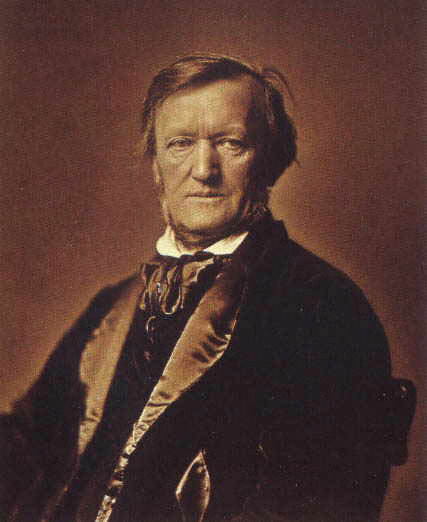
The overture to Tannhauser, my favorite of Wagner’s overtures. There’s a sense of epic adventure and emotion here that amazes me every time I hear it.
From Lohengrin — my favorite Wagner opera — the Prelude to Act I and “Elsa’s Procession to the Cathedral”. Wagner’s reputation is often one of bombast and thick, dense orchestration. This music is as delicate as anything.
The overture to Die Meistersinger von Nurnberg. Wagner’s other main reputation is one of unrelenting seriousness — but this is as sunny as anything you’ll hear by anyone else.
The Prelude and Liebestod from Tristan und Isolde. The emotional payoff here is one of the most staggering I know in all of music, anywhere, in any genre.
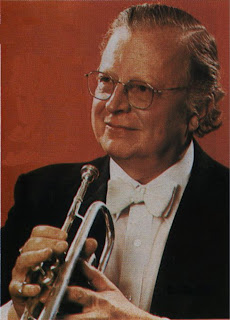
God-in-Heaven, a lot of people have died lately. But this one is the one that hits me in the heart. Adolph Herseth is dead. Herseth was the principal trumpet player for the Chicago Symphony Orchestra, for a career that spanned nearly fifty years.
When you’re a young musician and you become the slightest bit serious about your musical endeavors, you start to learn the names of those who are really, really good at your instrument. It’s not at all unlike…well, you know, it’s exactly like how young athletes in school idolize the best in their sport. The school’s star baseball player wants to be Howard Johnson or Doc Gooden. The star football player wants to be Marino or Montana or Bruce Smith. (I’m using names from when I was young, obviously.)
Well, the same thing happens for musical kids, too. Flute players hear about Galway or Rampal. Clarinetists idolize Richard Stoltzman. Percussionists? Well, if they’re jazz players, they dream of being the next Lionel Hampton, maybe. This is totally natural.
I remember one day, when we in the Allegany Senior Jazz Band were on one of our band trips for a competition, to Binghamton or Syracuse or some such place. We had already had our morning performance and were due to come back in the afternoon to play again, which gave us some free time for lunch, so we ended up at some local burger joint, where conversation turned, as it so often does for young trumpet players, to who we are idolizing now. Wynton Marsalis’s name came up, obviously, especially then, because this was the late 1980s, when Marsalis’s musical star was just starting to really shine. And Doc Severensen. Maurice Andre. Even Chuck Mangione’s name came up (a flugelhorn is just a trumpet with a larger bell and bore, for a darker, mellower sound).
I was the only one to mention Adolph Herseth.
I’m pretty sure that none of them had any idea who Herseth was, and that was fine. Herseth wasn’t a soloist, after all – he was a member of a symphony orchestra. But my tastes always ran to the orchestral; my attitude was always that the orchestra itself was the ultimate instrument (an attitude I likely acquired in the course of my hero-worship of Hector Berlioz). But I was still a trumpet player, too, and I had to have a narrower focus at times. Hence, Mr. Herseth.
I still remember when I first heard of him. Not the date or time, actually, but the circumstance: I was spending a study hall not in the actual study hall but practicing in the band room one day during school, and I spotted a stack of old magazines. There’s a magazine for band and orchestra teachers called Instrumentalist, and we had a bunch of these things lying there. I thumbed through the stack and pilfered out a bunch that had articles I wanted to read – a profile of a conductor here, a composer there…and on the cover of one, a guy in the standard orchestral uniform of tux with white tie, holding a trumpet. The caption identified the man as Adolph Herseth. Inside was an absolutely fascinating interview with the man, and it just…informed everything I would ever want to do with the trumpet.
I’ve long since lost that issue of that magazine (although maybe it’s still floating around some of the music-related ephemera at my parents’ house), but I remember a great deal from it, even though I haven’t read it in many years. Specifically, two points stuck with me. First, Herseth’s amusement with the tendency of American brass players to worry about mechanics to an odd degree. I always saw this with my brass brethren: worrying about the embouchure. (The embouchure is the group of muscles, mostly around your lips and jaw but also including your neck and even your upper arm, that you use to produce sound in a wind instrument.) Brass players, in my experience, tend to spend a lot of time thinking about their embouchures: how to properly place the instrument upon the lips. How to angle the mouthpiece for optimum pitch, range, and endurance. How to develop the muscles properly. How to, how to, how to…but Herseth found a lot of that plainly ridiculous, citing Maurice Andre who asked him, “Why do Americans worry so much about their lips? Why don’t you just pick it up and play?” Herseth agreed, and I’ve come to think of that as kind of a Chicago way of thinking. You just show up and do your job, and you do it well because it’s your job. Herseth’s attitude toward trumpet playing doesn’t strike me as being all that different from Roger Ebert’s approach to writing movie reviews, or Mike Royko’s approach to writing columns.
That sense of practicality served Herseth well when, early in his career, he was involved in a really bad car accident that put his face into the steering wheel, smashing his jaw and mouth terribly. After his recovery he literally had to relearn how to play, moving the trumpet back and forth to accommodate his dead nerves and two dead teeth, until he found a spot where it worked, and then he practiced his way right back to where he’d been to start with. I tend to have the most respect for people who take what they’re given and just say, “OK, let me figure out how to make this work.”
Second was Herseth’s comparison of the trumpet to the human voice. He openly referred to the voice as the primary and greatest instrument, and insisted that the job of the instrumentalist is to approach the quality of the human voice as closely as possible. This struck the young musician in me as very odd, but the more I thought about it, the more correct I thought he was. Herseth said that the greatest singers, the greatest musicians, were the ones who told a story in their music, and that he always wanted to be able to do that. That leads into this wonderful NPR feature, on the occasion of Herseth’s final concert with the CSO:
I love how he indicates that he never wanted a solo career, finding far greater musical satisfaction in the life of the orchestral musician. I always agreed with this, finding no greater musical rush than being one voice in this giant, unwieldy instrument that is the orchestra. Herseth refers to being able to get immense musical satisfaction out of so simple a passage as a simple, three-note descending figure in the Brahms Symphony No. 1. I never played that symphony (to my regret, as it’s one of my very favorite symphonies), but I did play the Strauss waltz On the Beautiful Blue Danube, toward the end of which is one of my very favorite bits in all music. The trumpet simply sounds a major arpeggio, three times. But when I played that piece as a freshman in college, I was so thrilled to see it on the program, because I knew that I got to sing those three slow arpeggios with my trumpet.
There’s a terrific book, long out-of-print, called Season with Solti by William Barry Furlong, which recounts a single season of the the Chicago Symphony in grand behind-the-scenes fashion, profiling many of the musicians as they go through an entire year in the life of a great American orchestra. I suppose a lot of the book’s details of orchestral life are well out-of-date, given that it was written in 1974. But there’s a good sense in which musicians are musicians. Today’s trumpet players still have to confront that horribly exposed passage in Strauss’s Also Sprach Zarathustra, or Bach’s Brandenburg Concerto No. 2, or the awkward syncopated entrance in one of the Schumann symphonies (which Herseth himself screwed up one night, in concert, prompting him to approach the infamously-tyrannical conductor Fritz Reiner afterwards to apologize for ‘conduct unbecoming the principal trumpet player of the Chicago Symphony Orchestra’).
Here is part of the section from the book on Bud Herseth.
Just as scrupulous – but far different – in his practice habits is Adolph “Bud” Herseth, the first trumpet player. “I practice every day,” he says. But not the same amount every day. It’s three hours on days when the work with the orchestra is light; it’s one and a half hours when it’s heavy. He also paces the practices to the style of music that’s being played in the Hall – by doing the opposite. When the week’s work involves ‘heavy’ music – “Mahler, Bruckner, Strauss, Wagner” – he spends his practice time on the light, highly refined works. When the week’s program is light, he turns to the heavier works. “I just try to balance it out.”
This he works on his articulation – in opposition. In weeks of work on pieces demanding heavy, almost percussive, articulation, he looks for “soft” works to practice on, so that he’s always in shape for the music that’s coming up. “I sometimes have to remind myself that, if we’ve played several weeks of ‘hard’ concerts – very aggressive, very hard playing – you tend to fall into the habit of using your articulation, your tongue, in a forceful way. And then you are playing nothing but delicate little things, like Mozart or something like that the next week.” So his practice is not always aimed at what the work of the week is, but at what it is not. For he’ll get seven and one-half to ten hours of rehearsal on the work of the week at Orchestra Hall, and he feels he needs to use his private practice time to balance it all out.
Nor does he practice on just one trumpet. At some point every week he’ll practice with smaller trumpets. He’s got a total of thirty-four different trumpets at home, most of them experimental in one form or another. (“We try a lot of different things – different shapes of the bell, different bore sizes, different tapers in the lead pipe – any changes that might make a big difference in the quality of sound in the instrument and in the gradation of volume that is available.”) In particular, he’ll work intensely in the extremely high ranges of the instruments. “Well beyond the range where I play,” he says. “I practice so that the high C’s are easy to reach – once you’ve played enough above them, you know that you can cope with them.”
He augments all this quite religiously with a program of exercise patterened after the Canadian Air Force system. He got started on it as a way to avoid a recurrence of an attack of sciatica nine or ten years ago, and he continues it as a way of maintaining his endurance on the trumpet. “The trumpet is physically the most strenuous instrument in the orchestra,” he says. “That is one reason why the trumpeters do not play as continuously as the violins, for instance. The violins’ type of strenuous work comes from the continuity with which they have to play. But their actual effort is nothing – bar for bar – compared to playing the high registers in the trumpet.”
The rewards of this labor are many and varied.
Some of them come from particular performances. A season or so ago, Herseth was asked by Solti to play Bach’s Brandenburg Concerto in F Major, no. 2. That, he says, “is the hardest single piece in the repertoire for the first trumpet. That is the most demanding of all. Nothing – nothing can be compared to the Brandenburg.” For one thing, the range is extremely high, so high that many orchestras do not give it to the trumpet to play. Instead they’ll turn to the soprano saxophone to take the trumpet part; in fact, the Chicago Symphony often had it played by an E-flat clarinet in the days before Herseth took over the first trumpet’s chair. Another problem is in the articulation. “Not only do you have to play some phrases hard, but you have to remember to play select phrases lightly because you are in a concert-type group, trying to balance with a flute, fiddle, and oboe and you do not want to be too predominant.”
He was so stunningly successful at it that Solti asked him to repeat the last movement as an encore, in response to the storm of applause that the performance arouses. “I don’t remember any other time that we did an encore on a Thursday night performance,” he says – and he’s been in the orchestra for twenty-five years. Solti himself was so moved by the work that he wanted to hear it again. (“He said to me, ‘Can you do the last movement again?’ And I said, ‘Well, let’s find out.'”) He did it again, to new and thunderous applause – and one suspects that Solti was barely restrained from doing it once more. Certainly the audience wanted it.
…
The Curtis Institute never answered his letter [of application to study music]. Juilliard and Eastman put him off for a year. But the New England Conservatory said they’d admit him at the next semester, in January 1946. He started his studies there are was still immersed in them – spending his free time hanging around the Boston Symphony Orchestra – when he got a telegram telling him that Maestro Artur Rodzinski would be pleased to audition him in his Fifth Avenue apartment in New York City. Herseth knew that Rodzinski was music director of the Chicago Symphony, but he’d never given much thought to playing in a symphony. He just figured that Rodzinski was between appearances in Chicago and was looking around for some reserves, perhaps “someone to play down at the end of the section.” He adds, “I did not know how he got my name or anything else.”
He went to New York and auditioned in Rodzinski’s apartment for an hour and a half. When it was over, Rodzinski congratulated Herseth: “You are the new first trumpet player for the Chicago Symphony.” Herseth was astounded. “I about went through the floor,” he says. But he wasn’t inclined to turn the job down.
Subsequently he discovered that the job had been offered to the first trumpet player of the Boston Symphony. He’d turned it down but, having heard Herseth play, he recommended him for the job. The irony was that Rodzinski left the Chicago Symphony after that and Herseth never played under him. “I often joke that they fired him as soon as they learned he’d hired me” – a twenty-four year-old who hadn’t finished his musical studies, as the first trumpet in the Chicago Symphony.
One final personal note: in my junior year of college, my last with the Concert Band, the major work on our spring concert program – the program we took on our annual tour – was a transcription, and quite a good one at that, of the first movement of Mahler’s Symphony No. 5. This symphony begins with a funeral march that in turn opens with a solo trumpet, and that trumpet part comes and goes throughout the entire movement. It’s not the most technical of parts, but it’s tremendously difficult, musically: you, the trumpet player, are setting the tone for the work. If you don’t sing that part and sing it just right, the entire piece just doesn’t get off the ground. For inspiration, I went out and bought a CD of the Symphony: Solti conducting the CSO, with Adolph Herseth playing, obviously. I didn’t try to consciously emulate Herseth’s performance in mine, but I tried to sing it as well as he did. I don’t know how successful I was, but I like to think I got part of it right.
Here is the Chicago Symphony Orchestra, with Adolph “Bud” Herseth at principal trumpet, conducted by Daniel Barenboim, in Mahler’s Symphony No. 5.
Obviously, as Robert Frost wrote, way leads on to way, and music wasn’t my destiny. I didn’t become Bud Herseth, but who knows – maybe I’m approaching writing in some of the same way he approached music. I hope I am. Music is still an extremely central part of my creative life, and I’ve always been of the belief that I’d rather lose my vision than my hearing. I do know this, too: one’s life need not track a path identical to that of one’s heroes in order for that relationship to bear fruit.
Farewell, Maestro Herseth! May yours be one of the trumpets that heralds the Ending of the World!