A very public thank you….
…to Roger, who sent me a copy of the Paul Simon album Graceland, which I have never heard. I look forward to listening to it, and hope to do so later this week or this coming weekend. Thanks, Roger! I can’t wait!
Share This Post
The family that fiddles together….
I’ve been forgetting to link this wonderful Mary Kunz Goldman article from the Buffalo News about the Buffalo Philharmonic Orchestra’s newest member of the violin section, but I forget no more!
An audition with the Buffalo Philharmonic Orchestra is always dramatic. But the recent audition the Philharmonic held for a first violinist was more than dramatic. It was historic.
The final round featured only a single anonymous candidate, who played behind a screen, as protocol dictates, while a committee listened closely.
At last, the candidate was approved and could step from behind the screen.
The audition committee gasped.
The mystery violinist was Megan Prokes, the 28-year-old daughter of longtime BPO violinist Robert Prokes. Hired by the BPO’s great former music director Julius Rudel, Robert Prokes recently celebrated 30 years with the orchestra.
Read the whole thing. It’s a lovely story of music in a family.
UPDATE: Wow, talk about timing — I link the original story and Goldman provides an update, on a few other family pairings in the history of the orchestra.
Share This Post
Last Dance
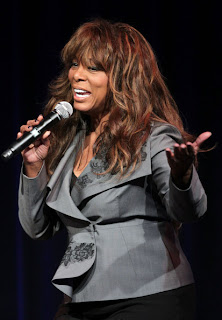
Donna Summer was my Whitney Houston.
I never realized that, until earlier today, when I went outside toward the end of my work day for a last brief break. I pulled out my phone, and before I even realized I was doing it, brought up “Last Dance” on it. And then I stood there, listening to that great disco song, for all eight minutes of its long version. It was a gorgeously sunny day, and there in the cool shade I listened to a song that I’ve loved since I was seven or eight years old, over the tiny speakers on my phone. The sound wasn’t very good, of course. The phone’s not designed for that. It sounds nice as a portable music player over earphones, but the speakers on the phone don’t produce any bass to speak of. It did not do Ms. Summer justice.
And she still sounded utterly, utterly astounding.
Because of my unusual relationship with pop music, I never owned a recording of Donna Summer’s, aside from “Last Dance”, until only just in the last few years. I rarely listened to rock or pop as a kid, preferring to stick with film music and, later on, classical. In fact, I didn’t really start to engage with pop music until I was already actively engaging with classical music. Interesting that both interests blossomed right around the same time…but just because I wasn’t buying pop and rock records or tapes until I was 14 doesn’t mean that I had zero idea of what was going on, mainly because of my sister, who listened to a lot of pop and rock (in addition to classical herself). The soundtrack of my world back then had that music in it, and I keenly remember hearing a lot of Donna Summer for a few years.
But she’d first come to my attention cinematically, through her acting debut in the disco movie Thank God It’s Friday (which I may well watch again this weekend in her memory). In the movie Ms. Summer plays Nicole Sims, an aspiring disco singer who is trying to get her big break by getting the deejay at the disco in the movie to let her sing. He refuses, and refuses, and refuses; he tries to kick her out of the disco and she keeps getting back in. Of course, there’s no doubt in our minds that she’s going to get her shot, but Summer plays her ably as a kid with some skill and just enough confidence to stick with it but also a bit of fear that once her shot is done, that’s it. Finally, the deejay realizes with horror that he has to kill a few minutes of airtime until the Commodores show up, and he’s got nothing to fill it with…so Nicole takes over and starts singing. What’s she singing? “Last Dance”. And of course, after a rough start, she comes into it, and it becomes a performance that has the entire disco dancing and cheering and so on.
Yeah, it’s predictable as hell. But Donna Summer is so beautiful and vulnerable and cocky and confident and willing to stake her life on this one opportunity that doesn’t so much present itself as make itself available to be stolen, that the moment totally works.
And it helps, of course, that “Last Dance” is such a great, great, great song.
Yes, it is. It really is.
Look, it’s fun to laugh at disco, and for a whole lot of reasons. It was music of excess and rhythm-above-all, music that seemingly existed for no reason other than to trumpet a very casual approach to sex that would seem not just quaint but downright dangerous just a few years later. The music, the clothes, the discos with their glowing lights in the darkness, all of it. But there’s never been anything, not one thing, that no matter how fierce the backlash against it, didn’t produce at least something worthwhile. And that was Donna Summer.
“Last Dance” has been a favorite song of mine ever since I saw that bad-but-fun movie (that a seven-year-old kid probably shouldn’t have been watching, but thank God for liberal parents). It sounds like typical overlong disco, with its throbbing beat. But it has real melody behind it, and its master stroke lies in its slow introduction, where Ms. Summer imbues the lyrics with more than a touch of sadness.
Last dance
Last dance for love
Yes, it’s my last chance
For romance tonight
I need you by me
Beside me, to guide me
To hold me, to scold me
‘Cause when I’m bad
I’m so, so bad….
The way Ms. Summer sings this, it’s not a woman trying to be seductive. It’s a woman feeling desperate. She is being seductive, but she’s also pleading. How many others have there been this night? It doesn’t matter; this is the last one. She needs you, but not because of anything special about you…it’s just the fact that the place is closing and they’re playing the last song of the night. This is it — last call, the last dance.
The beat starts now, and the dance part of the song begins.
Let’s dance the last dance
Let’s dance this last dance tonight
The lyrics repeat, now over the thumping disco beat and the synths and the strings and the brass. This all plays out like a dance on the floor, quick and thumping and seductive, but then there’s a very brief B section where Ms. Summer sings this:
That you’re the one for me
But all that I ask
Is that you dance with me….
That bit right there, that brief, brief moment, elevates the song to something more than just a “Hey let’s dance and then go screw” kind of song. (And the fact that the short version that you hear on the radio omits that part is a major reason why that short version should never be listened to by anybody.) The song takes on a secondary melody, with a break of several seconds in the singing between the second and third lines. What Ms. Summer is saying here is: “I’m looking for someone, I’m looking for the one…and I don’t know if you’re the one and for right now, I’m not asking you to be.” The dance is all there is…the dance on the floor, and maybe the dance to come, the one in bed.
That tiny B section is so blunt in its desperation, and Ms. Summer sounds so vulnerable as she sings it, that “Last Dance” rises, right there, above its genre and its poor reputation that lingers to this day.
The song includes a second slow section, which repeats the lyrics of the opening. It’s an interesting structural shift, and I wonder if it’s not partially meant to depict that second dance, the one that the singer hopes the last dance is leading to. As the song shifts back yet again to the faster tempo, Ms. Summer delivers one of the most amazing high notes I’ve ever heard from a singer (at about the 6:20 mark in the song). It’s the perfect, glorious, vocal climax of a wonderful song.
Donna Summer’s voice was an absolute miracle, as was the complete and utter command she had of that instrument when she was at the peak of her powers. Here’s how good she was, just three years ago, performing “Last Dance” live:
And here she is performing The Star-spangled Banner before a Red Sox game. I didn’t know this performance existed until just tonight.
Donna Summer was a beautiful, transcendently wonderful singer and artist. I truly, deeply hate that she’s gone from this world, and it’s people like her that make me wish so hard that there’s a next one.
Share This Post
From the Books: Lester Bangs on Dick Clark
Awww, dammit, Dick Clark is dead.
I’m not old enough for Dick Clark to be a rock-n-roll icon for me; he was a game show host first, and such is how I’ll default to remembering him. “Audience please, may we have absolute quiet. All right. For one hundred thousand dollars, here is your first subject. GO!”
I don’t have a lot to say about Dick Clark. The guy was an omnipresent fixture, and even in the much-derided appearances of his on New Year’s Rockin’ Eve the last few years, even as he struggled to form words, I could really see the spark in his eye, the one that said, “Yeah, I’m on teevee and how cool is that!”
But here is an excerpt from an interview that Lester Bangs did with Dick Clark for Creem, back in 1973. After some intro, Bangs notes that Clark’s thoughts spring from his head fully-made. (Keep in mind, folks, this interview took place 39 years ago, and is a product of its time.)
How wired would you have to get, for instance, to compete with this natural life stylin’ poppa’s rap: “There was a lady the other day that gave a fascinating speech in acceptance of an honorary degree she got at some college somewhere. Dolly Cole, she’s the wife of the chairman of the board of General Motors, so you know obviously where her politics lie and where her thinking goes, but she came up with a great line, she’s a self-educated lady and very charming, I did five television shows with her once, I got to know her reasonably well – she said to the graduating class, she apologized for her truck-driver language in front, she said, ‘All of you here attending this school who are complaining of the materialistic world can be assured that there are a couple of parents home working their ass off to keep you here.’ Which is an interesting thought. The other great line I read, and this is fabulous, is that in this generation of young people who all wanta be individualistic, the line is, ‘Look, I wanna be different just like everybody else!,’ we are really coming into a carbon-copy generation. It’s really unique. As a student of young people, I’ve never seen such a one-dimensional group of people in all my life – in thinking, in dress, even in music habits.”
I mean, did you ever! What I wouldn’t give to talk, hell, write like that – what incredible organization, what lucidity. But I suspected the facile flash of the superficial, generalized savant, so I lammed into him: Just why are you so interested in young people, Dick?
“Sheer unadulterated greed. That’s a facetious answer; it’s mostly true. It’s been a very good livelihood secondarily, and I would appreciate it if you wouldn’t excerpt it and just publish that part. I enjoy it. If I didn’t, there’s no amount of money in the world could make me do what I do. And let’s face it, it’s a hell of an interesting way to make a living. You never know from day to day what young people are gonna do next.”
That reminds me, Dick. Whadda you think of fag-rock?
He gets a worried look. “Do you think this is going to be widespread?”
Sure! David Bowie, Lou Reed, all those guys at the top of the charts, the queers are taking over the country!
He chews on that one a minute, and comes back typically unruffled, reflective: “Anything that’s new takes a while before it gets disseminated across the country. You get the JC Penney versions of fashions of what the style leaders are wearing. There’s an interesting premise in all of this, in the youth world, you take the lunatic fringe, the avant-garde, the style leaders, the nuts. And if you are careful enough to determine what they come up with that’s a legitimate trend, then you’ll be able to figure out eventually what the people in the middle, I don’t mean necessarily geographically but in the case of our country it is pretty much the middle, will be doing in the next number of months.
“Bisexual…what’s the other word, AC/DC? I think its partially fad and partially goldfish swallowing, as protest was. A lot of kids got into protest because it was ‘the thing’. It was not popular to criticize legitimate protest at the time, but I used to make the joke about the kid who had the sign in the bedroom closet that said ‘SHAME’, and would at any given moment take the sign and go out and march. The sign was apropos to anything. That may be what’s happening with the fag-drag crazy transsexual rock scene. I think that’s a quickie. I think more importantly that’s an indication of the desire to have show business return to music. That’s why you have an Elton John, a Liberace, an Alice Cooper. That’s show biz. We all know Alice is a put-on, a shuck. But what’s funny is when you read the sociological commentators and how torn up the whole straight world is over this craziness. I can’t attach any significance to that.”
Does he then see the hope of rock’s future in relatively wholesome groups like Slade, or the bubblegum androgyny of Marc Bolan? Nope. “I don’t think Slade will make it in the States for the same reason T. Rex didn’t make it. He thought he was Mick Jagger. He was Donny Osmond. Print it. The schmuck. I went over there at the time that there was a necessity to fill our subteen gap of idols, to try to convince [Bolan’s] people that it would be a good time to move on the American market in that area. The trouble was, the poor fellow believed his own publicity, when you had Ringo Starr running around taking pictures of him with an 8-mm camera. He believed he was going to be Mick Jagger, which he is not. He’s been so many things in his career I don’t guess he knows who he is. And he has been so ill advised – this happens with so many artistic people – a man of obviously great talents, but no business acumen. And so therefore never the twain shall cross and he went into the sewer.
“I’m always distressed by the supposedly bright people who don’t know what they are. Take the Monkees, who thought they were the Beatles. They could have had a very nice thing going in their area for another couple of years, despite the fact that it was a shuck. It was a commercially built commodity for which there was an audience from which they could have made a great deal of money and retired and passed it on to their children. Instead Mickey Dolenz thought he was Paul McCartney. He went up to Monterey and they laughed at him.
“Again statistically, look at the record books and you’ll see that every ten years in the middle of the decade some sort of freak superstar arises. You can take it back to Rudy Vallee and Bing Crosby, through Frank Sinatra and Perry Como, then you had Bill Haley and Elvis, the Rolling Stones and the Beatles, so now you’re upon it again. Sometime in the next two years there’ll be an individual who will be a white, male, single performing artist. Probably American.”
Changing the subject to his show, I wondered if he consciously strived to put forth a certain image of American youth in the kids that appeared on “American Bandstand”.
“Well, I dunno. They’re kind of middle-of-the-road kids, I guess. It wouldn’t be a typical concert audience because they’re dressed differently. The only dress requirements we have are that the girls can’t wear pants suits. It’s only because of the visual thing, because it’s a hell of a lot more interesting to watch a girl in a skirt. And with long hair in closeups it’s very difficult to distinguish male from female, so you use that attractive element. That’s only a matter of practicality,” he adds. “it’s not a prejudice on my part. I’m not a big leg man or anything.”
For some reason, Dick, hippies and counterculturites seem to think you’re stodgy. I asked him if he had a clue and he came back with both barrels. “That was very predominant about three or four years ago, but it’s become passe now. It was a good institution to play games off of. Than it suddenly dawned on a lot of them that I’d been around for twenty years and was carrying the ball for them and that’s the reason they were in business. I’m very cynical toward the underground press, of which you are one. I’ll be here longer than you will, is my attitude. I will be very happy to have you make fun of me or do whatever you want, I really don’t care.
“They have found now that there must be some semblance of order to stay alive. That’s why FM underground freeform radio died. Because you can’t turn seven freaky guys loose on the air to do whatever they wanta do whenever they wanta do it, play the same cut seventeen times or play some obtuse album, ’cause who cares?
“A lot of the whole world that kids don’t understand is politics and money. When you learn politics, money, the advertising world, where the skeletons are buried, you have then matured enough to stay alive. It’s part of the game. And a lot of kids don’t learn until they’re out wandering around saying, ‘Hey, I wonder why the place I was working at went out of business.’ They told too many people to shove it. That’s what happened to the Smothers Brothers. What a wonderful tool they had, except they painted one of the three major networks into a corner and said, ‘There’s no way for you to get out and we’ll win.’ They’re winning minor dollars, but it won’t amount to much by the time they pay the lawyers. So one must learn to screw the system from within.”
Okay, Dick, but just for the record, what did you do when you were a kid? “I was a student of the black arts. I was a hypnotist at thirteen. I lived all the way through that, my whole life I had bookshelves full of this stuff. And then when it got very big in the late sixties I said I better get out of this, I can’t stand listening to all of this again. I was a big hit at all the parties, reading palms, putting people out….”
So now how do you see yourself, the adult Dick Clark? As a moral leader for youth?
“I’m just the storekeeper. The shelves are empty, I put the stock on. Make no comment pro or con. Irving Berlin said, ‘Popular music is popular because a lot of people like it.’ That doesn’t mean it’s good or bad – that’s the equivalent of arguing the merits of hot dogs versus hamburgers. What the hell difference does it make?”
(From the collection Psychotic Reactions and Carburetor Dung, by Lester Bangs.)
Share This Post
A to Z: James, Jerry, and John
The other day SamuraiFrog paid tribute to John Williams, which gave me the inspiration for this post. I grew up listening to film music, and at that time, my three favorite composers were John Williams, Jerry Goldsmith, and James Horner.
Williams was, of course, my favorite from the earliest, and he remains so to this day. His gift for melody, his orchestrations, his touch with a scene…he has an ability to get right to the heart of the emotions of a scene that has always been, for me, the key to film music.
Horner came along a few years later. I’m happy to say that I was on board with Horner very early on; his first major scoring assignment was the Corman B-movie space opera Battle Beyond the Stars, and Horner provided a nifty bit of space adventure scoring, even if I would realize in later years that it was pretty derivative of the work Jerry Goldsmith was doing at the time. Horner’s first major assignment was for Star Trek II: The Wrath of Khan, and what a score he turned in – exciting and adventurous, while at the same time elegiac and with a definite seafaring mood, as befitting the movie’s Moby Dick parallels. I’ve cooled on Horner in recent years, as I think that his compositional palette tends to be a bit limited. But I can’t deny his power in his best scores.
Goldsmith was the toughest nut for me to crack. I first experienced him via Star Trek: The Motion Picture, a score which I liked well enough but found harder to draw myself into, given long passages that were pretty free of bombast (remember, I was nine at the time, so bombast was my order of the day). I would come to love a great deal of Goldsmith’s music over the years, but my enthusiasm for him waned a bit during the last ten years or so of his career, when he seemed to eschew the wonderful complexity of his earlier work in favor of giving each film a single memorable melody or two and then leaning on those melodies, over and over and over again. But there’s no mistaking that Goldsmith composed a great deal of truly great film music.
Of course, I’d learn a great deal more over the years about other composers, some of whom could easily fit into this ‘J’ post (John Barry, Joe Hisaishi, Jan AP Kaczmarek….). But from my early days, those were the biggies for me.
Here are some musical selections. (I’ll provide links to YouTube rather than embed the videos, so as to keep this post uncluttered.)
John Williams:
1. Williams is often associated with bombast, but he can do churning suspense as well as anybody. Witness his main title to Dracula, with its haunting suggestions of lurking terror.
2. The Flying Sequence from Superman blends lyricism with magical wonder better than any music I can think of.
3. One of Williams’s most underrated scores is his music for Nixon, the Oliver Stone film about the 37th President. The 1960s: The Turbulent Years is a fascinating tone poem that suggests American idealism and paranoia in the same track, as well as Nixon’s often single-minded pursuit of his political goals. It’s Williams’s insight that allows him to musically portray these things in the same individual.
4. I don’t think I can write even a brief “What John Williams means to me” post and not include something from a Star Wars movie, so here is, for me, the musical emotional heart of the entire saga. This moment – when Luke attempts to raise his X-wing from the swamp and cannot – really drives home the mysticism of the story, and makes Luke’s failures more elemental in nature. The music is “Yoda and the Force”. (This cue, to me, also gives the lie to the notion that until a certain point, Williams was all about brassy bombast. His string writing in this cue is amazing.)
5. Well, one more from Star Wars, this time Return of the Jedi. Brother and Sister underscores the scene where Luke reveals to Leia who he is, who Vader is, and why he must confront his destiny. It’s gorgeous writing, and in three minutes, Williams employs three different themes to suggest what is going on.
Jerry Goldsmith:
1. I can’t talk in any emotionally true way about Goldsmith without talking about Star Trek, so here’s his amazing music for the Enterprise (in a live performance), from Star Trek: The Motion Picture. Lots of folks decry this long sequence of James T. Kirk undressing a starship with his eyes, but…I’m fine with it.
2. There’s another long sequence later in the same film, in which, just as we had earlier seen Kirk relating to the Enterprise, now we see the Enterprise relating to the massive ship called V’Ger. The first music was romantic and stirring; this is haunting and mysterious. It’s Vejur Flyover.
3. One of my very favorite Goldsmith scores is his stunning work for the Schwarzenegger skiffy action flick, Total Recall. Here’s the main theme. It’s just fantastic, the way Goldsmith keeps the musical momentum percussively driving forward, forward, forward, suggesting the story to come of a man on the run who can’t stop running, even though he has no real notion why he’s running.
4. Goldsmith did a lot of synthesizer work in the 1980s. Some of this stuff sounds awfully dated, but the scores still work, for the most part. He also scored one of the best sports movies ever, Hoosiers. Here’s the theme.
5. One of the greatest noir scores of all time is Goldsmith’s score to Chinatown, which he had to churn out in a very short time, which is part of what led him to compose a very minimalistic score for a very small ensemble. The main theme sets the stage for a weary, bleak story to come.
James Horner:
1. It’s been nearly thirty years since I saw the movie – and it wasn’t really all that memorable – but Horner’s score to Brainstorm is wonderful. I should probably watch it again, just to remind myself what’s going on during “Michael’s Gift to Karen.
2. Horner’s score to Titanic isn’t my favorite, but the gently simple solo piano arrangement of the love theme, heard when Jack is drawing the portrait of Rose, is a beautiful moment.
3. The finale to Legends of the Fall is a fitting conclusion to a big-skyed Western family epic melodrama. This is my favorite Horner score.
4. Re-entry and Splashdown from Apollo 13 is just a great bit of film scoring. Horner keeps the tension going, even during the parts of the scene where it seems that hope has been lost.
5. From Battle Beyond the Stars, here’s “Cowboy and the Jackers”. This bit of action music comes when our hero, a kid named Shad, encounters a guy named Cowboy whose ship is under attack. This is what Horner sounded like when he first came on the scene. He would mature a lot, and pretty quickly. (He’d also learn to orchestrate…at the end of the track, just listen to the long, slow execution of the trumpet section that Horner mounts. Ye Gods.)

Share This Post
For Kevin, Val, and Walker Evans…and more….
Two of the finest people I know, Kevin and Val, have had to weather an awful lot of storms in the past few years, and now they have to say farewell to their beloved dog, Walker Evans. Here’s some music that I turn to in such times…because words are awfully inadequate. None of this has specifically to do with relationships between humans and animals, but then, the great thing about music is that it doesn’t have to map precisely to exact emotions to be of comfort.
(And in all honesty, I’ve had things like this on the mind all week, even before I heard about Kevin, Val, and W.E. It’s been a sad week for people near and dear.)
Share This Post
On Whitney and the Anthem
In comments to the previous post on Whitney Houston, Kerry asks why I didn’t post the video of Houston’s now-iconic performance of The Star-Spangled Banner at Super Bowl XXV. It’s a fair question, worthy of a couple of answers.
First of all…the performance wasn’t truly live. She was singing, with the mike turned off, while her pre-recorded performance, great as it is, was played over the stadium speakers and to the broadcast audience. She wasn’t lip-syncing, but I have a hard time seeing that performance as a truly live performance.
Second: well, this may be stupid. But I often have a hard time separating events from one another, and that anthem performance is irrevocably linked with one of the most painful outcomes I’ve ever experienced for one of my sports teams. (The only one that hurts more to remember, down to this day, is the Atlanta Braves’ Game Seven defeat of my beloved Pittsburgh Pirates in the bottom of the ninth in the 1992 National League Championship Series.) I hear Whitney Houston’s anthem, and so much more floods through my mind: botched tackles. A heroic game by Thurman Thomas, to no avail. And yes…Wide Right.
Because the next three Super Bowl losses were all by much greater margins, they’re easier to remember for me. Super Bowl XXV, though, is the one they should have won. They should have been champions when that night ended, and they weren’t, and what’s worst is that as things unfolded, that was their best shot at it.
This all probably sounds pretty trite, but I have very powerful memories of that game. The Bills’ Super Bowl runs all happened (except for the last one) when I was at college, 800 miles away from home. The Buffalo Bills were home. When I sat down to watch that game, it wasn’t just to watch my favorite team; it was in hopes and expectations that when it ended, I’d be sharing the same emotional high that everyone back home would be feeling. Instead…I got a kick in the gut.
You know what the worst thing was that night? I had a sectional rehearsal for one of my musical ensembles that night, scheduled for 9:30 or so. I’d told my section leader beforehand, “Look, I’ll be there, but not one second before that game ends. Because it’s the Bills.” So the damn game ended, and I had to get up and head out for a damned rehearsal, pretending that I was just fine and ready to get back to work. Which was, frankly, the very last thing I wanted to do.
I’ve been through an awful lot of shit since the night of Super Bowl XXV, so it may seem silly to still feel icky feelings about that night and how it ended. But I’m not really wired to separate entire events from things that happened in life outside of it, which is why as a rule, my memories of Whitney Houston’s Star-Spangled Banner aren’t terribly happy ones.