Pre

I’m not a huge fan of Buffalo News sports reporter Bucky Gleason, but he writes a nice article today about Steve Prefontaine, the great track runner who died in a car crash 41 years ago. I’m not entirely sure of the chronology, but I think we were living in Oregon at the time. I would have been all of three years old and some change, so I had no idea about any of this, but Prefontaine worked at a sports business that went on to become Nike. I do remember something of the rise of Nike — when we moved to Western New York in 1981, Nike was just beginning to become a national company, and I remember people around here saying “Nike” as if it rhymed with “bike”.

Anyway, check out Gleason’s piece.

Share This Post

A Farewell to Football

It’s been fun, football, but I can’t do it anymore.

I’ve been sensing this moment coming, with every single death of a former player. My enthusiasm started to wane with the suicide of Junior Seau…or maybe it was Mike Webster’s passing…or Dave Duerson…or…well, it doesn’t matter. For years we’ve known that life expectancy for former NFL players wasn’t great, and that former players often had to live with significant health and body issues for the rest of their lives after retirement. For years I said what everybody else says: “They knew the risks. They signed the contracts. They made the money.”

I can’t say those things anymore. Not after reading what Darryl Talley’s wife had to say.

“Our daughters and I spent a few years frustrated and concerned with Darryl’s anger, erratic behavior, insufferable mood swings, impulsivity, depression and memory loss,” Talley wrote. “He’d been more and more frequently asking how to spell elementary words. He lost keys, wallets, reading glasses, and television remotes regularly. Where he once would have retraced his steps and been able to find a misplaced item, he wasn’t able to do so anymore. He had no ability to concentrate or make decisions.”

Janine Talley says her husband sometimes struggles just to walk to the bathroom in the morning. He’ll occasionally be eating and just drop his fork or glass on the floor because he has no feeling in his fingers. Excruciating pain often makes it difficult for him to sleep or sit in a chair.

Once, Talley came out of the house for a trip to the store, and Janine noticed his hand was missing a chunk of flesh and bleeding profusely. He hadn’t noticed.

“When we got to the store and he pulled out his wallet, with it came his razor,” Janine Talley wrote. “When he finished shaving, instead of putting the razor back in the cabinet, he’d unknowingly put it in his pocket. The mystery of how he’d cut himself was solved. His not knowing he’d put the razor in his pocket and not having enough feeling in his fingers to realize he’d sliced chunks of his flesh off of them repulsed and infuriated me.”

I can’t read stories like this and conclude that it was all worth it. I can’t read accounts like this of a post-football life amounting to decades of pain and emotional turmoil and tortured family life. I can’t see those things, and many more like them, as a worthwhile price to pay for a game.

Sport is the act of demanding things from our bodies that they’re not really built to provide. I get that, and I’m sure every sport leaves its mark. But football is something else. Football is a meatgrinder of an industry that asks children to put their brains at risk in hopes of getting on the high school team, then asks the high schoolers to do the same in hopes of getting to play in college, and then asks the college players to do the same in hopes of getting to the NFL. With each level, the percentages shrink dramatically, and with arrival in the NFL comes…nothing more than that. You play your time, you get used up, and you leave.

I can’t support this any longer. I can’t cheer these young men on the field, knowing that in twenty or thirty years a good many of them will be suffering horrible physical ailments and may be struggling for money. (Talley’s family has had fundraisers to pay for his surgeries. Fundraisers. For a former NFL player who made “millions”, which weren’t enough. And that’s not Talley’s fault.)

I can’t support this sport any longer, with my feeling that it’s a matter of time before a player dies on the field.

I can’t buy the excuses anymore. Don’t tell me they know the risks; don’t tell me they sign the contracts; don’t tell me they get paid a lot of money. Just don’t. Nobody who reaches the age of, say, 40 looks back on their 22-year-old self and sees a paragon of risk-assessment. Likewise, don’t tell me that money makes it all better. In a lot of cases, the money doesn’t last, and in more cases, even if it’s handled intelligently, the money runs out eventually. Those few millions dwindle quickly once the career is over and the medical bills start to mount.

I’m sure that a lot of former players, even the ones who are suffering the most, will say that it was worth it to them. That the high they got from taking the field is more than worth the years and decades of agony that come later. And maybe, for them, it is. That does not justify the industrial ruining of lives for the sake of The Game.

Watching football has brought me less and less cheer over the last few years, and now, it seems to bring no cheer at all. I look at football highlights and all I see are men being paid to hit each other as hard as they can.

So it’s been fun, football, but I’m done. I no longer root for the Bills or hate the Patriots. I find the whole game a depressing thing for everyone concerned. Including the children who will see their fathers dwindle long before their time.

The difference between our bread-and-circuses and those of the Romans is that our gladiators aren’t dying on the fields or in the Colosseums. They’re doing it at home, alone, and sometimes they’re doing it with a pulling of the trigger as their final act.

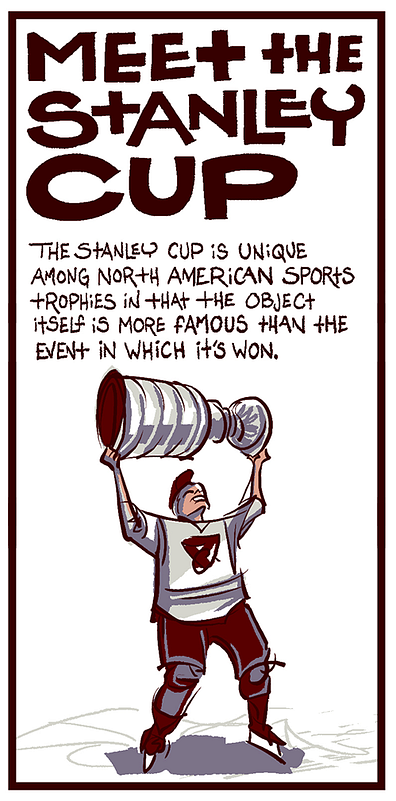
Is that worth a Lombardi Trophy, in any city?

For me…no. Not anymore.

Share This Post

You’re not fooling anybody, Canada!

I’ve long suspected curling of not being a real thing, and now Cal goes and confirms it, with this bit of “commentary” on Facebook (in response to this photo of what we’re told is the outcome of a curling match, but we know better, don’t we):

AN EIGHT ENDER???

I always ask the same questions when I see one of these pictures.

How the hell did the other team miss your rocks EIGHT FUCKING TIMES because they ALSO get eight rocks to throw. You got all your eight rocks to count but they did nothing to prevent that from happening. It’s like humans playing against squirrels when a eight ender occurs. They never show the other team who allowed EIGHT FUCKING POINTS to get scored against them because the shame is so great that their images will not even register on film.

An eight ender? This is about the worst real thing I can imagine happening. Four people with two rocks each on the other team couldn’t prevent this insult from occurring. How do you numnuts miss EVERYTHING in the house? Are you infirmed? Did none of your rocks even cross the hog line? I have to know. I HAVE TO KNOW!!

Yeah, there’s no way that’s a real sport! We’re on to you, Canada!

Share This Post

“I know who I am, and I know what I want.”

In 2009, the Buffalo Bills were in need of pass rush on their defensive line, and they had the ninth overall pick in that year’s draft, which pretty much gave them the pick of the litter in terms of defensive talent. They selected a guy named Aaron Maybin, who had just finished a very impressive year at Penn State. Maybin was supposed to be the next great defensive talent, but it turned out that he wasn’t. In fact, his career in Buffalo went so poorly that he was gone a few years later, after pocketing an immense amount of money. (This was before the current CBA, with its structured contracts for rookies.) Fans hated Maybin for his perceived lack of production and/or effort; fans derided the Bills for once again managing to bungle what should have been a golden opportunity to draft a fine player. In all honesty, as a fan at the time, I fell in both camps.

Maybin landed on a couple other NFL rosters over the next few years, and he had what looked like a decent season for the Jets, although a case can be made that his good sack numbers that year reflect the quality of the Jets’ defensive backfield that year (which was awesome). But Maybin still never caught on anywhere as a productive regular player, let alone a star, and he’s been OOF — Out Of Football — for a few years now, mostly forgotten except by masochistic Bills fans who like to bring up the name, every once in a while, of one the biggest draft busts in franchise history.

In today’s Buffalo News, however, writer Tim Graham has a remarkable story on Maybin’s life since football and the factors that shaped his experience within the game. It’s a pretty amazing piece, and I highly recommend reading it.

The Bills drafted Maybin 11th overall in 2009. Two years, one vainglorious rap song, several flamboyant hairstyles and zero sacks later, the Bills cut him. He was out of the NFL after four seasons.

Maybin isn’t solely to blame. Rare are the instances when an athlete’s inability to meet grand expectations is his fault alone.

Maybin, after all, led the 2011 New York Jets in sacks and tied for fifth among all NFL players in forced fumbles. He retired with an offer from the Indianapolis Colts on the table.

But with the Bills, he was miscast, mismanaged and misunderstood. He was unfinished when he arrived, and still unfinished when the Bills discarded him.

I’ve seen my feelings on football shift significantly over the last five years or so. I admit that it’s easy to take a second look at one’s fandom when the favorite team is constantly bad; maybe if the Bills had been a regular playoff team or even a Super Bowl contender, I’d be a lot more of a fan right now. But maybe not. It seems to me that football’s ugly side has really come out in recent years, from the constant fleecing of taxpayers for the building of stadiums* to the way the game tends to leave its former players with lasting brain damage. I find myself more and more sympathetic to the increasing numbers of players who have walked away from football, while seemingly in their prime and with millions of dollars potentially left to earn.

The fact is, we tend to view our teams as singular entities with interchangeable parts called “players”. Graham’s article on Maybin serves as a valuable reminder that the “parts” are, in fact, human beings, and as such, they bring all their various challenges and difficulties and quirks along with them. In Maybin’s case, it’s a good dose of poor decision-making, coupled with some hard-ball contract negotiating by the team, coupled with life experiences that add to the difficulties. Maybin also had great physical difficulty simply gaining weight to be the proper size for an NFL player, and he happened to be struggling with all of this at a time when the franchise was experiencing massive turnover in the front office and in the coaching staff. All that can wreak havoc with a young player who is still trying to grow and learn the game, and to me, it’s no surprise at all that Maybin eventually decided that he just wasn’t all that emotionally invested in football at all.

What is Maybin doing now? He’s a painter.

Maybin’s garage is full of finished canvases, leaning on each other in rows.

There are portraits of Nelson Mandela, Muhammad Ali, Joe Paterno and Tupac Shakur, unhinged erotica, challenging images of gladiatorial sport and slavery, inner-city reflections on death, oppression and strife.

“All my painting I do from the soul, and very rarely does somebody understand it,” Maybin said. “But everything you see me create came from me.

“The beauty in art is that it has so many interpretations. I just want you to feel something to the point of starting a conversation.”

I’m not equipped to say whether he’s a good one or not, but I do like what I’ve seen of his art. We often hear that there is life after football, but it seems to me that sports fans don’t always like to admit that there is life instead of football, too. In fact, there are times when I think that fans should not only realize that there is life instead of football for the players, but there is life instead of football for the fans. Yes, I hated Aaron Maybin as a player.

And then I realized what a colossally stupid reason that is to hate someone.

* Want to know how insane the stadium thing is? Take the case of Atlanta, where the football Falcons will begin play in a new stadium in 2017, replacing their existing stadium which opened in 1992. That’s twenty-five years. And the baseball Braves? They’re moving that same year to their new ballpark, replacing a stadium that opened in 1997. They didn’t even get a combined FIFTY YEARS out of their existing facilities. That is batshit crazy.

Share This Post

Who cares, they all look alike anyway.

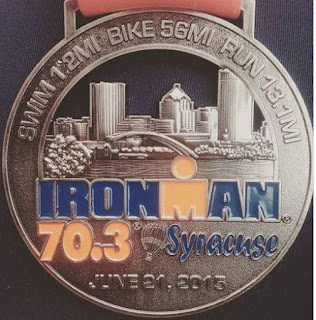
Syracuse had an Ironman triathlon thing the other day, and participants who completed the course were awarded this medal:

Yup, they got that beautiful medal for completing a triathlon. In Syracuse.

Because completing a triathlon is an accomplishment. In Syracuse.

One wonders, then, why the medal features the skyline of…Rochester.

Oops.

Share This Post

Tank You Very Much

Is it ever OK for sports teams to lose on purpose?

I’m sure we’d all say, “Probably not”. After all, there’s a very real reason that gambling is strictly forbidden in baseball, and there’s a very real reason one of the game’s greatest players — Shoeless Joe Jackson — will likely never get in the Hall of Fame. It has to do with losing on purpose.

But is it OK for a team to be purposely assembled by management with the goal in mind of being bad?

Well…if you’re in Buffalo, the answer is almost certainly a resounding “YES!!!”

Our NHL team in these parts, the Sabres, is virtually beloved. It’s entirely possible that hockey fandom is a bigger thing here than football fandom, although I suspect that’s because the Sabres had a brief period of being awesome eight or nine years ago while the Bills have been crappy for fifteen. But right now, the Sabres are awful. With one more loss, they will clinch the worst record in the NHL this season, and most fans here are fine with that.

Why?

Because the NHL Draft has not one but two astonishing prospects lined up to very likely go first and second in the first round. If the Sabres finish dead last, one of those two kids will end up playing in Buffalo. These guys (Connor McDavid and Jack Eichel) are referred to almost universally as “generational” players, the kinds of players who only tend to come along once every ten years or so. We’re talking Sidney Crosby and Mario Lemieux territory here.

But why would the Sabres be interested in both of those guys if they finish dead last? Well, that’s because the NHL does not do what the NFL and Major League Baseball do with their drafts. Those leagues slot their drafts strictly according to order of finish: the top pick goes to the team with the worst record, second pick to the second-worst, and so on, using various tie-breaker formulas to distinguish between teams with identical records. The NHL, instead, uses a lottery to determine the top pick, so this year (the lottery rules change next year, for some reason), the team that finishes dead last has only a 20 percent chance of picking first, that team is guaranteed to pick second if they don’t get the top pick. Which means that the team finishing dead last is guaranteed one of these two amazing players, who are both the type of talent that hasn’t resided in Buffalo in many moons, or maybe ever.

And the Sabres this year are bad. Really bad. Cataclysmically bad. Some sports people have determined that the Sabres are, statistically-speaking, historically bad. Ouch.

And they’re this bad, this year, on purpose.

Is that wrong? Is it wrong for a sports team’s management to purposely field an awful team?

Well, here’s the thing: I don’t think it is.

First of all, there’s nothing new at all about this. In hockey terms, they call it “tanking”, but a football team would likely refer to the phenomenon as “bottoming out”; you see it fairly often, when football teams whose rosters are aging and getting prohibitively expensive have a big purge of talent, resulting in a pretty bad team that has decided to go into “rebuilding mode”. Rebuilding almost always involves being pretty bad for at least a year or two (or so the team hopes; NFL history is replete with rebuilding projects that failed, resulting in another rebuild three or four years after the first one). “Bottoming out” is a pretty common idea in the NFL, and in fact, in recent years a lot of local sports commentators have called for the Bills to “bottom out”, so they might pick higher in the draft and maybe land on the best quarterbacks.

Meanwhile, the Sabres are definitely rebuilding. They have jettisoned virtually every high-priced player and every player who was due to become an unrestricted free agent, often in return for draft picks. This, too, is nothing new; baseball teams have been doing this for years. Over there it’s commonly called “having a fire sale”, when baseball teams that are pretty much out of contention start trading away players who are either going to be free agents or who command a high enough price in return that a team can use a trade to restock its minor league system with prospects. Are such teams “embracing losing”, as some have accused the Sabres of doing? I find it hard to see how. Same with the football teams who have elected to enter a rebuilding process. Is it “embracing losing” to enter into a period where losing is almost certain?

And why is it that sports commentators — columnists for the Buffalo News are notorious for this — so often call for rebuilds, call for “blowing it up and starting over”, call for “bottoming out”, only to harshly criticize the team when the process of rebuilding, blowing it up and starting over, or bottoming out results in a period of losing?

Who knows, but it seems to me that there are conflicting impulses at work here. We expect the players on the ice, or the field, or the diamond, to always put out their best effort. But the problem is that sometimes the best effort of management actually involves being bad for a while. The players may expect to win each time, but management has a different job, and sometimes it means being bad for an entire year in hopes of landing a very, very good player on the other end of it.

Share This Post

“I wonder why that guy won’t talk to the media!”, or, Great Moments in Buffalo Sports Journalism

Here’s a thing that happened. Last weekend, the Buffalo Bills’ 2014 season ended with the team out of the playoffs. Locker cleanout day was last Monday, and then the team dispersed for the offseason.

Fast forward to this past Saturday, two days ago. Rookie wide receiver Sammy Watkins, a high-profile player because not only was he a 1st-round pick but the Bills traded up to get him, sends out this tweet:

This caught the eye of Buffalo News columnist, and eternal claimant to the title of Official Source Of All OBJECTIVE Knowledge In Buffalo, Jerry Sullivan:

There was, as you might expect, a miniature pile-on directed at Watkins for saying that Buffalo is “so boring”.

Only….

Ayup. The guy wasn’t even here.

Sullivan wasn’t the only person to offer up an assumption that Watkins was dissing Buffalo as “boring”, but he was, so far as I could tell, the only professional journalist to do so.

I hope he’ll remember this some time next summer or next season when he whines about how Sammy Watkins avoids the media.

Share This Post

Peanuts and Cracker Jack

So the World Series kicks off tonight. I know, that’s the wrong metaphor. Sorry. I used to be a huge baseball fan, and I still find the game itself utterly beautiful to watch unfold, a game of moments where things happen one thing at a time. Baseball may be the last major sport that isn’t a constant flow of motion. As for rooting interests, as the League Championship Series started in each league, I noticed that of those four teams, none were a team I dislike in any major way. Generally, my approach in such cases is this: when there are no teams left for whom I have a rooting interest (be it rooting for a team to win or for a hated team to lose), I root for the remaining teams in order of how long it’s been since they won. In the AL you had the Orioles versus the Royals, whose last World Series wins were in 1983 and 1985, respectively. The Royals haven’t even made the postseason since then. (The Orioles have, but have not won any pennants.) As for the NL, it was the Cardinals and Giants, two teams who have each won it at least twice in the last few years. So no matter who won the AL pennant, I would root for the AL champion in the World Series. Hence, go Royals!

The remainder of this post is a book review. My sports fandom is nowhere near what it once was, and I see little reason to expect it to rebound in any significant way in the future. That said, I do still enjoy good sports writing, and John Feinstein is one of the betters sportswriters out there. He has a new book about baseball, called Where Nobody Knows Your Name: Life in the Minor Leagues of Baseball, and it’s definitely worth a look.

Minor-league baseball is sometimes seen as the more “pure” version of the baseball experience these days, where you can still go to the ballpark and take in a game for a few bucks, where goofball promotions are often used as enticements, where ads for local businesses still cover the outfield walls, where players still endure long bus rides from town to town, and where brushes with true baseball celebrity come mainly from young phenom players or Major Leaguers sent down to the minors to work their way back into the game after an injury.

Feinstein’s portrait of the minors has all that, but he also captures something that a lot of fans may not come to realize: that the minors are, in addition to being a training ground for guys not yet ready for the Majors, a place of frustration. The fact is, especially at the AAA level, nobody wants to be there. This is a fact that everyone must acknowledge, and some managers come right out and say it. Nobody wants to be in AAA baseball, because AAA is the cusp of the Majors. When you’re in AAA, your dream is almost there, constantly tantalizing you and torturing you with every single injury with the big club, with every time the manager’s phone rings, with every invitation to spring training. Triple-A baseball is a land of players who are this close. For some, it’s just a brief spot, while for others, it’s a place to spend years without ever getting to “the show”.

Feinstein focuses his book mostly on just nine men: six players, two managers, and one umpire. Some have made it and will make it back; others haven’t made it yet; some have made it and will never make it back. The central fact of this book is that while dreams do come true, they don’t always stay true. It’s a hard lesson for some of these players, and it’s very easy to understand why they keep signing up for one more year, why they keep trying to catch on someplace, even as they pass their 30th birthdays and start approaching their 40th.

It’s interesting to me, as well, that Feinstein includes an umpire in his journey through AAA baseball. Fans don’t think too much about umpires, really, and the only time their names really come up is when they screw up. If a baseball fan knows Don Denkinger’s name, it’s almost certainly because he blew a call in a World Series game; and even then, it’s not like umpire’s names stay in the memory for long. I couldn’t tell you the name of the umpire who screwed up a call a couple years back that cost a pitcher a perfect game on what should have been the final out. (For the record, I still think that MLB should have reversed the call and credited that guy with the perfect game. The idea that umpire’s calls are sacred and must never be changed, ever ever ever, is deeply bizarre to me.) Umpires work their way through the minors just like players do, hoping for that call to become an umpire at the Major League level. What I didn’t know is that umpires’ time is limited even more than players. A player can stay in the minors as long as some organization is willing to have him, but not so an umpire: you only get so many years, and if by that time the people who choose the Major League umpires don’t think you have it, that’s it: you’re done. There are no career minor league umpires.

I was likewise surprised at the degree to which winning isn’t much of a concern in the minors. They like to win, but winning is mainly seen as a function of playing well, and playing well is seen as the means to the end of reaching the Majors. Feinstein depicts the feel of a championship-winning minor league clubhouse as a pretty surreal place. It’s an accomplishment that nobody much gives a shit about. This reminds me of the great movie Bull Durham, which spans an entire season and yet except for one brief segment in the middle of the movie, you get almost no sense for how the team’s doing in the standings. No one cares. All that matters is who gets the call to go up, and who gets the call to go home.

Minor leaguers, it turns out, put up with a lot of crap. They’ll fly with their team in the morning to a new city for a day game, only to be told as soon as they plane lands that the big club needs an arm for that night’s game, so they’re to turn around and get on another plane entirely. Mets pitcher Chris Schwinden, for example, got a call up to join the Mets in Toronto. After sitting in the bullpen, he flies with the team to Pittsburgh, where he’s told that he’s been sent back down already, so he has to turn around and get to Buffalo. At this point in the night, a direct flight from Pittsburgh to Buffalo isn’t available, so they fly him to JFK, where he’s supposed to catch a flight to Buffalo. That plane is delayed for two hours, so the team sends a car to drive him from NYC to Buffalo. After a series of mechanical mishaps with the car, Schwinden finally gets back to Buffalo eighteen hours after leaving Pittsburgh. This whole passage had me laughing, because you can drive from Pittsburgh to Buffalo in less than four hours.

Feinstein is an honest sportwriter, which means that he can’t just depict baseball’s poetic and pastoral beauty. Baseball keeps going, and as big as some players get, there is no player so big that the game can’t keep being played once they hang up their cleats. Throughout the book, Feinstein makes clear that each and every person is aware that they are just minor cogs in the game’s history and that the game will go on without them when they’re done, almost as if they were never a part of it at all. At times this aspect of baseball can be bluntly heartless: near the end, when the umpire is finally told that he simply isn’t good enough and that his career is over, one reason given is the time he has missed from umpiring. How much time did he miss? Two weeks once, for the birth of his own child, and two days one other time, so he could attend an uncle’s funeral. That’s pretty brutal.

The emotions go the other way, though, and Feinstein shows this as well in many passages. Why do these players work so hard to chase a dream that few will ever get, for whom the odds get smaller with each year? This passage, from the introduction, explains it perfectly.

Every player knows how much the first call-up means. Which is why there is almost always a celebration of some kind in a Triple-A clubhouse when someone gets the call for the first time. Everyone understands what an extraordinary moment it is in a player’s life. Those who have been called up remember what it meant to them; those who have not know how much they want it to happen.

J.C. Boscan’s story isn’t quite the same as Jimmy Morris’s, because he never stopped playing. He signed with the Atlanta Braves in the summer of 1996 at the age of sixteen and spent the next fourteen seasons bouncing around the minor leagues. He first reached Triple-A in 2002 but couldn’t take the next step, because, even though he was a solid catcher, he just couldn’t hit well enough to be regarded as a serious big-league prospect.

He left the Braves for a couple of years to play Double-A and Triple-A for the Milwaukee Brewers and the Cincinnati Reds. He signed back with the Braves in 2008, because the people running the organization had so much respect for him as a clubhouse leader and someone who would set a good example for younger players that they were willing to bring him back – knowing he was unlikely to ever play in Atlanta.

Two years later, playing in Gwinnett, he had his best offensive season. Nothing spectacular, but a career-high five home runs and a batting average of .250 – higher than his lifetime average of .222. Late in August, Boscan began to hear that he might be on the September call-up list.

Every year on September 1, major-league teams can expand their rosters to as many as forty players (the regular roster size is twenty-five). Rarely do they bring up more than five or six players. Those who are brought up usually provide depth in the bullpen or on the bench of are young players being given a taste of the major leagues. Every once in a while, a team will give a player a “good guy promotion” – bring him up so he can make major-league pay for a month as a reward for being a good guy and not complaining about being stuck in the minor leagues.

Boscan had been in the minors for fourteen years and had never seen the inside of a big-league clubhouse except during spring training. At thirty, he was a long way from being the bright-eyed teenage prospect the Braves had brought to the United States from Venezuela in 1997.

On August 31, the word in the Gwinnett clubhouse was that the Braves were going to make their call-ups after the game. Boscan remembers being more nervous that night than at any other time in his career.

“I walked on the field that night, and all I could think was, ‘If I don’t get the call tonight, it’s never going to come,'” he remembered. “I honestly thought this was my last shot and my best shot to ever get to the majors. I could barely keep my mind on the game. All I could think about was what was going to happen after it was over. I was praying to God to let this be my time.”

When the game ended, Boscan sat in front of his locker and picked at the postgame meal. Hitting coach Jamie Dismuke had been designated by manager Dave Brundage to bring players into his office so they could be told they were going to make the thirty-seven-mile trip down I-85 to Turner Field. As Dismuke worked his way around the clubhouse, that thirty-seven miles felt more like a million to Boscan.

The first player called in was Freddie Freeman, the twenty-year-old phenom, who was hitting .319 and was considered a lock call-up. He came out of Brundage’s office with a huge smile on his face and was engulfed in congratulations.

Dismuke continued his rounds. One player after another walked around the corner to Brundage’s office and came out wearing the giveaway grin. The congratulations continued. No one had made a move to leave because this was a happy night – for those going up.

Six players had gone in to see Brundage – entering as Gwinnett Braves and coming out as Atlanta Braves – and there was no sign of Dismuke for a couple of minutes. Boscan’s heart sank. That was it – six guys. His dream had died.

Dismuke appeared again, this time walking directly toward Boscan.

“Skip wants to see you, J.C.,” he said. He wasn’t smiling. Boscan panicked. Maybe Brundage had gotten the good news out of the way first, and now he was going to let Boscan know that the team needed him in Double-A to work with a young catcher. Or, maybe he was being released.

Brundage was, in fact, preparing that kind of speech for Boscan. “I was going to look very sad and tell him that sometimes things don’t turn out the way you want them to in baseball,” he said. “But when he walked in here, he was shaking. I couldn’t go through with it.”

The entire Gwinnett staff was in the room when Boscan walked in.

“Have a seat, JC,” Brundage said, trying to look grim.

Boscan sat on the couch across from Brundage’s desk.

“You ever been to the big leagues?” he asked – knowing the answer.

“No,” Boscan said, shaking his head.

Brundage couldn’t keep up the charade.

“I was going to mess with you, JC, but I can’t do it,” he said, feeling himself start to choke up. “This is your day. You’re going up.”

Boscan burst into tears. Everyone else in the room was fighting to hold tears back.

“I’ve been a minor-league manager a long time,” Brundage said. “I can honestly say that was the best moment I’ve ever had.”

After Boscan had thanked everyone and shaken everyone’s hand and been hugged all around, he walked out of the office. Brundage’s office is in a hallway that leads to the clubhouse area where the players’ lockers are located. When Boscan turned the corner to reenter the locker area, the entire team was waiting for him.

Feinstein doesn’t reveal what became of JC Boscan after he finally reached the Major Leagues after fourteen years of minor-league toil, because that’s really not the point of his book at all. But I couldn’t help wondering, so I looked it up. That’s the thing about baseball: you can always look it up. He only had one plate appearance with the Braves that fall, in which he drew a walk to load the bases; he would then score a run when a subsequent hitter doubled. Over the next two seasons with the Braves and then one season with the Cubs, he appeared in a total of 17 Major-League games, collecting 7 hits in 28 at-bats, for a .250 average. He has 2 career RBIs, and zero home runs. After the 2013 season he signed with the Dodgers organization, and he’s still there, playing Double-A ball with the Chattanooga Lookouts.

Baseball abides, man.

Share This Post

Tony Gwynn

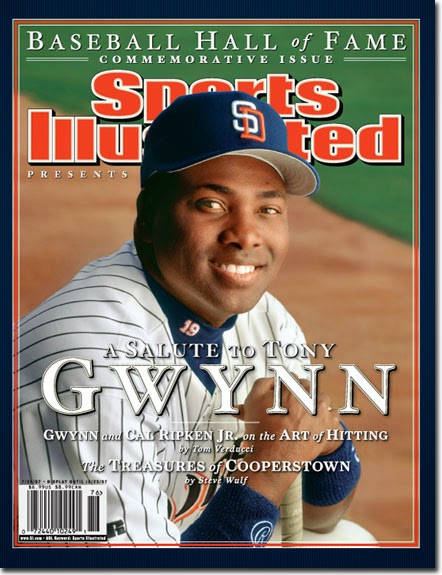
The Law of Big Numbers seems to imply that someone out there hated Tony Gwynn, but it’s telling that I’ve never yet met anyone who did. I’ve met people who hated Michael Jordan, and even Dale Earnhardt, but never yet have I met someone who didn’t like Gwynn as a player. I’m sorry to learn of his passing.

If there’s a heaven, I hope there’s good baseball. Lord knows there should be.

Share This Post