National Poetry Month, day twenty

Poetry can be many things. It can even be political, as can be seen in this poem by Charles Bukowski.

the con job
by Charles Bukowski

the ground war began today
at dawn
in a desert land
far from here.
the U.S. ground troops were
largely
made up of
Blacks, Mexicans and poor
whites
most of whom had joined
the military
because it was the only job
they could find.

the ground war began today
at dawn
in a desert land
far from here
and the Blacks, Mexicans
and poor whites
were sent there
to fight and win
as on tv
and on the radio
the fat white rich newscasters
first told us all about
it
and then the fat rich white
analysts
told us
why
again
and again
and again
on almost every
tv and radio station
almost every minute
day and night
because
the Blacks, Mexicans
and poor whites
were sent there
to fight and win
at dawn
in a desert land
far enough away from
here.

Share This Post

National Poetry Month, day nineteen

Anything can be a subject of a poem! Why not food?

The Health-Food Diner
by Maya Angelou

No sprouted wheat and soya shoots
And Brussels in a cake,
Carrot straw and spinach raw,
(Today, I need a steak).

Not thick brown rice and rice pilaw
Or mushrooms creamed on toast,
Turnips mashed and parsnips hashed,
(I’m dreaming of a roast).

Health-food folks around the world
Are thinned by anxious zeal,
They look for help in seafood kelp
(I count on breaded veal).

No smoking signs, raw mustard greens,
Zucchini by the ton,
Uncooked kale and bodies frail
Are sure to make me run

to

Loins of pork and chicken thighs
And standing rib, so prime,
Pork chops brown and fresh ground round
(I crave them all the time).

Irish stews and boiled corned beef
and hot dogs by the scores,
or any place that saves a space
For smoking carnivores.

Share This Post

Things….

A motto I saw:

Reposted from @jillcoxbooks! 😊

A conversation I’m surprised I haven’t had:

I'm surprised that this conversation doesn't happen more often.... #pieintheface

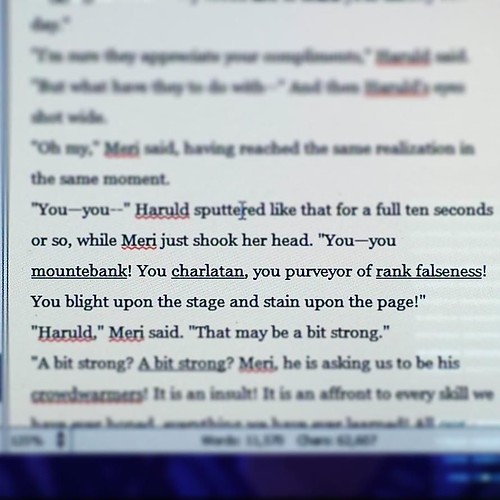
A snippet of my own writing that I rather like:

There are times when I *really* like my own writing. #amwriting

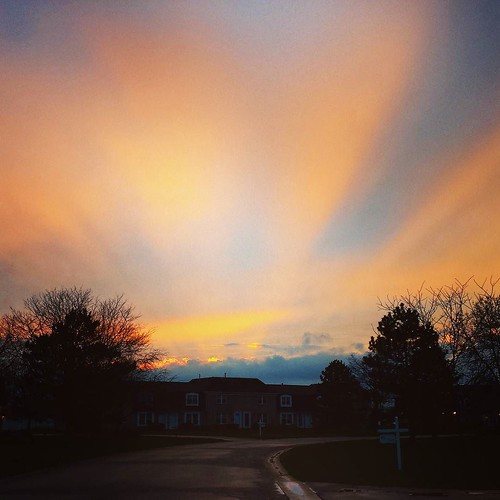
A sunset:

Not FIVE MINUTES after I took the previous photo, this happened in the WESTERN sky.... #sky #clouds

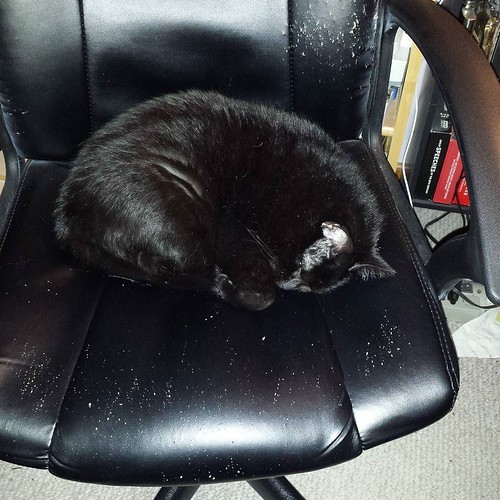
A cat in my chair:

I guess it's time for my alternate writing location.... #amwriting

A kick-off to my current vacation:

Yes, I am on vacation now, so LET THE WILD RUMPUS BEGIN!!! #Ahhhh #rum #candyisdandybutliquorisquicker #overalls

And on it goes!

Share This Post

National Poetry Month, day eighteen

All the world writes poetry, so it makes sense that one should read poems from all the world. Doing so is yet another way to remind oneself that no matter where humans live, no matter which gods they worship or what challenges they face by virtue of their geography, they are still often confronted by the same issues, and they wrestle with the same problems, and their poets and artists grapple with the same themes.

Here is a Persian poem, written by Hafiz, and translated by Ralph Waldo Emerson. Clearly it is best to read poetry in its original language, but I don’t believe that we should fail to read poetry originally written in other languages if translation is our only recourse. Even if one can’t get the complete sense of the poem, because of the missing connotations and the emotional heft of the cultural references, we can still find our way to the common area of humanity that underlies all art and all poetry.

I said to heaven that glowed above,
O hide yon sun-filled zone,
Hide all the stars you boast;
For, in the world of love
And estimation true,
The heaped-up harvest of the moon
Is worth one barley-corn at most,
The Pleiads’ sheaf but two.

If my darling should depart,
And search the skies for prouder friends,
God forbid my angry heart
In other love should seek amends.

When the blue horizon’s hoop
Me a little pinches here,
Instant to my grave I stoop,
And go find thee in the sphere.

Share This Post

National Poetry Month, day seventeen

A longer poem today, but the poet who may be my favorite of all time: Alfred, Lord Tennyson. His work often has a mystical, fantastic tone that appeals to me, and his language is old enough to feel like I’m entering a different poetic world when I read him, but his concerns are universal enough that I don’t feel a lack of relevance. Tennyson appeals to my sense of language even more than Shakespeare does, and he always seems to describe the world in terms that reflect its sadness and its beauty.

The Lady of Shalott
by Alfred, Lord Tennyson

Part I
On either side the river lie
Long fields of barley and of rye,
That clothe the wold and meet the sky;
And thro’ the field the road runs by
     To many-tower’d Camelot;
And up and down the people go,
Gazing where the lilies blow
Round an island there below,
     The island of Shalott.

Willows whiten, aspens quiver,
Little breezes dusk and shiver
Thro’ the wave that runs for ever
By the island in the river
      Flowing down to Camelot.
Four gray walls, and four gray towers,
Overlook a space of flowers,
And the silent isle imbowers
      The Lady of Shalott.

By the margin, willow veil’d,
Slide the heavy barges trail’d
By slow horses; and unhail’d
The shallop flitteth silken-sail’d
      Skimming down to Camelot:
But who hath seen her wave her hand?
Or at the casement seen her stand?
Or is she known in all the land,
      The Lady of Shalott?

Only reapers, reaping early
In among the bearded barley,
Hear a song that echoes cheerly
From the river winding clearly,
      Down to tower’d Camelot:
And by the moon the reaper weary,
Piling sheaves in uplands airy,
Listening, whispers ” ‘Tis the fairy
      Lady of Shalott.”

Part II
There she weaves by night and day
A magic web with colours gay.
She has heard a whisper say,
A curse is on her if she stay
      To look down to Camelot.
She knows not what the curse may be,
And so she weaveth steadily,
And little other care hath she,
      The Lady of Shalott.

And moving thro’ a mirror clear
That hangs before her all the year,
Shadows of the world appear.
There she sees the highway near
      Winding down to Camelot:
There the river eddy whirls,
And there the surly village-churls,
And the red cloaks of market girls,
      Pass onward from Shalott.

Sometimes a troop of damsels glad,
An abbot on an ambling pad,
Sometimes a curly shepherd-lad,
Or long-hair’d page in crimson clad,
      Goes by to tower’d Camelot;
And sometimes thro’ the mirror blue
The knights come riding two and two:
She hath no loyal knight and true,
      The Lady of Shalott.

But in her web she still delights
To weave the mirror’s magic sights,
For often thro’ the silent nights
A funeral, with plumes and lights
      And music, went to Camelot:
Or when the moon was overhead,
Came two young lovers lately wed:
“I am half sick of shadows,” said
      The Lady of Shalott.

Part III
A bow-shot from her bower-eaves,
He rode between the barley-sheaves,
The sun came dazzling thro’ the leaves,
And flamed upon the brazen greaves
      Of bold Sir Lancelot.
A red-cross knight for ever kneel’d
To a lady in his shield,
That sparkled on the yellow field,
      Beside remote Shalott.

The gemmy bridle glitter’d free,
Like to some branch of stars we see
Hung in the golden Galaxy.
The bridle bells rang merrily
      As he rode down to Camelot:
And from his blazon’d baldric slung
A mighty silver bugle hung,
And as he rode his armour rung,
      Beside remote Shalott.

All in the blue unclouded weather
Thick-jewell’d shone the saddle-leather,
The helmet and the helmet-feather
Burn’d like one burning flame together,
      As he rode down to Camelot.
As often thro’ the purple night,
Below the starry clusters bright,
Some bearded meteor, trailing light,
      Moves over still Shalott.

His broad clear brow in sunlight glow’d;
On burnish’d hooves his war-horse trode;
From underneath his helmet flow’d
His coal-black curls as on he rode,
      As he rode down to Camelot.
From the bank and from the river
He flash’d into the crystal mirror,
“Tirra lirra,” by the river
      Sang Sir Lancelot.

She left the web, she left the loom,
She made three paces thro’ the room,
She saw the water-lily bloom,
She saw the helmet and the plume,
      She look’d down to Camelot.
Out flew the web and floated wide;
The mirror crack’d from side to side;
“The curse is come upon me,” cried
      The Lady of Shalott.

Part IV
In the stormy east-wind straining,
The pale yellow woods were waning,
The broad stream in his banks complaining,
Heavily the low sky raining
      Over tower’d Camelot;
Down she came and found a boat
Beneath a willow left afloat,
And round about the prow she wrote
      The Lady of Shalott.

And down the river’s dim expanse
Like some bold seër in a trance,
Seeing all his own mischance—
With a glassy countenance
      Did she look to Camelot.
And at the closing of the day
She loosed the chain, and down she lay;
The broad stream bore her far away,
      The Lady of Shalott.

Lying, robed in snowy white
That loosely flew to left and right—
The leaves upon her falling light—
Thro’ the noises of the night
      She floated down to Camelot:
And as the boat-head wound along
The willowy hills and fields among,
They heard her singing her last song,
      The Lady of Shalott.

Heard a carol, mournful, holy,
Chanted loudly, chanted lowly,
Till her blood was frozen slowly,
And her eyes were darken’d wholly,
     Turn’d to tower’d Camelot.
For ere she reach’d upon the tide
The first house by the water-side,
Singing in her song she died,
      The Lady of Shalott.

Under tower and balcony,
By garden-wall and gallery,
A gleaming shape she floated by,
Dead-pale between the houses high,
      Silent into Camelot.
Out upon the wharfs they came,
Knight and burgher, lord and dame,
And round the prow they read her name,
      The Lady of Shalott.

Who is this? and what is here?
And in the lighted palace near
Died the sound of royal cheer;
And they cross’d themselves for fear,
      All the knights at Camelot:
But Lancelot mused a little space;
He said, “She has a lovely face;
God in his mercy lend her grace,
      The Lady of Shalott.”

Share This Post

National Poetry Month, day sixteen

Wow, we’re now on the back half of the month! So a brief post today about that wonderful form, usually used to comic (and sometimes bawdy) effect, the limerick.

The limerick packs laughs anatomical
Into space that is quite economical.
But the good ones I’ve seen
So seldom are clean
And the clean ones so seldom are comical.

Or:

The limerick’s an art form complex
Whose contents run chiefly to sex;
It’s famous for virgins
And masculine urgin’s
And vulgar erotic effects.

When I was in junior high, I suspect that all my male classmates had committed to memory a limerick beginning with “There once was a man from Nantucket”.

Here’s just one that I found that made me happy:

There once was a young lady named bright
Whose speed was much faster than light
She set out one day
In a relative way
And returned on the previous night.

A nerdy limerick! I find this pleasing on multiple levels.

I wonder: has any limerick ever been composed that was also a truly great work of poetry?

Share This Post

Symphony Saturday

You know how sometimes you want to listen to a piece of music that is light and airy, that flits around like the will o’ the wisp, that is imbued with bright charm and delicate wit?

Well, forget all that, because now we’re meeting Anton Bruckner!

Bruckner, in my experience, is one of those “love him or hate him” composers…or maybe that’s not quite fair. Maybe it’s not “hate”, but I’ve definitely encountered listeners for whom Bruckner is amazing, and for whom Bruckner is just someone they don’t really care if they ever hear again. His symphonies are long and, at times, repetitive; he thinks nothing of writing a five-minute exposition and then putting in a repeat. His orchestrations are, at times, very heavy and dense, and if Bruckner himself wasn’t quite a Wagnerian, there is at least a part of Wagner in the scope of his works and their weighty nature.

Unlike Wagner, Bruckner was a man of very deep faith, and I find it impossible to listen to Bruckner without feeling some of that spiritual nature coming through. He writes for the orchestra, at times, as though it were an organ, and his music seems almost designed to fill the cavernous spaces of enormous cathedrals, with long fugal passages and gigantic chorales and a general sense of vastness that is leading the way to Mahler.

Bruckner does not seem to have been the most self-confident of composers, which makes his works problematic for musicologists as he was constantly revising earlier works and muddying the waters as far as determining which versions are definitive. Look at the list of known revisions for today’s work, and you’ll see the problem.

This symphony, the Fourth in E-flat major, is often cited as the best starting point for Bruckner, and I tend to agree. The symphony does have one of the most magical openings to any symphony ever written, with the shimmering strings and then the high horn calls that seem to beckon from a distance. For the listener willing to go where Bruckner is leading, he draws you in, slowly and gently, so that when it all opens up in glory, there’s simply no question that this is where he was going all along.

I actually have not heard a lot of Bruckner, but what I have heard, I love. Here is Bruckner’s Symphony No. 4, the “Romantic”.


Next week: another Bruckner. We’ll be doing three of these altogether, so if Bruckner’s not your thing, well, I’ll see you in May!

Share This Post

National Poetry Month, day 15

For me, poetry is usually about the beauty of the language and the skill with which it evokes emotion, but there are also times when a skilled poet uses words to convey a visual sense so keen that I feel like I’m there. This is another great reason why writers should read poetry.

I read this poem for the first time this morning, after I literally opened a collection and flipped through it to come to a random stop…here. And this poem hit me between the eyes, so incredibly vivid are the details the poet uses to create his word-picture. This is just amazing.

Working in the Rain
by Robert Morgan

My father loved more than anything to
work outside in wet weather. Beginning
at daylight he’d go out in dripping brush
to mow or pull weeds for hog and chickens.
First his shoulders got damp and the drops from
his hat ran down his back. When even his
armpits were soaked he came in to dry out
by the fire, making coffee, read a little.
But if the rain continued he’d soon be
restless, and go out to sharpen tools in
the shed or carry wood from the pile,
then open up a puddle to the drain,
working by steps back into the downpour.
I thought he sought the privacy of rain,
the one time no one was likely to be
out and he was left to the intimacy
of drops touching every leaf and tree in
the woods and the easy mutterings of
drip and runoff, the shine of pools behind
grass dams. He could not resist the long
ritual, the companionship and freedom
of falling weather, or even the cold
drenching, the heavy soak and chill of clothes
and sobbing of fingers and sacrifice
of shoes that earned a baking by the fire
and washed fatigue after the wandering
and loneliness in the country of rain.

On the poet.

Share This Post

National Poetry Month, day fourteen

After a really long cold spell, we’re finally getting some spring-like weather here in WNY. Who knows how long it will last…but as long as it’s here, this poem seems appropriate.

Spring, the sweet spring
Thomas Nashe

pring, the sweet spring, is the year’s pleasant king,
Then blooms each thing, then maids dance in a ring,
Cold doth not sting, the pretty birds do sing:
    Cuckoo, jug-jug, pu-we, to-witta-woo!

The palm and may make country houses gay,
Lambs frisk and play, the shepherds pipe all day,
And we hear aye birds tune this merry lay:
    Cuckoo, jug-jug, pu-we, to-witta-woo!

The fields breathe sweet, the daisies kiss our feet,
Young lovers meet, old wives a-sunning sit,
In every street these tunes our ears do greet:
    Cuckoo, jug-jug, pu-we, to witta-woo!
        Spring, the sweet spring!

Share This Post