Something for Thursday

Remember the other day, when you said that you needed some more Rachmaninov in your life? Well, I live to serve!

The Rhapsody on a Theme of Paganini is one of Rachmaninov’s most enduring works, and it’s easy to hear why, with its masterful piano writing and its amazing invention on wringing a great deal of originality from a single tune. The work is a mainstay on concert programs throughout the world, and just about everybody has heard the amazing 18th Variation, which is actually an inversion of the main Paganini tune: Rachmaninov literally turns the melody upside down, and so doing, gives us one of the enduring lyric passages in all classical music.

But there’s so much more to this amazing work than just that 18th Variation! So here it is, the Rhapsody on a Theme of Paganini.

Share This Post

You’re not fooling anybody, Canada!

I’ve long suspected curling of not being a real thing, and now Cal goes and confirms it, with this bit of “commentary” on Facebook (in response to this photo of what we’re told is the outcome of a curling match, but we know better, don’t we):

AN EIGHT ENDER???

I always ask the same questions when I see one of these pictures.

How the hell did the other team miss your rocks EIGHT FUCKING TIMES because they ALSO get eight rocks to throw. You got all your eight rocks to count but they did nothing to prevent that from happening. It’s like humans playing against squirrels when a eight ender occurs. They never show the other team who allowed EIGHT FUCKING POINTS to get scored against them because the shame is so great that their images will not even register on film.

An eight ender? This is about the worst real thing I can imagine happening. Four people with two rocks each on the other team couldn’t prevent this insult from occurring. How do you numnuts miss EVERYTHING in the house? Are you infirmed? Did none of your rocks even cross the hog line? I have to know. I HAVE TO KNOW!!

Yeah, there’s no way that’s a real sport! We’re on to you, Canada!

Share This Post

My Favorite Fictional Presidents

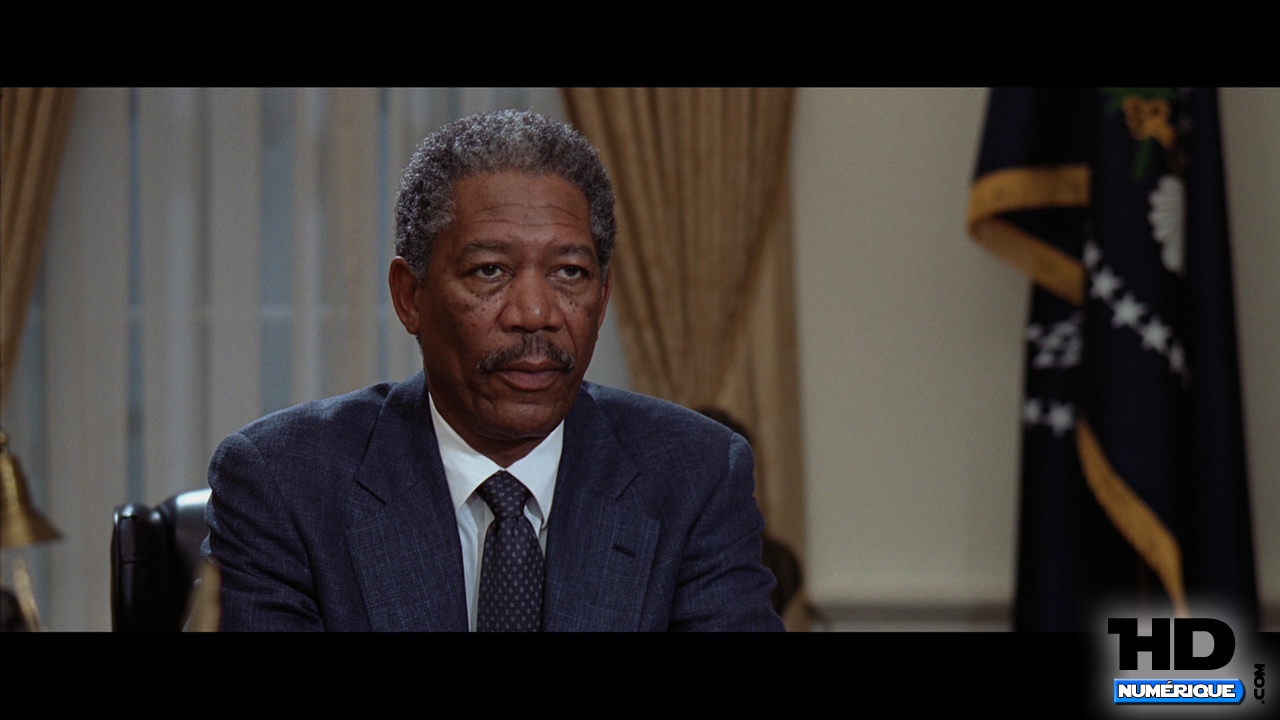
Let’s rank some Presidents Who Never Were!

5. Thomas Beck

President Beck’s record might seem spotty, given the amount of destruction due to natural disaster during his term, but his stoic leadership helped keep a seemingly doomed nation calm in the face of extinction-level calamity. And he pledged to rebuild, which was nice.

4. President Widmark

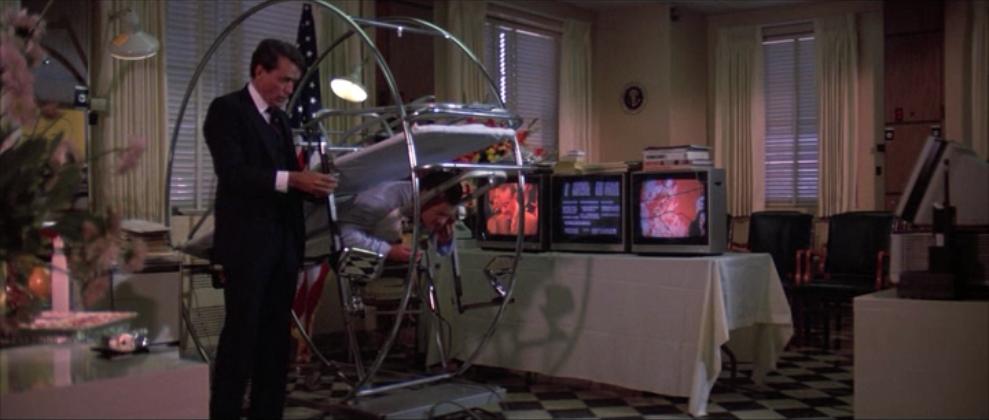
His first name is unknown, and he appears to have spent a good deal of his Presidency in traction due to back trouble. He is also known for being lazy, given his use of the “Declaration of War (the short form)”. Still, his term saw some gonzo stuff happen, most notably the attempted exodus of Red Lectroids to Planet Ten.

3. President Bill Mitchell

This President was a deeply odd man. He was cold and calculating, and was eventually proven to have been a crook as well…but then he had a very odd turn of heart and become something like a handsome FDR. In a creepy turn, after his death from some kind of cerebral hemorrhage or something, his wife ended up dating a guy who looked just like him. Very strange.

2. President Josiah Bartlet

One little-known aspect of President Bartlet’s term is the number of steps his staffers walked on a daily basis. One prominent observer once said, “Why do these folks have desks? They do all their major policy-making while walking in circles around the White House.” Bartlet is also noted for having lied about MS and having embroiled the United States in foreign policy crises (and gotten his own daughter kidnapped) when he decided to assassinate a leader of a fictional nation. Also oddly, he only served seven years and cited Rizzo from Grease as his favorite fictional character of all time.

1. President Thomas Whitmore

Apparently a crappy political leader, President Whitmore earns top marks for strapping into a fighter jet and helping blow up an alien spaceship. If Herbert Hoover had done that, he’d be on Mount F***ing Rushmore. Oh, and Whitmore gets special marks for becoming President and doing all that after being embarrassingly dumped by Meg Ryan in favor of complete stranger Tom Hanks.

Honorable Mentions: The President, unnamed, who pinned his hopes to Superman when three other people from Krypton showed up who were a lot less nice than Kal-El; President Allison Taylor, who resigned in disgrace after tearfully wishing that she could help disgraced agent Jack Bauer (apparently forgetting that she could just pardon him); President Andrew Shepherd, who fell in love with a lobbyist and had very nervous sex with her in the White House before giving a speech in which he literally promised to go door-to-door if he had to in order to confiscate Americans’ guns; President Richard Nixon, and not that one but the one who looked a little like that Hannibal Lecter fellow.

Oh, and The President of the United Federation of Planets who helped negotiate peace with the Klingons at Camp Khitomer, without calling anyone a “dumbass”.

Finally, make sure to check out this summary of the most dangerous period in Presidential history.

Share This Post

Symphony Saturday

One thing I’m greatly enjoying about doing these Saturday Symphony posts is that in addition to re-exploring music I’ve known and loved for years, I’m exploring music that has been unjustly forgotten as the decades and then the centuries have passed since these composers worked. In some cases, I haven’t even heard of the composers. Such is the case today, with British composer William Sterndale Bennett.

Britain isn’t much known for its classical music during the nineteenth century, for one reason or another. I’m not entirely sure why that’s the case, but aside from Sir Arthur Sullivan’s work, you don’t much hear the work of British composers between Handel and the arrival of Sir Edward Elgar. I don’t know to what degree William Sterndale Bennett’s work is representative, but if it is a good illustration of where British music was in the mid-1800s, then perhaps Britain’s music culture was too conservative to really blossom into what is considered “greatness”. There’s a commonly held perception, I think, that real greatness can most be found in those artists who move art forward, which seems to me to often result in artists being left behind when their work tends to look more back than forward. Such is the case with Bennett.

Of course, there were likely other forces at work. The development of the “classical canon” during the 19th century certainly reflects national attitudes of the time, and the Germanic dominance of classical music history can’t really be taken as a separate phenomenon, divorced from the politics of the day.

But no matter; what’s up for consideration is Bennett’s music. As I listen to this symphony (G-minor, op. 43, written in 1864), I hear echoes of Mozart and early Beethoven, and Bennett wrote this work seventy years after the former’s death and nearly forty after the latter’s. Bennett’s style apparently never developed beyond his early devotion to Classicism, and in looking up some things, quotes of Bennett’s seem to bear this out. One need only look at what he had to say about Richard Wagner to see it:

I have no intention of treating him disrespectfully; that I entirely misunderstand him and his musical opinions may be my fault and not his. At any rate he possesses an influence at this moment over musical life, which it would be impossible to overlook.

Basically he’s saying, “I dunno, maybe he’s good, but I sure don’t get it.” There isn’t a hint of any idea in this symphony more advanced than anything you might hear in Schubert. This music was considered old-fashioned in its day, so of course it would languish in obscurity. Bennett’s work is apparently enjoying what little resurgence it can (especially with 2016 being his bicentennary), but I suspect that William Sterndale Bennett will always fall into that category of composers who aren’t good enough to be frequently heard, but who are too good to be heard as rarely as they are. Anyway, it’s interesting to me to consider that as the 19th century marched on toward its final decades, as Romanticism was pushing music – incuding the venerable symphony – to larger and larger scales, here was this Britishman still happily writing full, four-movement symphonies that were only about 25 minutes long.

Here is William Sterndale Bennett’s Symphony in G-minor, op. 43.


Next week? I’m not sure. I gotta get to that wonderful Czech one of these weeks, though….

Share This Post

Bad Joke Friday

So, not once but TWICE this week, I wrote posts in advance and then hit ‘publish’ without scheduling a future date first. This post actually went live on Tuesday, and then I did the same thing again with ‘Something For Thursday’. But while I let that one go, figuring it was already late on Wednesday so the hell with it, I reverted this one to draft status and then forgot to schedule it or post it or anything. So here it is. Sorry. I’ll strive to do better!

Seen on Facebook this week:

William Tell and his family were avid bowlers. Sadly though, a fire broke out at the alleys destroying everything including all the league records.

Now we’ll never know for whom the Tells bowled.

Yuk!

Share This Post

Something for Thursday

Well, if I’m going to be such a staggering slacker about posting here, the least I can do is offer exuberant music. So here’s one of the most exuberant and cheerful pieces I know: Espana by Emmanuel Chabrier. Few musical works are more cheerful than this, with all that wonderful orchestral color and amazing, intricate rhythm!

Share This Post

Symphony Saturday

Now a more obscure composer, and a symphony that’s not a traditional symphony! Hooray!

Karl Goldmark was a Hungarian composer whose music was quite popular in its day, but not as much since. He’s one of those composers who isn’t quite good enough to make the “standard repertoire”, but he’s also too good to deserve being heard as infrequently as he is today. He lived a long life (1830-1915), and he wrote a lot of music, and what little I’ve heard of it is genial music in the fine Germanic tradition of his day. I suspect that Goldmark’s obscurity today results from a usual source: he was a very skilled composer who nevertheless never seems to have really pushed the limits of the art of his day. That all sounds very unfair, to be honest, which is why I’m featuring Goldmark today. I myself only encountered him via the local classical radio station on the drive home one day, when the announcer said something like, “If you’re a casual fan of classical music, it’s possible you haven’t heard of this composer, who was very popular in his day!” I suppose Goldmark might be considered a latter-day Salieri.

Anyway, the Rustic Wedding Symphony consists of five movements, the first of which is a theme-and-variations rather than a traditional sonata-allegro movement. The five movements are titled March, Bridal Song, Serenade, In the Garden, and Dance. The structure is reminiscent of Berlioz’s approach to the symphony, but there are no supernatural demonic forces at play here, just good, jovial Hungarian music.

This particular recording is an older one, but it’s vibrant and fun to hear. So go check out some Goldmark! He’s waiting.


Next week…I don’t know. I haven’t decided yet!

Share This Post

Something for Thursday

I watched the movie High Society over the weekend (it’s on Netflix!). I grew up with this film, in some ways, because it is a favorite of my parents’. Oddly, it took years before I saw it all the way through and in correct sequence, because if you grew up with movies on teevee (usually late-night or on independent stations), you typically saw movies chopped up, with entire scenes missing and sometimes out of sequence. It wasn’t until home video that I saw High Society as it was made.

How is it? Well, it’s good. I like it, but it doesn’t hold up as well as I’d hoped. It’s a literal remake of The Philadelphia Story, but converted into a musical, featuring Bing Crosby, Frank Sinatra, and Louis Armstrong as the main musical attractions. (Grace Kelly sings briefly, and Celeste Holm joins Sinatra in a song, but that’s all for “outside” talent.) The songs are all great, and the acting is pretty well top-notch, even if I’m not sure that Crosby and Kelly are really cut out for the types of roles they have here. In fact, I generally tend to the belief that whatever charms Crosby had — and they were many — being a romantic lead wasn’t totally in his wheelhouse. Plus, the story suffers a bit as key scenes from the original Philadelphia Story script are omitted in favor of songs. And then there’s a general whiff of period-realistic sexism. I’m generally good at maintaining my sense of period, but some of this stuff really rankles me (and bugged me as a kid, in all honesty). When Seth Lord says: “What most wives fail to understand is that their husband’s philandering has nothing whatever to do with them!”, I just want to punch the guy in the kidneys.

But…oh, those songs! Here are a few. First is Bing Crosby with “Samantha”. In the movie, Crosby plays a songwriter, and this is apparently one of his tunes:


Then “Now You Has Jazz”, as Crosby explains the makings of jazz to the rich folk of Newport, RI:


Earlier in the movie, Frank Sinatra and Celeste Holm have this wonderful comedic song, “Who Wants To Be A Millionaire”. They are reporters sent by a gossip magazine to cover Grace Kelly’s wedding, and they’re getting a big inside look at the lives of the rich.


And finally, my favorite song in the film. Crosby and Sinatra are at a party, both have had too much to drink, and this song happens. From what I read recently, this song actually got put into the film during production when someone pointed out that they had Bing Crosby and Frank Sinatra in the same movie and yet they hadn’t thought to include a duet for them. I love the last lines here: “Have you heard / it’s in the stars! / Next July, we collide with Mars!”

Share This Post