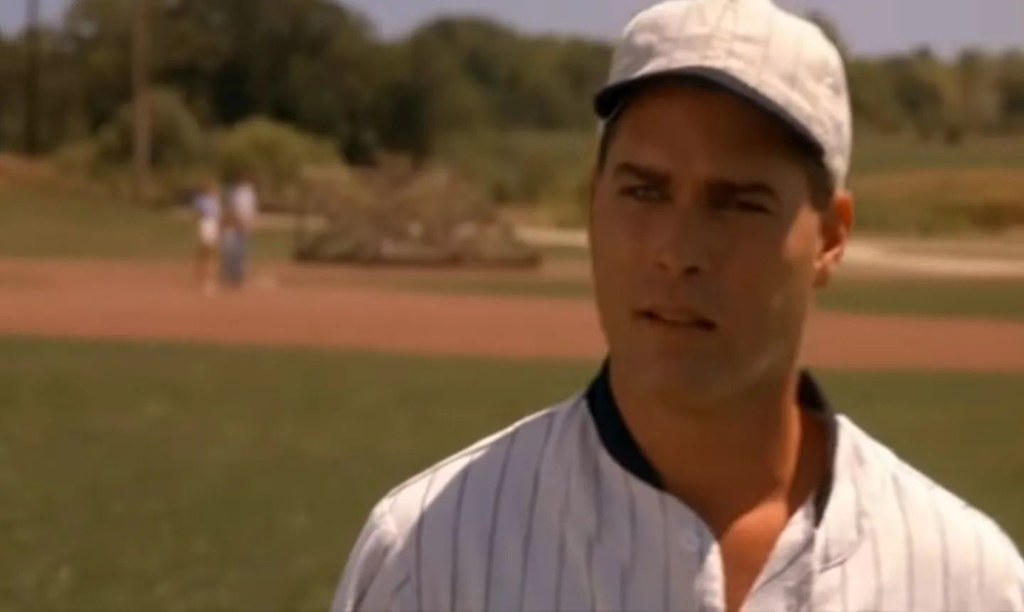
A break from the “Conversation Songs” series, in honor of actor Ray Liotta, who died today.


The official site of Kelly Sedinger: Reader, writer, photographer, and dreamer
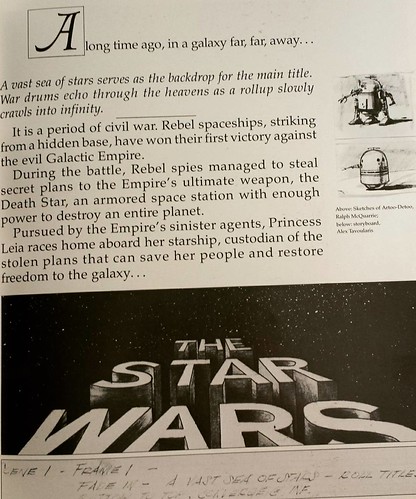
Forty-five years ago today, Star Wars opened in theaters. Here is a post I wrote in 2017 for the movie’s 40th anniversary.
I finally saw it, though, with my sister, who is six years older than me.
I didn’t like it.
It was very loud. It opened with big words flying through space and then there was loud spaceships and talking robots (one of whom only talked in beeps and whistles). There was a girl in white and a bad guy in black whose breath sounded weird. There was a desert planet with weird dwarf-creatures and a kid named Luke who lived with his aunt and uncle. (The uncle could be pretty gruff if Luke was goofing off, to which I could relate.) There were more loud spaceships and one really really big spaceship shaped like a giant ball. There was a guy dressed in black and white who helped the farm kid, and this guy had a giant ape-man friend. There were swords made of light and even more spaceships and a big battle in space.
All of that, and I didn’t understand a lick of it.
In my defense, I was all of five years old at the time.
Until Star Wars, my movie experience was pretty much limited to stuff like Bugs Bunny Superstar and Disney live-actions like The Shaggy DA (which contained a hoot of a pie fight). Then there was this movie with loud spaceships and robots and a farm kid and a bad guy in black and…well, I had no idea what to make of this movie.
Luckily for me I had my sister, who is six years older than me.
She went all-in for Star Wars. She ate it, drank it, breathed it. She talked about it a lot, and gradually her enthusiasm began to win me over. She explained the story to me because I hadn’t understood it all that well, and I decided that I wanted a part of her enthusiasm for my own. So I went with her to see the movie a second time.
I have never ever ever recovered.

I’ve been thinking a lot about Star Wars as it nears and achieves 40 years, and I find myself relating to it most as a storyteller myself. As a writer I tend most to look at Star Wars through the prism of story. Many stories have had a deep effect on me, on the stories I want to tell, and the way I go about telling them, but none moreso than Star Wars, even as the Star Wars story itself has changed over the course of its four decades. Most of the core ideas are still there, though, as Star Wars is now no longer in the hands of its creator, George Lucas. Star Wars is still a tale of heroic adventure unfolding in the sky. It is still a tale not just of the wars but more well-focused on the people fighting that war. It is a tale of improbably redeemable villains, of the way our paths mirror those of our parents, and of finding love in the face of desperation. It is a tale of family.
I can’t help thinking in most, if not all, of these terms every time I write a story, no matter which genre it’s in. Star Wars made me want to be a storyteller (what is playing with action figures, if not storytelling?). It also taught me that stories can focus at times on more mystical matters, and it taught me that story is an excellent way of addressing the challenges people face in their hearts. Most importantly, though, Star Wars taught me about heroes and quests and the wise elders who try to guide the heroes on their way.
Other stories have come since Star Wars arrived, and many have come to places almost as near to my heart. It’s not only stories, either; it’s all of creative art, really:
Lloyd Alexander’s Prydain Chronicles
The Lord of the Rings
Casablanca
On Her Majesty’s Secret Service
My Fair Lady
Cosmos
Much Ado About Nothing
The House with a Clock in its Walls
The Lions of Al-Rassan
Mary Stewart’s Arthurian trilogy (plus The Wicked Day)
Berlioz’s Symphonie fantastique
Rachmaninov’s Symphony No. 2 in E minor
Invisible Touch by Genesis
Once and Again
Princess Mononoke
These are all things — and there are more — that are at the center of my creative life, but none has ever quite dislodged Star Wars as my Prime Mover. Star Wars is, and continues to be, my Platonic Ideal of what story is.
Even so, I haven’t always kept as close an eye on Star Wars as a massive universe as many. I’ve read only a small handful of all the many novels and comics written over the years, and I haven’t played any of the video games. For me, my appreciation focuses pretty exclusively on the movies themselves, and not just the wonderful Original Trilogy but also the admittedly uneven — but still, in my eyes, uniquely compelling — Prequel Trilogy and even to a smaller extent the recent “Rebirth” movies, The Force Awakens and Rogue One. Those form the core.
Star Wars is as strong now as it ever was, and it is very likely even stronger. It has more fans than ever, and it is now in the hands of a corporate power whose pockets are deep enough to maintain it at a very high level for decades to come. More fans are created every day, it seems, and yet…I do have to admit to feeling a certain level of possibly grumpy oldsterism. Sure, you kids can love Star Wars and in fact I hope that you will, and that your love for Star Wars will lead you to other things. But I came in on the ground level. My memories may be hazy, but I do remember a time before Star Wars.
I believe that every story one writes — or rather, every story that I write — should be, in one way or another, a love letter, either to someone or something. The Song of Forgotten Stars has many influences, but it is ultimately my love letter to Star Wars. If not for Star Wars, there’s no way I would be writing this story. It’s not just about the internals of Star Wars, though: it’s about the way Star Wars impacted me and shaped my life and helped reflected certain relationships in my life. Put it this way: There’s a reason why the two main characters in my Forgotten Stars books are two Princesses, one of whom is six years older than the other. It’s a dynamic that makes sense to me on a lot of different levels.
I also know, from reading a lot about the making of Star Wars over the years and about the life of George Lucas in particular, that the way by which a creative work comes into existence is often a messy one. Lucas’s manner of creation is eerily similar to my own, or maybe vice versa. Lucas is someone who starts out by following ideas in any direction they might go, and only gradually whittles things down and discards this notion or that idea until a streamlined story starts to emerge. I work the same way, at least in part. My rough drafts are often very messy and they always contain entire ideas that I remove entirely, for one reason or another. Lucas has done so much mixing and matching of ideas over the decades (remember that for him, Star Wars is 47 or 48 years old, depending on where he dates The Beginning) that he at times seems to be misremembering his own history. I know how he feels. There are times when an idea seems so organic that it’s hard to claim it for my own. Even if it is.
So thank you for forty years, Star Wars! And may the Force be with you, forevermore.

Here’s something that I’m not sure if I’ve done in this space: shared a work I was literally listening to for the first time, all the way through, as I’m writing the post. I was on the way home from work and I heard a bit of a jubilant, almost jazzy work for orchestra, full of dance rhythms that seem almost Latino in character. I looked up the piece (that our phones can listen to a piece of music and identify it is one of the under-appreciated Great Developments Of Our Time), and I discovered that it does indeed quote extensively from Brazilian folk and dance tunes. The piece, called Le boeuf sur le toit, is by French composer Darius Milhaud.
Milhaud lived 1892-1974, and he is one of those Modernist composers of whom I know very, very little, despite his long life, his prolific output, and his influence on the music of the 20th century. Milhaud’s students included such modern music luminaries as Iannis Xenakis and Steve Reich, along with jazz and pop composers Dave Brubeck and Burt Bacharach. Milhaud spent time in Brazil, hence his incorporation of that nation’s tunes into this work.
Le boeuf sur le toit is a short ballet intended by the composer to be used as a soundtrack for the films of Charlie Chaplain, in the style of a fast and cheerful round that seems to cycle all around a particular dance floor. The energy starts from the very first bar, and just keeps right on dancing, all the way through. I also love the little off-key asides throughout, as if the dance is being joined by someone with no rhythm, and the song is being sung by someone with no pitch. Those touches remind me of Beethoven’s off-the-beat dance tune from his Sixth Symphony.
Speaking of Bull Durham, here’s something I saw last week on The Athletic:

Bull Durham has been my favorite baseball movie for pretty much forever (receipts!), so this particular promotion just makes me incredibly happy. It refers to one of the movie’s many “real-life of a minor-leaguer” jokes, in which our hero, eternal minor-league catcher Crash Davis (Kevin Costner), having been demoted in the minors so he can tutor Nuke LaLoosh, a young hotshot pitcher with tremendous talent who is also a slovenly doofus (Tim Robbins), looks with disdain on Nuke’s shower shoes (flip-flops one wears in the locker room showers):
Your shower shoes have fungus growing on them. You’ll never make it to The Show if you’ve got fungus growing on your shower shoes. Think classy, you’ll be classy. When you win twenty in The Show, you can let the fungus grow back all over your shower shoes and the press will think you’re colorful. Until you win twenty in The Show, however, it means you’re a slob.
This scene comes in the first act:
In the film’s last act, Nuke gets his inevitable call-up to the Majors after a whole season of learning and getting his ass kicked by Crash. There’s one last scene between the two of them, where Crash is giving Nuke a few last lessons before Nuke goes off to the big leagues and probably out of Crash’s life for good. Unfortunately, I can’t find this scene on YouTube, but it really is one of the best scenes in the movie as it shows that Nuke has grown over the course of this one minor-league season. You can watch a part of it here.
What makes this so great is that this scene has a purely visual call-back to the shower-shoes speech that flashes by; you might not even notice it. I didn’t until something like my eighth or ninth time watching the movie. You’re listening to Crash and Nuke talk while Nuke finishes packing, and you might not even notice that at one point Nuke takes his shower shoes out of his locker and puts them in his bag. You might not even notice that they’re clean. I just love that writer-director Red Shelton had enough confidence in his story and his script and his actors that he didn’t feel the need to underline this in any way. He left it purely as an Easter egg to be found by people who are willing to pay close attention to his movie.
And now it’s a promotion for the real-life Durham Bulls!
I’m not gonna lie: I’m not a ballcap guy, I never have been. I only ever wear one at work when I’m in a department that requires it, and it’s the one with The Store’s logo on it. But I can’t say I haven’t thought about buying one of the gross-shower-shoe caps when they hit the market. That’s a degree of next-level geekiness that I can respect!
A bit of dialogue from Bull Durham:
Crash Davis: I never told him to stay out of your bed.
Annie Savoy: You most certainly did.
Crash Davis: I never told him to stay out of your bed.
Annie Savoy: Yes you did.
Crash Davis: I told him that a player on a streak has to respect the streak.
Annie Savoy: Oh fine.
Crash Davis: You know why? Because they don’t – -they don’t happen very often.
Annie Savoy: Right.
Crash Davis: If you believe you’re playing well because you’re getting laid, or because you’re not getting laid, or because you wear women’s underwear, then you are! And you should know that!
There are two main reasons I’ve been posting more tersely here of late. First, because Daily Life has been unusually busy the last week-and-a-half. Last weekend we were out of town for four days (more on that to come!), and then we were out of town again yesterday (for the Rochester Lilac Festival, more on that to come!). I had a special project at The Store that required me to go back in for a few hours at night in addition to working my usual shift. Guy Gavriel Kay, my favorite living author, had a new book come out (and I still haven’t dug into it much, but that’s on the docket for later today). Other books needed finishing and returning to the library. I cooked dinner a bunch. My mother needed some stuff carried from here to there, or from there to here. Doggos needed walking. Episodes of The Repair Shop (more on that to come!) and Letterkenny (more on that to come!) needed watching. And more!
Second, and more importantly, I’ve been on a streak regarding the work-in-progress (or ‘WIP’, as writer-folks refer to them), the unusually frustrating fifth book in The Song of Forgotten Stars. And as our hero, perpetual minor-league catcher Crash Davis, tells us in the movie: “A player on a streak has to respect the streak.”
This book has been frustrating in ways that are unusual to me. The problem hasn’t been that I don’t know what happens next; the problem has been that I do know what happens, but I’ve struggled to figure out how to write it. There were structural difficulties that I had real problems un-knotting: in this book, as in the last couple volumes in this series, my main characters are all living their own stories, but their own stories interconnect and influence one another, because they live together and that’s how these things work. It’s that interconnectedness that has been my sticking point. But starting two weekends back, I actually started moving the ball forward again.
Which meant that I had to respect the streak.
So, on days when I knew there would be little time for writing amongst all the other things I had going on, I prioritized the novel over this space (and also social media, where I’ve also been posting lightly the last few days). I’m not sure how things will go moving forward, but…well, we’ll see! I’ve got some other plans on the horizon that I intend to spend time ironing out this week and next weekend (Huzzah, three-day weekend!), so, onward and upward!
Another short observation about the current WIP: as noted, this is the fifth book in this series. The Song of Forgotten Stars is planned to be nine books long, and I’ve got quite a lot of the larger story mapped out in my head or in notes. (By “quite a lot”, I mean, well, “some”.) There are things that I know will happen, but I don’t quite know how those things will end up happening. Some of these things I’ve known would happen since I was writing Stardancer back in 2011 and 2012, while others have come up in my head since then.
The interesting thing is that here in Forgotten Stars V, I am for the first time writing scenes that I envisioned two, three, even four books ago, all the way back to the beginning. It’s surreal, knowing that I’m finally reaching a point now there I knew years ago what was going to happen, is happening. I’m writing scenes that I envisioned a long time ago. It’s like finding signposts along the way that were only ever ahead of you, only…now, they’re here.
Time now to wrap up this post, because the streak ain’t over and I have to respect the streak. Back to writing!
(Oh, and in case anyone asks just because in the movie Tim Robbins thinks he’s on a streak because he’s been wearing Susan Sarandon’s underwear while he pitches, no, I have not been wearing…oh, forget it.)
Oh, and this is not the first time I’ve referred to this bit of dialogue during a writing-induced blogging slowdown….
Franz Liszt, one of the first virtuoso superstars of the music world, didn’t stop at composing his own showpieces to display his own incredible talent at the piano keyboard. He also transcribed for piano many of the great symphonic works of his day, including all nine of Beethoven’s symphonies. Reducing orchestral works to the keyboard results in a very odd kind of listening experience if you know the original work well: you’re hearing all the themes and all the development, in all their compositional glory, but with none of the orchestral timbres.
But it’s still Beethoven, distilled through the piano genius that was Franz Liszt.
Here’s the Symphony No. 7, possibly Beethoven’s greatest symphony and one of his very greatest works, recast as a piano virtuoso work by Franz Liszt. And make no mistake: it’s all here. Liszt transcribed it, but he sure didn’t simplify it.
Continuing my little series on “One-way Conversation Songs”, when the lyrics are literally one side of a conversation, we take an infrequent trip into Country music this week. In this song, Jo Dee Messina is catching up with a friend she hasn’t seen in a long time, and though her life isn’t perfect and is sometimes a struggle, she’s doin’…well, let her tell you.
Film music today!
This weekend was, among other things, the twentieth anniversary of the release of Star Wars Episode II: Attack of the Clones, which is one of my favorite installments in the series. Even now, when the Prequel Trilogy has benefitted from the passing of time and some much-needed critical reassessment (way overdue, but I remain proud of having done a lot of that lonely heavy-lifting myself back when hating the Prequels was still the mainstream position), AotC still seems to be the one that gets picked on the most, which I continue to not understand.
The movie’s music is something of an oddity. John Williams turns in a lot of his usual inventive brilliance, even though the film’s last act was apparently still under heavy revision so late in the production game that the entire last act is largely scored with music re-used from the previous film, The Phantom Menace. Williams’s original work is typically amazing, centering on a new Love Theme for the romance of Anakin and Padme, which even at this point we know is (a) doomed to failure, and (b) going to produce the baby twins of Luke Skywalker and Leia Organa.
As the romance is doomed and tragic from the get-go, Williams wrote a lush love theme that leaps and yearns in suitably sad and tragic fashion. But he does some more with it: he gives that love theme a darkly militaristic middle section, for one thing, in line with the fact that Anakin’s fall to the Dark Side (which helps give the Empire its beginnings) is borne from this very love affair. Williams also crafts the love theme itself from a kind of minor-key inversion of the Star Wars main theme, and the theme’s final bars form a quote from the classic Imperial March.
In this selection, the Finale and End Credits Suite from the film, we start with some suspenseful music as the Battle of Geonosis winds down and the traitorous Count Dooku flees to Coruscant, so he can report to his master, Darth Sidious (the Sith alter-ego of Chancellor Palpatine, who is the puppet master behind everything). Then the music swells as the Republic’s Clone Army is revealed in all its terrifying majesty, setting forth to war–but the music here is the Imperial March from the Original Trilogy. Williams is telling us that this is the true moment the Empire is born.
Then, a blazing rendition of that love theme as Anakin and Padme marry in secret, before the film’s smash-cut transition to the end credits. This is the best of these transitions in the entire saga, in my opinion, and it’s the last time that Williams would end a Star Wars movie’s narrative with anything other than his iconic theme for the Force.
The official site of Kelly Sedinger: Reader, writer, photographer, and dreamer
