

Something for Thursday
Two selections from the vocal group VOCES8: One is “May It Be”, from the score to The Lord of the Rings: The Fellowship of the Ring, and the other is a setting of a piece called “Nyepi” by Icelandic musician Olafur Arnalds.
I like VOCES8 a great deal. There’s a purity to their sound that elevates just about anything.
Share This Post
“Well I’ll tell you this and I’ll tell you that, I’m very very scared of a very big hat!”
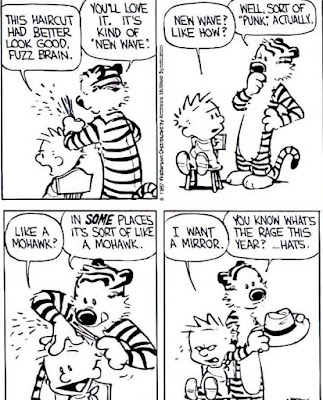
I’ve recently made an important decision regarding my wardrobe. It’s time to make a change.
No, I’m not ditching overalls. I’m adding something.

Yup: I’m starting to wear a hat.
For me, this is kind of big, because I’ve never been a hat person. I had a black-and-white fedora in high school that I liked, especially for jazz band concerts, but that was about it. Baseball caps were never my thing, and I’ve never actually owned one aside from the ones I wear at work when I’m entering a food production area (it’s a health department requirement). I have nothing especially against hats. Hats are fine (though, with regard to the ball cap, I’ve been kind of irritated that the ball cap has become the vastly predominant acceptable hat in the world); I’ve just never made it much of a habit to wear one.
But as I am nearing my last three months in my 40s, I have noticed to my slight chagrin that my hair is thinning a bit, which means that I’m exposing the top of my head to more sunlight than I really want to when I’m out walking with the dogs or whatever.
So…enter the hat.
I did not want a ball cap; I wanted a hat that’s decent for hiking with a brim that goes all the way around. I did my due diligence in researching the topic of which hats are best for hiking (by typing into Google, “Which hats are best for hiking”), and after doing a bit of research I ordered a hat from the Henschel company: this hat, specifically. In olive green. Double XL, because apparently I have a gigantic head. Who knew!
(That is not an opening for wiseacre comments, by the way.)
Well, the other day the hat arrived and I have donned it for my afternoon and evening dog walks each night since. How have I fared? Well, here’s the pictorial evidence:



I actually think this hat looks pretty good! I’m happy with the way it looks. There’s a bit of self-consciousness of the kind that I suspect always comes when you wear something in public that you have not worn before, which is weird because I’m out there thinking, “Oooooh, I hope nobody is thinking I look weird in this hat,” and they’re almost certainly thinking, “Oooooh, I hope we’re having spaghetti for dinner” or “Oooooh, there’s a new episode of my favorite show tonight” or something like that, and if they notice me at all, there’s no acknowledgement of a guy in a hat at all, much less one that starts with “Oooooh”.
So yeah, I like the hat and will be wearing it to protect the skin on my head a lot more, moving forward. And I do think it looks at least a bit cool!
(By the way, the title of this post is a reference to this routine from the British version of Whose Line Is It Anyway.)
Share This Post

Tone Poem Tuesday
Here’s a curiosity: a film music tone poem that’s actually a tone poem, and not a group of film music cues arranged into one. Composer Michael Kamen (much missed, he died too young and vibrant in 2003) scored the movie Mr. Holland’s Opus, from which this piece comes.
The movie–which I quite like–tracks something like thirty or forty years in the life of Mr. Holland (Richard Dreyfuss), a young man at the start of the film who envisions himself as a composer of serious music. He quickly finds that he’s not going to be able to support him or his wife on that at the outset, so he does the reasonable thing that a lot of people do when they figure they need something to do until they attain artistic success: he becomes a teacher.
At first, his efforts at teaching are not encouraging. He doesn’t see it as his actual job, and it shows, to the point that his students hate the drudgery of his class and he hates the drudgery of teaching them and his principal (played wonderfully by Olympia Dukakis) has to call him out on his awful attitude, saying something like “You actually beat some of the kids to the parking lot when the final bell rings.” Eventually Mr. Holland makes a turn in his teaching when he decides to employ rock-and-roll in his lessons (this is the 1960s, so this doesn’t go over spectacularly well with some folks) and when he actually realizes that a particular student who is struggling with the clarinet is trying to reach him.
Mr. Holland discovers that yes, he can teach high school music, and teach it he does, for the rest of his career: through the Viet Nam War and through his own child’s birth and through the discovery that his son is deaf and through a strange attracted protectiveness he feels toward one very talented pupil who comes along and through the inevitable budget cuts to the music program that will cost him his job in the end. He does compose through all this, and at the end of the film, the school band, along with some of the many alumni he has touched–including that unconfident clarinetist from years before, who is now Governor–sets up to perform the last minute or two of this piece. (Asking questions like why does a high school and alumni band sound so good and when did they rehearse is churlish behavior that should be swatted down with great harshness.)
So Kamen wrote this roughly nine-minute work, called “An American Symphony”, which purports to be the serious composition that Mr. Holland has been writing for all his many years of teaching. Kamen’s music is always impressive, and I miss his film music voice. He tended toward the big and the dramatic (there’s zero doubt in my mind he would have scored at least one MCU movie), and his melodies don’t always exactly leave you humming them, but they reward repeated listening and become quite familiar as you do. For this piece he even paid tribute to Mr. Holland’s breakthrough as a teacher, the realization that he could use rock-and-roll as a means to bringing the kids into more serious music, by adding the electric guitars to his orchestral palate.
It’s an interesting piece, a long-form tone poem written specifically for a movie whose central message is along the lines of “Life is what happens to you when you have other plans.” Here is “An American Symphony” by Michael Kamen, from the score to the film Mr. Holland’s Opus.
Share This Post
“I don’t know, I’m making this up as I go!” Forty Years of Indiana Jones
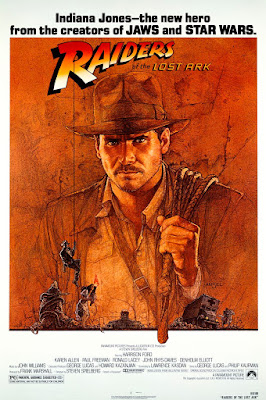
Last week was the 40th anniversary of the initial theatrical release of Raiders of the Lost Ark.

Raiders arrived in the summer that my family uprooted from Hillsboro, OR, for Allegany, NY, all the way across the country. I was still three months shy of turning ten, and this would be my sixth cross-country move in that time. (Fortunately it was the final such move.) Raiders was the big movie that summer, and when it came out I knew nothing about it at all, save for that it starred my favorite actor at the time, Harrison Ford. I also knew from the ads that the creative team behind it was Steven Spielberg, the director of Jaws (which I hadn’t seen) and Close Encounters of the Third Kind (which I had), and George Lucas, with whom I was quite familiar indeed. Ford’s presence was the bigger factor in my wanting to see Raiders, after the previous summer’s The Empire Strikes Back had left his onscreen fate unresolved, frozen in that block of carbonite.
I’m not sure when in the course of all our moving and unpacking Raiders arrived, but we didn’t see it until we got to our new town. The theater where we saw it, the Palace Theater in downtown Olean, NY, was probably a wonderful place back in the day, but by 1981, it was…very much not. It was a rundown dump, to be honest, and it would close sometime in the next ten years before being finally demolished in 1998 so a cookie-cutter Rite-Aid could be built on the lot. Oh well. The Palace had a giant marquee and an enormous auditorium with a big screen and a balcony, and it must have been something to see years ago. By the time we were there, the chairs were beat up and torn and uncomfortable, the “concessions” consisted of a coin-operated popcorn machine, the sound was lousy, and it was just a terrible place to see a movie. I think that Raiders hadn’t been out that long when we got there, because the theater was mostly empty. The movie got a lot bigger as the summer went on, and it eventually screened at each of Olean’s three (at the time) movie places.
As the lights went down and the movie started, I still had no idea what this thing was about. What was the “Lost Ark”? Was this a movie about looking for Noah’s boat? It opened in…South America? In 1936? Who were these people tromping around a jungle? Why was that one guy going to shoot the leader? Wait—the guy with the leather jacket and the hat just defeated a guy with a gun with a bullwhip? And they’re searching a trap-filled old tomb for some golden statue? Betrayals? Bottomless pits? Guys getting impaled on spikes? Giant boulders?
And then our hero (I guess this is our hero) gets through all that only to have some clean-cut French asshole steal the treasure from him? But he escapes in a waiting seaplane? And he’s afraid of snakes?
What the hell was I watching?!
Just as with Star Wars four years earlier, I had no frame of reference for this movie, but by the time that plane disappeared into the sky, whisking our hero Indiana Jones away (albeit having failed), I was settling in for what was clearly going to be a thrill ride of a movie. Thankfully by this time I had some movie-going under my belt, and I was able to come to Raiders on its own terms. Poor Star Wars, four years before, had been sufficiently alien to me that I didn’t even like it at first and it took my sister’s raging enthusiasm to bring me over to it.
Raiders was the first time I ever heard of the Ark of the Covenant, and the film’s Egyptology content was appealing. There were hissable villains (some open and some skulking about in the shadows), a plucky heroine who apparently could outdrink fat Sherpas, and there was even a cool twist on the treasure map idea: the map wasn’t one you could fold up and carry around with you. It was a scale model and you could only make “X” mark the spot if you had an amulet with a crystal in the middle of it that rested atop a stick of a certain height, so that the morning sun would make a beam that would tell you where the secret vault was located that apparently contained the Ark.

(In a surprising moment of opportunity, I would much later recreate this moment at work.)
There was also a wonderful device to show our hero’s globetrotting in pursuit of the magical ark, in which footage of his plane is superimposed over a map with a red line showing his progress:

And the action sequences! Fistfights in Nepalese taverns! Chases through the Cairo marketplace! A fight atop and below a cargo plane whose propellers were whirling! And, most spectacularly, a chase through the desert roads of Egypt in which our hero is on a horse and he’s chasing after a Nazi convoy of various vehicles including a big truck.

Raiders of the Lost Ark rocked my world in 1981, just as surely as Star Wars had in 1977, Superman and the animated The Hobbit had in 1978, and Moonraker did in 1979. In terms of the big formative influences on my inner world as a story lover and a storyteller, it’s probably the case that by the time Raiders was out, I only had one more world-rocking encounter in store (which would be the middle-grade Gothic horror novels of John Bellairs). I love stories about quests for ancient artifacts, and mysterious treasure maps and sinister traps laid for those who do the questing. I love that in each Indiana Jones movie, the villain is ultimately undone by his or her own terrible failure to actually understand the nature of the thing of power they are pursuing. And I love when the hero is just plugging along, refusing to give up, and sometimes surviving just by sheer luck and escaping bad situations not through pure brawn or might or fighting skill, but by being observant and instantly sizing up an opportunity to gain just a second or two of advantage.
Next time you watch Raiders, or really any of the Indiana Jones movies, pay attention in the chases or the fight scenes, and you’ll see Indy looking around, processing what’s going on around him, noting other developments in the periphery. You’ll see him about to get skewered by a guy with a sword, so he ducks aside just as the guy starts plunging the sword forward so it’s the bad guy behind Indy who gets run through. Or you’ll see him realize that the airplane’s propeller is about to do his dirty work for him. Or that…well, you get the picture.
Ten years or so ago–probably more, actually–we watched Raiders for the first time with our daughter, and it was a delight watching her reactions as the movie drew her in as it had me. She tensed up in all the right places, including a fun tease-moment when the torture-minded Nazi goon shows up and pulls out a chain-and-rod thing that initially looks like a torture gizmo, but then turns out to just be a hangar for his coat; she laughed at all the right moments, like when a dazzling swordsman is dazzlingly brandishing his deadly cutlass in front of Indy, clearly intending to dazzlingly cut Indy into pieces with the deadly cutlass–until Indy just casually shoots him with his deadly pistol. (One of the two great moments of improvisatory movie magic by Harrison Ford, who suggested just shooting the guy instead of doing the big fight scene that was planned for that spot in the movie, because Ford was suffering from dysentery that day; Ford’s other iconic bit of improv was suggesting “I know” as Han Solo’s response to Leia’s “I love you” in The Empire Strikes Back.)
Is Raiders perfect? Of course not! The logic of the whole basket chase doesn’t hold up (Why would the bad guys have switched the baskets? How would they have planned for that?), and the movie’s climax simply doesn’t quite work, an opinion I’ve always had, though it took me many years to figure out just why. For one thing, how Indy knows not to look on the magic of the Ark comes out of the blue; in the novel there’s a line or two in the scene where the wise man is translating the inscription on the Headpiece, which says something like “The power of the Ark will destroy any who look upon it”. I don’t know is that was in the script and cut, or if it was just an addition by the novelist who thought the film’s ending lacked proper set-up. And in all honesty, there really is something just slightly unsatisfying about watching a movie in which the hero fights, chases, escapes, his way through everything, only to be a passive observer in the climax.

Not one bit of that is remotely damaging to the movie, though. Raiders of the Lost Ark remains a thrilling experience to behold, each time I watch it, and Indiana Jones remains one of the great recurring movie heroes. He was clearly intended to be a kind of James Bond character, having lots of completely different adventures from one unrelated movie to the next, and while I’m glad that Indy never became as ubiquitous as Bond (with a movie ever two years for a long time), I do wish we’d had more than the small number of adventures that we had. We had Raiders and Temple in the first three years, but then it took five years before Last Crusade arrived, and then Indy sat on the back burner for almost two decades before Kingdom of the Crystal Skull showed up, with mixed results. And as I write this, a fifth film (whose title is as yet unrevealed) is in production, now that Harrison Ford is in his late 70s. I’m not sure how I feel about this.
The tone of the serials that Indiana Jones was originally intended to reflect is from a time in storytelling when certain tropes were less cringeworthy than they are seen now. Temple of Doom especially suffers in this regard; it requires a lot of mental calibration to watch it without getting that feeling of “Geez, we really did, and in many ways still do, think that we white Westerners are the civilized beings bringing wisdom to the brown heathen savages of the world, don’t we?” (And as I watched Temple just last night, I’m pretty up-to-the-minute in this realization.) Crystal Skull was partially intended to bring Indy into the realm of Cold War-influenced 50s sci-fi, which was a great idea that wasn’t totally executed well in that movie. Maybe Indiana Jones never should have become a franchise at all. Movie producers in 1939 were perfectly happy to let Errol Flynn be done with Robin Hood, after all. Raiders is an adventure classic; Temple might be as well, with reservations. Last Crusade doesn’t hold up for me as well as its two predecessors, and Crystal Skull is just OK. We’ll see what happens with this fifth movie in a franchise that is somehow going to extend longer than 40 years with the same guy playing the same adventuring character.
Meanwhile, we’ll always have Raiders of the Lost Ark. Like Star Wars four years earlier, Raiders ended up being an enormous temporary influence on pop culture, as Hollywood suddenly figured that the film’s success indicated an unknown appetite in audiences for period adventures. Thus came a bunch of copycat kinds of movies, like two featuring Richard Chamberlain as H. Rider Haggard’s adventurer Allan Quatermain and a forgettable pirate movie called Nate and Hayes. Tom Selleck, who was originally to have played Indiana Jones in Raiders until his teevee contract for Magnum PI forced him to drop out of the project, got a consolation prize in a somewhat sleepy adventure flick about a biplane pilot called High Road to China (and Selleck would eventually get to actually dress up as an Indiana Jones look-alike in a Raiders spoof episode of Magnum). On television, ABC had a show called Tales of the Gold Monkey about a seaplane-flying pilot in the 1930s South Pacific, and CBS had Bring ‘Em Back Alive, a one-season adventure show featuring Bruce Boxleitner as hunter/naturalist Frank Buck in Singapore. Comics got in on the act as well; Marvel had an anthology series called Amazing High Adventure that it sporadically published for a few years in the 80s. Eventually Hollywood seems to have decided that Raiders hadn’t been a wild success because of some deep appetite for period adventure, but because it was simply a great film, made well. Funny how that works. Not even George Lucas’s attempt to bring Indiana Jones to the small screen, in a series called The Adventures of Young Indiana Jones, succeeded particularly well. This style of adventure tale wouldn’t really have another big hit until 1998’s The Mummy, which, like Raiders, likely became a big hit by virtue of being a really good adventure movie, well-made. Again, funny how that works.
For me, Raiders of the Lost Ark‘s appeal and influence wasn’t on a specific character or time period in history (though I do confess that for a time in 1981 I said “archaeologist!” when asked what I wanted to be when I grew up–it was nice to have a real-world thing to aspire to be from the current geek obsession movie, since one couldn’t exactly want to be “Starship Captain” or “space smuggler” or “Jedi knight”). It was more a style and approach to adventure storytelling: an attentiveness to pace and to carefully setting up everything that is to come later, and it’s about giving each character a definite motivation for what they’re pursuing. It’s about the idea that hero and villain can want the exact same thing, for completely different reasons, and it’s about a hero who keeps going, who doesn’t give up, and whose intelligence allows them to make it up as they go.
Thanks for 40 years of adventure, Dr. Jones.
Share This Post

Something for Thursday
Tone Poem Tuesday
I’ll have more to say about Raiders of the Lost Ark later this week (the movie came out 40 years ago this week!), but for now, here is John Williams conducting the Vienna Philharmonic in one of the most iconic of his many iconic themes, the Raiders March. I especially love Marion’s Theme, which forms the mid-section of this march; her theme has a lot more of a yearning sensuality to it than any of Williams’s lyrical themes from the Star Wars movies to that point.
Share This Post
On Ned Beatty and HEAR MY SONG (in part, a repost)
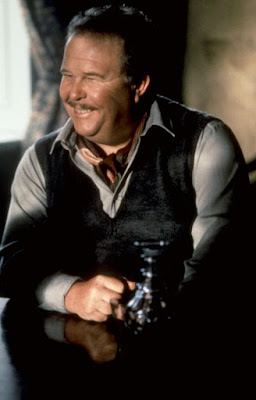

Actor Ned Beatty has died at the age of 83. Beatty had a long and wonderful and varied career, and he played a wide variety of characters. I suppose he’s seen more as a “character actor” than as a lead, but…I don’t know, surely there should be something between a character actor and a proper lead, right? Beatty was always recognizable, but he never seemed the same, if that makes any sense. Every time I saw him in something he managed to create something all new. My first exposure to him was in Superman: The Movie, which remains my favorite superhero movie to this day, even after everything the MCU has done, and he showed up pretty reliably over the years. Even if the movie I was seeing was a total stinker–the Richard Pryor movie The Toy leaps to mind, and it’s mindboggling that a movie that bad could result despite the presence of Pryor, Jackie Gleason, and Ned Beatty–there was always a total professionalism to Beatty’s work.
My favorite of Ned Beatty’s movies is Hear My Song, a comedy from 1991, which is not at all well-known. I take every opportunity that comes along to beat the drum for this movie, because it’s just a warm-hearted joyful romp through the world of beloved Irish tenors, old seaside villages, skeevy concert promoters, and angry tax cops. I wrote about Hear My Song some years ago, and I repost that review below. I’m only sorry to note that I don’t actually single out Mr. Beatty’s performance in the movie for special mention, because the movie wouldn’t work if he wasn’t absolutely fantastic.
Please watch Hear My Song, if you can! It’s available to rent on YouTube (and as I write this, the entire thing is actually available for free via some user I don’t know, but who knows how long it will take the copyright folks to shut that down). You won’t regret it, I promise.
Thanks for the movies, Ned Beatty! You were one of the greats.
Hear My Song (1991)
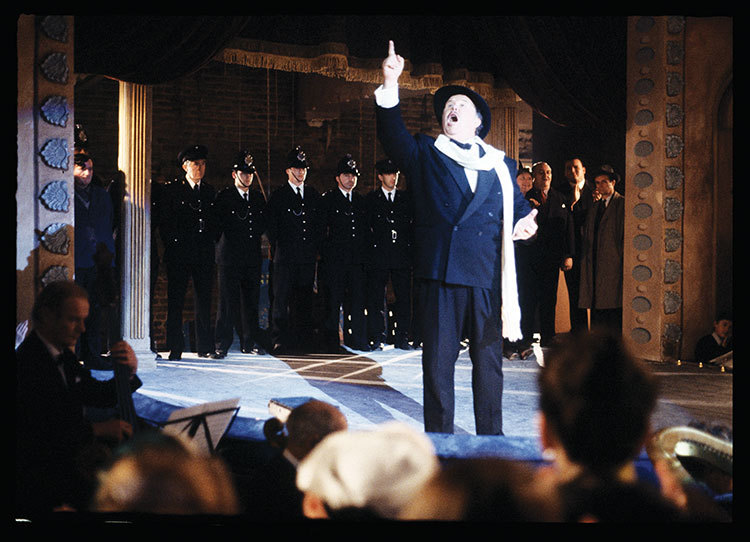
Years ago, when we’d been dating a year or so, The Girlfriend (now The Wife) rented a movie for us to watch. It was a British comedy that I’d never heard of, called Hear My Song. We both absolutely loved it, and it’s been one of those movies that I’ve wanted to watch again ever since, even though it’s been really hard to locate a copy, to the point where it then became one of those movies of which I have greatly fond memories that maybe I don’t want to revisit, on the off chance that my memories of it are more nostalgic than accurate. Or, to put it another way, I was afraid that maybe this movie had been visited by the Suck Fairy.
Well, Hear My Song is, as of this writing, available for streaming on Netflix, which proved to be a temptation too great. So I watched it, and…absolutely loved it again.
Adrian Dunbar (who co-wrote the movie, and who would later secure semi-immortality in Star Wars lore by playing Senator Bail Organa in The Phantom Menace, only to see his scenes cut entirely from the film and the role recast with Jimmy Smits in the subsequent Prequels) plays Mickey O’Neill, a young man who runs a dinner club and musical revue. The place isn’t making great money (in the first scene, Mickey has to take the stage himself) and he isn’t popular with his landlords, who decide to evict after a scheme to let word of mouth sell tickets for a crappy singer named Franc Cinatra results in bad blood. His next money-making effort is to book Irish tenor Joseph Locke, who is legendary in this town but has lived in Ireland for more than thirty years because he’s wanted for tax evasion.
Locke is the Maguffin of the movie. First, no one is sure if the guy claiming to be Locke is really Locke or not, and second, Locke didn’t just evade taxes as much as he literally ran out of town, avoiding arrest by inches (and by pushing a cop off the boat on which he was fleeing) and running out on the affair he was having with a local beauty queen. This beauty queen turns out, later on, to be Mickey’s girlfriend’s mother, and after she has a late-night tryst with the man claiming to be Joseph Locke, she loudly announces that he is not. Ouch. Mickey loses the theater, his girlfriend, everything…unless he can get to Ireland and bring back the real Joseph Locke.
There’s nothing in this movie that’s really all that surprising at all, at least until the end, when things turn in a way that is reminiscent of endings like The Shawshank Redemption‘s, in that elements that have been in place the entire way suddenly turn out to be relevant in surprising and deeply pleasing ways. I don’t want to spell it out, but this movie has one of my favorite endings, ever.
But an ending can’t work as well as this one does by being clever; it also has to have the emotional heft to it, and this one does. This is a movie about likable people who have, occasionally in their lives, done unlikable things, but in most cases they are trying to atone for them, or recognize their misdeeds when they come back to haunt them. There isn’t a single unflawed character in this film, all the way to Mickey himself, who seems emotionally stunted in some ways, and whose main skill in life seems to be a gift for bullshit. (One of his favorite tricks is to appeal to the older generation, who lived through World War II, by giving a speech that starts off with “I grew up in peacetime.”
With comedies like this, it’s easy to describe them in such a way that makes them sound like serious dramas. Hear My Song is most definitely a comedy; in fact, it ranks high on my personal list of funniest movies I’ve seen. A scene involving a bar full of Irishmen trying to assist one of their brethren with a dental problem is hysterical, and the best gag involves our two drunken heroes and their curiosity as to the depth of a particular well. More than that I must not say.
Hear My Song is, for me, so good that I don’t understand how it’s managed to fall so completely off the radar. It has a wonderfully witty script full of memorable characters, it’s photographed beautifully, the music is fantastic, and the cast is tremendous, led by Dunbar and by Ned Beatty as Joseph Locke (the real one). And if you’ve ever watched Star Wars: A New Hope and wondered just how good an actor William Hootkins really was (he sadly died a few years back), well, Hear My Song will give you an answer.
What a wonderful, wonderful movie!
Share This Post

Ladies and gentlemen….
The Internet, for all its annoyances and horrors, is also a place of fun and wonderment, and it’s always nice to see a reminder of that. One example is a person on Twitter who has made it his job to post the same thing, each and every Friday.
It’s a video clip of actor Daniel Craig, from an episode of Saturday Night Live that he hosted. It came time for him to introduce the episode’s musical guest, a Canadian singer named Abel Makkonen Tesfaye. Tesfaye’s stage name, however, is “The Weeknd” (spelling intentional), so what Daniel Craig says is: “Ladies and gentlemen, The Weeknd.”
When saying that, Craig does this little shake of his head and a spreading of his arms as if to say that he can’t believe he’s lucky enough to be introducing this artist…and as the clip has been repurposed, it sounds like Craig is amazed that we made it, that we survived another week: “Oh wow, we got there. We’re here, folks. It’s OK.”
“Ladies and gentlemen, the weekend.” Spelling intentional.
It’s Friday night. Ladies and gentlemen, the weekend!
Share This Post
Something for Thursday
Classic rock is often on the playlist at Casa Jaquandor, for many reasons. This is the popular music I grew up with, the “soundtrack of my youth” as it were, though in my case, not as strongly as for others (because the main part of the soundtrack of my youth was John Williams, Jerry Goldsmith, James Horner, and their comrades). Nevertheless, I couldn’t help hearing a great deal of classic rock as it was new, in restaurants and on car stereos and in bars and camps and generally all over the place. I tend to associate a lot of this music with the road, since the car radio was often the way much of this stuff was consumed, and between moving and road trips a-plenty, we spent a lot of time in the car when I was a kid. (In and out of it…I don’t want to convey an idea of endless automobile-related experiences as a kid, but my parents were of a general mindset that if you live within a few hours of something neat, why on Earth wouldn’t you drive there and check it out? More than once, if it turned out to be really cool? I have adopted much the same mindset later in life.)
Oddly, though I’ve heard a great deal of classic rock and many of the songs are familiar or even well-known to me, I am often not very good at all at knowing which band did what song, or even what each song is! The age of Google, with the ability to search for song lyrics and then mobile devices whose search engines are equipped with song identifiers, has been a boon for people like me. Here’s one song that shows up a lot on the Pandora classic rock station The Wife plays or on the Sirius XM classic rock station I enjoy sometimes. For years I’ve known neither the name of the song nor which band it is, but I enjoy its lyrics about failure to commit to a relationship and yet wanting the relationship to endure, and I love the song’s opening guitar hooks and the general beat of the song. This isn’t just the soundtrack of my youth; in a lot of ways songs like this are the soundtrack of the road trips of my youth.
And to think, I didn’t know the name of this song, or who played it, until yesterday. Go figure. Here is “Sister Golden Hair”, by America.