“What Happened Was….” (Thoughts on the Film)

 I suppose I am lucky that I never had to negotiate the world of dating as a single adult, out there in “the wild”. My dating life was mercifully short, and it took place in the context of the sheltered existence of college. It was also by the greatest good luck that the last person I dated in college ended up being the last person I dated at all, because we’re still together now.

What Happened Was is a movie that not about dating, but it’s about one specific date, and that’s it. Ninety minutes that track the entirety of a single date between two people who work in the same New York City law firm. He ((Michael, played by Tom Noonan, the film’s writer and director) is a paralegal  and she (Jackie, played by Karen Sillas) is an executive assistant. The movie was made in 1994, so he can make a crack about “That’s what they’re calling secretaries now.” He’s a very tall, gangly man, bald except for around the edges. She wears her red hair tied back, but loosely. The entire date takes place in her apartment (one set, which fits since the film is an adaptation of a stage play). She has made dinner. They eat, they drink, and gradually they bare their souls to one another, with results that disappoint each, in each other and in themselves.

I wouldn’t have even known this movie exists if not for Sheila O’Malley, who wrote glowingly of it last week (and previously in her paid column which I hope returns one day). Apparently the film was released in 1994 to some acclaim, and then it managed to disappear into the memory hole pretty completely. It had a VHS release but never a DVD, and the version that was haltingly available on streaming services wasn’t in great shape. But a restoration has taken place and now that version is in release and is getting wider streaming access. I watched the film on YouTube, as a rental, but I’m not sure which version I saw, the restoration or the earlier, cruddier print. (I did try to watch the restored one on Fandango, but for some reason Fandango’s credit card interface wasn’t working at all, prompting me to correct my information even though it was correct each and every time. YouTube, being a Google company, uses Google Pay, which makes that sort of thing much easier.)

Here is Sheila on What Happened Was:

In her 2016 book The Lonely City: Adventures in the Art of Being Alone, an essential entry in the sparse study of loneliness, Olivia Laing writes, “What does it feel like to be lonely? It feels like being hungry: like being hungry when everyone around you is readying for a feast. It feels shameful and alarming, and over time these feelings radiate outwards, making the lonely person increasingly isolated, increasingly estranged.” When I read Laing’s book, I thought of 1994’s What Happened Was, written and directed by Tom Noonan, one of the great films about loneliness, in particular loneliness of the urban variety. The film unnerved me so much when I saw it in its initial release—25 years ago—that it was a long time before I re-visited it. Images from it haunted me for years. Marketed as a meet-cute gone awry, What Happened Was… is, instead, an unblinking look at the havoc loneliness can wreak on humans. It’s only 91 minutes, but every minute is excruciating.

The description–a movie unfolding in real time with just two people on a date–made me think of another classic film of the same general description, which came out right around the same time, Before Sunrise. But where that film is about the fire of youthful lust between two people who are walking around Vienna, What Happened Was is about older people who have been adults long enough to feel some disappointment that their adult lives have not tracked their younger dreams, but they haven’t given up the dreams yet, either. It’s harder for them to open up, and when they do, the results are much, much, much messier. This movie plays out almost like a psychological thriller, but the thrills are purely internal. Don’t read anything into the brief moment where she brandishes a knife at him. She laughs, saying “I’m kidding!” She does this a lot: saying something to provoke him or push him off kilter, and then laughing and assuring him (and us) that she’s joking. It never really quite defuses the tension, though. He does it too, and it doesn’t work for him, either.

We first see her sleeping, naked, face down, on a mattress with no pillows and only a sheet wrapped around her waist. Her phone–the kind of cordless handset once found in every home in America, though this one’s pink–lies on the bed next to her and she is clutching a ceramic cat. Why? We don’t know. Minutes later she’ll drop the cat and break it while in her last frantic moments of getting ready for the date. She picks up the pieces and drops them in the fish tank. Nothing is ever explained of the ceramic cat. This isn’t the kind of movie where characters linger over personal belongings: “Oh, that. My grandmother bought that for me at a flea market when she was traveling through Dubuque. She always loved the Mississippi River….” Nope; none of that. Oddly this makes the apartment seem like a real place for me. All of our personal spaces have things in them that only make sense to us.

Her apartment is oddly large, for someone living alone. I wonder what it costs. She has a sitting area with enough space for four or five people, but a separate dining area just for two. She has a dressing area cordoned off by drapes, and a mannequin that is draped with scarves. The mannequin shows up throughout the film, coming and going from the background shots, almost like a third person, silently watching the night’s events unfold. Others seem to watch, too: she has a poster of Martin Luther King and the famous “cat’s eyes” poster from the musical Cats. These posters, along with the mannequin, create almost a constant presence of other eyes, watching Karen and Michael throughout their evening (the only other piece of wall art in Jackie’s apartment is a print of album cover art from the band Asia)…and the film also establishes that Karen’s apartment has a view into other apartments across the streets. She needs to live in a place with a view, she tells Michael several times. No one seems to be looking from their own views into her apartment, though.

I notice that the layout of the apartment is such that the Cats and the MLK posters don’t have a direct line of sight into the kitchen, though. They can’t see into there, and that’s where the Asia cover-art print hangs. It’s almost as if Jackie has constructed her life as to leave her kitchen as private as she can. 

(A beautiful time-lapse shot during the credits shows one of the other buildings, viewed from Jackie’s apartment, as the day fades and the various apartment lights come on.)

We next see her returning home from work; she has bought wine and a cake for the night. A fluorescent light in the hallway outside her front door is constantly flickering, and she finds it annoying enough to smack it a few times, with no result. When Michael arrives he comments on it, and she gives him the usual excuse: the landlord won’t fix it. But before he arrives, she is already sipping from the wine, and a few minutes earlier, when her alarm clock went off, we see an unfinished glass of wine next to it. Jackie drinks a lot, apparently. This is never really commented on, but it’s always there, and Sillas has to trace Jackie’s mannerisms throughout the evening as the alcohol takes its grip on her.

We see her getting dressed for her date, in the not-quite-private dressing area. She tries on a few items, rejects them; she touches her own face in a gesture that will be reprised later by Michael, and she has an expression throughout all of this that is very hard to read. Is she afraid? Nervous? Is she questioning herself? I don’t know. We’re not given any internal (or external) monologue. All we can do is watch…but as she is clearly struggling with something, the mannequin is looking away.

I seem to be focusing a lot on the visual nature of this film, don’t I? But that’s because…well, a movie is a visual thing, and a movie doesn’t have to be some gigantic blockbuster filled with million-dollar digital effects to be a visual masterpiece. What Happened Was relies on visuals to create its story every bit as much as it does its dialogue and acting. All of this creates mood, all the way down to the lighting. Jackie is very particular about the lighting. She has different kinds of lights all over the apartment. Normal lamps and lamps with cloth draped over for color. Cannister track lights over the bar separating the kitchen from the rest of the place. Candles. A chandelier over the dining table. The light in the aquarium. And, eventually, a light-up Mother Goose. Jackie is forever turning this light off and that one on, dimming this and brightening that. And then there’s the light out there in the hallway, the one that flickers so garishly you think it might cause seizures.

Michael arrives, and the first minutes of the date are incredibly awkward. He is carrying his briefcase and the requisite bottle of wine that you bring to someone’s house; when he offers it he stands there for a few seconds, clearly trying to will himself into action, and then he says, “Oh, I brought this wine!” as if he’d forgotten about it…which he very clearly had not. His collar is open and he’s wearing a sweater vest; his necktie is hanging from his jacket pocket. Throughout the first half of the movie, there is usually something between Jackie and Michael: a dining table, a coffee table, the kitchen bar. When they finally reach a point where there’s nothing between them, first on the couch and then later in a part of the apartment we don’t even know is there at first, it feels…neither quite right nor quite wrong.

And there’s the movie’s master stroke, right there, in addition to the brilliant visual construction of the film itself: We never really have a sense of how this date is going. Is this two awkward people being awkward at first and gradually feeling at ease with each other? Or is the awkwardness permanent and these people are a disaster who should never ever date again? We never know. Not even after the film has ended. That’s what makes it linger.

As Jackie and Michael talk through the first half of their date, some things–themes–emerge, and their dialogue is intriguingly constructed. Each says things that they repeat a few times, like how Jackie likes to live with a view. It’s almost like they feel the need to return to conversational safe space as they feel themselves starting to drift toward a confessional space. Michael seems to get there first, opening up about how he is gathering information for a book he’s writing about the law firm; this catches Jackie’s ear, because her own dialogue conveys a strong sense that even at the firm she feels like she’s on the outside looking in, a little.

At first Michael definitely comes off as being the stranger of these two people. One of his early confessions is that he hears his own name mentioned subliminally in a Beatles song. Jackie is briefly taken aback by this, but she recovers by claiming that “Oh yeah, something like that happened to me once!”, but she gives no details. Her own awkwardness is less overt: she has invited this guy over to dinner at her place, so she’s cooking for him–but she does all her cooking on the weekend and freezes everything to be microwaved through the week, so her big dinner for him is a microwaved scallop dish that she literally serves to him from the Tupperware container she nuked it in. He grins through this, in a way that seems a little mocking–but then he says weird shit like “I hate the word ‘seafood’,” so it’s hard to tell just where he’s landing on all this. Meanwhile, she keeps drinking and filling his glass. She almost forgets that she has rolls on the table, and she doesn’t serve the salad until after they’ve been eating for ten minutes.

Michael’s book-writing sounds like real social crusader stuff: he wants to get the truth out there, let the people know what’s going on! But it’s all vague and he says things about publishing that seem…wrong, made-up. He pulls out a little notebook at one point to jot something down, but he doesn’t tell Jackie what he’s written, and we never do find out. There are a lot of such moments in What Happened Was: tiny moments that might be meaningful or might not be, and all we can do is watch it all play out and decide for ourselves, later on.

Jackie, it turns out, also writes. She writes stories, and she has even published a few–but that turns out to have been a vanity publisher. Michael seems to know this, but he’s got enough kindness not to squash her on that basis, and eventually he gets her to read one of her stories to him. She tells him that it’s a kid’s story, but it very much…is…not. She reads it to him in another room, separated by a curtain. She keeps her notebooks in a lockbox (the same kind of notebook, albeit larger, as the one in which he had jotted his secret note earlier). She reads a story that starts off sounding awkward, stilted; I have to note Sillas’s performance here as she starts the reading haltingly, in the manner of someone who is reading their work aloud for the first time (and yes, I know what that feels like). But she gets over that and reads…and reads…and reads. The story is quite a bit longer than we (or Michael) expected, and it’s here that the movie makes its most use of close-ups. The reaction shots on Michael are disorienting, in the dim light of this secret space that’s illuminated by a Mother Goose lamp.

Returning to visual elements, the use of color in What Happened Was is pretty amazing. The palette seems muted early on, but aspects of the set take on a more saturated appearance as we proceed. Even the Asia poster in the kitchen shows this: in the last scene, it has red highlights that aren’t there in the opening scenes. The visuals are more and more stark as the emotions our characters are plumbing become more and more stark.

I don’t want to spoil too much of this, but in the end, the date doesn’t end particularly well. Nor does it end spectacularly badly, either. Jackie may eventually be too drunk to make sense of what’s gone on (though she’s not wrecked, either) and Michael makes a final confessional that feels like a desperate attempt on his part to salvage a night that has not gone the way he may have hoped…but then, he never really seemed to bring much by way of hope into the night to begin with. Michael’s final confessional might be the part of the film I liked least, because…it’s honestly the one thing that happens in this movie, the one thing said by either character, that’s not surprising. I’ll just leave it at that. But as the movie ends, we’re not sure really if the situation between Jackie and Michael is completely doomed, or if it can be repaired (they’re going to see each other Monday morning, right?), or if they’ll exist in some kind of relational limbo for a while. But it’s worth noting one last visual cue: when Michael leaves for the night, as he heads out into that hallway, the formerly flickering garish light is no longer flickering. It’s just garish.

Sillas and Noonan are both incredibly effective in these roles. Noonan even makes use of his own incredibly long fingers for some shots, like when he picks a piece of lettuce off the table (it fell out of his salad bowl when she overfilled it) and puts it in his mouth after a second or two of clearly thinking, “I’m not sure what to do with this.” Sillas tracks quite the emotional journey here as she hurries to get ready for this date, then pours herself into it, then opens herself up, and then has to process her deep disappointment that it hasn’t gone the way she had hoped, though we never really know what she hoped for this night. Meanwhile, Noonan’s Michael seems like a guy who has a lot of initial bluster, then some retreat, then some more bluster, followed by defensive retreat…and when he finally decides to commit to his own feelings in any way, it may be too late. In the end he finally admits that he has no idea what he’s doing, and Jackie has to clarify that for him.

In the two days since I watched What Happened Was, I keep thinking about it and about these two characters. I wonder what happened for both of them. I have my thoughts on that (I think this night ends up a one-off that they never even mention again to anyone), but maybe I’m wrong. Maybe. I keep thinking about it, and I suspect that’s the entire point.

ADDENDUM: In Sheila’s article above, she also mentions that the film’s marketing campaign did it no favors, and after looking into that a little, Holy SHIT, is she right. The trailer really does make it look like an erotic thriller, and the poster makes it look like…I don’t even know what you’d expect from a movie with this poster, but it sure isn’t what the movie ends up delivering.

I wonder if the movie’s 1994 vintage hurt it a bit. This was when the “rise of indie film” in the 90s was just starting to gather steam, and I suspect that the people in charge of marketing this film just simply had no idea at all of how to do that. So, they came up with a terrible campaign that likely gave audiences the complete wrong idea, so any word of mouth was likely not great. That’s a shame.

Share This Post

Composer Focus: Jean Sibelius (part one)

 So here’s something new I’ll be trying for a bit, based on my experience in 2020. I wrote a lot last year about Ludwig van Beethoven, which was fitting since 2020 marked his 250th birthday. I don’t plan to focus on a specific composer every year (or every day or every month) for their particular anniversaries, but I did greatly enjoy spending a lot of time in a specific composer’s sound world, so that’s what I’m going to try to do for a while: spending several months focusing on a particular composer. This isn’t to say that I’ll only be listening to the music of a particular composer, but I’ll be focusing that way.

I’m going to start with Jean Sibelius.

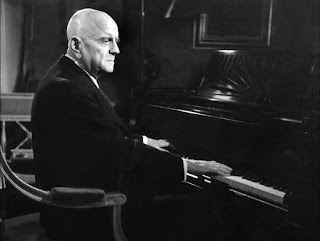
Quite a stern looking fellow, wasn’t he? (Obviously the second photo is Sibelius as a younger man. I screwed up the uploading and decided to leave it.)

Sibelius is known as Finland’s greatest composer, and there’s some good reason for that. From what I’ve read, Sibelius’s reputation has waxed, waned, and waxed again in the almost a hundred years since his main period of active composition came to an end. After the mid 1920s, Sibelius’s output dried up almost completely, and he lived out the remainder of his years–thirty of them, until he died in 1957 at the age of 91–composing little. As David Dubal notes in his book The Essential Canon of Classical Music, “[Sibelius’s] lifespan far exceeded his ability to fathom new artistic developments.”

Sibelius, like Rachmaninov (whose own long lifespan took place within the boundaries of Sibelius’s), straddled the transition from Romanticism to Modernism, and thus the transition from traditional tonality to the various systems that followed it. While Rachmaninov kept composing music that made him seem more and more anachronistic as his life progressed (though it did his reputation no harm), Sibelius’s music is more individualistic, so his reputation has had a harder time. Dubal, again:

Sibelius’s place in music history was once more secure than it is now. Around 1920 in various quarters, he was proclaimed the ideal modern composer and an antidote to the seeming chaos of Schoenberg, Stravinsky, and Bartok. But by the late 1940s, his reputation had begun to decline. The composer Virgil Thompson, listening to the great Seventh Symphony, wrote, “I do not believe for a moment that its gray and dirty-brown orchestral coloring is a depiction of either the Finnish soul or the Finnish landscape…I think Sibelius just orchestrates badly.” Thirty years later Harold Schoenberg called Sibelius “a dated bore” but conceded for him “an honorable place among the minor composers,” while giving to the Danish Carl Nielsen “as much sweep, even more power, and a more universal message.”

I cannot at this point comment on Thompson’s impression of Sibelius’s Symphony No. 7, as I haven’t heard it yet. We’ll see. And I may decide that Schonberg is incorrect; again, we’ll see. I do like Carl Nielsen a great deal, but that’s for another time.

In my college years, I only played two works by Sibelius, on the same program, in my freshman year. The big one was the Violin Concerto, which I disliked quite a bit at the time. It was a hard setting in which to get to know a piece of music, though, and I fully grant that my view at the time was very poorly informed. At that point, the orchestra in college didn’t even have a full complement of players until just before the performances, when our music director (my beloved Dr. Janice Wade) would bring in musicians from surrounding towns to fill out the group. On the one hand, I didn’t know shit, being only 17 (I certainly thought I knew shit, but believe me, I most certainly did not), but on the other hand, that’s also a very difficult scenario under which to form a fair impression of a work.

The other piece was Finlandia, which is by far Sibelius’s most well-known and popular work. It is literally a musical love-letter to Sibelius’s own homeland, and it chock full of orchestral color, some deeply exciting material (the middle section somehow feels march-like without being a march), and then a deeply beautiful hymn-like melody that sounds like a folk anthem (even though all the melodies in the piece are of Sibelius’s own invention). Finlandia has become as beloved in Finland as The Stars and Stripes Forever has to Americans, and it’s as good a place as any to enter Sibelius’s sound world. This particular performance adds a choir to the proceedings, for stirring effect.

In future weeks I’ll look at Sibelius’s tone poems (many inspired by the folk epics of Finnish legend), his symphonies, and, yes, that Violin Concerto that vexed me at seventeen. Stay tuned!

Here’s Finlandia.

Share This Post

2021 in the Books: Beethoven, Merlin, and the Hardy Boys meet Veronica Mars

 Here’s some of my recent reading!

::  Beethoven: The Relentless Revolutionary by John Clubbe is simply superb. I wanted to get this one done in time to blog about it during 2020, but getting it done this year is fine.

Beethoven: The Relentless Revolutionary, Clubbe

While not really a “life and works” biography, Clubbe’s book has enough of that within its pages that it would suffice if one was looking for a single-volume account of Beethoven’s life. Clubbe is more interested in tracing through Beethoven’s life and music the influences of late-18th and early-19th century revolutionary history and politics. Beethoven emerges not just as a towering figure in art, then, but as an important historical figure in his own right. Many histories of music and biographies of artists don’t really do this kind of heavy lifting; any history is often treated as incidental. Mozart, for example, is often shown not as a part of history, but as a force of his own, only occasionally interacting with history, such as in his dealings with Emperor Joseph II of Austria.

Beethoven, on the other hand, was profoundly impacted by history, and Clubbe shows this readily by tracing Beethoven’s artistic influences and artistic goals in the light of the revolutions in human rights and political philosophy that shaped that time. Napoleon Bonaparte turns out to be a deeply important figure in Beethoven’s world, going far beyond the famous anecdote of the great composer initially dedicating his Symphony No. 3 in E flat major to Napoleon, and then ripping the dedication away when the Frenchman declared himself Emperor.

Clubbe writes:

Beethoven’s music thus reflects both the turmoil of the age in which he lived and no less the turmoil within himself. As he matured, he affirmed ever more passionately the ideals in which he believed. By focusing on the revolutionary origins of his music, itself a response to the revolutionary age in which he lived, we enter the heart of his genius. For listeners, past and present, who have yearned for political and social change, Beethoven’s music has been and remains an inspiration.

This book is outstanding and I highly recommend it.

::  The Crystal Cave, by Mary Stewart.

The Crystal Cave, Mary Stewart

This was a re-read of the first book in Stewart’s Merlin trilogy, which I first read almost thirty years ago when I went on a massive Arthurian binge during my collegiate years. I was obsessed with “the Matter of Britain” back then, and those stories have held a special place in my heart ever since. I remember finding Stewart’s trilogy, with a fourth book she added on later, in a boxed set in a shopping mall bookstore while on a tour with my college band, someplace in Wisconsin, and I read the four books the following summer. I remember loving them as I read them, but I never re-read them until now, although I’ve intended to re-read them for several years now. Time to get that job done!

Stewart wrote The Crystal Cave in 1970. How does it hold up fifty years later? Quite well, in all honesty. Stewart writes a very historically-focused story here, keeping the fantastical elements to a minimum. The Arthurian saga has always presented problems to those who would write stories based on it, seeing as how there is no single “Arthurian saga”; what we call that, or “the Matter of Britain”, is a collection of tales and stories that accrued and gathered and evolved over hundreds of years. This can result in a lot of versions to take on a disjointed feel, which Stewart avoids by making Merlin, not Arthur, her main character; in fact, Arthur himself doesn’t arrive on the scene, and then only by virtue of being born, until the very end of The Crystal Cave. Everything up to then is Merlin’s story: his questionable birth, his entry into the world of post-Roman Britain mysticism, and his dealings with the pre-Arthurian Kings like Vortigern and Uther.

Stewart’s prose is cooler than I remember, heavy on description and with long paragraphs. In this she might not appeal quite as much to modern readers, but I like this Tolkienesque approach. Her characters are sharply drawn, though, and Merlin’s adventures are interesting throughout. There’s a lot of military maneuvering in this book as armies tromp all over Wales, which is something I didn’t remember from my first reading, but then…it’s been a while!

I will be reading the other two books in the trilogy later this year.

::  The Montague Twins: The Witch’s Hand, by Nathan Page and Drew Shannon.

I checked this out of the library on a whim, because I like to use graphic novels as way to cleanse my reading palate from time to time. This one is an absolute delight. I loved it!

The Montague Twins: The Witch's Hand, Page and Shannon

Basically, what you have here is something that reads like The Hardy Boys mashed up with Veronica Mars, set in a small New England town in the 1960s, with magic and witchcraft thrown in. Actual magic and witchcraft, mind you, not the Scooby-Doo fake magic-and-monsters that always turns out to be Old Man Carruthers in a rubber suit and latex mask, who “woulda got away with it if it hadn’t been for you meddlin’ kids.”

Our leads here are, yes, “the Montague twins”, but they have a larger supporting cast to the point where it seems like actually calling the book The Montague Twins feels like a bit of a misnomer. But they’re two late-teen twin brothers who wear their hair in stylish pompadours and who investigate local crimes. As the book opens, they’ve successfully located the missing dog of the local Very Rich Family Who Owns Everything, and yet oddly, the Very Rich Family doesn’t seem quite as happy with this as they should, which does play in later in the book. There’s a lot of bad-blood history in this book that comes out over the course of its story, not all of which is exactly surprising but a lot of which is satisfying in the “A-ha, I knew it!” way.

What I loved most about this one is that it takes its time. We live in a storytelling epoch in which pacing is seemingly everything, in the sense that the faster-paced the better. One bit of writing advice I see all the time is “Every word must advance your story, and if it doesn’t, cut it!” This has resulted in stories that are constantly rush rush RUSHing their way through their plot beats, with no time for the reader to digest or think or linger in the world or enjoy a quiet moment here or there with characters. The Montague Twins: The Witch’s Hand does not rush, which pleased me greatly. Not every story has to whip by like a damn episode of a CBS procedural, folks!

I read that a sequel is forthcoming to this book. I hope it’s a success and there are more to come!

Share This Post

Super Bowl trivia questions!

 It’s THAT weekend, again! If you need some Super Bowl trivia questions for your socially-distanced Super Bowl Party On Zoom, here you go! These are recycled from last year, with revisions to two questions based on the results of last year’s game and this year’s champions (I can no longer say that no team has ever played a Super Bowl on its own home field!). Answers are in the comments (with one question’s answer having changed after last year’s Super Bowl result).

1. What is the highest combined point total in a Super Bowl?

2. What is the lowest combined point total in a Super Bowl?

3. What winning team scored the fewest points?

4. What losing team scored the most points?

5. What is the oldest existing venue to have hosted a Super Bowl?

6. What is the oldest existing stadium that is home to an NFL team to have hosted a Super Bowl?

7. What is the last Super Bowl to be played in a stadium that was not home to an NFL team?

8. According to a Super Bowl-related episode of THE SIMPSONS, who are the favorite teams of Homer Simpson and Moe Szylack?

9. Three American Idol winners have performed the National Anthem at Super Bowls. Which ones?

10. These two teams have met in three Super Bowls.

11. These teams have each met in two Super Bowls.

12. These three teams are 1-0 in the Super Bowl.

13. This is the only team to be currently undefeated in multiple trips to the Super Bowl.

14. As of 2021, this team has gone the longest without returning to the Super Bowl.

15. As of 2021, this team went the longest between Super Bowl victories.

16. To date, this is the only Super Bowl whose participants played their home games in the same state.

17. Following each of this team’s last two Super Bowl victories, the starting quarterback for both games retired. Name the team and the two quarterbacks who retired as champions.

18. These teams have won at least four Super Bowls.

19. These teams have lost at least four Super Bowls.

20. This player is the only special teams player to have been named Super Bowl MVP.

21. The team with the NFL’s season rushing champion has advanced to the Super Bowl only four times. Name the players, the teams, and the Super Bowls.

22. Since the NFL adopted a 16-game regular season, seven teams have posted records of 15-1 or better. Only two of those have won Super Bowls, however. Name the two champions, and the remainder of the teams and their results.

23. This is the only team to win the Super Bowl after being outscored during the regular season.

24. Over the course of 12 months, this city hosted the NHL Stanley Cup Finals, the World Series, the Super Bowl, and the NCAA Final Four. Which city was it, and which Super Bowl was hosted?

25. Four coaches have each lost the Super Bowl four times apiece. Name them.

26. Which of the following has never happened in a Super Bowl: a punt return for a touchdown, two wild-card teams meeting in the Super Bowl, a play from scrimmage over 90 yards, or a head coach winning a Super Bowl with two different teams?

27. Name the four teams that have as yet never reached the Super Bowl.

28. In only two Super Bowls did neither team commit a turnover. Which ones?

29. The closest geographical proximity between the two cities represented in a Super Bowl was 164 miles. Which two cities, and which Super Bowl?

30. What is the earliest in a Super Bowl that a winning team has taken its final lead?

31. No team has ever won three consecutive Super Bowl championships. What two teams came closest to doing so?

Enjoy, and go Chiefs! Evil Tom MUST be denied a seventh victory. ON THIS ALL DEPENDS.

Share This Post

The history….

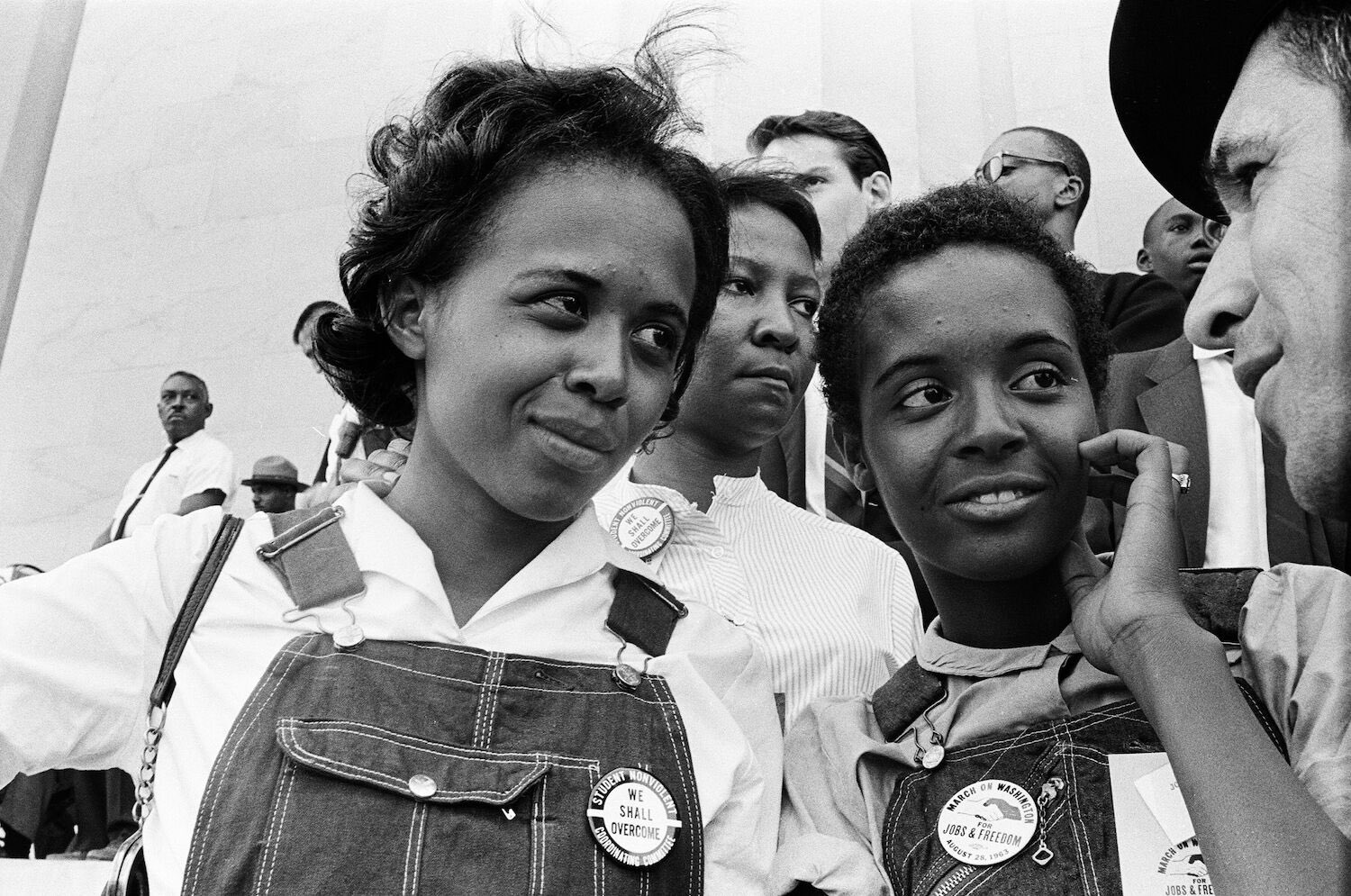
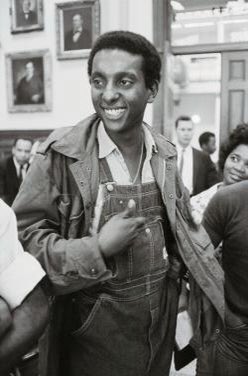
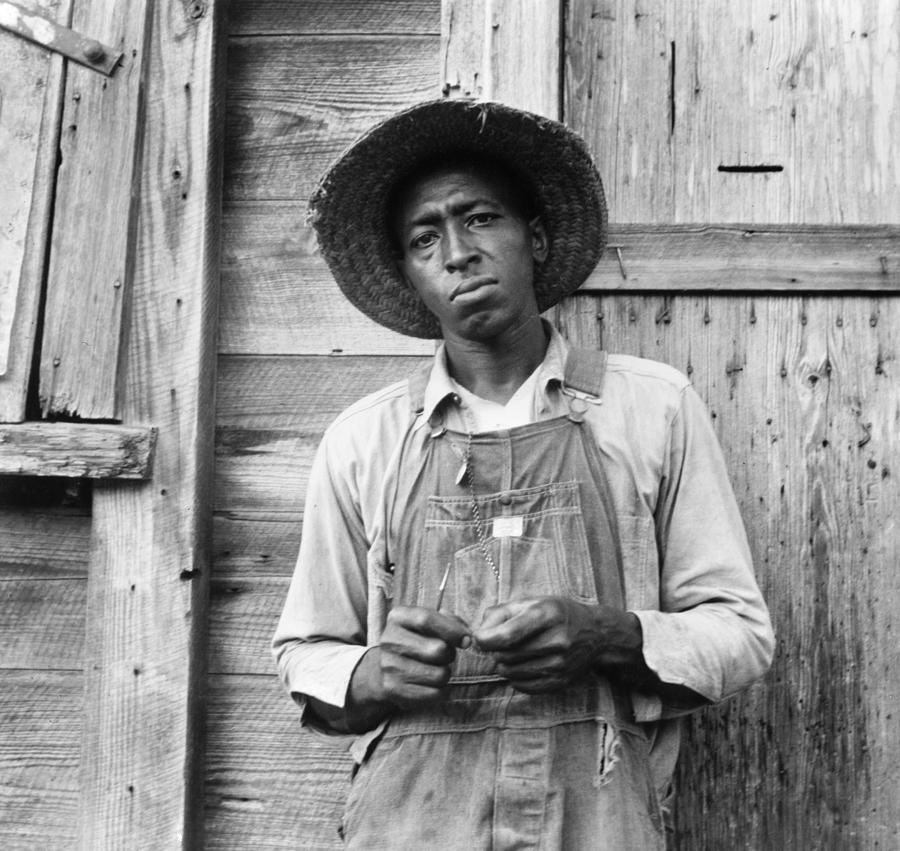
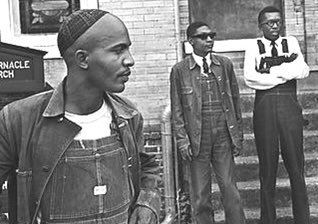
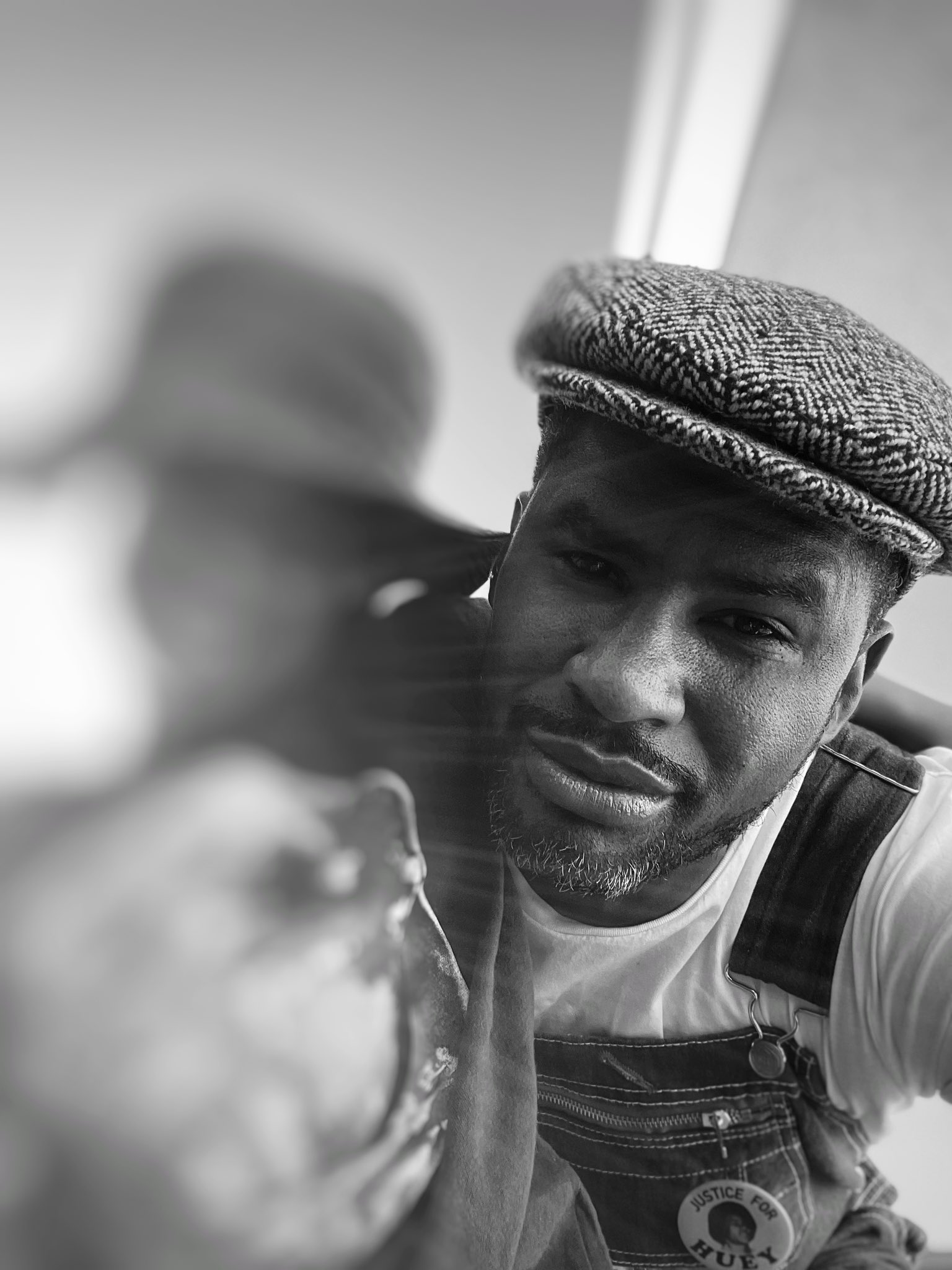
 It’s February (sorry about the lack of posting, there’s some stuff going on that’s not horrible but occupying lots of brain cycles), and with it comes, as always, Black History Month. Here is a thread I saw on Twitter yesterday, from a user going as “LEFT Ph. D”, describing in brief the part that something near and dear to me plays in Black history in America: overalls!

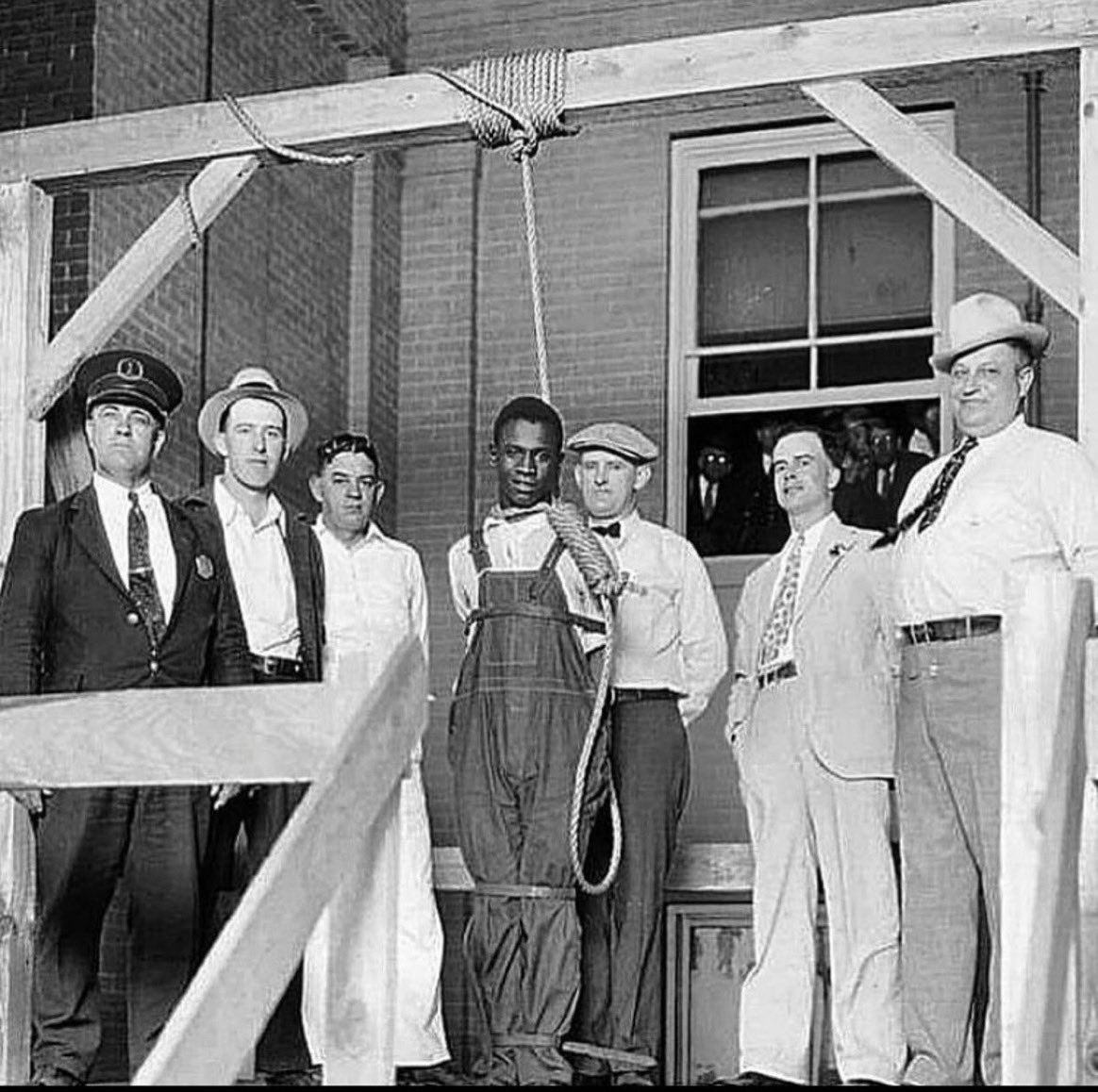
I tried embedding the individual tweets, but for some reason the code to do so was kind of wonky, so I’m reproducing the text and images below, in sequence as they appeared. WARNING: One of the images is a difficult one, a stark reminder of the casual way we used to show our devaluing of Black lives.

The SNCC referred to in LEFT Ph.D’s commentary is the Student Nonviolent Coordinating Committee, a student-led movement that was one of the main methods for students in the United States to engage with and support the growing Civil Rights movement. More on them here.

(One of these images is difficult.)

Our clothes come with a politic.

SNCC used denim overalls as a counterbalance between women and men. They used overalls as a symbol of solidarity with sharecroppers in the rural South during Jim Crow. They used overalls to combat politics of responsibility.


Yesterday, my 5-year-old asked me why I always wear overalls. He was curious about the buttons that I wear on my clothes. I didn’t give him a history lesson on denim/workwear and Black folks, but I did show him pictures. I did tell him that those pictures were of our ancestors.

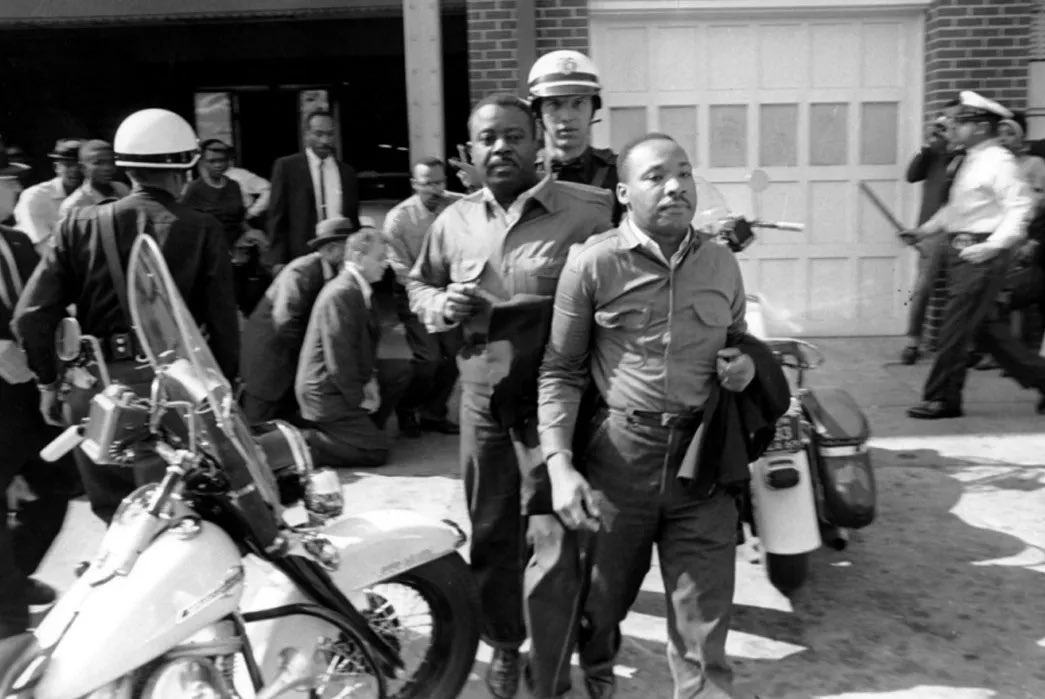
When Dr. Martin Luther King Jr. was arrested in Birmingham, Alabama in 1963, he was wearing denim workwear. He wasn’t wearing his “Sunday best.”

He was aware of the politics of denim.

It was this MLK that wrote ‘Letter from a Birmingham Jail’.

When Joyce Ladner, Kwame Ture (then (Stokely Carmichael) and other members within SNCC purposely rocked denim overalls, as a uniform, it was a conscious effort to build with Black folks that were most terrorized by violence of Jim Crow America.


I found this all pretty fascinating. Obviously for me, overalls are a thing of comfort and a bit of statement of personal weirdness and quirk. But there’s history behind them, a dark and important history that hasn’t even played out completely yet.


Share This Post

From the Books: WORLD OF WONDERS by Aimee Nezhukumatathil

2021-01-31_02-50-22

From summer 1976 to summer 1977, my family lived in LaCrosse, Wisconsin while my father taught at the university there. That school year I was in kindergarten, while my sister was in…sixth grade, I think? My memories of LaCrosse aren’t grounded by very many specifics these days, but there are things I remember of that year. I remember a couple of the pizza places we went to: one was Rocky Rococo’s, and the other…wasn’t. There was a bar and restaurant called Schmidty’s that I vaguely recall serving a pork chop on a steel serving plate, which I thought was really cool. I also vaguely recall my father jokingly calling that place “Shitty’s” because he always did like a funny rhyme, though he and my mother were less amused by me trying that same joke on for size. Bummer! Swear words are fun!


I also recall one morning when we were gearing up for one of our usual Saturday (I assume it was a Saturday) road trips. A fixture of my childhood was all of us getting in the car and driving someplace an hour or two away, seeing what was there for a bit, and then coming home, usually with a stop at some tavern someplace for dinner. On this morning, I asked my mother where we were going, and she said, “Iowa!” I had no idea what “Iowa” was; remember, I was five years old and pretty hazy on the concept of states and stuff. I don’t remember what we saw that day on our drive to Iowa, but that was the first time Iowa was ever on my radar. Maybe we went to Dubuque? I don’t know.

I think back on that day, though, and I realize that as a kindergartner was hanging out with his parents, about a hundred seventy miles or so west there was a first grade girl hanging out with her parents, and that thirteen years or so later, that girl would meet that kindergartner in college, and a year after that, he’d ask her to go see a movie with him (Edward Scissorhands), and fast-forwarding to today, as that onetime kindergartner writes this very post, she’s taking measurements for a new bed for one of our dogs. We grew up worlds apart, but then there was this one period when we weren’t that far from each other. Just a few hours’ drive apart, for that one day. Later in summer ’77, we’d move to Hillsboro, Oregon…and a couple years after that, to Allegany, NY. That young girl I’d marry was a couple thousand miles thataway…and then she was a thousand or so miles thataway. Until finally the thataways converged, and we were together, hoping for as few thataways as possible.

I’ve been thinking about this a lot, after reading this passage from Aimee Nezhukumatathil’s remarkable book World of Wonders: In Praise of Fireflies, Whale Sharks, and Other Astonishments. At this point, Nezhukumatathil is in sixth grade, living in Kansas with her family through a year she doesn’t seem to have enjoyed very much:

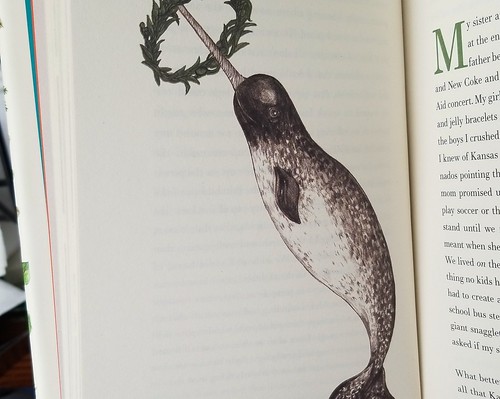
I could not have known that just one hour south of Larned State Hospital the person I would eventually marry, the father of my sons, was likely practicing layups in his driveway or hitting baseballs into a field not too far from a buffalo range. Just one hour from my life’s love! One hour! A white boy who would one day take my brown hand in his, putting it to his heart when he makes a promise so I can feel his heartbeat and the warmth residing there. If only the narwhal could have taught me how to listen for those clicks of connection, that echo reverberating back to me.


Wait, you might be asking. What’s this about a narwhal?


The book is called World of Wonders, and as I flipped through it in the bookstore where I found it (a brand new bookstore in Ithaca that is one of the most beautiful little bookstores I’ve ever seen and had the terrible luck of opening as the COVID pandemic was apparently shutting down the world), I figured it for a poetical look at a quirky selection of the world’s creatures, quirky and poetic. And it is certainly that, as Nezhukumatathil is a poet by vocation. But more than that, Nezhukumatathil uses all of these amazing creatures of the world as metaphorical gateways to discuss her personal biography and her experiences in the world.


Nezhukumatathil, being a poet, writes with language that is beguiling and lyrical. The book has the feel of being one long prose poem. Here she is on fireflies:


For a beetle, fireflies live long and full lives–around two years–though most of it is spent underground, gloriously eating and sleeping to their hearts’ content. When we see these beacons flashing their lights, they usually have only one or two weeks left to live. Learning this as a child–I could often be found walking slowly along untrimmed lawns, stalling and not quite ready to go inside for dinner–made me melancholy, even in the face of their brilliance. I couldn’t believe something so full of light would be gone so soon.


One aspect of Nezhukumatathil’s life to which I can relate is moving a lot as a young person, but I cannot relate to her experiences as a person of color living in all these rural American locations. I can, though, readily envision the kind of experiences she had. There was an Indian family that moved to my town when I was a senior in high school, and one of their daughters (I think there were at least two kids in that family) was in my class, for all of one year. She was an incredibly smart and very nice (and, I might add, beautiful) person who was very well read; her favorite book was The Great Gatsby, which I myself read that year for the first time. She and I had some discussions on that book that I remember fondly. But some other things, I remember less fondly. As the year began to dwindle and as graduation neared, it was time for the yearly academic awards, and she won a bunch of them. Some of my classmates–all of them as white as anything–groused in the quieter moments of study halls that “Why should she get all the awards, she only came to town that year, she’d be gone soon, she was an outsider.” This at the time reminded me of my sister’s experience six years earlier in the exact same school district, when we’d moved in when she was a junior and she proceeded to win a lot of academic accolades. But of course her experience couldn’t possibly map to Shazia’s (that was her name), because Shazia had the added hurdle of moving to small-town rural Western New York as a person of color.


Throughout World of Wonders, Nezhukumatathil occasionally makes glancing reference to time she lived in Western New York. I had no idea of this when I bought the book, but it caught my attention. But when the subject comes up, it’s a very quick mention, gone as quick as it comes, and I wondered if Nezhukumatathil had a bad experience here. I wondered where she lived in WNY, and how much of her experience here I would recognize, even as the person watching it unfold instead of living it. Late in the book, though, Nezhukumatathil names her town: Gowanda, NY. I know the town. It’s a small village in the hilly country between Erie and Cattaraugus Counties, a very beautiful area that I value highly for its hills and valleys and gorges and streams and waterfalls. But Nezhukumatathil writes of a single year there, and I think back on my classmate Shazia.


Later, Nezhukumatathil writes of living in Western New York, during her chapter on the red-spotted newt:


These newts are one of the only amphibians to contain a ferromagentic mineral in their bodies, and that, combined with their incredible capacity to memorize sun and starlight patterns to return to their original pond waters, make them an animal on par with salmon for their excellent homing capabilities. What’s particularly amazing is that in its lifetime–thanks to its innate magnetic compass–a newt doesn’t usually stray farther than just over a mile from its origins pond, staying within the range of about eighteen football fields.


My own homing instinct was stronger than I ever could have thought. A decade after I left Western New York as a teenager, I was finishing up a fellowship year in Madison, Wisconsin. I scanned the academic job boards for entry-level professorships and had to blink twice when I saw there was an opening not too far from my old home. It was a long shot, I knew, but I applied anyway, even as I drove around to local bookstores and coffeehouses in Madison to apply for jobs there. Coffee barista, English professor–I felt guilty for even daring to hope I could land a tenure-track job–all I knew was that I wanted to stay in the classroom, but I also wanted to be able to spend time outdoors and write.


After a few days’ worth of interviews, I received the magical call welcoming me back, and I spent fifteen more years in Western New York. I was married there. My babies were born there. But it wasn’t my forever home. Though we still keep in touch, my best friends had long since moved away. I was still one of too few brown people in town. I was tired of acquaintances at the post office asking about “my people,” meaning Filipinos or Indians; tired of people saying Namaste! to me in the grocery store, when I was least prepared for it; tired of the increasingly hostile climate at work if I dared to suggest more diversity on campus; and simply tired of being the one brown friend to so many people. On top of that, I spent fifteen winters navigating roads clogged with lake-effect snow. I was done with that pond. I would need to keep searching.


Everyone has to find their own home, their own place to belong. Nevertheless, it makes me a little sad that the place that’s my home, my place to belong, wasn’t someone else’s. A bit selfishly, I mourn that my region had for a time someone living here who is capable of writing a book like World of Wonders…but for this reason or that, she felt that she couldn’t really live here. This happens for a lot of reasons, not all of them bad…but still. A place is a bit sadder when it says farewell to its poets, and a bit sadder than that when it doesn’t even realize its poets have left.


Anyway, World of Wonders is a beautiful book.

Share This Post

A Note on the Lack of Music on this Blog of Late.

 You may have noticed that I’ve been posting very little music-related content here of late. That’s mainly because I went really hard-core into music posting the last few months of 2020 (December especially), and this month I’ve been focusing on some other goals (starting a book, celebrating the end of Issue 45 of The American Presidency (worst issue ever!), watching horror as my own fellow citizens tried to perpetrate a coup with the help of actual elected Republicans). Music posting will return in February, which is just a few days away, so…yay!

And with that, here’s two doggos.

New bed 4: Y U IN MY BED #Cane #dogsofinstagram #greyhound #greyhoundsofinstagram #Carla #pitbullsofinstagram #pitbullmix #pittie #staffordshirebullterrier #staffiesofinstagram

Share This Post

Competence Porn

 Recently, one of the hosts of a writing-related podcast that I enjoy (Functional Nerds, if you must know!) referred to “competence porn”, meaning stories wherein the characters are actually, well, competent. They know what they’re doing, they know their jobs, and they work to get the job done. Which isn’t to say that there aren’t complications! Not at all. But none of the major plot developments arise from someone being dumb or inept or not having a clue what they’re doing. That is refreshing.

Competence Porn can also refer, I think, to instructional videos or documentary-type videos in which people who know what they are doing simply go about doing their job. This particular video is an outstanding case in point. The YouTube algorithm served this up for me, and I have no idea why–maybe it’s because I’ve watched railroading videos, or occasional construction videos, but not many of those at all. The concept is incredibly simple: a contractor was using an excavator (the modern version of what I learned as a kid was a “steam shovel”) to dig out a pond someplace. Unfortunately, the ground appears to have been too saturated and the operator appears to have not used proper equipment in moving the excavator, resulting in the excavator sinking into the mud all the way up to the cab.

In steps Our Hero, the fellow making this video. This is nothing but 41 minutes of this guy doing the job of digging out this excavator, but it’s just amazing to watch. It starts with his laconic attitude. The sight of the excavator buried in mud is disconcerting, and at first glance I thought, “I have zero idea how they’re going to get that thing out of there.” But Our Hero just says in a gentle drawl, “Well, there’s the problem,” and next thing we know, he’s in an excavator of his own, working on digging out that one. This involves moving a whole lot of mud so that the water won’t flood the hole as they dig into it; it involves delicate placement of mats that will provide support for these giant tools. The ‘mats’ consist of half a dozen railroad ties all bolted together and laid out side by side so that the excavators can drive over them, and the most fascinating part of this video is Our Hero’s manipulation of the mats. He moves them quickly and precisely with his excavator, and he taps them into position to line them up, and at one point (about halfway through the video) he even picks one up and moves it while he looking at and taking to someone else!

There’s never any questioning it here, never a shown moment of “Oh wow, let me call somebody, I don’t even know where to start.” Just a cursory “Well, there’s the problem,” followed by the work to get the job done. Apparently the whole job only took an hour and a half from their arrival to the end, and it just seemed like a day at the office for these folks.

Competence porn, indeed!

(This video is so even-keeled that the droning sounds of the excavator engine as it digs and dumps, digs and dumps, digs and dumps has a kind of ASMR effect, I noticed. This was actually relaxing to watch!)

Share This Post

A Thousand Falling Shadows

On the street where I live #wny #winter #snow

 In old movies–especially the black-and-white noir films–you’ll often see someone standing under a streetlight. In the movies the streetlights always cast a distinctive pool of light below, with a relatively sharp boundary between the light and the darkness beyond. In reality, though, streetlights haven’t been like that for years, owing to the high-pressure sodium lamps used in modern streetlights. These lamps cast the familiar, ridiculously-bright light that spreads outward in all directions, fading at length.

Now, however, in the interests of energy efficiency, municipalities all over the country are switching from the high-pressure sodium lamps to energy-efficient LED fixtures. The LEDs really do cast distinctive pools of light below, with a relatively sharp boundary between the light and the darkness beyond. The light is a natural spectrum, thankfully, so the light doesn’t feel false–in fact, it feels even less false than the brilliant burning amber of the old lamps.

One thing you discover with LEDs is that unless they are filtered through frosted glass or something similar, their light is extremely directional, which means that shadows made in LED light tend to be very sharp and accurate. This was driven home for me tonight, when we walked our dogs as snow fell from the sky. It was a peaceful night, no breeze, so the snow was able to just flutter down to the ground on its own time and agenda. These are my favorite kinds of nights to walk, during the wintertime…and tonight I noticed something else, when we passed beneath the first of the new streetlights on our street.

The snowpile sparkled like snow usually does–but there was something else. Tiny shadows of darkness, all flitting in the same direction across the snow on the ground. It took me a minute to realize that I was seeing something I had never seen before, something I had never thought to see before. I was seeing the shadows of the snowflakes themselves, snowflakes casting their own shadows on their already-fallen brethren. I never thought for the tiniest of seconds that a snowflake could cast its own shadow.

But it turns out they do. And that, my friends, is a bit of magic.

Share This Post

ForgottenStars.net

The official site of Kelly Sedinger: Reader, writer, photographer, and dreamer

Skip to content ↓