Just because, here are some photos of the dogs.
(I’ll take more of the cats soon.)


Just because, here are some photos of the dogs.
(I’ll take more of the cats soon.)
Wow, I need to get back into the swing over here, don’t I? Here’s something! It’s not even a bad joke. I liked it, actually!

(via)
I really love the movie Catch Me If You Can. One reason is John Williams’s wonderful score, with its mix of caper-jazz and its wistful tone depicting Frank Abagnale’s (Leonardo DiCaprio) unspoken wish for some kind of normal life. Williams edited his masterful score, one of his most underrated gems, into this suite.
The Death of the Ball Turret Gunner
From my mother’s sleep I fell into the State,
And I hunched in its belly till my wet fur froze.
Six miles from earth, loosed from its dream of life,
I woke to black flak and the nightmare fighters.
When I died they washed me out of the turret with a hose.–Randall Jarrell (1914-1965)
When the Lion at his pleasure comes
To the watering place to drink, ah see!
See the lesser beasts of Al-Rassan
Scatter, like blown leaves in autumn,
Like air-borne seedlings in the spring,
Like grey clouds that part to let the first star
Of the god shine down upon the earth.–Guy Gavriel Kay, from The Lions of Al-Rassan
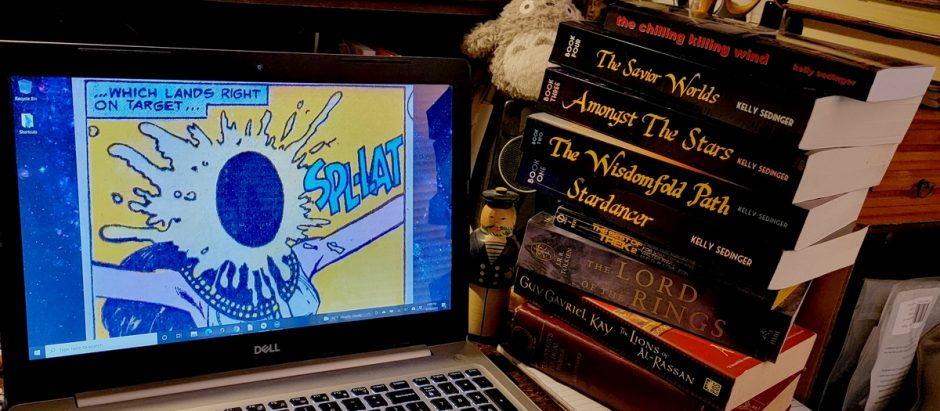
April is National Poetry Month, so I’ll be doing some posting about poetry over the next few weeks, starting with this. Should writers read poetry? Should they write it? While I would never presume to tell writers what they should or should not write, I tend to think that the answers to both questions are Yes.
I have occasionally committed acts of poetry myself, but not very often, and as I don’t generally find the results particularly encouraging, I don’t intend to share them except as very brief excerpts in my fiction. I do, however, read a decent amount of poetry, and I firmly believe that all writers should do so.
It all comes down to what Stephen King called “the writer’s toolbox,” and his dictum that to be a good writer one must read a lot and write a lot. Reading a lot extends a writer’s grasp, and reading poetry extends it in ways that reading a lot of fiction does not. If writing is likened to carpentry–extending Mr. King’s metaphor a bit–than reading poetry is like learning entirely new methods and techniques. A new way to stain a piece of wood, say, or perhaps a new method of joinery.
While poetry can certainly be read for its technical aspects, I find myself concentrating much less these days on things like rhyme or meter than I did when I was reading poetry in school. What I’m after now is the language itself. I read poetry to see, in new ways, just what language can really do.
Consider metaphor. Here’s a poem called “Up-Hill”, by Christina Rosetti:
Does the road wind up-hill all the way?
Yes, to the very end.
Will the day’s journey take the whole long day?
From morn to night, my friend.But is there for the night a resting-place?
A roof for when the slow dark hours begin.
May not the darkness hide it from my face?
You cannot miss that inn.Shall I meet other wayfarers at night?
Those who have gone before.
Then must I knock, or call when just in sight?
They will not keep you standing at that door.Shall I find comfort, travel-sore and weak?
Of labour you shall find the sum.
Will there be beds for me and all who seek?
Yea, beds for all who come.
I suppose the metaphor here is pretty obvious: the road that is being walked here is life itself, and the inn at the end that cannot be missed and has beds for all who come is death. That’s not especially hard to see. But the craft of the metaphor is what’s interesting here, and in my experience, metaphor is best explored via an industrious reading of the poets.
Then there is description. Writers often worry about description: what’s too much, what’s too little, which details are best to utilize in painting a word-picture, which details are best left aside. As much as I love the work of JRR Tolkien, Alexandre Dumas, and Victor Hugo, the fact is that writers these days are not given as much space to craft their descriptions as in decades or centuries past, so we have to be careful.
This is where reading poetry can help us. Take this short verse by Tran Nhan-tong, a Vietnamese emperor and poet who lived from 1258 to 1308:
The willows trail such glory that the birds are struck dumb.
Evening clouds balance above the eave-shaded hall.
A friend comes, not for conversation,
But to lean on the balustrade and watch the turquoise sky.(translated by Nguyen Ngoc Bich, in the collection World Poetry)
So few details! In fact, there are almost no details given here, just statements of fact. But can anyone read this and not create a mental picture of a summer evening, looking out at the willows beneath a turquoise sky dotted with clouds? If they can, I don’t know how.
And then there is rhyme and meter and alliteration and all the other various things that our high school English teachers tried teaching us. Those are all wonderful tools that you can use in your storytelling. For all our focus on things like plot, character, and world building, ultimately the spell that our stories cast is deeply dependent on how we use our language. That’s where so much of the real magic lies, and this is best learned by reading poetry with an eye to what the language is doing.
Next up: Where to start?
A very young Judy Garland–even before she would travel over that rainbow–sings to a photograph of Clark Gable.
Max Reger was a late-Romantic era composer who isn’t heard a lot these days, owing to his reputation of having written mostly very dense works that aren’t the easiest listens in the world. I’m all for difficult listening, but I’m not sold on Reger, whose work strikes me (based on what little I’ve heard) as very heavy and ponderous. But I’ll let you all be the judge: here is Reger’s Symphonic prologue for a tragedy.
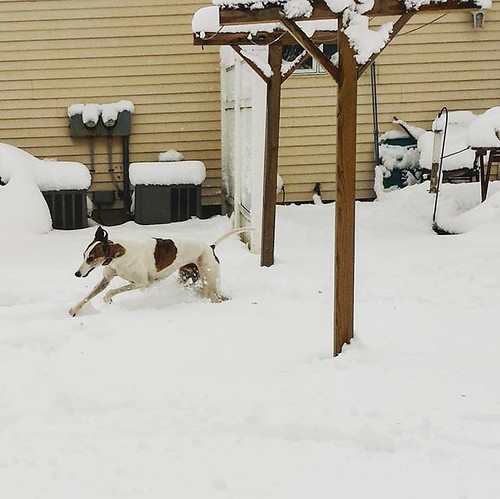
I’ve always found it hard to get really nice pictures of Cane as he’s running. From certain angles a greyhound running is a magical thing, but from others they look like a randomized collection of overlong limbs flailing in every direction.
I finally got lucky a couple of weeks ago.



It’s been a busy week…but not so busy that we can’t take some time for Itzhak Perlman playing Bizet by way of Pablo de Sarasate.
Sorry I didn’t get around to posting yesterday, but here is a bit of film music from a movie that is one of the better ones out there at depicting the sense of wonder and grandeur in the universe that science can illuminate. The film is Contact, and I offer this in memory of Stephen Hawking, who died the day before yesterday (on Pi Day, and Albert Einstein’s birthday, for a couple of odd synchronicities). Hawking was a complicated person, as most are, but his contributions to science cannot be diminished. He is now one of the “Giants” upon whose shoulders future generations will stand.
It’s Pi Day, everyone!
It is also Albert Einstein’s birthday and, sadly, this year’s edition marks the passing of Stephen Hawking, about which I’ll have more to say later. But for now, let’s celebrate Pi!


NASA’s Pi in the Sky Challenge
A few videos:
(That one’s titled “Pi Day” but the video has nothing to do with Pi so far as I can see, but it’s a cool video anyway, so there it is.)
And finally:


