
Tone Poem Tuesday

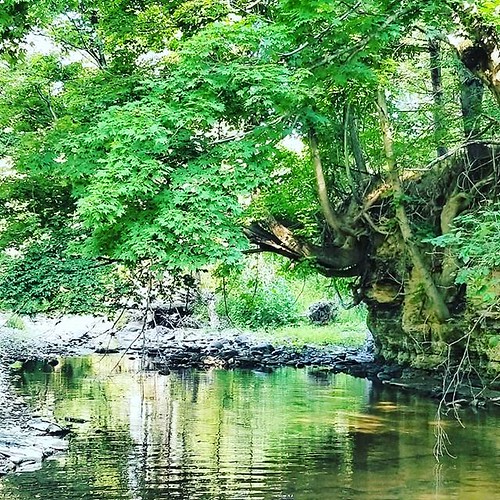
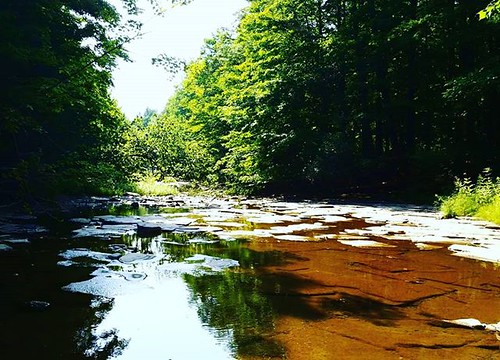
It’s always worth remembering that classical music isn’t just about dusty old works by composers long dead. British composer Eric Whitacre is still very much alive, and he is actually only a little less than two years older than me. I don’t know a whole lot about him, actually. The work featured here is, to my knowledge, the only work of his that I have heard, but it’s a beautiful piece indeed, for solo cello and strings. Called The River Cam, the work was composed in honor of cellist Julian Lloyd Webber’s sixtieth birthday (and he is actually the featured soloist in this recording), and it is inspired by the titular River Cam in England, which flows through Cambridge. The work is meditative and dreamy in the tradition of Ralph Vaughan Williams, putting me a bit in mind of The Lark Ascending. The music rises and falls and churns, conveying the energy of a river without resorting to brisk tempi or harsh discord. There’s a lot going on here as one listens, with the melodic lines going in different directions and at times creating dissonances that are nevertheless very beautiful to behold.

One thing is certain: I’ll be attending more on the music of Eric Whitacre.

Posted in Uncategorized | Tagged | Comments Off on Tone Poem Tuesday

Symphony Saturday

At last, the kinda-sorta weekly feature returns!

I’ve been listening to this symphony a lot of late. I find it a very compelling work, with a wealth of Romantic melody, vigorous orchestration, and quite a bit of pleasing energy. It’s also a mainly forgotten work, by composer John Knowles Paine. A big focus in this series has been to listen to a good many works of music that don’t deserve the obscurity into which they have faded, and Paine’s Symphony No. 2 certainly is that. Subtitled “In Spring”, the symphony is in four titled movements:

I. Adagio sostenuto: “Departure of Winter”; Allegro ma non troppo: “Awakening of Nature”
II. Scherzo Allegro: “May-Night Fantasy”
III. Adagio: “A Romance of Springtime”
IV. Allegro giojoso: “The Glory of Nature”

This is one of the most genial works I have ever heard, which is one reason I keep returning to it. There is some occasional brooding to the music, but the brooding invariably gives way to song and optimism. Perhaps that’s in keeping with the symphony’s vernal inspiration, and I for one find it hard to hear the last movement singing its heart out and not feel something of that optimism myself.

What a wonderful symphony this is!

Posted in Uncategorized | Tagged , | Comments Off on Symphony Saturday

Something for Thursday

A sad note from earlier in the week was the passing of Dolores O’Riordan, singer for the band The Cranberries. I don’t know their music very well, but you couldn’t be alive in the 1990s and not hear it at some point. I always liked her voice, with its effortless pixie-ish lilt.

Posted in Uncategorized | Tagged | Comments Off on Something for Thursday

Tone Poem Tuesday

I heard this frankly amazing piece the other day on the radio, and I promptly listened to it three more times as soon as I got home from driving about. The work is the Russian Overture by Sergei Prokofiev, and it is simply a collection of tunes, some of which are actual Russian folk tunes and some of which are original themes of folkish nature composed by Prokofiev himself. Prokofiev isn’t the type of Russian composer we often think of: he doesn’t pour out songlike melody like a Borodin or a Tchaikovsky or a Rachmaninov. His is a more modern sensibility, a reaction against Romanticism but still without the full-on nods to the modern of a Stravinsky. I found this work an infectious listen, with its occasional singing, its frequent playfulness, and its variability between intimate song and boisterous showmanship.

Here is the Russian Overture by Prokofiev.

Posted in Uncategorized | Tagged , | Comments Off on Tone Poem Tuesday

Greta Thyssen

Roger notified me of the passing recently of actress Greta Thyssen at the age of 90. I confess that I had no idea at all who she was, but thankfully, Roger provided context. In addition to her film career she later became an artist, and was married for a time to Cary Grant.

For my purposes, she starred in several Three Stooges shorts. I’ve never been a huge fan of the Stooges, but you can’t deny that they elevated the fine art form on which Ms. Thyssen several times found herself on the receiving end:


Full points to Ms. Thyssen for her pie-faced slow burn!

Posted in Uncategorized | Tagged , | 1 Comment

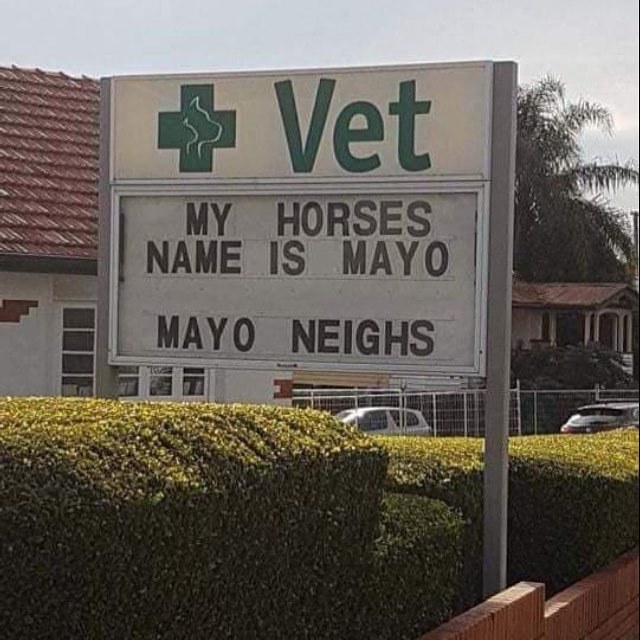
Bad Joke Friday

A Star Wars one!

Heh!

Posted in Uncategorized | Tagged , | Comments Off on Bad Joke Friday

Something for Thursday

Wow. Edward Scissorhands is twenty-seven years old. That’s meaningful to me because back in February 1991, there was an oboe player in my college band that I suddenly realized was pretty cute. She let slip in conversation that she wanted to see this movie, as did I, so I invited her to see it with me.

Spoiler: she married me, and now we have dogs.

Here is a selection from what is, to me, the finest work Danny Elfman has ever done as a film composer.

Posted in Uncategorized | Tagged | Comments Off on Something for Thursday

Tone Poem Tuesday

Starting off 2018’s musical selections with a short and lovely setting by Percy Grainger: a familiar folk tune from Scotland, “Ye Banks and Braes O’ Bonnie Doon”. Grainger is always worth returning to, for his sonorous settings and his ability to paint an amazing tonal picture in just a few minutes.

Posted in Uncategorized | Tagged | Comments Off on Tone Poem Tuesday

From the Books: THE COMING OF THE KING

So yesterday I saw a New York Times article linked on Twitter in which apparently some members of former European aristocracy are starting to raise the notion that maybe, just maybe, world problems might be helped somewhat by a return to monarchy. I confess I didn’t bother reading the article because…well, the whole notion just sounds goofy. But I did note the name of the first person quoted in the article: one Count Nikolai Tolstoy, who is a member of onetime Russian nobility, a distant cousin of Leo Tolstoy of War and Peace fame, and the writer of a fantasy novel about the wizard Merlin called The Coming of the King.

As it happens, I bought this book way back when I was in college and going through the big Arthurian phase of my reading life. There was a couple of years where if I was reading a book not related to any of my classes, it was an Arthurian book of one sort or another: either fantasy novels retelling the tale, or a nonfiction book about the legends or the larger category of British folklore from which the Arthurian matter springs. Tolstoy’s novel is…well, I started it and got about seventy pages in before I gave up. His writing style was very formal and almost stilted (not unlike The Silmarillion), but what got me was a passage that ranks as one of the strangest passages I have ever read in a fantasy novel. I thought that I had shared this before, but I did a cursory search of the archives and couldn’t find it, so here is is anew.

I don’t even recall the contextual events in which this takes place, save that it is a big feast-type party or something at the King’s great hall. Tolstoy is describing some of the evening’s entertainment here, and…well, this happens. I swear that this is from a novel that actually got published.

Low before the king bowed the seven newcomers; and bowed low they remained, with buttocks bare gleaming from the ruddy glare of the king’s hearth. For they were the far-famed farters of the Island of the Mighty, whose skill in farting surpassed any that might be found in Prydyn, or Ywerdon, or distant Lydau across the Sea of Udd.

Wonderfully loud was the farting of the royal farters at the feasting of King Gwydno Garanhir upon the Kalan Gaeaf; wonderfully lour, skillfully sonorous, and evil-smelling beyond the achieving of all others of their calling. At first they emitted with rare delicacy the seven notes of the scale, moving up and down the line in harmony, high and low. Then they blew forth tunes such as cowherds and milkmaids sing. They whistled high and they whistled low in semblance of the whistling of the keepers of the king’s kennels. or of unseen birds that pipe in the brake.

But these wonderful feats were as nothing to what followed, and an ecstasy came upon the Men of the North as each of the performers excelled his fellow with some new and marvelous display of art and skill. Marvelously true to reality was the snorting of war horses, the braying of trumpets, the roaring of stags, the rumble of thunder, the bellowing of bulls, the snarling of wildcats, and long, low drone of a homing cockchafer on a summer’s eve.

Well-fed were the performers upon dulse and lentils and beans, but not beyond the space of half an hour were they able to sustain their skillful performance. There came a moment when their conductor gave vent to a long, low whistling sound like a serpent retiring to its heathery laid; so sibilantly soft, stealthy-sounding, and stalely stinking as to instill an awed silence upon the assembled company. It was a signal for the departure of the troop, and with a final effort of such loudness and force and vigor that men swore afterward it set the goblets rattling upon the royal board, and all but extinguished the pine torches flaring in their sockets and even the great hearth burning beneath the royal cauldron.

Like the gale before which no man is able to stand upright, which blows without ceasing from the mouth of that Cave in the land of Gwent which men call Chwith Gwent, was that mightiest of farts which was in the North at that time. There were those in the king’s hall, however, who feared lest the performance might arouse storms and tempests in the winter sky, avowing they could hear afar off in the mountains the rolling of Taran’s wheel.

It was amid smoke and confusion and stench that the king’s farters flew from the banquet hall to the hostel set apart for them. It was long before the pleasure passed and laughter died away and tongues were stilled, so delightful was their performance to the Men of the North.

As noted, I have little idea what to make of this, and I recall that I read very little farther in the book after this.

As for the novel itself, it was apparently at one point to be the first book in a trilogy of novels about Merlin, but the next books never appeared. Count Tolstoy was apparently involved in some sort of legal action involving libel, which put a bit of a kibosh on his writing at the time. To my knowledge these books have never appeared.

And there, folks, is the strangest thing I’ve ever read in a fantasy novel.

Posted in Uncategorized | Tagged , , | Comments Off on From the Books: THE COMING OF THE KING

Something for Thursday

I must admit that I love a good cheesy hard rock ballad, and this might be the greatest of them all.


(And yes, I like the movie that it came from. It’s so gloriously entertaining in its jaw-dropping badness that I can never look away from it. It’s the cinematic equivalent of a lava lamp.)

Posted in Uncategorized | Tagged | 1 Comment