Something for Thursday

Composer Johann Johannsson died the other day. I am not terribly familiar with his music, but I have liked what I’ve heard. He seems to do a lot of atmospheric work that relies on repetition of motifs and long, slow builds–not unlike, say, Vangelis.

Here are several samples of Johannsson’s work. I’m glad he leaves such music behind, but I’m sorry that he won’t be able to create more of it.

Posted in Uncategorized | Tagged | Comments Off on Something for Thursday

Tone Poem Tuesday

In honor of tomorrow being Valentine’s Day, here’s one of the most famous musical treatments of one of the most famous love stories of all time: Tchaikovsky’s Romeo and Juliet Fantasy Overture. I just listened to this the other day with fresh ears, after not having heard it in quite some time, and I was struck anew by its raw power in depicting the central conflict in the play (the feud between the Montagues and the Capulets) and the rapturous love of the two young people who think to rise above it all, only to be consumed by it in the end. It’s a grand work, and it is almost the greatest musical treatment that Shakespeare’s play has ever received. (The greatest, of course, is Berlioz’s third symphony….)

Here is the Romeo and Juliet Fantasy Overture.

Posted in Uncategorized | Tagged | 1 Comment

John Mahoney

Actor John Mahoney died the other day. His most famous role was probably Martin Crane, father to Frasier and Niles Crane on Frasier, but he did a lot of work over the years, and for me the most memorable thing he did was also the first thing I ever saw him in: the great teen romance film Say Anything, in which he plays Diane Court’s father in a complex and moving storyline.

Diane is graduating high school, and she is utterly brilliant, so much so that she has won a fellowship to study and live overseas. However, she meets a fellow senior named Lloyd Dobler, who is massively in love with her and who manages to get her to agree to a date. So begins a whirlwind romance that unfolds over the weeks after graduation, which is for many young people a time of great uncertainty if not outright fear.

Mr. Court, obviously, dislikes Lloyd, who has no real plan for his own future other than to date Diane as much as possible and maybe pursue kickboxing, which he indicates is “the sport of the future”. (This was 1989, mind you.) This is the standard old trope, isn’t it? The doting father of the highly-achieving girl detesting the “bad boy” that she is dating.

But the film subverts the trope. Lloyd isn’t a “bad boy” at all; in fact, everyone who knows him loves him, from one end of the school’s social ladder to the other. He is talented and smart in his own ways, even if he doesn’t immediately scream out “future success story”. Also, Diane’s relationship with Mr. Court isn’t typical for films like this. Many times the doting father is a stern figure who seems cold and distant, intent only on preserving the family’s status or some such thing. Mr. Court, though, is warm and encouraging with Diane, clearly loving her deeply and wanting her to succeed. He doesn’t seem terribly invested in his own life, and in actuality, the Courts’ home life is presented as mainly comfortable, and not wealthy. Nice, but not too nice.

And that’s the problem.

Rather than keep Mr. Court as just some obstacle for Diane and Lloyd, the film gives him his own motivations. It turns out that he has been embezzling from his own business for years, and that the IRS is closing in on him. His whole house of cards is about to collapse and he knows it. That is why he is so invested in getting Diane into that fellowship: it will get her free, it will keep her safe when his own actions come back to haunt him. Lloyd, though, represents a threat to that. If Diane stays in Seattle for Lloyd…if she foregoes this opportunity…Mr. Court sees those possibilities as sheer disaster.

Through all this John Mahoney plays Mr. Court brilliantly. He clearly loves his daughter very deeply, even as we learn that he has been lying to her for years. His distaste for Lloyd doesn’t become personal until the very end, when he realizes that Diane is going to have both the schooling abroad and a life (for now) with this directionless, almost Zen-like boy. Mahoney shows Mr. Court’s conflicting emotions and growing tension throughout, in scenes like one where he huddles in the bathtub in a moment of encroaching terror and another when he is buying luggage for Diane and starts to flirt a little–just a little–with the salesperson, but then has to stop when he credit card is denied. When Diane confronts him, giving him an opportunity to confess and he doesn’t (after an IRS agent has asked her if her home is “nice…but not too nice”), he tries resisting at first, but then the shame is written clear on his face when Diane has to tell him that she found his stash of money.

I have always felt that Say Anything is one of the greatest teen romances ever filmed, if not the greatest, and I’ve never wavered from that opinion. John Mahoney’s performance is a big part of that. The film has an open ending, leaving it up to us to decide what the future holds for Diane and for Lloyd and for Mr. Court, and if their relationships will ever heal. If not for the very human portrayal of Mr. Court, this wouldn’t really work.

Mahoney was in a lot of stuff, obviously, and I was a big fan of Frasier through its run. Mahoney’s Martin Crane was a blue collar man who didn’t have very many ways to relate to his two academic sons, but he always found a way, such as in this wonderful scene where he comes up with a very distinctive way of cheering Frasier and Niles up.


There’s another scene, in another episode, when Niles has a little too much to drink and indicates his belief that he and Frasier are both massive disappointments to their father, a supposition that sends Martin to very quick anger. Mahoney nails the emotion in that scene as he snarls, “You will not put these words in my mouth. I was always proud of you boys.”

John Mahoney was a terrific actor, and I already miss him, even though I realize that I haven’t seen him in anything new in some time. He did a number of memorable voice roles for animated films like Atlantis and The Iron Giant, and he was quite active on the stage as well. Thanks for the memories, John Mahoney. You were a great one.

Posted in Uncategorized | Tagged | Comments Off on John Mahoney

THE WEST WING and storytelling in miniature

Greetings, Programs!

Back in the day, The West Wing was one of my favorite shows. I don’t think it’s aged as well as many, and I’ve found that I have issues with Aaron Sorkin over the years, but still–when the show was at its best, The West Wing was superb. One facet of its success was its approach to storytelling in miniature.

The West Wing was an ensemble show, telling the stories of a large cast of characters as they worked in the White House to run the United States. Ensemble shows (and books) pose their own challenges: which stories do you focus on more than others, what do you do with characters who might not be the actual focus in this episode or chapter as opposed to the next one, and so on. Many times there would be a “main” storyline in an episode, but along the way Aaron Sorkin had to get the other characters into the show somehow. Sometimes they would factor into the episode’s main storyline, other times they wouldn’t.

This, then, posed two problems: First, Sorkin had to make sure that the main storyline in any episode moved along in satisfactory fashion with lesser screen time in which to do that job than a non-ensemble show might have (and he was not always successful at this). Second, he had to ensure that the secondary stories in any episode were satisfying on their own (and he was not always successful at this, either).

Here we have one of Sorkin’s secondary stories that works very well. This is from the second season’s Christmas episode, in which the main story is Josh Lyman’s struggles with PTSD after being critically wounded in an assassination attempt on the President some months before. That story has no bearing on this little tale that involves CJ Cregg and her attempts to get to the bottom of an odd incident in which someone, while on a tour of the White House, suddenly had a very emotional response to seeing one of the many paintings on the wall.

This little story unfolds over just two scenes, which combined take less than five minutes. And even so, you have everything you need for a story: character, a problem, some background, and some true wit. Here’s the scene:

What leaps out at me here? Well, we have the trademark Sorkin stuff here: walking-and-talking, fast dialog, and all that. But there’s something here that definitely sparkles, which doesn’t always happen in these Sorkin episodes-within-episodes. There’s the mystery as to why someone would be so emotionally charged after seeing what we’re told is an uninspiring painting, and there’s the fact that the payoff comes pretty quickly. This miniature episode highlights one of Sorkin’s favorite approaches to storytelling: using comedy in the first act to partially conceal the emotional hit in the second (leaving the emotional hit, as he once described it, “hiding in the tall grass”). Here Sorkin only has two scenes to work with and they have to be pretty short, so he doesn’t linger or tarry. There’s nothing here that doesn’t need to be here, which can be one of his problems as a writer. There is also no pious pontification here.

Of course, the scene mostly crackles because of the amazing chemistry between Alison Janney and the wonderful British character actor Paxton Whitehead. The way Janney smiles when Whitehead is referring to the President’s awful taste in art (while taking another shot at her own “taste in accessories” in the process), just the way they converse as if they do this stuff every day. This stuff doesn’t always work well on The West Wing but here it works so well that I almost want a sequel series when CJ Cregg, after leaving the White House, teams up with Bernard Thatch to seek out lost works of art and return them to their original owners. I love this little story right from the opening exchange, which establishes relationship and character in just two lines each:

CJ: How are you doing, Bernard?

BERNARD: I’m not at all well.

CJ: That’s not unusual, is it?

BERNARD: No.

The storytelling lesson here is that sometimes limits can push one to do really good things. Sorkin doesn’t have time in this episode for more with this story than these two scenes, so he gets all the impact that he can from them. It’s really, as Sorkin himself might say, quite something.

And that’s all I have for today. See you ’round the Galaxy!


Posted in Uncategorized, Writing | Comments Off on THE WEST WING and storytelling in miniature

Tone Poem Tuesday

I’ve listened to this piece four times tonight in succession, so beautiful did I find it. Karl Goldmark was a Hungarian composer in the Romantic era who lived much of his life in Vienna, and as such his music is highly reflective of the Viennese and the Germanic traditions of the time: there is much of Wagner’s approach to color and orchestration in Goldmark’s work. But this particular piece, the Sakuntala Overture, is full of lyricism and music of high yearning, particularly in the melody that is first heard at the 1:27 mark and which recurs throughout. The overture is a concert overture, not connected to any music drama or opera, and as such it is complete in its meditation upon an Indian legend that is told in the Mahabharata.

Here is Karl Goldmark’s Sakuntala Overture. I hope you enjoy it.

Posted in Uncategorized | Tagged | Comments Off on Tone Poem Tuesday

Bad Joke Friday

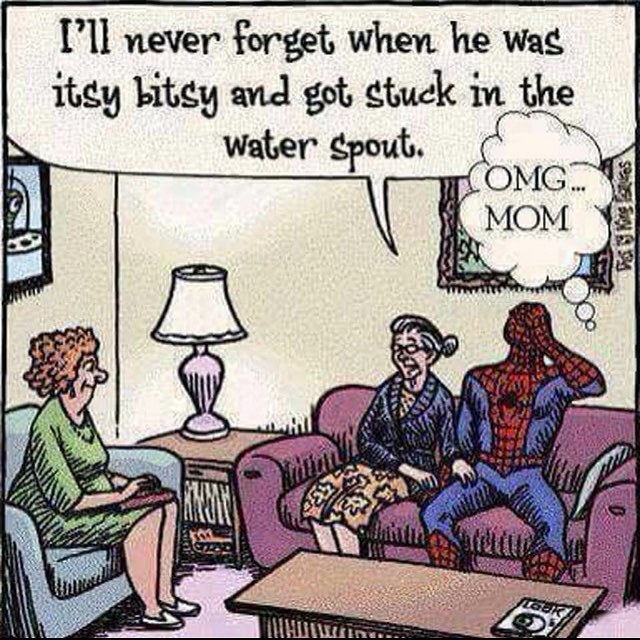
Kinda forgot about this, didn’t I?

Posted in Uncategorized | Tagged | Comments Off on Bad Joke Friday

Something for Thursday

One of the touchstone works of my life here: Mozart’s Sinfonia concertante for solo violin, viola, and small orchestra. The orchestra here consists of nothing but strings, horns, and oboes — and some of the most magical writing for solo violin and viola in music history. This work is, for me, one of the greatest examples of musical perfection ever composed. It is works like this that make me think that sometimes artists aren’t so much creating works of art as breaking through, however briefly, into some other realm where all is light and wonder.

Note that this performance has no conductor, and that the performers all stand throughout.

Posted in Uncategorized | Tagged | 3 Comments

Tone Poem Tuesday

The words of a truly great President seem apropos tonight, as a truly execrable President takes the stage.

Here is Aaron Copland’s A Lincoln Portrait.

Posted in Uncategorized | Tagged | 1 Comment

Something for Thursday (Robert Burns edition)

Today is the birthday of Robert Burns, the great national poet of Scotland, whose verse flows in the very heart of that fine and noble land. In that honor, here is one of the finest Scottish singers of our day, Dougie Maclean, performing one of Burns’s works. If it gets better than this, I’d rather not know how.


For more on Burns, as always, Sheila O’Malley has you covered.

Posted in Uncategorized | Tagged | Comments Off on Something for Thursday (Robert Burns edition)

From the Books: Ursula K. Le Guin on Tolkien

Author Ursula K. Le Guin has died.

Calling Le Guin an “author” is true, but it doesn’t do her justice, and that’s coming from one who has not read nearly enough of her work. Not even close. Le Guin was a cultural force, particularly in the genres of fantasy and science fiction where her influence is felt so keenly that her name ranks with the very highest of titans in the fields. Le Guin’s brilliance shone for decades, not just in her fiction but in the examples she set in her interactions with the rest of the field and in her thoughts to which she gave voice in many essays. Le Guin was one of the absolute giants, and her passing at the age of 88 is one more milestone in the history of two genres that still strive for respect and acceptance.

I have a small book that I got years ago as a reader’s companion volume to the Book of the Month Club’s editions of The Lord of the Rings. (The book is cleverly titled, A Reader’s Companion to THE HOBBIT and THE LORD OF THE RINGS.) It contains a number of short essays about JRR Tolkien and his writing, and the final essay in the book, called “The Staring Eye”, is Le Guin’s. Here is a part of it:

They were displayed on the new acquisitions rack of the university library: three handsome books, in the Houghton Mifflin edition, with beige and black dust jackets, each centered with a staring black and red Eye.

Sometimes one, or two, or all three of them were out; sometimes all three were together. I was aware of them every time I was in the library, which was often. I was uneasily aware of them. They stared at me.

The Saturday Review had run a special notice upon the publication of the last volume, praising the work with uncharacteristic vigor and conviction. I had thought then, I must have a look at this. But when it appeared in the library, I shied away from it. i was afraid of it. It looks dull, I thought–like the Saturday Review. It’s probably affected. It’s probably allegorical. Once I went so far as to pick up Volume II, when it alone was on the rack, and look at the first page. “The Two Towers.” People were rushing around on a hill, looking for one another. The language looked a bit stilted. I put it back. The Eye stared through me.

I was (for reasons now obscure to me) reading all of Gissing. I think I had gone to the library to return Born in Exile, when I stopped to circle warily about the new acquisitions rack, and there they were again, all three volumes, staring. I had had about enough of the Grub Street Blues. Oh well, why not? I checked out Volume I and went home with it.

Next morning I was there at nine, and checked out the others. I read the three volumes in three days. Three weeks later I was still, at times, inhabiting Middle Earth: walking, like the Elves, in dreams waking, seeing both worlds at once, the perishing and the imperishable.

Tonight, eighteen years later, just before sitting down to write this, I was reading aloud to our nine-year-old. We have just arrived at the ruined gates of Isengard, and found Merry and Pippin sitting amongst the ruins having a snack and a smoke. THe nine-year-old likes Merry, but doesn’t much like Pippin. I never could tell them apart to that extent.

This is the third time I have read the book aloud–the nine-year-old has elder sisters, who read it now for themselves. We seem to have acquired three editions of it. I have no idea how many times I have read it myself. I reread a great deal, but have lost count only with Dickens, Tolstoy, and Tolkien.

Yet I believe tha tmy hesitation, my instinctive distrust of those three volumes in the university library, was well founded. To put it in the book’s own terms: Something of great inherent power, even if wholly good in itself, may work destruction if used in ignorance, or at the wrong time. One must be ready; one must be strong enough.

I envy those who, born later than I, read Tolkien as children–my own children among them. I certainly have had no scruples about exposing them to it at a tender age, when their resistance is minimal. To have known, at age ten or thirteen, of the existence of Ents, and of Lothlorien–what luck!

In the essay Le Guin goes on to think about what her experience with Tolkien might have meant to her as a writer of the fantastic had she come to it earlier in life than when she did. It’s interesting to consider. For myself? I came to Tolkien first when I was eight or so, via the animated The Hobbit, and three or four years later via the books. I have no idea how it affect me, as a writer of the fantastic, but then, Ursula Le Guin was a genius, and I’m only me.

I have intended to re-read Le Guin’s A Wizard of Earthsea this year already; I have now moved it up in the planned rotation. I read it in eighth grade, I think; I recall liking it, but I never read past it. To this day my familiarity with Ursula Le Guin is more through her essays and nonfiction than through her fiction (I also read The Dispossessed, and remember it about as well, which is more reflective of me as a young reader than her as a writer). This needs to change.

Ursula K. Le Guin lived to be 88, and she leaves behind an enormous legacy not just in her own works but in all the authors on whom she was a huge influence. Her life may be over, but the ripples in time left by her having been here? Those are just beginning.

Thank you, Ursula K. Le Guin. You’ll be read for a long, long time.

Posted in Uncategorized | Tagged , , , | 1 Comment