Three years and a couple of days ago, someone joined our family.


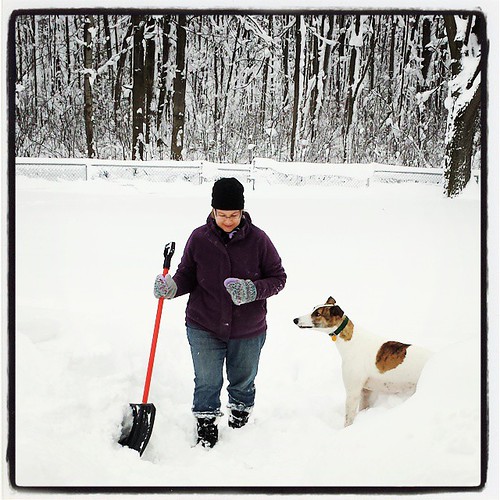

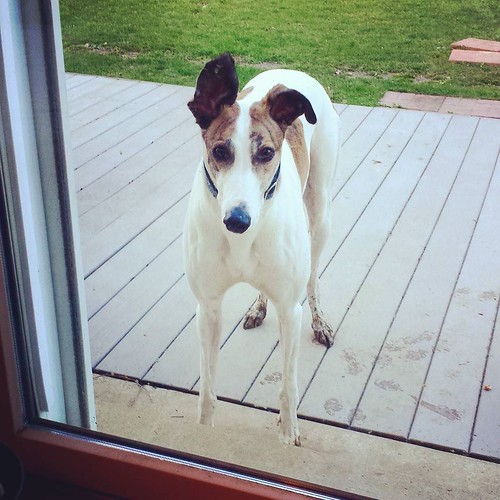


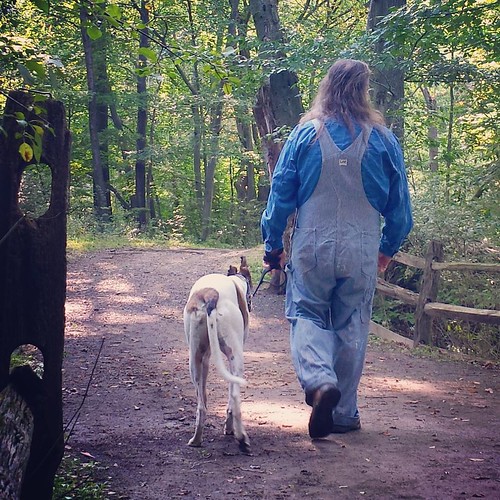

He may be welcome to stay now. I mean, the jury’s out, but I’d say that things are leaning in his favor.

The official site of Kelly Sedinger: Reader, writer, photographer, and dreamer

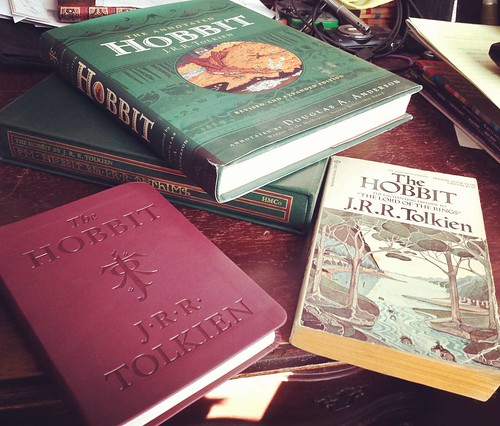
At no point have I not loved this story (except for the handful of years I was unaware of it), and I don’t expect that I will ever not love it. The Hobbit and its more noted follow-up, The Lord of the Rings, are on my shortlist of the stories that have shaped me the most: we’re talking Star Wars territory here, to be honest.
I knew the story of The Hobbit — well, most of it, anyway — several years before I actually read the book. That’s because my first encounter with this story was via the Rankin-Bass animated version that first aired in 1977. I don’t recall if I saw it then or on a subsequent re-run, but it didn’t matter: I loved this story quite intensely, and when I read the book a few years later, I was done for.
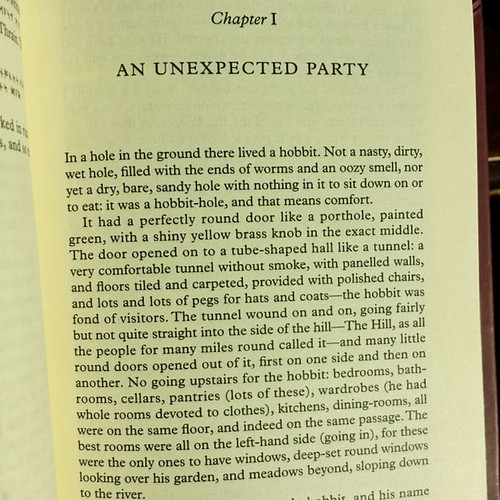
More than that, though, the adventure story that comprises The Hobbit contrasts greatly with the world-wide import of the events to come. The focus in The Hobbit is intimate, and the focus never wavers from this little hobbit named Bilbo who is ensnared in events larger than he can comprehend, and his efforts to make his way in a world he doesn’t understand and barely wants to. The Hobbit is an adventure story, but it’s an adventure story that ends somewhat ambiguously with the treasure won but one of its seekers dead. This anticipates the moral direction of what is to come, when the fundamental quest is not to find something but rather to lose something that is already found.
And it is, really, one hell of an adventure story.
This is weird. I never knew this song existed until the other day when I heard it as part of the soundtrack to one of The Daughter’s video games. It’s a peppy, zippy pop song from the 1950s…singing the praises of uranium. I am not making this up.
“Uranium Fever”. As the kids say, I can’t even.
In the course of a long post about Twin Peaks (of which I know nothing and cannot comment), Sheila O’Malley says this:
This is the proper attitude of artists. I realize that’s not a popular sentiment. But I am suspicious of popular sentiments, in general. More so now than ever.
I think that art is best when there is less feeling of being “owed” on both sides.
The Cassini mission has ended with the space probe’s final plunge into the Saturnian atmosphere. We learned a great deal from Cassini — and we will continue to do so as more and more analysis of its data is done — and I find it somewhat of a bright moment in a world where science itself is being deeply undervalued at precisely the time when we need good science most.
Thank you, Cassini.


It’s increasingly clear that this feature is really “Whatever piece of one-movement classical music I want”, because this isn’t a tone poem but rather a selection of ballet music from an opera. Specifically, the opera is La Gioconda by Amilcare Ponchielli, and the ballet suite in question is the “Dance of the Hours”. This is one of the most familiar pieces of music in the classical repertoire, mainly for having been parodied by comedian Allan Sherman in his summer camp song “Hello Muddah, Hello Fadduh”. If you can manage to listen to the actual Ponchielli suite with fresh ears, it’s really a wonderful and evocative work of classical dance music.
The official site of Kelly Sedinger: Reader, writer, photographer, and dreamer