Sunday Burst

You stay classy, Internet!

:: This is good a graphical representation of what it feels like to be in an ensemble, performing a piece of great music, as I’m ever likely to see. If you have the bandwidth, put it on fullscreen!


ZKO Rollercoaster // GREAT EMOTIONS from virtual republic on Vimeo.


:: The Songs of Summer. It’s not a list of songs specifically about summer, but rather…

…to discover which summer songs were either released or peaked in popularity during the summer of their respective years. Some are about the summer or the stuff of summer: parties, picnics, fleeting love, nostalgia or fun. Some have that summer feeling in sound alone. Many are relevant to their times. Some have become standards. Some annoy, like a sticky day with too many mosquitoes. Others slow down time, like an unexpected breeze one hopes will never stop.

(By the way, is anybody besides me starting to get a little freaked out with how recent “100 years ago” is getting to be?!)

:: I really like this graphic of typical kitchen measurement conversions. The only way it could be better is if it included ounces.

:: Solar roadways?!

::  And finally, the greatest refrigerator ever:

I love you, Internet!

Share This Post

A brief note regarding comments

The last few days I’ve noticed that a couple of comments have slipped in without my receiving an e-mail notification, which means that they sit in my Unpublished queue until I sign into Blogger again. This happens once in a while and usually fixes itself, but meantime, if your comment sits longer than usual, bear with me!

Share This Post

A Random Wednesday Conversation Starter

We’ve been looking at patio furniture lately and have been shocked at the price tags involved! Seriously, we don’t really want to pay what we’d pay for a couple of pieces of indoor furniture for some stuff we’d only be using six months out of the year, at best. And yet, it seems that there is no “mid-range” for patio furniture — it’s either low-end cheap plastic crap for under $200, and then nice stuff starting at $750. Weird.

Anyway, what’s something that gave you some serious sticker shock?

Share This Post

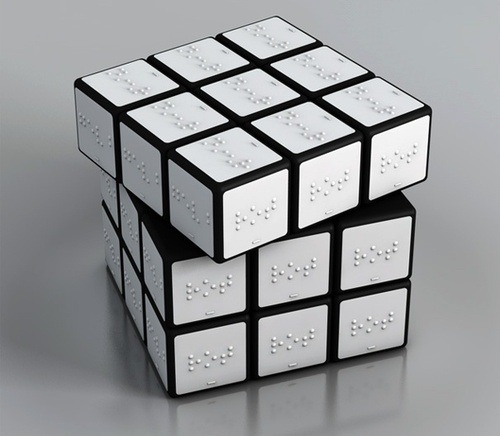
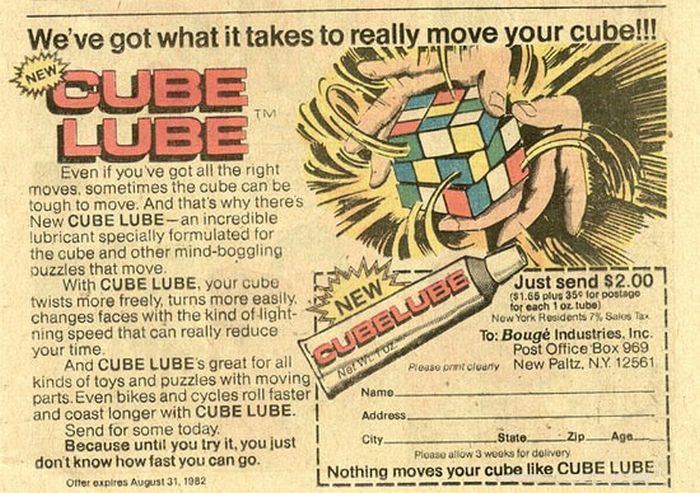
From the Books: Douglas R. Hofstadter on the Rubik’s Cube

My uncle Jerry once told me an awful joke:

What goes, “Click–do I have it yet? Click–do I have it yet? Click–do I have it yet?”

Answer: Stevie Wonder doing a Rubik’s Cube.

I know. Awful.

Anyway, many squeals of delight reverberated through the online world yesterday as Google’s doodle turned out to be a quite-functional Rubik’s Cube, in honor of the puzzle’s 40th anniversary. That’s amazing to me, another milestone of a passage of time that just doesn’t feel that long. I remember the first times I saw the puzzle, in the toy store of the Beaverton Mall in Portland, OR. This was late 1980 or early 1981, when the Cube was just starting to become the most popular thing going.

Eventually I got one, courtesy my parents, and I fiddled with it a lot until I could get two sides complete at the same time. But I was never able to crack the thing entirely, and I think my father was intrigued by the puzzle’s mathematical nature, so he sprang for a solution book, through which we pored until we both saw how the thing worked and how it could be returned to its pristine state, usually in a smaller-than-expected sequence of moves. The logical approach to solving the Cube, which I have long since forgotten, was really quite elegant, and I occasionally want to revisit it, now that I’m old enough to appreciate such things. At the time, for an awkward fifth grader in a new school, the ability to solve a Rubik’s Cube turned out to be quite the ice-breaker. (It may have also cemented my reputation as a soft and nerdy kid, but hey, it wasn’t like I was going to be on the football team anytime soon, anyway.)

Years later, in college, I bought a book by Douglas Hofstadter called Metamagical Themas, which was the title of a series of columns Hofstadter wrote for Scientific American back in the day. Hofstadter is an interesting person, although frankly whenever I read him (and I haven’t read him in too, too long), I got the feeling that I was peeking through a knothole in a fence into an awfully grand universe. In short, he was often way over my head. But he did write two columns about the Rubik’s Cube, which he found appealing as a puzzle and as a mathematical object. Both columns are presented in the book, and I excerpt the first of them here:

The Magic Cube is much more than just a puzzle. It is an ingenious mechanical invention, a pastime, a learning tool, a source of metaphors, an inspiration. It now seems an inevitable object, but it took a long time to be discovered. Somehow, though, the time was ripe, because the idea germinated and developed nearly in parallel in Hungary and Japan and perhaps even elsewhere. A report surfaced recently of a French inspector general named Semah, who claims to remember encountering such a cube made out of wood in 1920 in Istanbul and then again in 1935 in Marseilles. Of course, without confirmation the claims seem dubious, but still titillating. In any event, Rubik’s work was completed by 1975, and his Hungarian patent bears that date. Quite independently, Terutoshi Ishige, a self-taught engineer and owner of a small ironworks near Tokyo, came up with much the same design within a year of Rubik and filed for a Japanese patent in 1976. Ishige also deserves credit for this wonderful insight.

…

When I first heard the cube described over the telephone, it sounded like a physical impossibility. By all logic, it ought to fall apart into its constituent “cubies” (one of the many useful and amusing terms invented by “cubists” around the world). Take any corner cubie — what is it attached to? By imagining rotating each of the three faces to which it belongs, you can see that the corner cubie in question is detachable from each of its three edge-cubie neighbors. So how in the world is it held in place? Some people postulate magnets, rubber bands, or elaborate systems of twisting wires in the interior of the cube, yet the design is remarkably simple and involves no such items.

In fact, the Magic Cube can be disassembled in a few seconds, revealing an internal structure so simple that one has to ponder how it can do what it does. To see what holds it together, first observe that there are three types of cubie: six center cubies, twelve edge cubies, and eight corner cubies. Each center cubie has only one “facelet”; edge cubies have two, corner cubies have three. Moreover, the six center cubies are really not cubical at all — they are just square facades covering the tips of axles that sprout out from a sixfold spindle in the cube’s heart. The other cubies, however, are nearly complete little cubes, except that each one has a blunt little “foot” reaching toward the middle of the cube, and some curved nicks facing inward.

The basic trick is that the cubies mutually hold one another in by means of their feet, without any cubie actually being attached to any other. Edge cubies hold corner cubies’ feet, corner cubies hold edge cubies’ feet. Center cubies are the keystones. As any layer, say the top one, rotates, it holds itself together horizontally, and is held in place vertically by its own center and by the equatorial layer below it. The equatorial layer has a sunken center track (formed by the nicks in its cubies) that guides the motion of the upper layer’s feet and helps to hold the upper layer together. Unless you’re a mechanical genius, you can’t really understand this without a picture, or better yet, the real thing.

…

It is likely that many people will buy cubes, little suspecting the profound difficulty of the “basic mathematical problem”. They will innocently turn four or five faces, and suddenly find themselves hopelessly lost. Then, perhaps frantically, they will begin turning face after face one way and then another, as it dawns on them that they have irretrievably lost something precious. When this first happened to me, it reminded me of how I felt as a small boy, when I accidentally let go of a toy balloon and helplessly watched it drift irretrievably into the sky.

It is a face that the cube can be randomized with just a few turns. Let that be a warning to the beginner. Many beginners try to claw their way back to START by first getting a single face done. Then, a bit stymied, they leave their partially solved cube lying around where a friend may spot it. The well known “Don’t touch it!” syndrome sets in when the friend innocently picks it up and says, “What’s this?” The would-be solver, terrified that all their hard-won progress will be destroyed, shrieks, “Don’t touch it!” Ironically, victory can come only through a more flexible attitude allowing precisely that destruction.

In a postscript, Hofstadter adds:

I finally must confront the matter of the cube fad’s passing. David Singmaster’s Cubic Circular is going under after Volume 8. Many thousands of Megaminxes [a puzzle similar to a Rubik’s Cube, but dodecahedral in shape] were melted down for their plastic. Uwe Meffert’s puzzle club seems to have been a flop. The Skewb and many other wonderful objects I described never hit the stands. A few that did were almost immediately gone forever. So…have we seen the last of the Magic Cube? Are those cubes you bought going to be collector’s items? Well, I am always loath to predict the future, but in this case I will make an exception. I am bullish on the cube. It seemed to seize the imagination wherever it went. Despite the line concluding my second cube column, the cubic fad finally did spill over into the Soviet Union.

In my opinion, the world simply overdosed on cube-mania for a while. We humans are now collectively sick of the cube, but our turned-off state won’t last too long — no more than it lasts when you tell yourself “I’ll never eat spaghetti again!” after gorging on it. I predict that cubes will resurface slowly, here and there, and I am even hopeful that some new varieties will appear now and then. This is Mother Lode country. There may never again be quite the Gold Rush we witnessed a couple of years ago, but there’s still plenty of gold in them thar hills!

I’ve just decided that I needed a Megaminx. Among other things, the shape of the dodechedron plays a role in the Princesses In SPACE!!! (not the actual title) series.

Long live the Cube!

Share This Post

Linking some stuff!

Time to link a few items that have been languishing while I’ve been otherwise occupied!

:: Friend and fellow writer SK Waller has been paying tribute to the rock bands of California’s Gold Coast:

But the Tri-counties didn’t adhere to the British Sound. Instead, they took what they liked and cast off the rest. While southern California topped the charts with Folk-Rock (the Byrds, the Mamas & the Papas…) and Progressive Rock (the Mothers of Invention, the Doors…) and northern California grabbed national attention with Acid Rock (the Jefferson Airplane, Janis Joplin and Big Brother & the Holding Company…) the Gold Coast, overlooked and passed over, was busy mixing up their own brew that included all of that, but whose base was Surf. Welcome to 1960s proto punk, California style.

She’s created a whole site about this part of rock history, California Gold Coast Dreamin’. Check it out!

:: Farran Nehme, one of the best film-bloggers around (under the title Self-Styled Siren), has a novel on the way. It sounds amazing, steeped as it is in her astonishing knowledge of film history:

New York in the late 1980s. Ceinwen Reilly has just moved from Yazoo City, Mississippi, and she’s never going back, minimum wage job (vintage store salesgirl) and shabby apartment (Avenue C walkup) be damned. Who cares about earthly matters when Ceinwen can spend her days and her nights at fading movie houses—and most of the time that’s left trying to look like Jean Harlow?

One day, Ceinwen discovers that her downstairs neighbor may have—just possibly—starred in a forgotten silent film that hasn’t been seen for ages. So naturally, it’s time for a quest. She will track down the missing reels, she will impress her neighbor, and she will become a part of movie history: the archivist as ingénue.

As she embarks on her grand mission, Ceinwen meets a somewhat bumbling, very charming, 100 percent English math professor named Matthew, who is as rational as she is dreamy. Together, they will or will not discover the reels, will or will not fall in love, and will or will not encounter the obsessives that make up the New York silent film nut underworld.

As it turns out, I know nothing at all about silent film…but I might have learned some, had I gone to college a couple years later. The music director of my school’s orchestra was a part-time player in a Des Moines ensemble that played the scores to accompany silent films, and just after I left with diploma in hand, she made this passion of hers a part of the college’s orchestra scene! I’ve always been bummed that I missed out on that.

:: It’s Monday; your to-do list at work is probably short and manageable. So go waste some time learning stuff! Atlas Obscura is one of those sites you can lose yourself in, quickly.

:: I’m a sucker for reading other writers discuss their procedures, what tools they use, their workspace, et cetera. I obviously don’t subscribe to the “Maybe if I use the same pen Stephen King uses!” kind of thinking, but I still like hearing about process. I find it a bit inspirational, both in general terms (these folks still have to sit down and work), and in practical terms (lots of successful folks have good thoughts on how to organize and create a workspace). George RR Martin is very particular about the word processor he uses.

:: Chalkboard art, created in secret.

Have a great Monday, folks!

Share This Post

Building a Library

When the prospect of finally moving from the old Casa Jaquandor into a new Casa Jaquandor started shaping into more of a realistic goal than a “here’s something we should do one day” dream, maybe a year-and-a-half ago, there were a number of thoughts that flashed through my mind:

“A space of our own, where we can put whatever we want on the walls or plant whatever we want in the yard!”

“A kitchen large enough for our kitchen stuff! A kitchen with enough counters to be able to prep multiple phases of a meal without having to completely clear one spot constantly!”

“The Daughter can have an actual room of her own, as opposed to half a room which is half storage for our stuff!”

“Space for The Wife’s sewing machines and crafting stuff!”

And, for me, one glaring notion:

“A new writing space with enough room for books to be on shelves, as opposed to stacks everywhere I turn!

The old space was…well, it wasn’t so much a space, as a hollowed-out corner. I ran out of shelf space for books many, many, many moons ago, to the point where books just started going into stacks on the floor, tucked into corners and piled beside my desk itself. My desk was an awful clutter, and frankly, sitting down to work felt less like sitting down at a desk so much as climbing into a cramped cockpit. Looking back now, I wonder how I managed to get as much work done there as I did; in the last few years, there have been three complete novels and half of a fourth, in addition to all the various bloviation I pile into this space.

Worst of all, my books felt less like a collection or a working library than a massive horde of crap gathered at random over the years. Eventually I had to stop going to those used book sales at the public library, because I simply didn’t have room for all the treasures I often found from there anymore. I got a lot more selective with the books I bought, and still, they piled up in unacceptable states of inaccessibility. Yes, there are books I forgot I owned (though I didn’t end up with multiple copies unknowingle), but that mattered little; I reached the point where I knew I couldn’t find a specific book a lot of the time, so it just languished unread in some stack, some pile, someplace.

I fooled myself for a long time into thinking that I loved that space, until I finally came to the realization, when moving was a possibility, that I hated it. I mean, look at this mess!


Ugh.

So when it finally came to pass that we found a new living space and that it might be ours, I knew that I was possibly going to be able to convert an entire room into my “book room”, my “study”, my “library”, my “writing space”. I’m still not sure what I call it. But it’s amazing.

It started with a room.

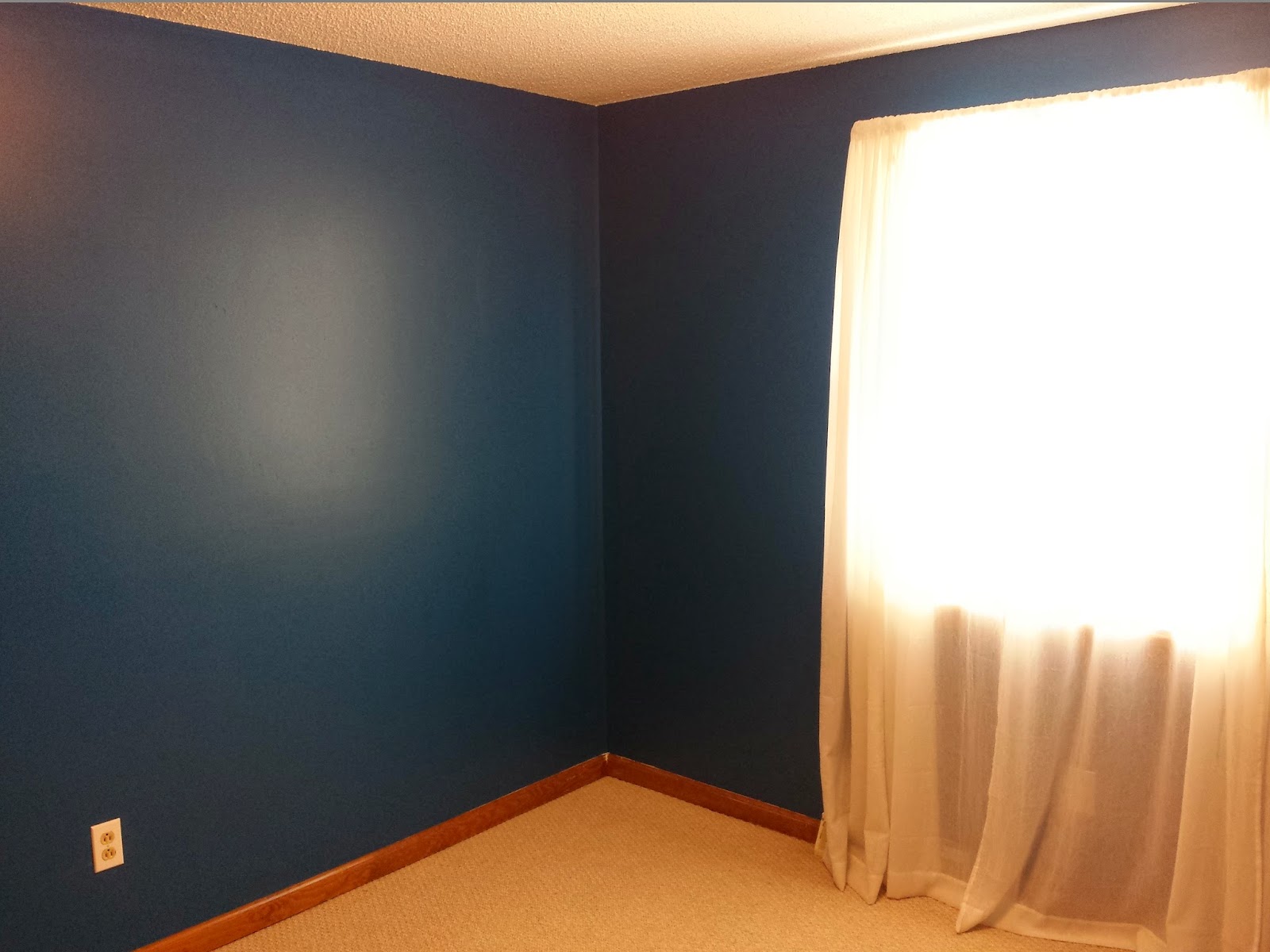
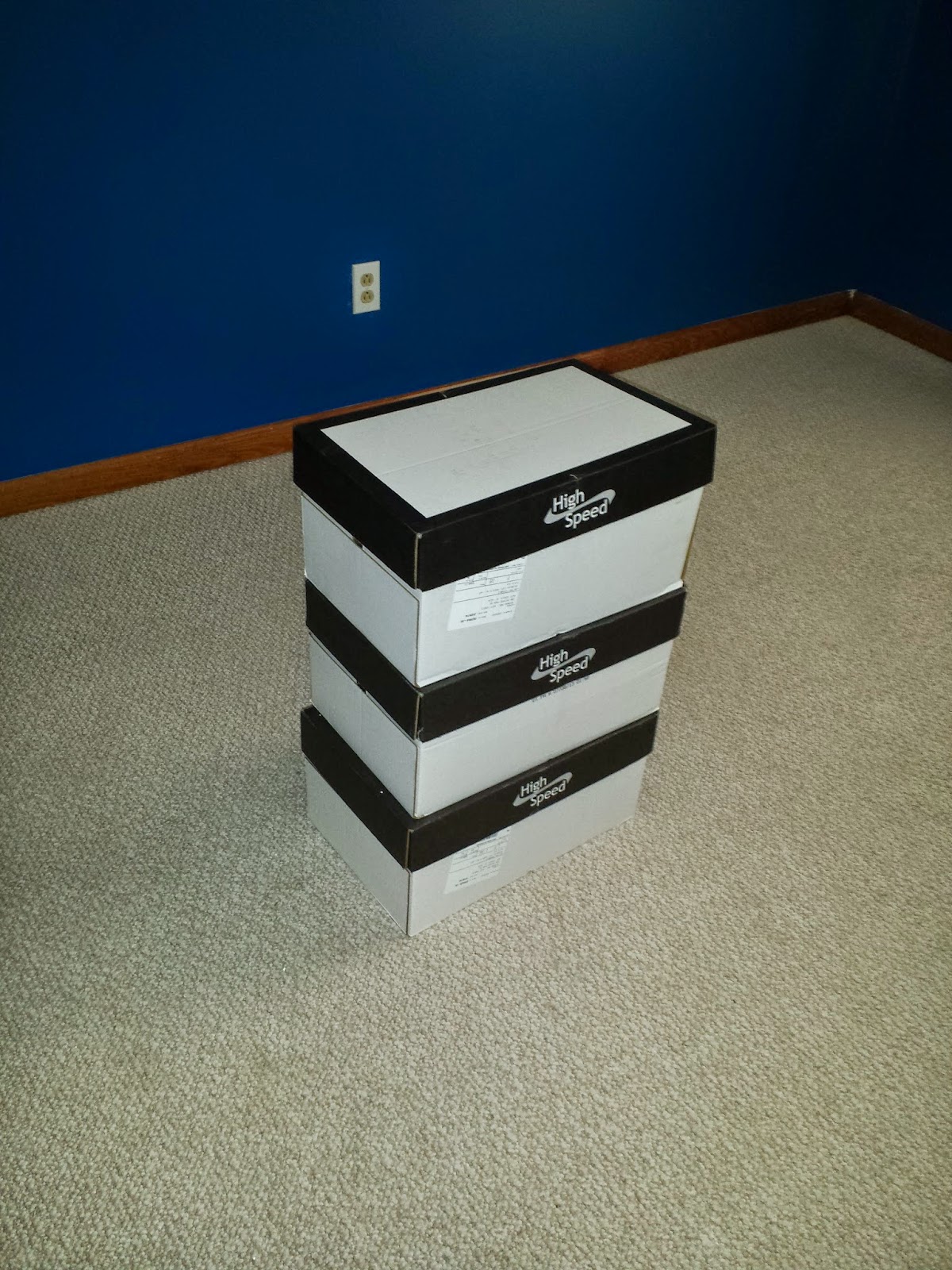
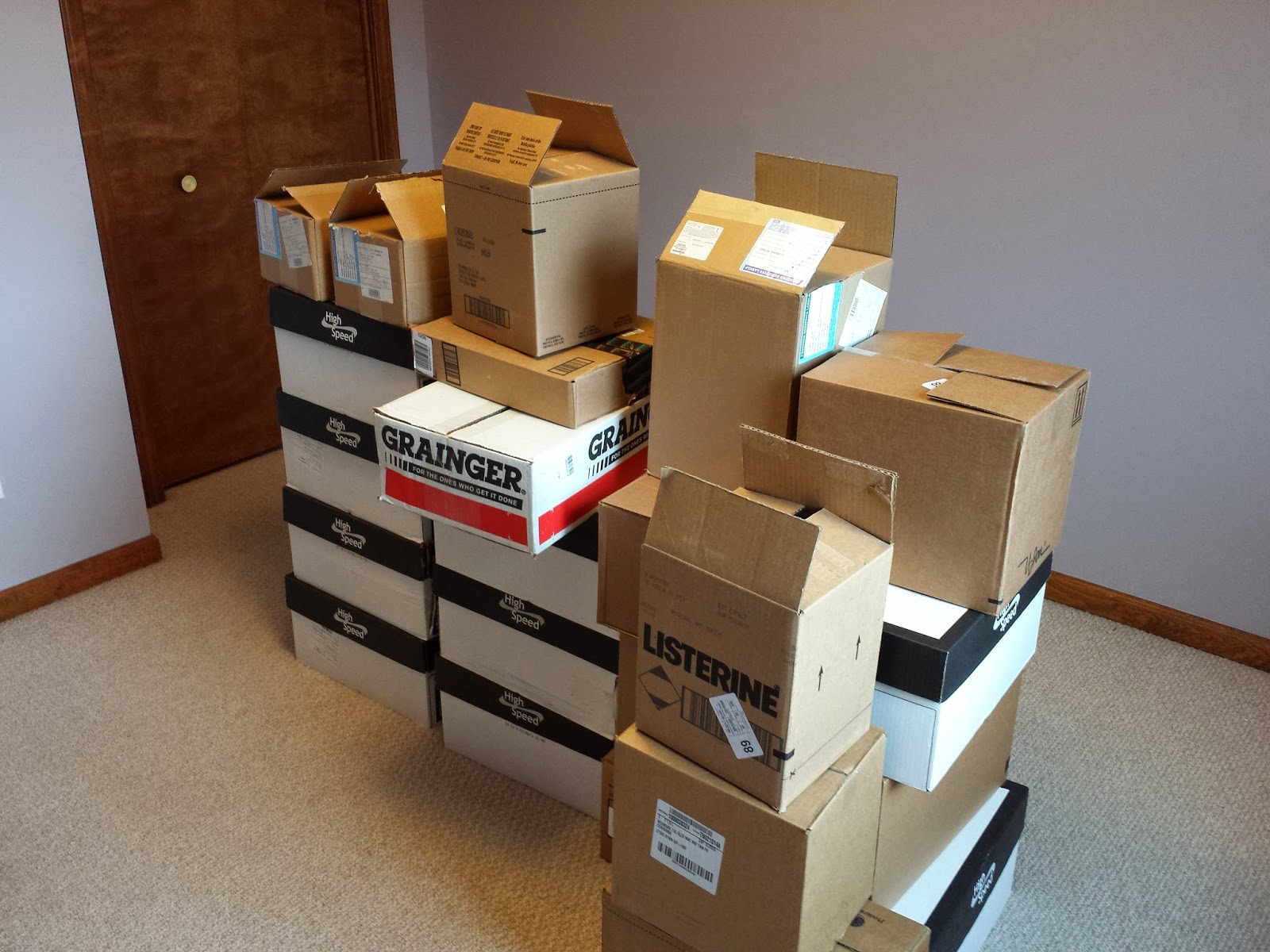
Yes, the deep blue walls would have to go, but first, into the room came…boxes.
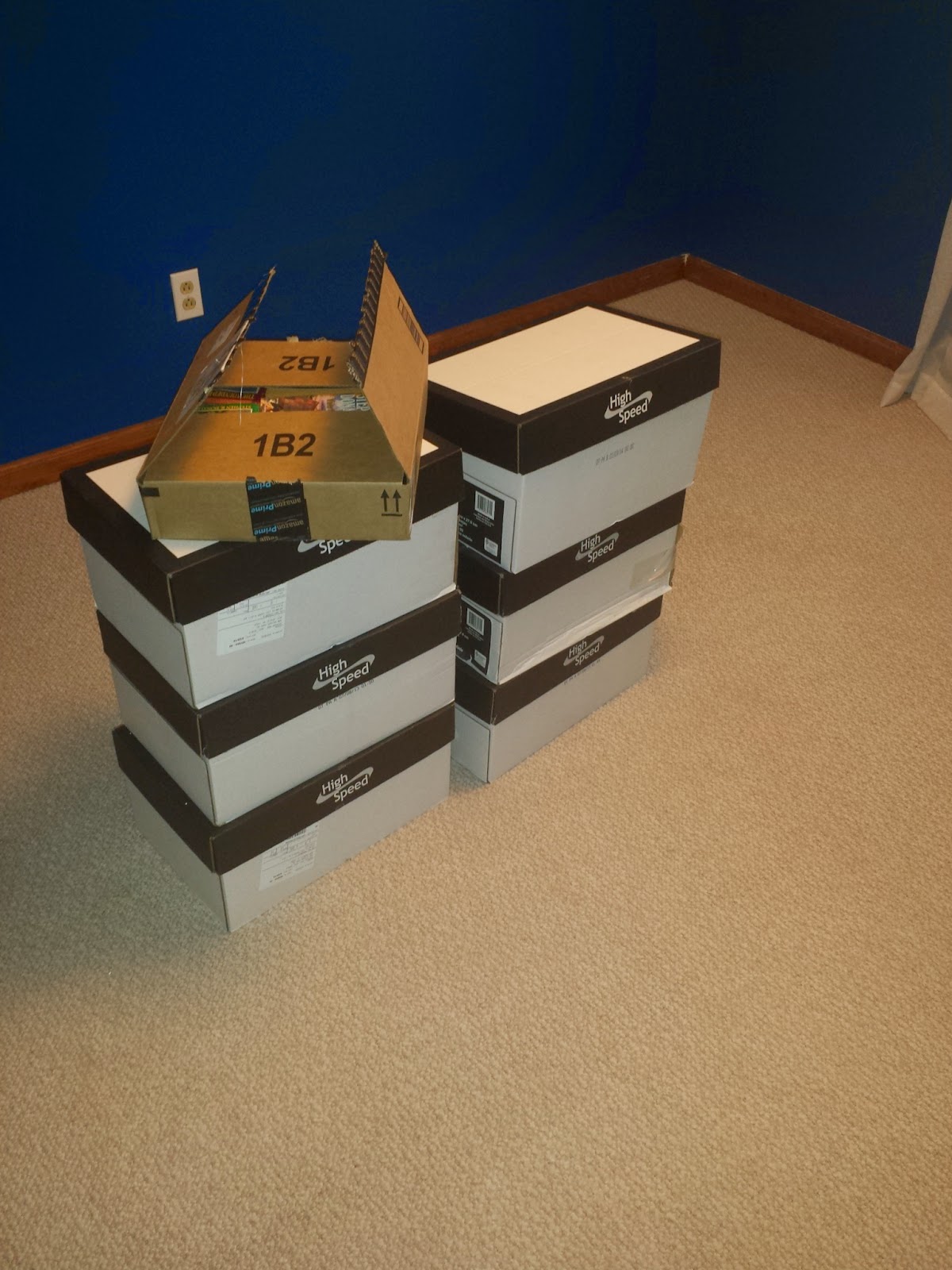
Boxes begat more boxes….
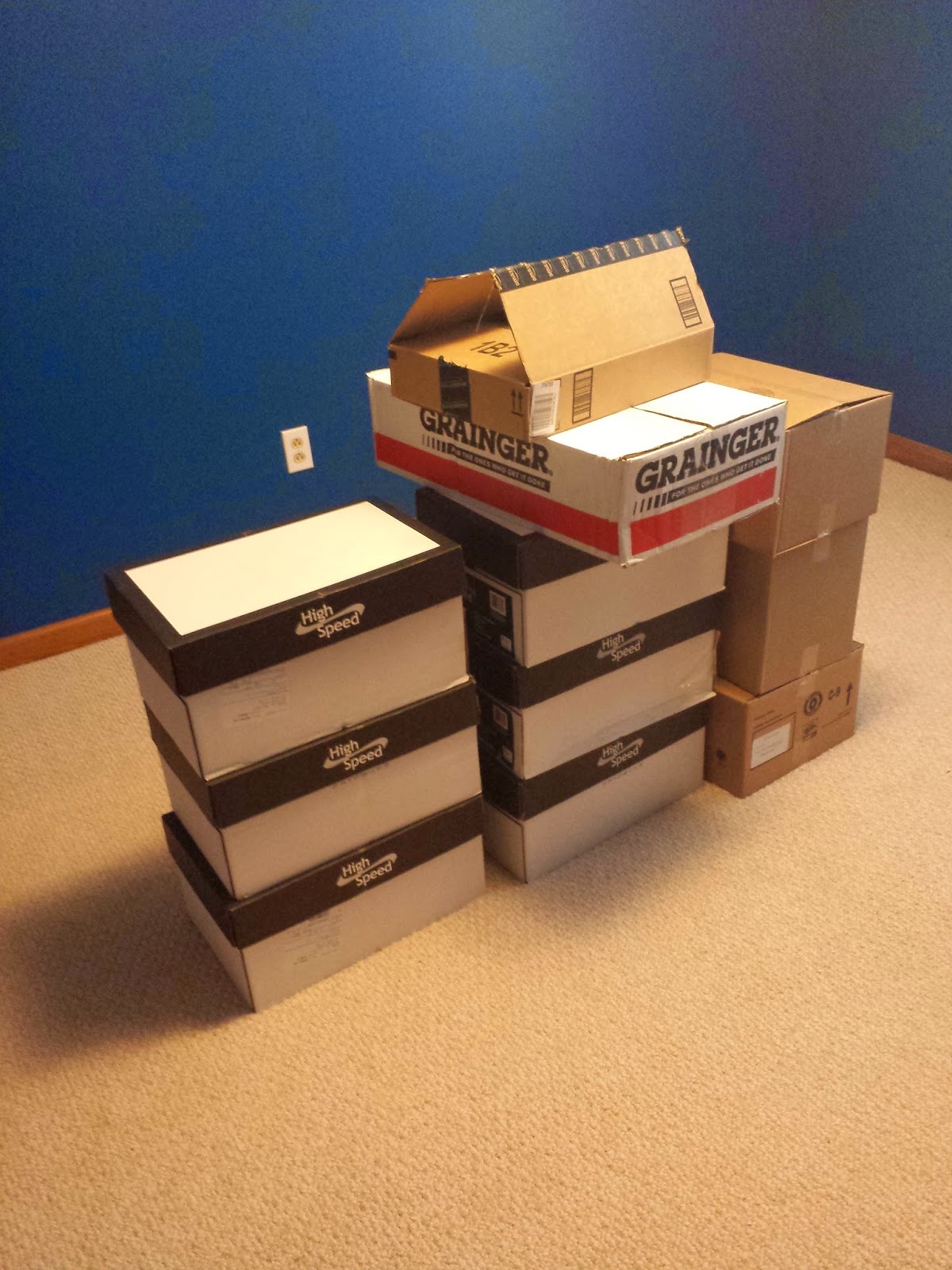
…which begat more boxes….

 Then the painters came, and away went the deep blue in favor of a brighter, more soothing amethist.

Along with more boxes.

And more.


Finally, they were all over here, all boxed up (minus half-a-dozen large bags of books that I decided were better served in someone else’s library, so off they went to the local public one as offerings in their next used book sale). This took me probably about six weeks, packing up four or five boxes of books at a time and driving them over. Luckily, New Casa Jaquandor is only a few miles away from Old Casa Jaquandor, so it wasn’t like I had to drive an hour each way or anything. But it did get pretty tiring, nonetheless; lugging boxes of books up and down stairs is never fun.

This felt weird, for a while, not having any real access to any of my books, and it took a toll on my writing productivity. There really is something of an osmotic process to being in the presence of lots of books. I find their presence conducive to getting work done, and when they were all boxed up, I felt so out of sorts that I ended up not writing at all when the move finally drew near. But I knew that soon it would be time to start unpacking them all and getting them on shelves.

Which meant, buying and assembling new shelves. I didn’t want anything ridiculously expensive, and I certainly didn’t need any specialty cabinets built. I kicked around for a bit the notion of building my own as a carpentry project, but I rejected that for now on the basis that I want to be set up to work now, and not at some indeterminate point in the future when I get a chance to build something, which would certainly be later rather than sooner. Besides, to me, bookshelves are a purely functional thing; what matters is the books. So I ended up buying four of these units, since they’re a good size and they actually match one unit I already have.

So, then came…assembly time!


What I always find is that assembling more than one of the same unit goes faster with each one, once I’m familiar with the procedure. These actually went together pretty quickly, probably taking on average around an hour for each one. Maybe a bit less, actually. Then it was time to start setting them up:


Obviously, I needed to level things up a bit! These units actually come with a bracket which you use to secure them to the walls by drilling into the wall stud, so they’re actually really sturdy. If anything ever happens sufficient to make these shelves fall over, well, I’ll likely have bigger fish to fry at that moment.

These units take up one entire wall of my library. I used my other shelving units — collapsible bookcases that fold flat for travel when not laden — in the opposite corner, two tall units (one of which is actually two bookcases stacked) behind my desk in the corner, one on the other side of my desk, and one next to the door. Now I was ready to start shelving.


It was somewhat serendipitous that Dr. Sagan’s shelf started first, because that’s what I found in the first box of books I opened. But there he was! And that brings me to something else that has eluded me for years: organization.

In the past, I’ve always had books in a mishmash, scattered all over the place, nonfiction mixed with fiction, and authors with their own books scattered all over the place. I wanted to reduce that, if not eliminate it. Carl Sagan’s books are all together now, on one shelf, and his shelf is alongside a few others filled with science-related titles. I tried to keep most of my history works together, my travel writing together, my books on movies together, fantasy books together, and so on. I have a science fiction shelf and an entire poetry area. All my Star Wars books reside together, and my art books and graphic novels all take up one entire bookcase. JRR Tolkien and Guy Gavriel Kay each get an entire shelf (with room on the GGK shelf for his next novel in hardcover, and then I’ll have to start thinking a bit), and both of these are on the shelves by my desk so they’re always right there next to me.

This entire process was mostly enjoyable, although it was at times a bit overwhelming:


Going through everything in a more controlled manner allowed me to take more stock of my collection, and I ended up filling two more boxes with books to be donated to the library. Weeding is always useful, and I plan to do it more often now that I’m in a state where I can look at things and assess them more readily. I greatly downsized my Philosophy collection, most of which were texts I acquired whilst studying Philosophy in college. In most cases I just had to eventually admit that my reading interests are unlikely to take me into places like twentieth-century analytic philosophy again, and to be honest, I found this part of the process less emotional than I expected. When keeping a book depends on moving it, it’s easier to ditch it.

Anyway, the job finally got done, for the most part — at least as far as the books are concerned.


What’s left? Decorating and more organization. I have a closet in this room, which is nice; I’ll be able to create an “archive” of sorts for stuff to go live in there, stuff that routinely got piled elsewhere. I need to get my various knick-knacks out and about; currently all my little spaceships are still in a box because I’m not sure what to do with them, and I need a basket of some sort to toss my car keys and all the various things I carry around in my pockets when I’m at work. At the old place I just piled this shit in a spot on the top of my desk, but I don’t want to do that anymore. I have two narrow bookcases, twelve-inches wide, that will be for various writing supplies, but I discovered the other day that they do not fit the binders I use for my manuscripts, so I may need to acquire another small bookcase. I need to arrange candles, and right now as I write this, I have no idea where my coasters are. I can’t just put beverage vessels down on bare wood! That’s just not right!

Oh, I got myself a new desk lamp. I didn’t really care for the old one, a silver aluminum thing with a white plastic shade. This seems more…I don’t know, Philip Marlowe-esque. Why I’d want to look more Philip Marlowe-esque, I have no idea, but this seems anyway more like a lamp a writer uses. Hey, what can I say. Sometimes you do want to at least look the part, and I don’t have a wastepaper basket full of rejected pages from my Next Great American Novel.


I have some wall art that I want to get up, but I’ll need to do some framing, and that’s going to have to wait for a few weeks while we finish getting all our crap out of the old place. I’ve already hung my Phantom Menace poster, and I have a Star Wars: A New Hope poster to go up too, as well as three Japanese lobby cards for the Original Trilogy that I’ve keep carefully stored for years (a reader sent them to me, anonymously, way longer ago than I like admitting — if you’re still out there, Reader, thank you so much!), which will also go up. And so it goes.

I’m settling in. The place is becoming home, and I have a place to work. In the old place, I had books in just about every room; now they’re all in here, and I’ve decided I want it that way. I’ll read in my bedroom and living room and dining room, but I don’t want to be surrounded by this aspect of my life anymore, except for when I want to be surrounded by it (which is often). I keep returning to these posts by Sheila O’Malley about when she moved and had to rebuild her entire library, and among the many wonderful things in those posts (seriously, read them, they’re among the best things I’ve ever read in blog form), she says this:

“I don’t want any books in my bedroom. My bedroom is for sleep and moisturizing and loving. I’m sick of sleeping surrounded by 5,000 books.”

Ayup!

So there I am. Time to start working again, eh? Onward and upward! Zap! Pow!!


(Yes, I’ve added “splat” to my roster of standard sound effects. Seems pretty obvious, with the pies and all.)

Share This Post

Brief dispatches

Let’s see, what’s going on? Well, we’re still moving and settling. My Heavens, what a process this is. It’s awful. I hate it…except for the parts of unpacking, settling, and building a new life. That’s pretty cool. But we still have stuff at the old place, and frankly, were it not an apartment building and thus other people living there, I’d be giving a lot more thought to the old “box of matches and some incendiary additives” approach to dealing with the rest of it. Yeesh.

Writing? Well, I knew that May was going to be an awful month for writing, and it has been at least as far as actual generation of real content goes. I have been thinking a lot about my story (well, two stories, because focus just isn’t something I do), and while I have been doing a bit of toe-dipping here and there into writing, I look forward to resuming the work with vigor in June. Onward and upward! Zap! Pow!!

Day job? I don’t talk about my day job much at all, but hey, you know what? It’s going pretty well. I enjoy the opportunities to learn to do new things (at least, new to me), and I’m not burning myself out in front of a computer screen before I come home and try to write. So there’s that.

Lessee, what else…oh yeah. The Wife and I were married seventeen years ago today.


So there’s that. Happy Saturday, Blogistan! Let’s all be careful out there. See you at halftime.

Share This Post

ForgottenStars.net

The official site of Kelly Sedinger: Reader, writer, photographer, and dreamer

Skip to content ↓