Random Thoughts on ‘Manbabies’

I was going to post about this last week, after local blogger (and, in general, a voice I respect) Christopher M. Smith did a podcast in which he crankily outlined all the ways he thinks US society is unserious and immature, but I ended up not posting it, because it just struck me as a waste of time. But now he’s visited the topic for a second straight week, so here are some random thoughts.

1. Any statement of the form I no longer engage in [INSERT ACTIVITY HERE] because I’m [INSERT AGE HERE] is inherently dumb. Sorry, but I don’t take anything of the sort seriously. I can probably think of a very small few statements of this type that are well taken, but I wouldn’t even try to universalize them to a general rule, to invoke Immanuel Kant. People who say “I don’t see superhero movies because I’m 38” are little different from people who say, “Edna shouldn’t have long hair at her age.” I’ve been told that if you’re over the age of five, you shouldn’t eat peanut butter-and-jelly sandwiches or wear overalls. Well, I’ll keep my own counsel on that.

2. Equally obnoxious is I no longer engage in [INSERT ACTIVITY HERE] because it’s a waste of time. Again, this is pure obnoxious snobbery. You may decide that some things are more important than other things, and adjust your time use accordingly. That you’ve decided that a given activity is a waste of your time does not imply that it’s a waste of everyone‘s time.

3. Smith argues, or at least attempts to argue, that various leisure activities are commanding too much attention from Americans to allow them to focus on the more important things. He doesn’t really argue this, though, because he provides zero evidence to back this statement up. Where’s the data that show this?

4. At the same time, he states that well, OK, it’s fine to have hobbies as long as you don’t let them ‘define you’. No clarification on what it means for a hobby to ‘define you’ is given. He does speak derisively of people who cosplay at the San Diego Comic-Con, again leaning on the ‘you shouldn’t do that when you’re a certain age’ line of thought, but how are we to know who is allowing their hobby to define them and who is not? I have a friend who is really into sports-related hobbies, mainly autograph collecting and fantasy sports leagues. He attends a lot of sports events, has Bills season tickets, and so on. He is also deeply involved in the activities of his church. Does sports define this man? I think not. Are there people who are too deeply into their particular hobbies? Of course. Are there too many in society? Ahhh…that’s a question that requires a lot more evidence to support it than Smith provides.

In fact, he undermines his own point when he cites people he knows who have hobbies of the type he’s deriding, but proceeds to indicate that those people are fine, because he knows then and knows that they aren’t the ones taking things too far. But who are, then? A bunch of people he’s never ever met? Is he able to read minds now?

5. “We don’t do big things anymore.” I’m sorry, what was that? I was too busy reading up on the achievements of our Olympic athletes and looking at the latest data beamed back from the Curiosity rover that we just landed on another planet.

That’s overly snarky, I know. There really is a case to be made that our society isn’t getting enough done to confront our serious problems. But is there a strong case to be made that our entertainment is proving to be a massive distraction thereof? I’m not convinced, because Smith’s argument simply doesn’t have enough connective tissue to convince me. Instead, it basically sounds like, “Too many people like stuff that I don’t like, and they like it too much.” Meh.

6. Smith and his interlocutors slam Hollywood’s filmmaking culture for making too much crap these days, and there’s some real hay to be made here. But extending our movies — and not all of our movies, but just the biggest profile movies — to an argument about all of culture doesn’t seem to really hold up. First off, he quotes Francis Ford Coppola as saying that he couldn’t get The Godfather made in today’s Hollywood culture. And that may well be: I completely agree that movies are too homogeneous right now, too focused on a narrow subset of subject material, and too focused on resuscitating existing properties as opposed to taking risks. But he keeps singling out the entire superhero genre, without even bothering to consider the idea that maybe a good movie can be made of superhero material. One wonders if he similarly dismisses fantasy and science fiction.

Two sub-points here, though. First of all, maybe Coppola couldn’t make The Godfather today. But somebody could, and I know that somebody could because somebody did. His name is David Chase, and he made it as The Sopranos. He just did it for teevee.

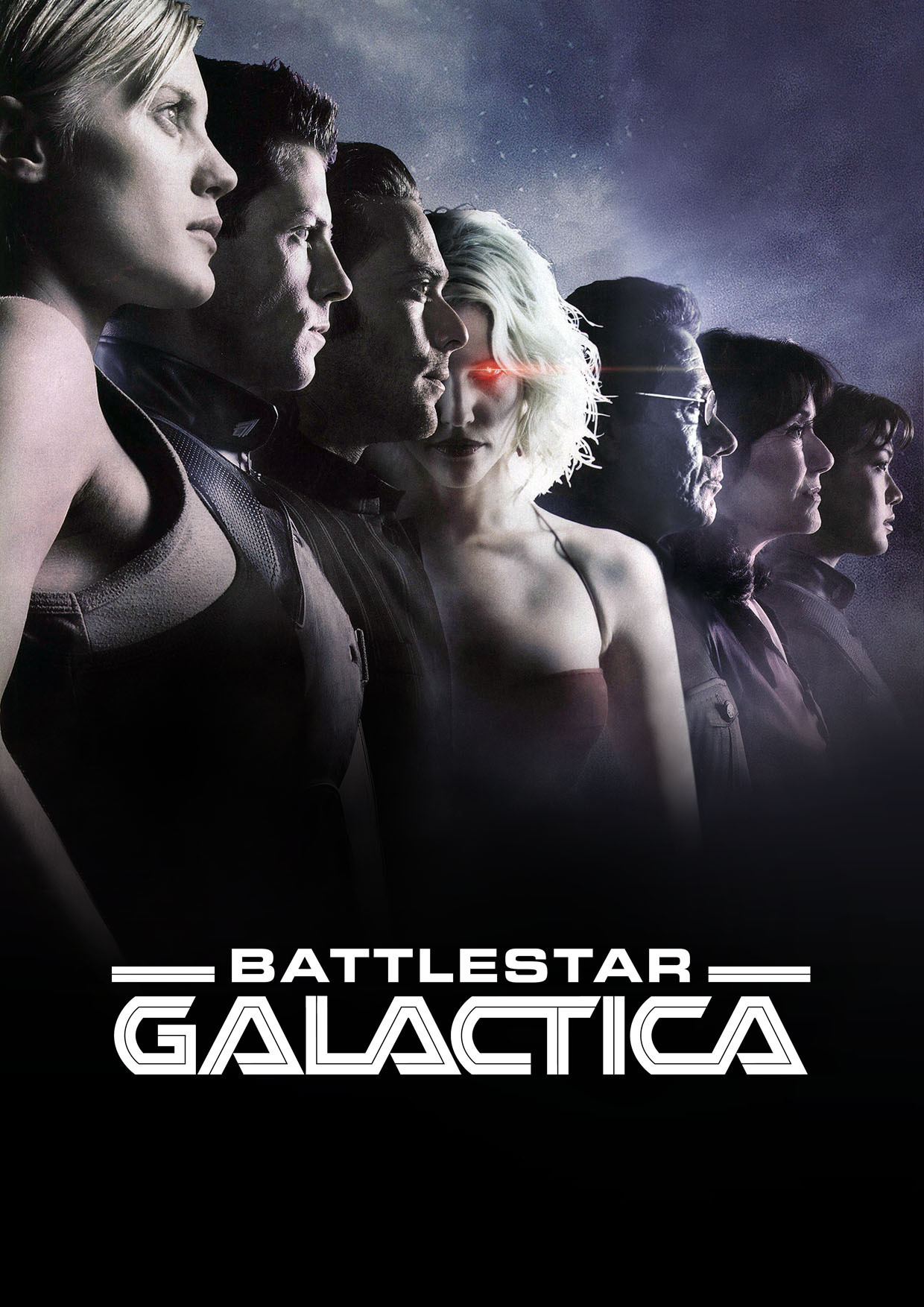
Could a movie about inner-city crime in Baltimore get made today? Maybe, maybe not. But an extremely well-regarded teevee show called The Wire got made. How about a movie about a successful teacher-turned-drug dealer? Maybe not, but there’s a teevee show called Breaking Bad. How about a gritty and violent fantasy series that at its best overturns the tropes of its genre? Game of Thrones. Or a science-fiction series that depicts the choices faced by a society that finds itself at permanent war? Battlestar Galactica.

Objecting “But we’re talking movies, not teevee!” doesn’t hold up. Neither, really, does a rejoinder that those are mostly cable shows and not network shows. Cultural media don’t exist in a vacuum. You can’t cite a ton of crap movies as evidence of the increasing crapiness of our popular culture whilst ignoring the other things, in other media, that stand as evidence that the quality exists and has simply moved someplace else.

Secondly, it’s been my belief for years that the denizens of any particular era are the worst people to judge the quality of their era’s artistic and cultural endeavors. Quality takes time to rise, sometimes decades, and the history of every art — not just movies, but books, music, poetry, you name it — is replete with examples of things that were loathed in their day but later became cultural touchstones. There’s a wonderful book called A Lexicon of Musical Invective that makes this point very simply by providing excerpt after excerpt of scathing reviews of works of classical music that would go on to become beloved standards of the classical repertoire, by the critics of the time. We remember the hits and forget the misses.

7. Remembering the hits and forgetting the misses also applies, I think, to regarding too highly the eras gone by. Smith seems to believe that there was a golden age of civic involvement in the past. Is this true? Maybe it is, actually. There is evidence to be cited that in some ways, earlier incarnations of American society were more ‘serious’ than they are now. But I’m not sure how true this is. We don’t vote enough, certainly, and in terms of public policy, we tend to stick rigidly in some odd middle, neither particular liberal nor rigidly conservative. But I’m not prepared to grant that we’re stuck in neutral, either. This deserves greater discussion, but again, not from the rhetorical framework that Smith establishes. Our problem is not that we’re seeing too many superhero movies.

Smith cites a relative of his — an uncle, I think — who did a lot of civic stuff, and Smith cites himself as a further example of the way everyone should be. This is sheer nonsense, and it’s basically equivalent to Professor Henry Higgins when he wonders, in song, “Why can’t a woman be more like me.” If your argument for what’s wrong with society literally sounds like “Not enough people live their lives the way that I choose to live my life”, then maybe you might want to think about reframing things a tad.

8. My final point here: at one point, Smith argues that a big problem is our increased connectivity, with stuff like texting on smartphones. He complains that even when we’re standing in line at the post office, we’re so busy checking Facebook and tweeting and texting and stuff and dammit, “Can’t we just wait in line anymore?” And I’m thinking, “What in God’s name is so great about standing in line?!” I mean, seriously: are we really supposed to romanticize the act of standing in a long line at the post office or the bank or the DMV? What are we supposed to do otherwise? Look at the cinderblock walls? Maybe talk to the person in front of us or behind us…but what if they’re not feeling conversational? In having new options for things to do while we wait our turn at the counter, am I really supposed to think that we’ve lost something as a society? Because…I don’t.

9. Finally: if this reads like me trying to defend the honor of superhero movies or ‘comic book culture’, well, it’s not. I don’t read too many comics, I don’t see very superhero movie that comes along, and so on. But as far as ‘comic book culture’ goes, I am reminded that comic books are a much bigger part of the cultural landscape in Japan than they are here. If we’re truly unserious as a culture — and there is an argument to be made thereof — one has to do a bit more heavy lifting than pointing to some movies to demonstrate it.

OK, that’s enough of that. Back to doing what I usually do on this blog: indulging my love of things that I’m sure would be judged as ‘manbaby’ material by my societal betters. ‘Tis a cross to bear, but bear it, I shall!

Share This Post

Something for Thursday

I re-watched all of Carl Sagan’s epochally brilliant series Cosmos last fall and winter, and for a science series that is going on 32 years of age, it’s still moving and poetic and inspiring and, well, all the things that it’s always been thought to be. In honor of the Mars-fall earlier this week of the Curiosity rover, here is the entirety of the fifth episode of Cosmos, “Blues for a Red Planet”.


“The Martians will be us.” What an astonishing sentiment.

Share This Post

“So say we all!”

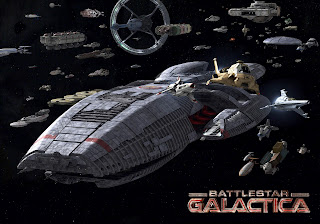
I’ve mentioned more than once, over the years, that I have a tendency to not be up on the big pop-culture things when they’re big, or up on what’s the cutting-edge thing in my favorite genres right when it’s at the cutting edge, and so on. For four years back during the 2000s, I heard nothing but good things about the ‘reimagined’ Battlestar Galactica series – well, nothing but good things, that is, until the show ended, at which point I heard some divisive stuff. But since I didn’t have cable, I had to file BSG away for future reference.

Well, ‘future reference’ is now, and last week I finished watching the first season of BSG. I would post things to Facebook about it, and I’d hear a pretty uniform response each time: fans of the show telling me how jealous they are of my coming to the series for the first time. That’s pretty high praise…which the show has, to my mind, equaled. At least in the first season. I’ve got three more to go. (I think.)

Anyway, Battlestar Galactica famously launched way back in 1978, on the ABC network. Even though it most definitely owed its network pick-up and investment (the show was very expensive) to the incredible success the year before of Star Wars, BSG had actually been under development by creator Glen Larson since the early 1970s. He’d had this notion for a show in his head for a while, and when SF space opera suddenly became wildly popular, his show got its chance.

The story had humans existing on twelve worlds, called the Colonies, and living in peace, until they are viciously attacked at the planet Caprica by the robot race called the Cylons. Caught unawares, the humans are smashed, and end up fleeing their planet with a ‘ragtag fleet’ of various ships, under the protection of the giant battleship – called a ‘Battlestar’ – named Galactica. As the tattered remnants of humanity begin to make their way across the galaxy, the leader of the Colonial fleet, Commander Adama, reveals their destination: the mythical, lost 13th colony, called ‘Earth’.

This same background applies to the new BSG, although some of the details have been changed, as befitting a ‘reimagination’ of the idea. Larson’s original series was not just a kind of “Wagon Train to the stars” (and was, in fact, probably a better exemplar of this idea than Star Trek, even though that’s how Gene Roddenberry originally described his iconic show); he also infused it with a lot of veiled references to his own religion and its beliefs, the LDS Church. But for all that, the original BSG has gained a pretty unfair reputation through the years as a cut-rate Star Wars rip-off. I suppose this is partly due to its short run (a single season, due to the ratings not being quite good enough to justify sufficient advertising charges to cover the show’s large budget) and to the follow-up series two years later, Galactica 1980, which was…well, it was, in BSG parlance, frakking awful.

In the years since, there was occasional interest in a revisitation of the BSG franchise, including a project that actor Richard Hatch (Captain Apollo on the original series) spearheaded. It was producer Ronald D. Moore, however, who got the new version off the ground. Moore had a strong grounding in genre teevee, having worked on Star Treks TNG and DS9. The reimagined series, when announced, caused some consternation amongst fans of the original series; I remember one fellow on the FSM boards who would get quite incensed whenever the subject of a new BSG would come up.

So, anyway, as of this writing, I’ve watched all of Season One and about a quarter of Season Two. I’m coming to this with little knowledge of what is to come, although I’ve heard some fairly uncomplimentary things about how the series ends. I suppose I’ll find out soon enough on that score…but what do I think for now?

Generally, this series is amazing.

The main hook is delivered in a pilot miniseries that’s about three-and-a-half hours long. There we open with a deep space station where a human delegate and a Cylon delegate are to meet, once a year, to discuss relations. Or that’s how it’s supposed to go…but what really happens is that the human delegate basically shows up, sits in a room, and reads the paper while no Cylons come. This time, however, the Cylons arrive: two menacing-looking robot types, and a Cylon who looks, for all the world, like a stunningly beautiful blond woman. She asks the delegate if he is alive, and then…the Cylon basestar (the term for a Cylon flagship) destroys the station.

It turns out that the blond woman, ‘Number Six’, is one of many copies, and whenever one of the human-appearing Cylons dies, their memories are instantly transferred to an identical and new body. This simple fact allows the same Cylons to appear in numerous places in the story, and there are quite a few scenes where a human sees a Cylon that he or she has previously killed.

Meanwhile, the crew of the Battlestar Galactica is preparing the ship for a decommissioning ceremony, with all that entails – goodbyes being said, press members being led on a tour, the eventual revelation that one of the launch bays has been converted to a gift shop – when the Cylons launch their dreadful attack on Caprica. Almost immediately this ship, with its commander who is preparing for retirement and a crew mostly made up of young recruits who have never seen any kind of action before, are the leaders of the war effort.

As in the original series, the Cylon attack is staggeringly successful, to the point that all of the Twelve Colonies are destroyed, and all of humanity is reduced to around 50,000 people on a bunch of spaceships, only one of which – the Galactica — is a warship. The rest are tankers and passenger liners and resort ships and the like. They quickly form up into the Colonial Fleet, and take to the stars, fleeing the pursuing Cylons lest humanity be wiped out forever. There’s a deeply chilling scene where it becomes clear that only a portion of the Colonial ships have FTL drives, and as the Cylons launch an attack on the fleet, only those ships can escape, which they do – leaving thousands behind to perish.

The new BSG takes a much more realistic and serialized approach to dealing with this central story notion. Episodes tend to pick up where the last one left off, and problems from one episode are rarely solved in the allotted 60 minutes. Problems of supply, such as water and fuel, are addressed in ways that I don’t recall the original series dealing with in great detail (not that the original ignored all that, by any means).

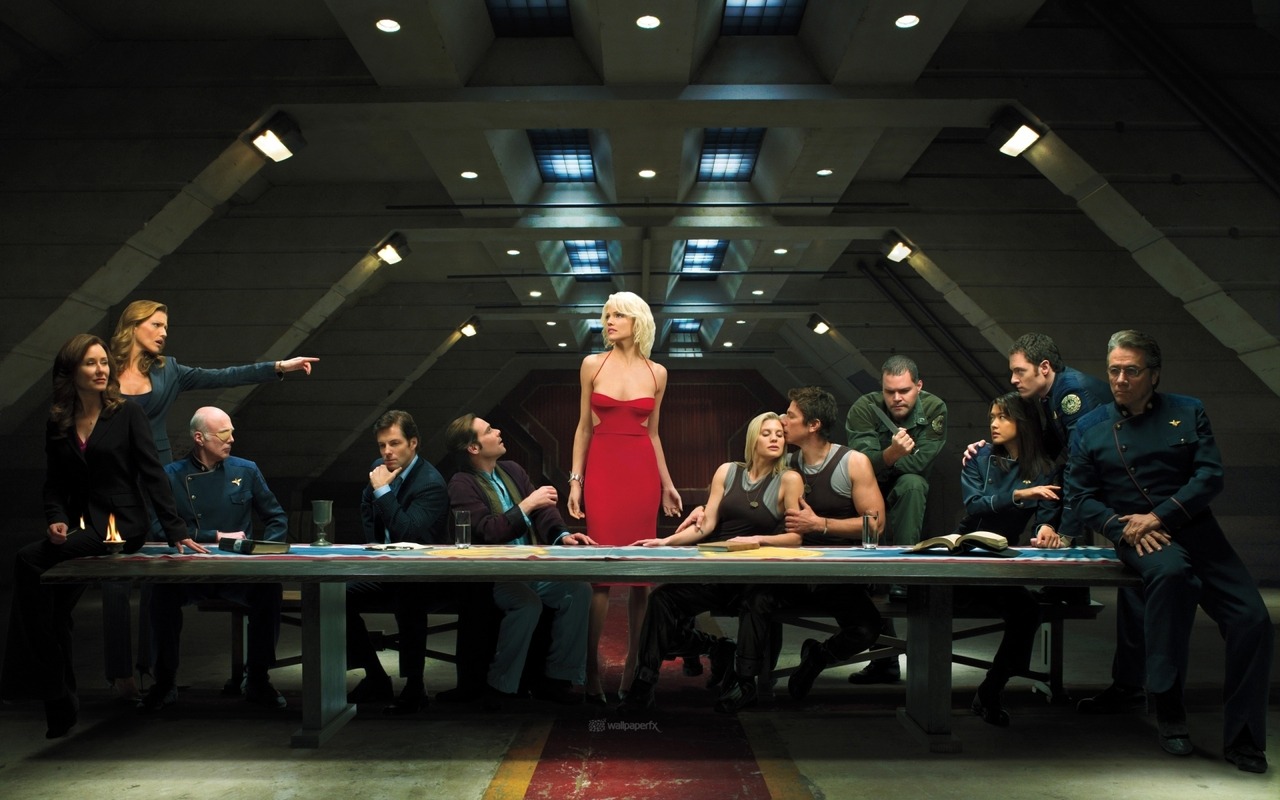
BSG, like all great science fiction, succeeds or fails based not only on its premise, but on its characters who are living that premise out. This version of BSG is full of interesting characters, with the line often blurred between who is villain and who is not. Alliances form and dissolve as various people find that at times their individual agendas align, while at others, they clash. Aside from the Cylons, there is no one on this show who stands out as purely good or purely evil. Even Commander Adama, who may be the most effective teevee starship commander since Jean-Luc Picard, has moments when he succumbs to his own inner demons and allows them to control his actions. The show is masterful at creating flawed people, but also people whose flaws aren’t so debilitating that we can never sympathize or understand.

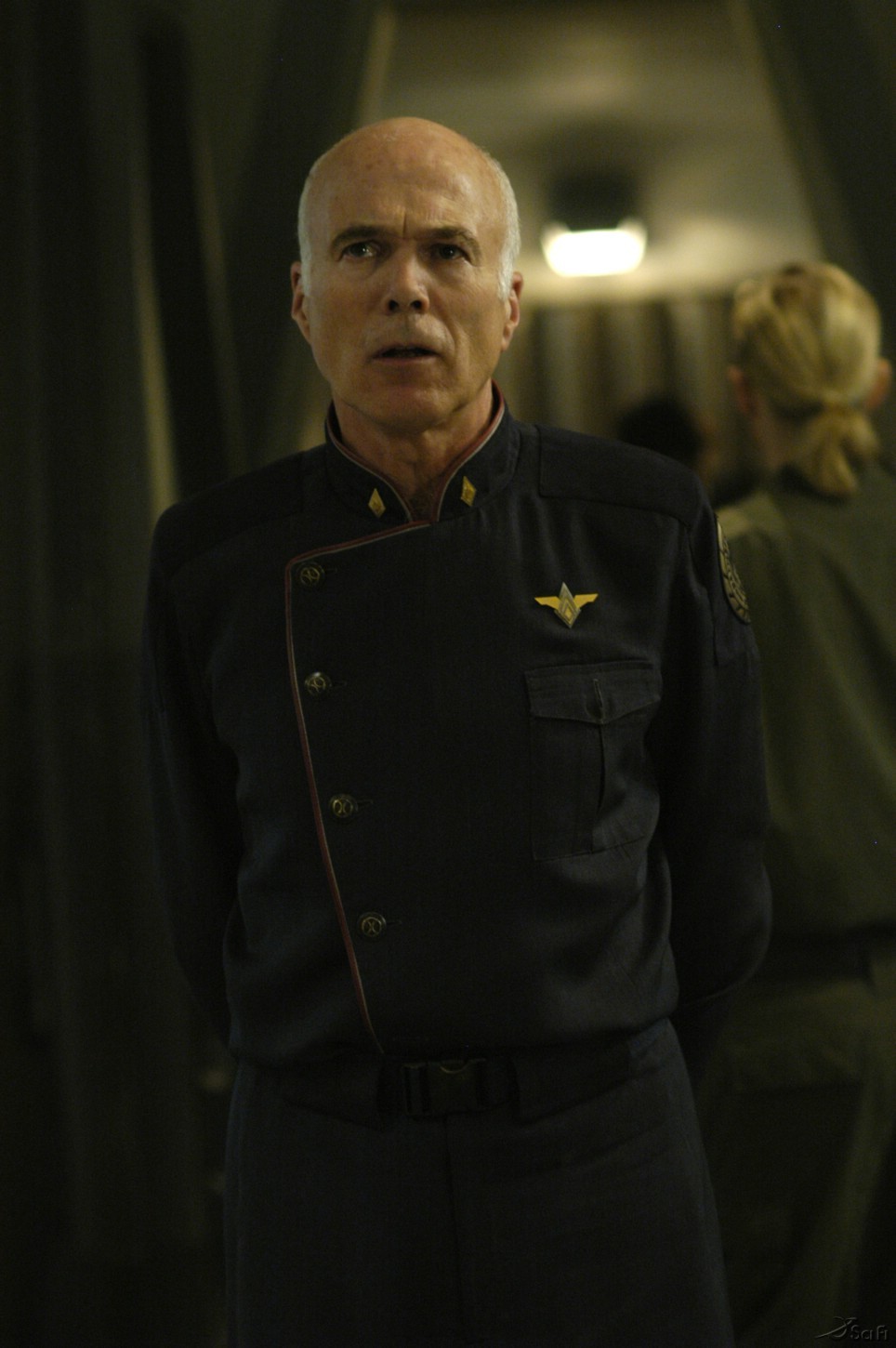
Even better, the flaws of the characters make sense. Colonel Tigh is an alcoholic who suffers from crippling self-doubt about his own abilities to command or make correct decisions – so much so that he often doesn’t even realize it when he makes the right ones because he has to. He’s the one who calmly makes the decision to seal off a section of the Galactica that is on fire and vent that section into space, even though this will mean the instant death of dozens of crew, because it’s the only way to deal with the problem.

And then there is Kara Thrace, the brilliant cigar-chomping Viper pilot with a penchant for breaking the rules and who goes by the call-sign “Starbuck”. I remember a lot of consternation when the show was announced that they were making Starbuck (Dirk Benedict’s role in the original series) into a woman, but it really works here. This Starbuck is arrogant and skilled and resourceful and brilliant, but also brash, disrespectful, and racked with deep guilt that exists on several levels. At the point I’ve reached in the series, there have been some indications that Starbuck has a deeper level of significance in some way, but I haven’t gotten there yet. She is a fantastic character, though. Nothing dull ever happens when she is onscreen.

And the roster of the show’s best characters marches on. Laura Roslin is the Secretary of Education in the Colonial Government, and as such, she is 43rd in the line of succession to the Presidency…until the Cylons kill, in one fell swoop, the 42 people ahead of her, so this prim schoolteacher finds herself President of the Colonials during their greatest time of struggle in history. This, in fact, turns out to be one of the show’s most frequent themes: the way in which history often forces the least likely of people to rise to the occasion and do what must be done to survive. The obscure cabinet member who works on education policy becomes President. The commander of the ship that’s being mothballed becomes the leader of the entire war effort. The maintenance workers who repair the ships suddenly find their duties the difference between life and death. And so it goes.

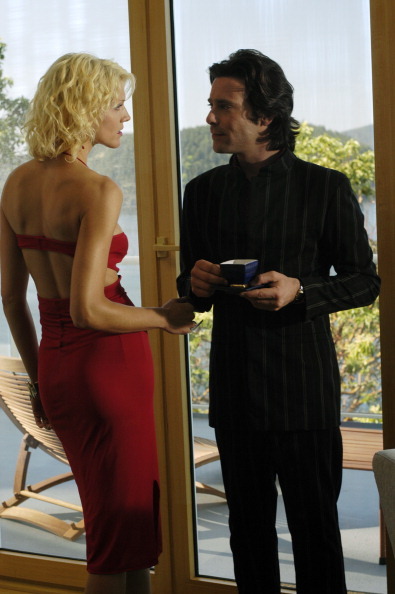
BSG‘s moral ambiguity is most centered on Gaius Baltar, the brilliant scientist who is seduced into giving access to defense computers on Caprica to the stunning woman he’s dating…who happens to be Number Six, the gorgeous human-looking Cylon. In many ways, it’s his fault that the Cylons are so able to destroy Caprica so quickly, so utterly, and so decisively. But is he a villain? It’s hard to see him as such, even though his agenda, to the extent that he even has one, doesn’t really line up to the rest of the Colonial fleet’s. As the series unfolds, Baltar is visited over and over again by Number Six, who may or may not be a figment of his imagination…or a vision placed via a chip in his brain. She is able to stoke his ego to enormous degree, first by getting him elected Vice President, and then by convincing him that he is an ‘instrument of God’.

The BSG writers excel at creating situations where the moral course is not at all clear. In just this one season, we have the fleet having to rely on convicted criminals to form a work crew to acquire water; we have a decision made on incomplete information whether or not to destroy a Colonial ship that may have been taken over by Cylons; and we have the increasing evidence that what is happening to the Colonials has been foreseen in their scriptures, so that they must decide whether to continue fleeing or stop and retrieve an artifact from their once-lost home planet of Kobol. BSG provides its characters with few easy decisions – in fact, it’s almost as if the writers delight in creating situations where their people are in a really bad spot and their only courses of action available basically constitute a grab-bag of suck. “Pick your poison” seems to be the general order of the day on this show…or the choice between the devil you know and the devil you don’t.

I don’t want to give the impression that the updated BSG is all dystopic depressing stuff, because it’s not. It’s intense and dark and a lot of bad stuff happens, but there are real moments of happiness along the way, and a couple of moments of outright triumph. This is a show that makes a major victory out of when the running tally the President keeps of the to-the-number population of the human race actually increases by one, and there are moments of humor along the way. Small moments, to be sure, but there’s a constant sense that when a triumph comes, it is earned. Prices are paid for victories, but hope remains.

This brings me to the show’s mystical and religious themes. The Colonials seem to be polytheistic, believing in gods who are modeled on the Greek pantheon of deities. Reference is made to Apollo and Athena, as well as others. The Cylons, however, are particularly interesting because they are not just a race of robots, as in the original series. The Cylons believe in a monotheistic God, to the point where Number Six, in her talks with Baltar, speaks to him in ways that are so spiritual that it’s possible to wonder if she is some kind of angel and not a Cylon at all. The original series had its religious content as well, being famously shaped by Glen A. Larson to reflect the theology of the Mormon church. The BSG update doesn’t quite do that, but it does address some of the big spiritual questions. Characters are said to be meant to do certain things, and there is the constant repetition of a single spiritual idea, used almost as a kenning in the show: “All this has happened before, and all this will happen again.”

In terms of production design, BSG is top-notch. The Galactica itself is only mildly updated in design, as are the Colonial Viper starfighters – they are still long and sleek, with their tri-thrusters, but they’re deadlier now. Interestingly, early in the show’s pilot miniseries, there’s a touching scene where the flight crew on Galactica provides Adama with a restored ‘vintage’ Viper, which is, of course, one of the ships from BSG 1978. There are other, small nods to the original series: the gold-plated Cylons of the original show are revealed to be an earlier model in this one, and the Colonial Anthem turns out to be the Stu Philips theme from the original show. These are all small nods of respect toward the earlier show. (The ultimate such nod is, of course, the casting of Richard Hatch — who played Apollo on the original show — as Tom Zarek, a criminal-turned-politician, who is one of the more interesting characters on a show that is loaded with them.)

There are other things about the production design that might seem a bit odd at first, but I quickly became used to them. The clothes on the show are contemporary – and by that, I mean, you could pluck just about any civilian character out of BSG, plunk them in the middle of any city in America, and no one would look twice at them. Suits with neckties, women in pants suits and the like…in truth, I found this aspect of the show easiest to swallow. Nobody really has any idea what would be in fashion in some future (or past) society, so why not just use fashions from right now and have done? It was no harder for me to get used to this than it was to get used to all the Western tack in Firefly. One design element in the show that I really like is how every piece of paper, every book, every bit of printed matter, is printed on octagonal paper. That little detail goes so far to make clear that this world, these people, look like our and us, but they’re not.

And the music? There’s some wonderful music on this show, and it uses a lot of different styles, from slashing synths to action cues that are nothing but percussion to a Celtic-theme for the father-son relationship of Adama and Apollo.

I will continue to report on BSG as I make my way through the series, but for now – what a great, great show.

Share This Post

A Random Wednesday Conversation Starter

So, go ahead and kvetch about the Olympics a bit. What are your favorite events? What events do you just not get? What events would you include or exclude? Granting that providing tape-delayed coverage is a necessary evil given the distances in time zones, what could NBC be doing better with its coverage? How weird is it watching Olympics without Jim McKay on the teevee? Do professional athletes in sports like basketball make for better, or lesser, competition? How big a problem IS doping, and what’s the future of the very notion of ‘performance-enhancing’ medicine?

Share This Post

“The Martians will be us.”

Images of Mars-fall:

Mars Science Laboratory (MSL)

Curiosity Parachute Landing Spotted by NASA Orbiter [detail]

Mars Curiosity Rover Landing Broadcast at Times Square, Earth

Mars Curiosity Rover Landing Broadcast at Times Square, Earth

Mars Science Laboratory (MSL) (201208050020HQ)

Mars Science Laboratory (MSL) (201208050018HQ)

FLA_397506083EDR_F0010008AUT_04096M_x2sqt-HD

Mars Curiosity


If we were to cut our defense budget by, say, a third, and instead of using that money for tax cuts we were to put every penny of it into our budget for space exploration, I think it would be better for us, maybe later rather than sooner…but not so much later as we might believe.

Share This Post

Sentential Links

Links….

:: It’s this kind of ignorant trash that sets feminism back decades. Women who defend this book are, however unwittingly, participating in some of the most blatant misogyny I’ve ever witnessed, giving the impression that some women enjoy being debased, abused, and controlled (outside of a consensual dom/sub relationship). (Thank God I’m hearing awful things about 50 Shades of Gray now…if only more people had told me what an awful book Twilight is….)

:: That’s something I’ve been thinking about lately. As much as I love adventure stories, I’ve never been a risk taker. Presented with the easy way or a potentially more rewarding, but harder way, I’ve always taken the easier way.

:: You didn’t set out to get rich as a favor to the rest of us.

So stop expecting a thank you note. (Couldn’t agree more. The whole “Bow down and thank your Job Creating Overlords!” thing that we’ve got going on is utterly nauseating.)

:: Er…your brother got killed in a mountain-climbing accident! (In context, this is actually really funny….)

:: What I like most about all three Batman movies is Gary Oldman as Commissioner Gordon. The character developed a lot over the course of the trilogy and the whole storyline revolves as much around him as it does around Batman. While the flashy action scenes are usually left to others, I get a kick out of every single minute of screentime Oldman has. That man can say more with taking off his glasses than others with a five minute monologue. (I haven’t seen the movie yet, but I’m eternally fascinated by Gary Oldman, when he turns up in stuff.)

:: I’ve made no secret of the fact that I often feel a little lost here in the 21st century, but at moments like this, when technology gives us the opportunity to share things like this with the people who are making it happen, and the people all over the world who also get excited by the thought of something we built setting down on another freaking planet… god, it’s all so amazing. It almost makes up for nonsense like whether or not eating mediocre fast-food chicken sends the proper political statement.

:: The news these days is filled with polarization, with hate, with fear, with ignorance. But while these feelings are a part of us, and always will be, they neither dominate nor define us. Not if we don’t let them. When we reach, when we explore, when we’re curious – that’s when we’re at our best. We can learn about the world around us, the Universe around us. It doesn’t divide us, or separate us, or create artificial and wholly made-up barriers between us. As we saw on Twitter, at New York Times Square where hundreds of people watched the landing live, and all over the world: science and exploration bind us together. Science makes the world a better place, and it makes us better people.

It’s what we can do, and what we must do. (Amen. Oh my God, Amen.)

:: I tell you these summer days passed by with saddle, foot, and bow are becoming legend in my own life. I adore every hoof mark, stride, and knocked arrow.

And the very best part?

It’s Monday.

More next week. Or not.

(Actually, maybe not…I have family visiting from out of town this coming weekend, so posting may not happen much. You are warned. Heh!)

More next week!

Share This Post

Sunday Burst of Weird and Awesome!

Oddities and Awesome abound!

:: A seven-foot-long model of the Serenity, made entirely out of Legos. Absolutely amazing. Lots of linkage at io9!


01 Serenity


:: For some reason, Major League Baseball teams have, for the last few years, employed the pie-in-the-face as their post-game ritual for the celebration of individual heroics, such as the pitcher who throws a complete-game one-hit shutout, or the left-fielder who goes 5-5 with two home runs and 9 RBIs. Baseball ‘pies’ tend to be shaving cream, which is gross, but…well anyway, the Oakland A’s did a video of what their office culture might be like if they employed pies for celebrating off-field accomplishments of the organization, such as, say, selling a set of season tickets.


:: And there’s just no other way to say this: it’s Awesome.

God I hope this works!

More next week!

Share This Post

ForgottenStars.net

The official site of Kelly Sedinger: Reader, writer, photographer, and dreamer

Skip to content ↓