Help Fund a Farm

Let your children grow up to become farmers. There is a surplus of mediocrity in this nation and a deficit of bravery. Let your children grow up to be farmers. Let them be brave.

Jenna Woginrich is one of my favorite bloggers. She’s a woman who was in the urban corporate rat-race until she apparently decided that she would much rather own her own farm, instead — and that’s been the focus of her life ever since. She does own her own farm now — or at least she’s paying a mortgage on her own farm, and she’s been documenting all the various joys, discoveries, heartbreaks, thrills, and fears of such a life.

One of the more difficult things she writes about is her constantly troubled financial state, as she tries to make her relentlessly monthly payments while doing a job (as well as freelance writing) that is notorious for not paying much. Woginrich is very creative and crafty in this regard, inventing revenue streams out of whole cloth, and her latest one is a Kickstarter campaign whose main focus is a fiction book she has decided to write.

Cold Antler Farm is a small, livestock farm set into the side of a mountain in upstate New York. It is the home of author, blogger, and homesteader, Jenna Woginrich. There she runs the farm by herself, following her dream of a creative and feral life. Every day Jenna takes care of sheep, horses, dairy goats, pigs, poultry, gardens and bees while writing about it on her blog – Cold Antler Farm. Thousands of readers and hundreds of visitors have been a part of her story, reading along as she went from a corporate graphic designer with farm dreams to a full-time writer on her own piece of land.

Woginrich will write about her rural county in the early 1900’s and the strange occurrences happening in the farmland around it. Birchthorn is a mystery and paranormal thriller. A widow and her small farm in the winter, her community of eccentrics and farmers alike, and the strange resurgance of an old legend coming back to life in a small town. And the best part about this story? YOU can be a part of it. Part of its creation process through an interactive blog where you get each chapter as it is written to comment and suggest storyline with, or you can pledge your way INTO the novel itself as a character!

The project has already received full funding, but it’s still open for donations for a few more days (and I plan to donate myself before it ends). Woginrich isn’t just doing the “Give me money and when the book’s done you get a copy or a really nice copy or a really REALLY nice copy with an autograph” thing; she’s actually inviting her benefactors into her creative process, which is something that intrigues me greatly. Her book won’t just be crowd-funded, but in a sense, crowd-created. I’m highly intrigued to see how this works and what kind of book emerges on the other end. If any of this interests you, do check out her blog! (She has also written a number of books about her experiences with farming and the do-it-yourself life, which are well worth checking out.)

Share This Post

“Some infinities are bigger than other infinities.”


I’ve complained a bit about the time I spent over the last several days watching my computer try to run Windows Movie Maker, with less-than-reliable success. (Part of this is likely because it’s a pretty basic program, and another part is undoubtedly that my computer isn’t tricked out with all kinds of extra memory for tasks like video editing.) There was one upside to the time I spent not writing, though: I passed quite a lot of the time I was waiting for the computer to do stuff reading John Green’s The Fault In Our Stars.

Spoilers follow, so I’m putting this after the break.

The Fault In Our Stars is one of those cultural bandwagons I’m only jumping on extremely belatedly. Green’s book is extremely popular, and has already been filmed (it’s playing now at a theater near you!). But I knew nothing about it, really, except that it was about two teenagers who fall in love in the midst of their mutual struggles against cancer. If that were all I knew, I doubt I’d have bothered, but I’ve seen enough good press about the book to be curious, and in our recent move, I saw that The Daughter owns a copy. So I gave it a read.

I came armed with tissues…but in the end, I did not need them. This is not an indictment of the book in any way. I was not unmoved by the story, but…well, it turns out that I knew enough about The Fault In Our Stars that there was a large degree to which reading the book felt like waiting for the other shoe to drop. I knew that one of these two lovers was not going to make it all the way to the last page, if not both. And as soon as I opened the book and noticed that it was in first person and figured out which of the two was narrating, well, that narrowed it right down quick.

It’s the girl, Hazel Grace Lancaster, narrating. So therefore we know – unless the book takes a really supernatural or spiritual turn at the end – that the boy, Augustus Waters, will die. The book doesn’t give us a long drawn-out death spiral for him, though; this isn’t one of those cancer stories where the healthy person finds out they have cancer and then they get sicker and then better and then sicker again and then start the long slow drift into death. John Green is after something else here.

As the book opens, Hazel is already at Stage IV. Her ending is already written, and all that’s left is however much fighting she intends to do along the way. She’s using an experimental new drug that is buying her time, but it’s always clear that this is all it’s doing. Her thyroid cancer is in her lungs now, and thus she is forever tethered to an oxygen tank. Augustus is a cancer survivor: his cancer has a high survival rate, and the worst it did was require the amputation of his leg. But in an early bit of foreshadowing, someone points out that a cancer “survivor” still has to spend the rest of their days keeping vigilant watch for the disease’s return.

Hazel and Augustus – as well as the other fellow cancer sufferers in the book – are all made acutely aware that they are some kind of “other” entity, not really allowed to have full lives, but not yet dead, either. They live in some kind of half-world that is pushed on them from without, a world of support groups and prayers that no one particularly feels are effective uses of time and long bouts of painful treatments and a general acceptance that their lot is to leave the world with so many things undone. For the most part, Hazel seems to accept all this, but she presents to the reader a kind of weary and jaded outlook, a sense that it’s all fairly meaningless. And yet, for all her fatalism, there are moments when he very real fears and raw emotions shine through, such as when she reveals that she once overheard her mother say that when she dies, “I won’t be a mother anymore.” That’s an awful burden for a child to bear.

Augustus, however – well, I found Augustus hard to like at first. He comes off as awfully sure of himself, and convinced of the holiness of his own ideas. Augustus Waters is prone to long discourses in which he elucidates at length whatever nifty idea has just popped into his head, and he’ll even insist on reciting his new idea before anyone else can say anything at all. He’s very sure of the things he thinks, and it feels at first like his own kind of defense mechanism, his carefully-honed impression of a guy who has figured out a lot of things. It’s something of a sham, though, and the moments do come when Augustus’s fears are laid out: he is afraid that his life will have been meaningless, that he will leave nothing behind to be remembered. He tries to cover this over with cynical talk, but it’s easy to see through it. Hazel sure does.

I was not quite enchanted by the book’s central “plot”, which involves the two young lovers going to Amsterdam so they can quiz the author of their favorite book about what happened after it ended. (He ended the book in the middle of a sentence.) I have to admit that in these scenes, I felt the hand of the author most strongly pushing things along. Green does, though, have the intelligence to not have the Reclusive Author turn out to be a warm genius who has all the answers; instead he is an alcoholic who has pretty much completely given up. He’s good at saying things that sound as if they might, on some level, be brilliant and profound, but Hazel and Augustus both see through this and eventually depart in anger. They’re not done with this guy yet, though, and he pops up again as Augustus reveals his dark secret: that his high-survival-rate cancer has returned with a vengeance, and he’s going to be on the bummer end of those statistics.

Augustus fades from the book fairly quickly, and Green is wise enough not to draw this out. There’s no final bedside farewell scene when everyone holds hands and Augustus quietly slips away. His death comes quickly, after a brief battle that doesn’t seem at all to have any hope whatsoever. Nor should it, really. This is all very wise on Green’s part: after all, if this book is Hazel’s narration, it’s clear that she would want to focus on the happier memories and breeze through the bad ones, to a certain extent. Even there, though, it’s not as if it reads like a defense mechanism. Hazel is someone for whom death is a concrete fact, but who also refuses to allow it to dominate everything, even when it does.

I struggle to describe my response to The Fault In Our Stars. It manipulates, but its manipulations felt honest to me. The emotions seem real and genuine, not forced, and even during the “literary quest” subplot, which does feel a bit shoehorned in, Green avoids the temptation to turn the man into a guru with life-altering wisdom. Green’s dialogue occasionally reads like writing – particularly when Augustus is speaking – but most times, the talk in this book is so natural that it achieves the dream of conveying vocal inflections with no adverbs and no attribution verbs other than “said”. One could do a lot worse than read this book just for the lessons in crafting dialogue alone.

Perhaps it’s my own life experience coming to bear, but as delicate and lovely as the love story between Hazel and Augustus is – and I can totally forgive John Green for writing it so that their first and only real date is a dinner at a waterside cafe in Amsterdam, with flower petals fluttering through the air – I find myself most haunted by Hazel’s parents. They aren’t really fully-shaped characters, which is appropriate since at Hazel’s age we simply don’t see our parents as fully-shaped people. Her mother’s fear, though – “I won’t be a mother anymore” – is real. That’s a real thing, folks. That’s what it feels like. Later on, it turns out that Hazel’s mother has been making her own preparations for what is to come, and making plans for afterward so she does not simply end up staring at the walls through a grief-filled existence. This does give Hazel some small degree of comfort, but she can never truly know what things are going to be like for her parents when she is gone, and neither can her parents. That particular emotional hole may well be the deepest a person can be plunged into, even when you know full well that it’s coming. This isn’t criticism, by the way – I’m not suggesting that John Green has missed something here by not focusing on the parents. Given the literary structure and focus he selected, he couldn’t focus on the parents. But that’s where my emotional sympathies are inexorably drawn, for reasons that I can’t really avoid.

Ultimately The Fault In Our Stars is both a hopeful book and a fatalistic one. We can’t flinch from the fact of our temporary existence, but we also shouldn’t flinch from the experiences that make our temporary existence bearable. In the end, Augustus writes to Hazel in words that he has almost certainly known will not be read until he is gone:

You don’t get to choose if you get hurt in this world, old man, but you do have some say in who hurts you. I like my choices. I hope she likes hers.

I don’t think it’s entirely coincidental that the words Hazel uses to affirm the last expressed hope of Augustus Waters are words commonly used in our culture to affirm marriage.

Share This Post

Hey, I’m on Goodreads!

Actually, I’ve been on Goodreads for quite a while (it says that I signed up in 2007!), but I’ve never used it. Now I’m making an attempt, after reading someplace that being active on Goodreads is a good idea for writers. I’ve no idea if that’s true, but hey, it can’t hurt. So if any of you are on Goodreads, feel free to ‘add’ me or ‘friend’ me or whatever it is they call it.

And then…explain the thing to me! I don’t quite get it…do I actually write about the books I read over there, or is giving books a star rating all there is? Do other people comment on my star ratings and then we have discussions? I do rather like the notion of a book-based social media site, but if someone could give me the dime tour-and-explanation of the thing, I’d be grateful.

Share This Post

Building a Library

When the prospect of finally moving from the old Casa Jaquandor into a new Casa Jaquandor started shaping into more of a realistic goal than a “here’s something we should do one day” dream, maybe a year-and-a-half ago, there were a number of thoughts that flashed through my mind:

“A space of our own, where we can put whatever we want on the walls or plant whatever we want in the yard!”

“A kitchen large enough for our kitchen stuff! A kitchen with enough counters to be able to prep multiple phases of a meal without having to completely clear one spot constantly!”

“The Daughter can have an actual room of her own, as opposed to half a room which is half storage for our stuff!”

“Space for The Wife’s sewing machines and crafting stuff!”

And, for me, one glaring notion:

“A new writing space with enough room for books to be on shelves, as opposed to stacks everywhere I turn!

The old space was…well, it wasn’t so much a space, as a hollowed-out corner. I ran out of shelf space for books many, many, many moons ago, to the point where books just started going into stacks on the floor, tucked into corners and piled beside my desk itself. My desk was an awful clutter, and frankly, sitting down to work felt less like sitting down at a desk so much as climbing into a cramped cockpit. Looking back now, I wonder how I managed to get as much work done there as I did; in the last few years, there have been three complete novels and half of a fourth, in addition to all the various bloviation I pile into this space.

Worst of all, my books felt less like a collection or a working library than a massive horde of crap gathered at random over the years. Eventually I had to stop going to those used book sales at the public library, because I simply didn’t have room for all the treasures I often found from there anymore. I got a lot more selective with the books I bought, and still, they piled up in unacceptable states of inaccessibility. Yes, there are books I forgot I owned (though I didn’t end up with multiple copies unknowingle), but that mattered little; I reached the point where I knew I couldn’t find a specific book a lot of the time, so it just languished unread in some stack, some pile, someplace.

I fooled myself for a long time into thinking that I loved that space, until I finally came to the realization, when moving was a possibility, that I hated it. I mean, look at this mess!


Ugh.

So when it finally came to pass that we found a new living space and that it might be ours, I knew that I was possibly going to be able to convert an entire room into my “book room”, my “study”, my “library”, my “writing space”. I’m still not sure what I call it. But it’s amazing.

It started with a room.

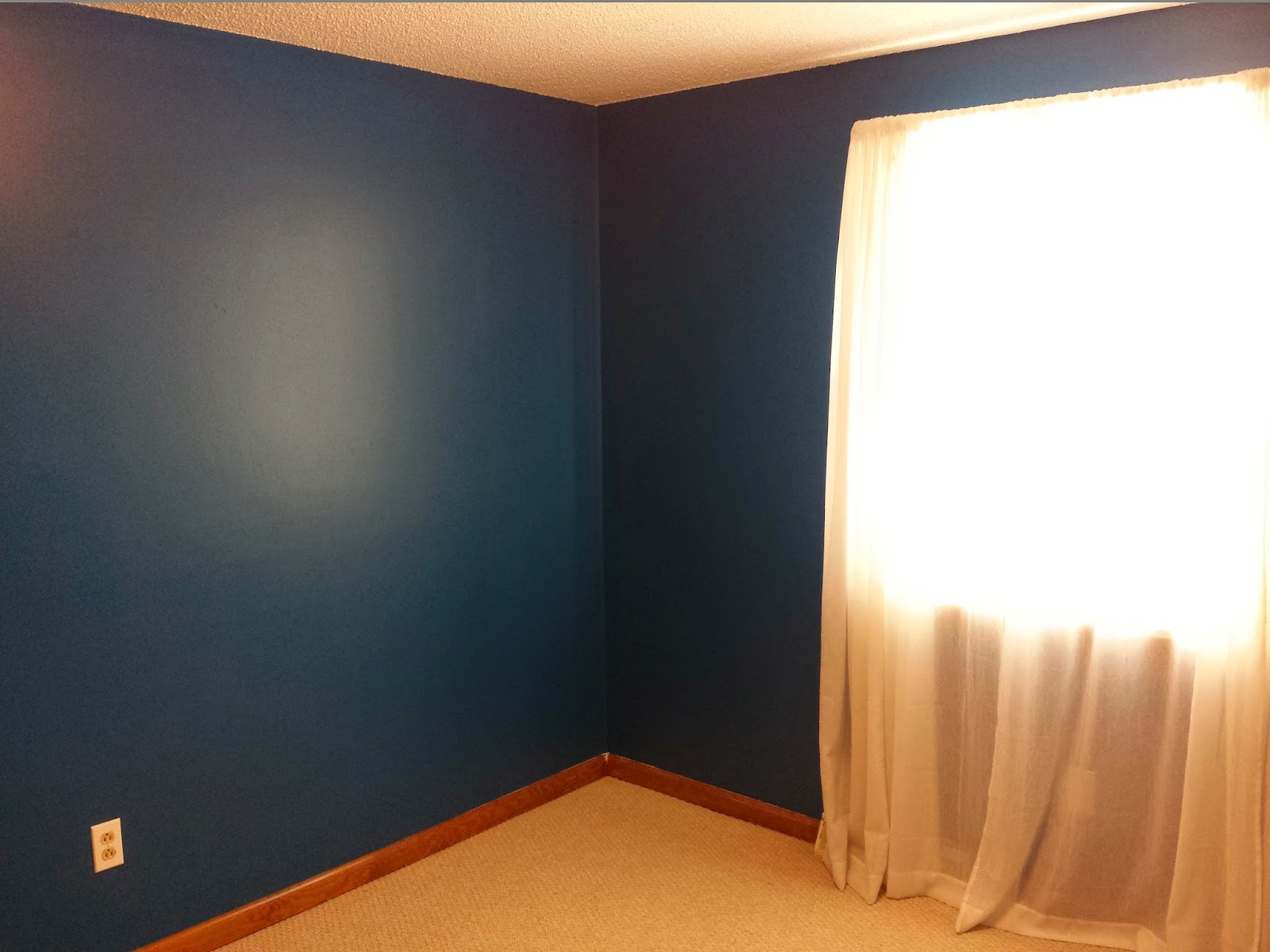
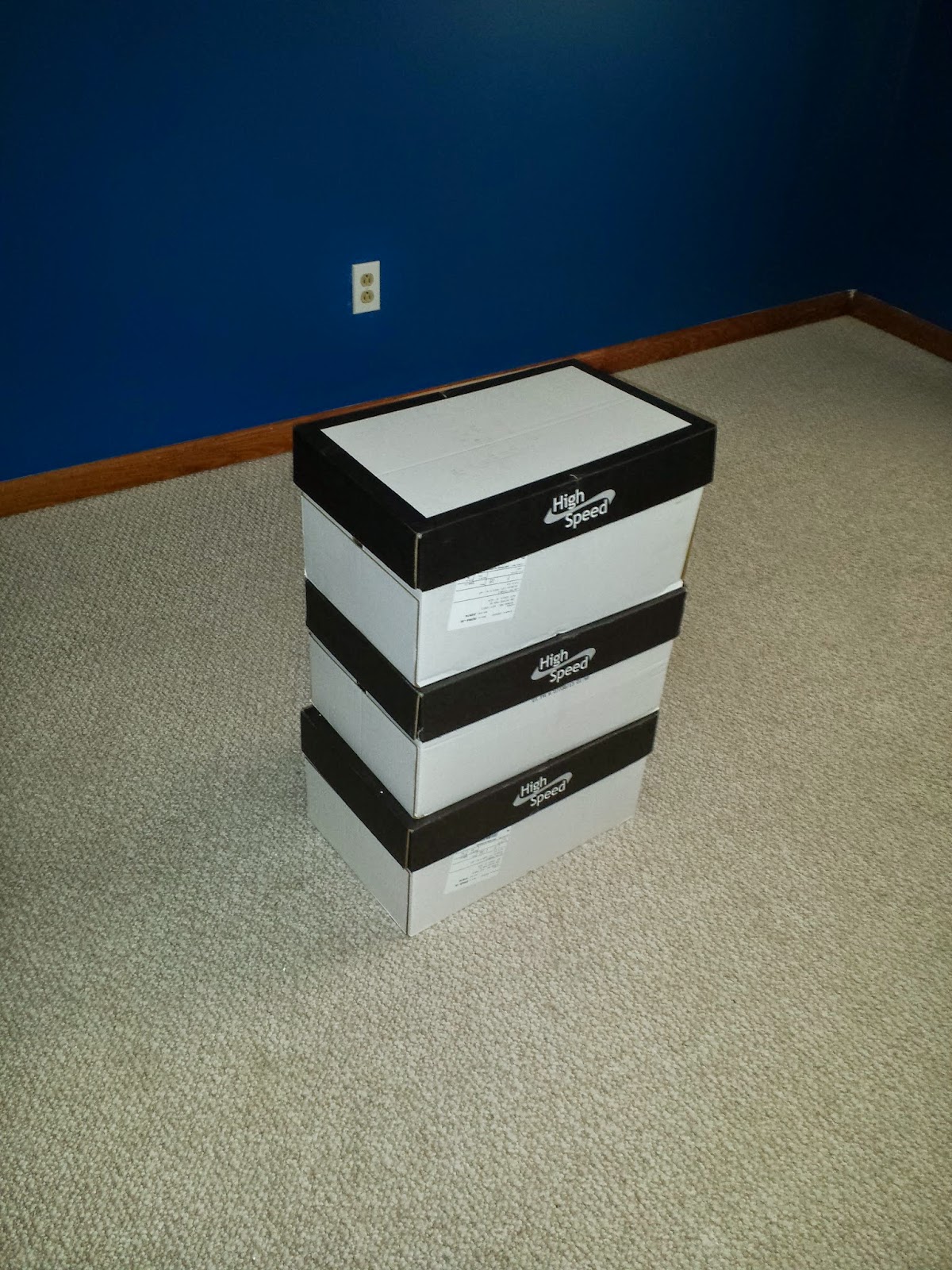
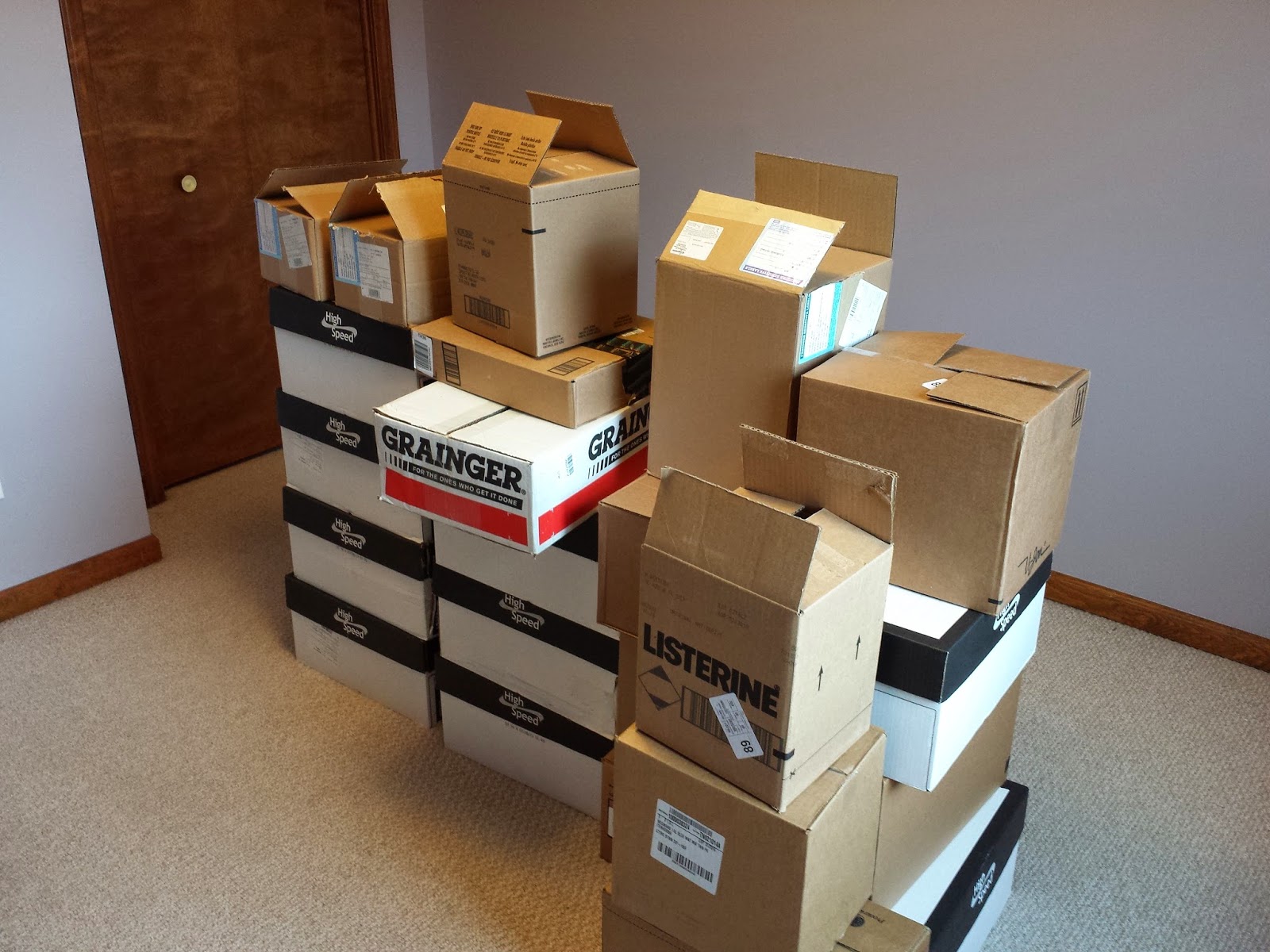
Yes, the deep blue walls would have to go, but first, into the room came…boxes.
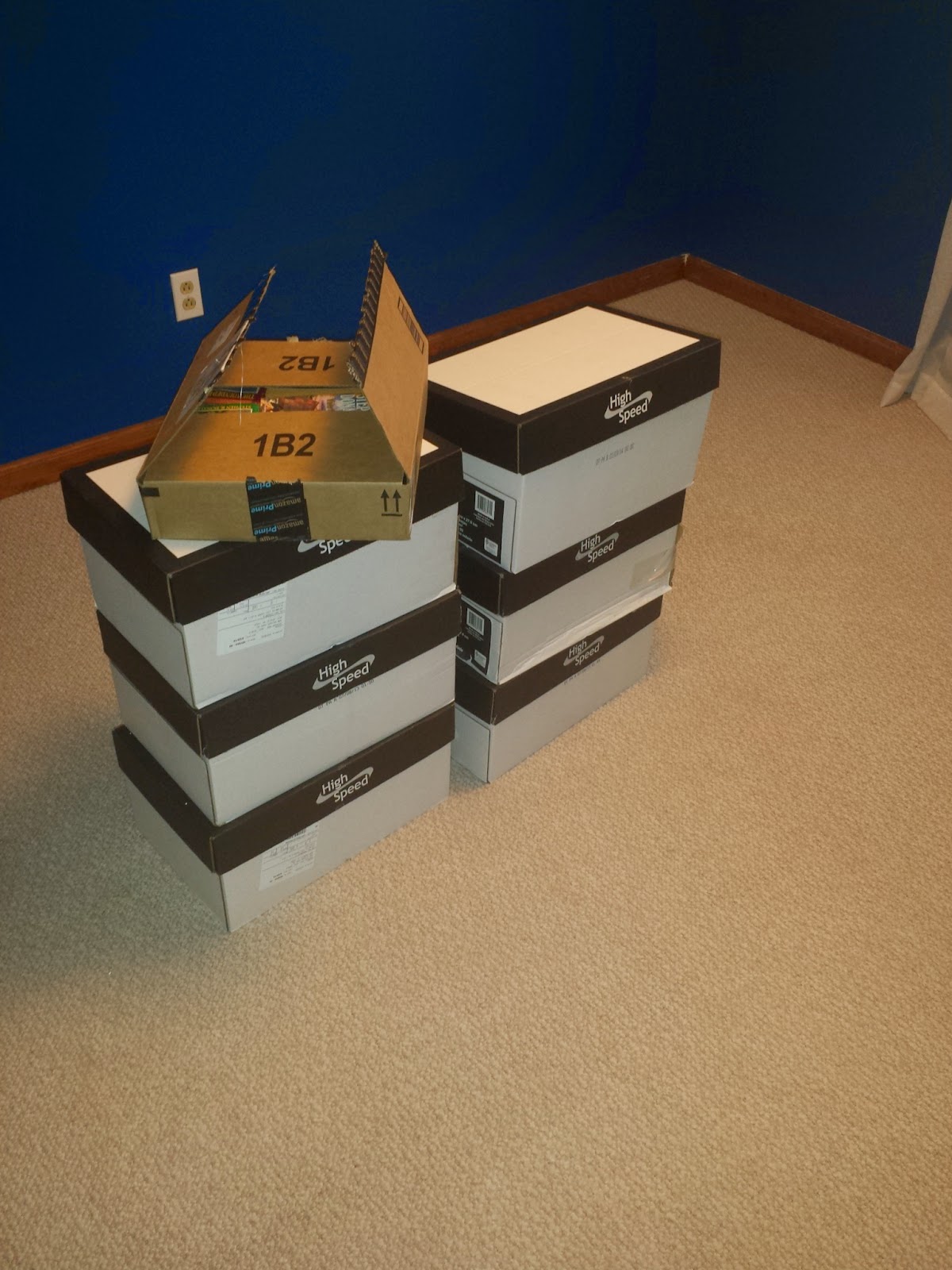
Boxes begat more boxes….
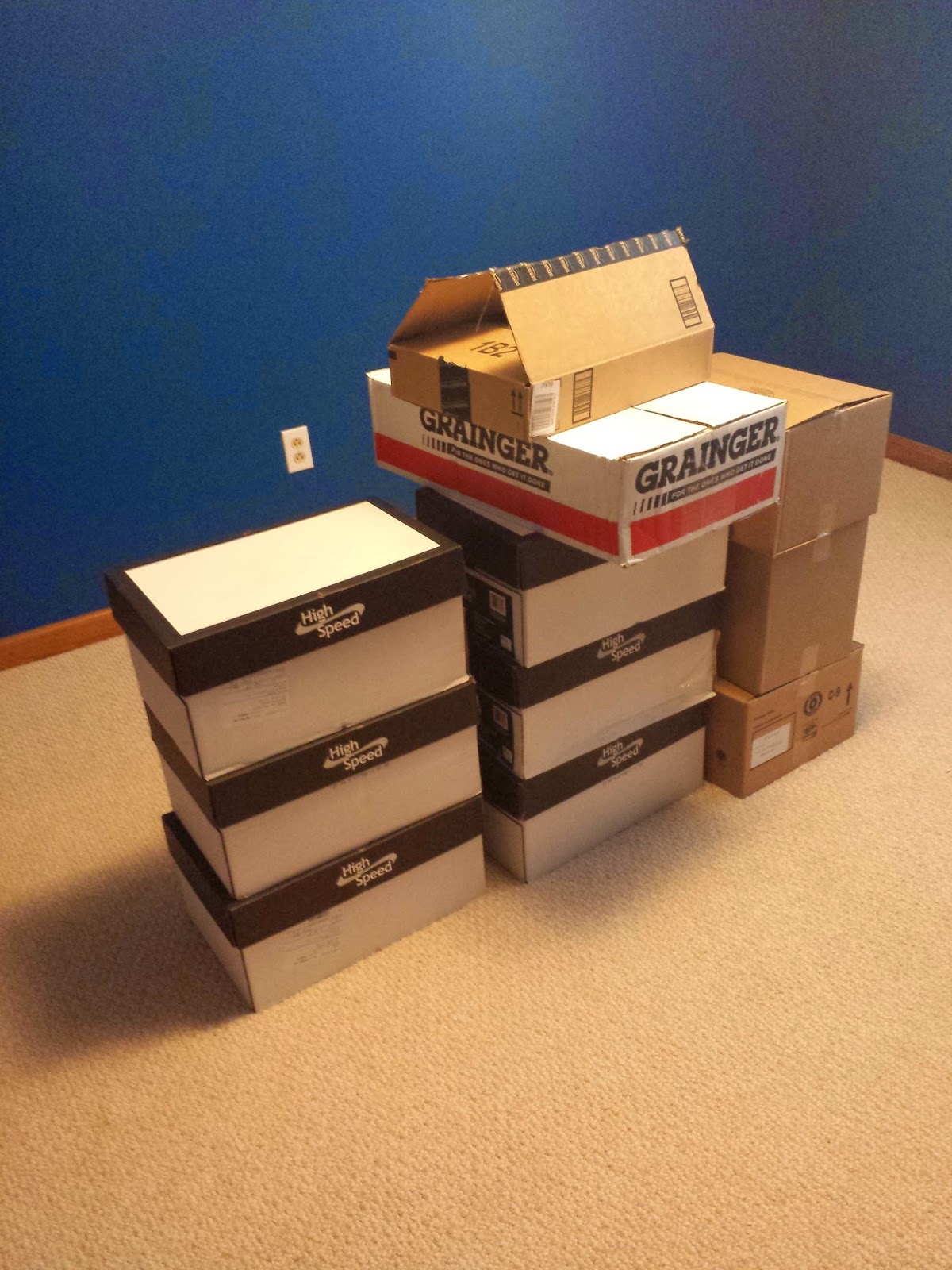
…which begat more boxes….

 Then the painters came, and away went the deep blue in favor of a brighter, more soothing amethist.

Along with more boxes.

And more.


Finally, they were all over here, all boxed up (minus half-a-dozen large bags of books that I decided were better served in someone else’s library, so off they went to the local public one as offerings in their next used book sale). This took me probably about six weeks, packing up four or five boxes of books at a time and driving them over. Luckily, New Casa Jaquandor is only a few miles away from Old Casa Jaquandor, so it wasn’t like I had to drive an hour each way or anything. But it did get pretty tiring, nonetheless; lugging boxes of books up and down stairs is never fun.

This felt weird, for a while, not having any real access to any of my books, and it took a toll on my writing productivity. There really is something of an osmotic process to being in the presence of lots of books. I find their presence conducive to getting work done, and when they were all boxed up, I felt so out of sorts that I ended up not writing at all when the move finally drew near. But I knew that soon it would be time to start unpacking them all and getting them on shelves.

Which meant, buying and assembling new shelves. I didn’t want anything ridiculously expensive, and I certainly didn’t need any specialty cabinets built. I kicked around for a bit the notion of building my own as a carpentry project, but I rejected that for now on the basis that I want to be set up to work now, and not at some indeterminate point in the future when I get a chance to build something, which would certainly be later rather than sooner. Besides, to me, bookshelves are a purely functional thing; what matters is the books. So I ended up buying four of these units, since they’re a good size and they actually match one unit I already have.

So, then came…assembly time!


What I always find is that assembling more than one of the same unit goes faster with each one, once I’m familiar with the procedure. These actually went together pretty quickly, probably taking on average around an hour for each one. Maybe a bit less, actually. Then it was time to start setting them up:


Obviously, I needed to level things up a bit! These units actually come with a bracket which you use to secure them to the walls by drilling into the wall stud, so they’re actually really sturdy. If anything ever happens sufficient to make these shelves fall over, well, I’ll likely have bigger fish to fry at that moment.

These units take up one entire wall of my library. I used my other shelving units — collapsible bookcases that fold flat for travel when not laden — in the opposite corner, two tall units (one of which is actually two bookcases stacked) behind my desk in the corner, one on the other side of my desk, and one next to the door. Now I was ready to start shelving.


It was somewhat serendipitous that Dr. Sagan’s shelf started first, because that’s what I found in the first box of books I opened. But there he was! And that brings me to something else that has eluded me for years: organization.

In the past, I’ve always had books in a mishmash, scattered all over the place, nonfiction mixed with fiction, and authors with their own books scattered all over the place. I wanted to reduce that, if not eliminate it. Carl Sagan’s books are all together now, on one shelf, and his shelf is alongside a few others filled with science-related titles. I tried to keep most of my history works together, my travel writing together, my books on movies together, fantasy books together, and so on. I have a science fiction shelf and an entire poetry area. All my Star Wars books reside together, and my art books and graphic novels all take up one entire bookcase. JRR Tolkien and Guy Gavriel Kay each get an entire shelf (with room on the GGK shelf for his next novel in hardcover, and then I’ll have to start thinking a bit), and both of these are on the shelves by my desk so they’re always right there next to me.

This entire process was mostly enjoyable, although it was at times a bit overwhelming:


Going through everything in a more controlled manner allowed me to take more stock of my collection, and I ended up filling two more boxes with books to be donated to the library. Weeding is always useful, and I plan to do it more often now that I’m in a state where I can look at things and assess them more readily. I greatly downsized my Philosophy collection, most of which were texts I acquired whilst studying Philosophy in college. In most cases I just had to eventually admit that my reading interests are unlikely to take me into places like twentieth-century analytic philosophy again, and to be honest, I found this part of the process less emotional than I expected. When keeping a book depends on moving it, it’s easier to ditch it.

Anyway, the job finally got done, for the most part — at least as far as the books are concerned.


What’s left? Decorating and more organization. I have a closet in this room, which is nice; I’ll be able to create an “archive” of sorts for stuff to go live in there, stuff that routinely got piled elsewhere. I need to get my various knick-knacks out and about; currently all my little spaceships are still in a box because I’m not sure what to do with them, and I need a basket of some sort to toss my car keys and all the various things I carry around in my pockets when I’m at work. At the old place I just piled this shit in a spot on the top of my desk, but I don’t want to do that anymore. I have two narrow bookcases, twelve-inches wide, that will be for various writing supplies, but I discovered the other day that they do not fit the binders I use for my manuscripts, so I may need to acquire another small bookcase. I need to arrange candles, and right now as I write this, I have no idea where my coasters are. I can’t just put beverage vessels down on bare wood! That’s just not right!

Oh, I got myself a new desk lamp. I didn’t really care for the old one, a silver aluminum thing with a white plastic shade. This seems more…I don’t know, Philip Marlowe-esque. Why I’d want to look more Philip Marlowe-esque, I have no idea, but this seems anyway more like a lamp a writer uses. Hey, what can I say. Sometimes you do want to at least look the part, and I don’t have a wastepaper basket full of rejected pages from my Next Great American Novel.


I have some wall art that I want to get up, but I’ll need to do some framing, and that’s going to have to wait for a few weeks while we finish getting all our crap out of the old place. I’ve already hung my Phantom Menace poster, and I have a Star Wars: A New Hope poster to go up too, as well as three Japanese lobby cards for the Original Trilogy that I’ve keep carefully stored for years (a reader sent them to me, anonymously, way longer ago than I like admitting — if you’re still out there, Reader, thank you so much!), which will also go up. And so it goes.

I’m settling in. The place is becoming home, and I have a place to work. In the old place, I had books in just about every room; now they’re all in here, and I’ve decided I want it that way. I’ll read in my bedroom and living room and dining room, but I don’t want to be surrounded by this aspect of my life anymore, except for when I want to be surrounded by it (which is often). I keep returning to these posts by Sheila O’Malley about when she moved and had to rebuild her entire library, and among the many wonderful things in those posts (seriously, read them, they’re among the best things I’ve ever read in blog form), she says this:

“I don’t want any books in my bedroom. My bedroom is for sleep and moisturizing and loving. I’m sick of sleeping surrounded by 5,000 books.”

Ayup!

So there I am. Time to start working again, eh? Onward and upward! Zap! Pow!!


(Yes, I’ve added “splat” to my roster of standard sound effects. Seems pretty obvious, with the pies and all.)

Share This Post

Stuff in the time of the Bard

I recently read a delightful history book called Shakespeare’s Restless World: A Portrait of an Era in Twenty Objects, by Neil MacGregor. This book takes a great approach to painting a picture of Elizabethan London: MacGregor finds twenty objects from that era and writes about each, telling how each particular item reflects the era and describing for us what we learn from these objects. There’s no dry recitation of facts and dates here; MacGregor’s book genuinely captures what it was like to be alive at that point in history, in terms of what you would carry with you, what you would read, what you would think about by way of politics, and what you ate.

I think most of us have some idea of what people are likely to have felt when they first watched the great love scenes from Romeo and Juliet or heard Macduff being told of the killing of his children. The words move us now as we imagine thay must have always moved an audience. But in this chapter I want to ask a less elevated question: what did Shakespeare’s public eat in the theatre? What were you likely to be nibbling or crunching as you first heard “To be or not to be”? Modern audiences embark on films and plays armed with chocolate and popcorn, glasses of wine or bottles of water. What about the ELizabethans? It is a question that recent archaeological work has taken us a long way towards answering. Over the last few decades the Museum of London has excavated the sites of a number of Elizabethan theatres: they have found huge quantities of glass and pottery fragments, fruit seeds, nuts and mussel shells, and, in among all the detritus, this sharp and stylish fork.

It has a slender shape, a little longer (9 inches) and much narrower than the kind of fork we use today, with two fierce-looking prongs at the end; it is easy to imagine somebody languidly pronging a delicacy with it while watching a play. But this is not the equivalent of disposable plastic cutlery, thrown away at the end of a performance: this fork is made of durable iron and it once had an elegant wooden handle — you can still see the pins that held the wooden plates in place — with at the end a tiny brass knob (a rounded ornamental handle) beautifully engraved with the initials “A.N.” This sort of fork, a sucket fork as it is known, is for spearing suckets or sweetmeats — selections of marchpane (marzipan), sugar-bread, gingerbread and the like, the equivalent of a box of chocolates. This is very smart cutlery, and it is meant to last. And last it did, for this particular fork lay for centuries on the site of the Rose Theatre on the south bank of the River Thames.

Good book! Check it out if the Elizabethan world or Shakespeare is of any interest. And even if they’re not.

Share This Post

Snapshots from Ithaca

This weekend The Wife and I made our annual getaway to the Ithaca Apple Harvest Festival, and we had a great time as always…although the festival itself wasn’t quite like it usually is, owing to the fact that Ithaca is in the midst of tearing apart its pedestrian mall to rebuild it (in truth, the infrastructure there was looking a bit long in the tooth, and I look forward to seeing what things look like when it’s done). I know that pedestrian malls aren’t thought of very highly anymore, but Ithaca is a small enough city that they are able to pull it off — it’s all of three blocks, and there’s plenty of parking and lots of nice businesses to frequent.

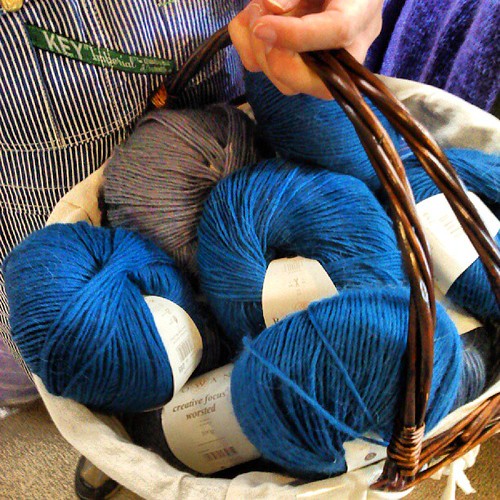
Anyway, it all started with a trip to a knitting supply store just outside of town, which is one of the nicer yarn shops we’ve found in our travels of such. The Wife ended up with a small pile of yarn to add to her stash:

The Wife's yarn haul. Wow!

Then we were off to downtown, where our first order of business was lunch at Waffle Frolic, a restaurant that we absolutely adore. This is their counter.

Ordering counter at WaffleFrolic #Ithaca

Since The Wife went on a gluten-free diet last year, we were thrilled to discover that Waffle Frolic has GF waffles. Even better, though, was that we learned that they also have GF fried chicken, so that we were both able to have waffles and fried chicken, which is one of the finest of all food combos. I never heard of it before a few years ago, but I am seriously in the tank for waffles and fried chicken, folks!

Waffles and fried chicken! #Yum

Next was some shopping and milling about. As I said, the Festival usually takes up the entire pedestrian mall, but this time it was sequestered mostly to either end of the mall, so there was more walking than usual, which was fine. There’s food and lots of crafts, with a great deal of stuff available that is made by local or regional artisans. I am increasingly a fan of buying things that are locally made, and if I can buy it directly from the person who made it, then that’s fantastic.

Now this was funny. There’s a comics store there that I usually go into, more to find something to bring back for The Daughter than for myself (I love comics, but I find that they tend to be wildly overpriced, which is why I tend to exclusively rely on the library for comics reading). Looking through the wares, I found a case with some toys and action figures and the like inside, and on top was this giant model of the starship Enterprise, in my favorite design that ship has ever sported:

Amazing model of the Enterprise at a comics shop in #Ithaca. The shopkeep proceeded to give me a mild tongue-lashing for taking the photo, because of technology and omnipresent access to photography and the like. Wasn't sure I understood his point, but I

As soon as I took the photo, though, the owner was right there to give me a tongue-lashing for taking photos in his shop. He went on some rant about the need to control or limit the technology, now that everyone has access to photography. I honestly did not understand the point he was making — is he worried about people using iPhone cameras to scan comics pages in his store so that they don’t have to buy the comics? It’s not like any of the stuff in there is his intellectual property, and besides, many times I’ve chosen to go into a business or store because someone posted a picture from within and said, “Check out the cool stuff this store has!” Weird. He also pointed to the “No photographs!” sign that maybe I should have seen…but the sign is above the door in the back of the store that leads to their back room, it’s about the size of an index card, and it’s taped to a wall that is also covered with all manner of comics-related posters and artwork. I offered to delete the photo, but he said that wasn’t necessary. I bought a little TARDIS for The Daughter — it has a little light on top — but I think I’ll be foregoing that shop in future trips to Ithaca. If he doesn’t want word getting out that he has cool shit in his store, then I’m happy to oblige.

Nice model, though.

On a happier note, the lack of pedestrian traffic in usual areas meant that I got to actually get up close to one of the Sagan Planet Walk markers! This is a public art installation in Ithaca, honoring the memory of Carl Sagan (one of my eternal heroes), in which stone markers are placed throughout the town in such a way as to constitute a walking tour of the Solar System, with the distances between the markers proportionally accurate to the distances between the planetary orbits. According to the website for the Planet Walk (associated with the Ithaca Sciencenter), the markers for the Sun, Mercury, Venus, Earth, and Mars are in temporary storage (with temporary signage indicating their location, so that the Planet Walk is still possible). But I got to pose with Jupiter. Yay, Jupiter!

Posing with Jupiter in Ithaca! (Wow, the camera did weird things with the stripes of my overalls.)

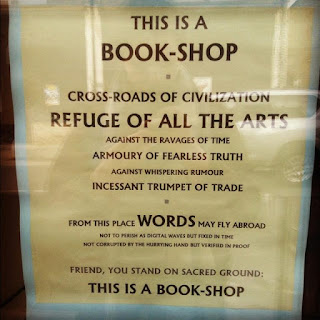
Finally, I visited my favorite used bookstore, Autumn Leaves. I only bought a couple of books this time — I’m trying to cut down my book acquisition until such time as we acquire more space for book storage, which will involve moving — but I always love going in that store. It’s bright and open and airy and inviting. And in their storefront window, they had a mannequin, attired thusly:

Mannequin at Autumn Leaves Used Books in Ithaca. I think they knew I was coming. #overalls #mannequin #Ithaca

It’s like they knew I was coming!

All in all, a lovely trip, and I’m sad it’s over. There are two places I’d like to live on this world, other than right here. One is Toronto. The other is Ithaca!

Share This Post

The rules for reading

I discovered this article sitting in my ‘Blog Fodder’ bookmark folder, and I figured I should address the topic. It’s about reading, and the rules we adopt for how we go about reading. Here are the rules the author posts (I snip the explanatory content, so please go read the article for more!)

1. Always stop at the end of a chapter. Always.

I really try to do this. Failing this, if the book has longish chapters and I’m really tired and I know I’m not gonna make it another ten pages, I’ll read to the next line break. Books that never use line breaks or section breaks tend to really madden me. The most infuriating case of this that I recall off the top of my head is The Illuminatus Trilogy, where the authors completely shift topics, locations, and whatnot from one paragraph to the next, no break whatsoever. But I do look for logical breaking points.

2. Use specific bookmarks.

I don’t use specific bookmarks for specific purposes or books, but I do have several that I use regularly; one is my old Borders Rewards card, with which I simply cannot bear to part. I carry a piece of Borders with me, always! (Hey, I spent many a wonderful hour in Borders.)

2a. No dog-earing, bending, or folding of pages.

I agree with this wholeheartedly. My librarian mother drilled this into me at a very early age, and I’ve never once rebelled against this since. I hate dog-earing pages, and it bugs me to no end.

2b. Weirdly enough, spine-breaking is fine, just don’t get too crazy with it.

Enhhhhh…I’m not a fan of spine breaking. I know it happens, but I really try to avoid it, as much as possible. The only exceptions are cookbooks, which I want to lie as flat as possible while I’m cooking, but you know what? Lots of times I won’t even break the spine with those.

3. Always read two books at once.

More than that, if I can! The trick is to vary the genres, or have one non-fic and one fiction going at once. Graphic novels can be fit into the reading schedule in this way, too. I only read one book at a time if one particular book sweeps my imagination away.

4. No (or minimal) writing in books.

Agreed. I used to write all manner of marginalia in my academic books at school, such as all my various philosophy books. Now I can’t abide the practice. The only acceptable writing is a note to the receiver in the frontispiece, if the book is a gift. Otherwise, no writing!

5. Rereads must be earned because there are too many great books out there to read an okay one twice.

I’d agree with this. I don’t do a whole lot of complete re-reads, but I will dip into books now and again to refresh my memory on passages. Guy Gavriel Kay, Christopher Moore, JRR Tolkien, and JK Rowling are on my list of re-read authors. Carl Sagan, too. Maybe a few others. In general, I approach re-reads as I do anything else: “What am I in the mood to read right now?”

What other rules do I have? Well:

6. Not finishing a book is OK.

Seriously, I just don’t have time to read everything, and if a book isn’t working for me, it’s OK to stop and move on to something else.

7. It is always better to take more books on a trip than you think you’ll possibly have time to read.

Because how do you know how much time you’re gonna have?!

8. Having a favorite genre is fine. Getting stuck in that genre is bad.

Variety is a spice. Or something. You can look it up.

What are your rule for reading?

Share This Post

Shouldn’t we elect him to something?

JK Rowling has been unmasked as the actual author of a crime novel.

Which jogged my memory. Here is guy-who-knows-everything Ken Jennings, writing almost six years ago:

Structurally, these aren’t fantasy novels at all. They’re fair-play mysteries in wizard’s clothing–novels with not just plots and characters and setpieces, but “solutions” as well. J. K. Rowling is justly praised for her elaborate and meticulous world-building, but I’m convinced that a lot of that endless detail is just there for standard detective-novel purposes: to distract, to confound, to envelop the real “clues” in a Cloak of Invisibility.

…

I bet Rowling’s first post-Harry Potter book–talk about a hard act to follow–will be a classic mystery of some kind. I don’t know if it’ll be a hard-boiled gumshoe case, a true-crime police procedural, a classic manor-house throwback, or what, but it’ll be a mystery novel. She’s been writing them all along, after all. It’s just that no one’s noticed.

(Emphasis added.)

Casual Vacancy excepted, Mr. Jennings certainly had Rowling pegged. Go read his post, by the way — it’s not long, but the stuff I snipped out is a cool examination of mystery story tropes as deployed in the Harry Potter books. (Which I plan to re-read this winter.)

Share This Post