
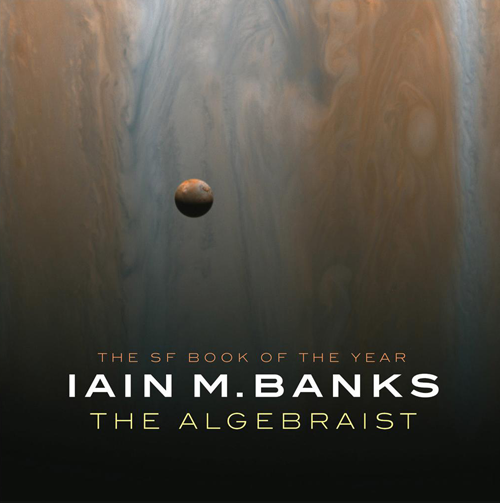
SF author Iain M. Banks has announced that he has terminal cancer and is unlikely to live more than a year. This is insanely sad. I’ve only read two of his books, and loved both. Time to read more, I suppose.


The official site of Kelly Sedinger: Reader, writer, photographer, and dreamer
COWORKER: So, what’re you gonna do tonight?
ME: I think I’m gonna go home, do the normal stuff — relax, quick nap, shower, dinner — and then get some writing done.
COWORKER: Cool!
[CUT TO LATER — MY APARTMENT]
ME: Ahhhh, good to be home! Change clothes…put new ice cream in freezer…open up computer, check e-mail…huh, seems I got a package in the mail, wonder what it is….
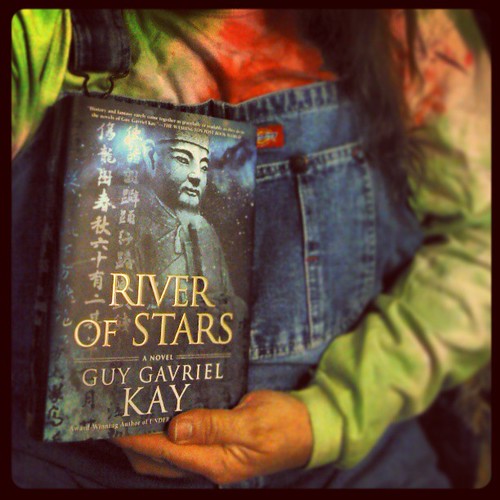
[I look at the book I’m already reading and enjoying, but for which I suddenly feel significantly less enthusiasm….]

When I was a kid, my dream was to be an astronaut.
Not terribly unique, as kids dreams went, in my generation. The space program had lost a bit of its momentum in the mid-1970s, but the moon landings were still fresh in memory, and in any event, a movie came along in 1977 that made space a going concern for an awful lot of young’uns, myself included. So in my first few years of grade school, I read a ton of space books. I remember very few of them, but I learned a lot from each. One of them that I do remember, quite strongly, is a book by an author and illustrator named Jeanne Bendick, called The First Book of Space Travel. The book came out in 1953, which means that when I read it in first grade (1977), it was 24 years old. And more…the book came out four years before Sputnik flew.
The book was mentioned a while back on the wonderful blog and everything else too. Seeing these images again after so long takes me right back to thumbing through this book while sitting in Mrs. Smith’s classroom at Witch Hazel School. (When I should have been working on my assignments…sigh….)


I need to track down a copy of this book! Why it’s not in my personal library already, I’m not really sure.
Just briefly:
:: Cetaganda is the next book up (for me) in Lois McMaster Bujold’s ongoing saga of the adventures of Miles Vorkosigan, and as usual, a fine book indeed, full of politics and intrigue and adventure as our Miles gets embroiled in the internal politics of the Cetagandan Empire, and drags his poor best friend, Ivan Vorpatril, along for the ride. I really enjoy these. I can’t really say a whole lot more than that — these books are just good, character-driven entertainment. At this point in the series, Miles is still pretty young and inexperienced, so it’s fun seeing him gain in those areas.
:: Jack Campbell’s The Lost Fleet series is, apparently, full-throttle military science fiction, following Captain John “Black Jack” Geary as he takes command of the fleet in a failing war effort and vows to bring it home. Trouble is, Geary was recently resuscitated after spending a hundred years in hibernation after completing a battle victory that has made him a legend. Thus he has to deal with the fact that his own officers treat him with worshipful reverence, which strains his relationships and fills him with dread for how morale will suffer when they realize that their hero is as human as they are.
The first book in this series, Dauntless, starts with a huge BANG, and the pacing rarely drops after the third or fourth page. Military SF doesn’t always ring my bell, but this book was terrific. I can’t wait to read more of this series!
:: Praise seems to be uniformly good to great for John Scalzi’s Redshirts, which is why I hesitate to report that I just didn’t like it. I must qualify that, however: Scalzi’s skill with characterizations and for keeping the pot boiling is still in evidence, so ultimately, I think that my reaction to this book is less a reaction to any deficiency in the execution and just that, well, this type of story just isn’t my cup of tea. Redshirts is a very meta kind of tale, meditating on the oft-cited (and equally oft-mocked) way that the poor guys in red shirts on Star Trek almost always met awful ends. Redshirts is even more ‘meta’ than Galaxy Quest, believe it or not. If you like that sort of thing, then this book will probably be up your alley. I’m not a big ‘meta-fiction’ fan, so this book just didn’t do much for me, alas.
It’s not you, Mr. Scalzi. It’s me. But I’ll keep reading your stuff!
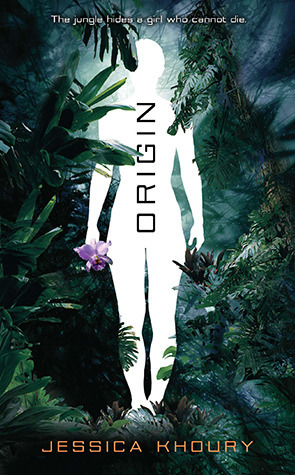
Deep in the rain forests of South America there is a secret laboratory complex that is devoted to a single project, and the result of that project is a girl named Pia. All of their work has led to the ‘creation’ of Pia, who is the first in what the scientists hope is nothing less than the complete re-engineering of the human species. And what, exactly, is so special about Pia? She is immortal.
That’s the background of Jessica Khoury’s wonderful debut novel Origin, in which Khoury explores a host of issues all the while spinning a highly engaging story of adventure and first love. It’s a very entertaining book that left a lot of questions lodged in my mind. Many of them aren’t new questions, but they’re questions that are bound to come up a lot over the next phase of human history.
What is the proper role of science?
What lengths are justified in the pursuit of scientific discovery?
To what extent should humans be biologically ‘modified’ with improvements?
And to what extent are children obliged to fulfill their own dreams and desires, and to carry out their assigned duties in the service of the dreams and desires of adults?
When we meet Pia, she is about to turn seventeen, and is on the cusp of becoming a full-fledged member of the scientific team at Little Camelot (the research facility). The entire focus of this facility, as led by a man Pia calls “Uncle Paolo”, is the development of nothing less than human immortality, which (they believe) would usher in a new golden age of humanity — a permanent golden age. How such an achievement would change humanity is mostly glossed over — there are a few discussion as to what it means to have humans stop reproducing, because they won’t need to — but that’s clearly by design on Khoury’s part, as she is depicting one of the SF’s oldest and finest tropes, the scientists meddling with things best left unmeddled, and without really working through the ethical and moral implications of their project.
Consider Pia. Khoury doesn’t entirely spell out what is meant by ‘immortality’, but she establishes that Pia cannot be harmed by normal means. She can’t even have blood drawn, because the needles will no longer puncture her skin. So, how big a bomb blast would she survive, for instance? We’re not really told, but that’s probably a good thing, as it really doesn’t have a whole lot to do with the story.
Pia’s mother seems to look on Pia with disdain, and we do learn more about their relationship as the book goes on. The novel is one of relationships across the board, each one convincingly drawn. Most central to the book is the relationship between Pia and the native boy she meets, Eio, a member of a tribe called the Ai’oans. Pia meets Eio one night when she succumbs to her desire to see beyond the boundaries of the science facility and sneaks out. In many ways, meeting Eio puts Pia sets everything to come in motion.
Khoury’s Pia is a somewhat typical teenage/young adult protagonist in that she chafes against the boundaries that have been placed upon her life. What sets Origin apart is the nature of those boundaries. They are not just imposed from without, by the scientists in control of her life (on the basis that she is literally their greatest success and she is also, for all intents and purposes, a human lab rat), but also by the very nature of her being. The possibility of love terrifies Pia, because she can’t imagine a basically unending life of always outliving those she comes to love. But she also learns that love isn’t always a force that can be ordered around.
For all the interesting questions raised in Origin, Khoury is still able to craft a book that keeps the pages turning, first during the intriguing chapters at the beginning when we’re learning about this world of hers, then in the middle part of the book when Pia is starting to really develop, and then in the kinetic and at times horrific final act, when all manner of hell breaks loose as relationships are exposed and questions are answered.
I was particularly interested that Origin doesn’t seem to be set in any real specific timeframe. What I mean by that is that Khoury keeps things grounded well enough that even as the book’s central Maguffin is the scientists’ search for immortality (which is granted by the pollen of a flower that grows in exactly one place in the rain forest), there’s a powerful sense that the book could well be happening right now…or in twenty years…or in a hundred. In terms of location, Khoury keeps the book very tightly focused. It’s an interesting choice, and it turns out that this is an excellent book to put into the hands of people whose impression of science fiction is spaceships, and lots of ‘em.
(On that very last point: reading Origin in the same year as Beth Revis’s Across the Universe and A Million Suns was a nice bit of synchronicity, given the teenage heroines in all three novels — apropos to me personally, since Princesses In SPACE!!! (not the actual title) also has a teenage girl as the main protagonist. Funny how things work out sometimes!)
I have no idea if Khoury is planning a sequel to Origin or not. I rather hope not, as the book is a fine stand-alone. And as a final bit of testimony, let me just note that I bought a copy for myself…and then, when finished, I bought another for The Daughter as one of her Christmas presents. Shhhh! Don’t tell her.
Origin is highly recommended.
Two years ago, when Master Chef started up on teevee, I took note of the three judges. Gordon Ramsay, everybody knows. Graham Elliot? Never heard of him, but when they indicated that he has at least one Michelin star, I knew that he was a credible judge. But the third guy? Never heard of him. His name is Joe Bastianich, and it turned out that he’s not a chef, but a restaurateur. Well…OK. I’d rather a chef do the judging, but a guy who has been running a number of very successful, high-profile restaurants in New York City? Fair enough.
It quickly became clear, in that first season, that while everyone expected Ramsay to be the big jerk of the squad (the Simon Cowell of the cooking shows, I suppose), based on his vitriolic persona as established on Hell’s Kitchen, it was actually Bastianich who most often brought the blunt rudeness. When he tastes a dish, he keeps his face a mask as he chews and swallows; then he fixes the cook with an icy stare before slowly turning and going back to his seat. And while there were moments when Ramsay would rip a dish to shreds, it was Bastianich who established his bona fides as the colossal prick of the group, occasionally going so far as to pick up a contestant’s dish, walk it to the nearest trash can, and spike it therein. Ouch.
The problem was that the blunt jerk of the group needs to be kind of fun to watch in action, and Bastianich didn’t really come off that way. It wasn’t enjoyable watching him rip on people, for the most part, and it just made him come off as, well, a big douche. It struck me that they toned him down a bit in the second season, and now that we’re in the third, they’ve almost turned Joe Bastianich into a real human being. He still engages in the garbage-can antics once in a while, but now, it’s really clear that a dish deserves it. (One contestant served up scallops that were individually wrapped in something so as to make a tiny little basket for each one; after having Ramsay rip the idea, Bastianich grabbed the plate, took it to the can, and tossed it whilst saying, “The scallop basket goes in the garbage basket.” Ouch, indeed.)
Most interestingly, Bastianich has really showed a lot more emotion this season than in previous years. His reaction to Monti‘s crab-meat wrapped Scotch egg was affectingly warm, and right off the bat in the first episode, you got a sense that he was going to open up a bit this year, when he tasted an Asian cook’s steamed dumplings, started to step back to do his icy stare, and then just smirked and said to the guy, “You know they’re good.”
So anyway: if the Joe Bastianich of Season One of Master Chef had written his new book, Restaurant Man, I probably wouldn’t have read it. Luckily it’s out as the Joe Bastianich of Season Three is on teevee, so I can read it without thinking, “Hey, it’s a book by that douche on the show who isn’t even a chef!” But fans of the show should take note: if you’re looking at this book on the basis of Bastianich’s work on Master Chef, you may be disappointed, because the show is never even mentioned in the book.
What’s it about, then? Well, to boil it down, it’s basically Kitchen Confidential written from the standpoint of the person who owns the restaurant and pays the bills.
The comparison to Anthony Bourdain’s book seems to me an apt one, because Bastianich does at times seem to be striving for the kind of tone that Bourdain struck, with the same sense of peeling back the curtain, and using a lot of foul-mouthery to do it. Bastianich isn’t the writer that Bourdain is, but so what? He has still turned in an interesting and engaging book about another facet of the restaurant world. Other books, such as Bourdain’s, detail the culinary side of things, and Bastianich is certainly keyed in to that aspect of things. But his focus has to be on something else: making the whole thing profitable.
Here is how the book begins:
Here’s everything you need to know to open a restaurant.
Your margins are three times your cost on everything. Some things you make more, some things you make less. You have loss leaders on the menu – veal chops and steak might cost you 50 percent of the ticket price on the menu. Pasta and salad you can run closer to 15, just as long as everything works out to 30 percent.
Bells and whistles like appetizers and desserts bring down the cost. Desserts are almost pure profit. Wine by the glass is usually marked up four times, although we don’t always do that. At Babbo we get about three times cost for a quartino, or sometimes even two times, so our wine cost is 30 to 50 percent.
Thirty percent of your monthly take is going to be your food and wine cost. Thirty percent is going to be labor, 20 percent is miscellaneous, including the rent, and 20 percent is your profit. Your rent per month should be your gross take on your slowest day.
And that’s it. Restaurant math is easy. If you need to gross ten grand in a day, then it’s about having two hundred people coming in and spending fifty bucks apiece. And within that $10,000, you should have $3,333 going to the cost of goods sold, $3,333 going to labor to execute that, and 20 percent miscellaneous, including linens and insurance and bug spray and anything else. That leaves 20 percent profit. Like I said, it’s very simple. There are a lot of more complex models, but this is the basic way of doing it.
Anything you give away for free is bad. Linen is the number-one evil, because it is expensive and no one pays for it. Same with bread and butter. You don’t mind paying fifteen bucks for a veal chop you sell for thirty dollars, but paying a dollar and a quarter for a tablecloth and thirty-five cents for each napkin that someone gets dirty before they even have their first drink is a drag.
In a typical Manhattan fine-dining restaurant, between 10 and 20 percent profit is an acceptable margin. Twenty percent if you’re a stud, 10 percent if you’re just doing okay. But every little thing will eat into your margin. A spoon that goes into the garbage is coming out of your pocket. A pot of coffee no one drinks costs you money. How close the chef cuts the fish to the bone will make a big difference. In this business, to make money you have to save money.
My dad taught me that. He was a restaurant man. That’s what he called it: “Restaurant Man”.
That’s Bastianich’s style: he’s very direct, almost blunt, and while he’s rigorous about quality, he is so with a never-relenting focus on profitability. If you want to know what the cooks are thinking about, read Bourdain; if you want to know what the owner is thinking about, read Bastianich.
A couple of science fiction booknotes! Zap! Pow!
:: I’ve seen some mention of a book over the last year or so on various SF blogs called Ready Player One, by a writer named Ernest Cline. Aside from those mentions, I knew nothing about the book until I picked it up on a lark when I saw it at the library. Boy, am I glad I did – what a fun book!

Thirty years from now, the world is a corporate dystopia, and the prime form of escapism is a virtual reality ‘game’, created by two men who grew up in the latter decades of the 20th century, which is so massive that it incorporates entire enormous worlds within it. One of the creators, a fabulously wealthy techno-genius who is also eccentric and reclusive (think Steve Jobs and Howard Hughes, blended into one guy) dies, and bequeaths his entire fortune, a truly staggering sum of money, to the first person who can successfully complete a ‘quest’ that he has created within the virtual world that he has created.
This is all, well, not terribly original. A few decades out, the world is a dystopia where everything is run by a few corporations? Yeah, we’ve seen that before. And the ‘reclusive oddball creates a quest for riches’ thing? Yup, that’s been done too. Basically this book is It’s a Mad Mad Mad Mad World meets Demolition Man. But you know, sometimes originality isn’t about creating something totally new; originality can be found in mashups that no one would ever think to do.
But what really makes this book something else isn’t the mashup, it’s the way all the details are ripped straight from the entire grand, weird, oddball geek culture of the last thirty years, with key focus on the 1980s. If you grew up watching Star Trek and arguing with friends over the Ewoks and listening to Duran Duran and planning your afterschool activities on the basis of which of your friends had an Atari console and so on and so forth, then there is stuff in this book that will thrill you to the core. It’s as if Cline has packed his book with easter eggs, hundreds of them, for people from that period to get. Luckily, I grew up in that very era, so I think I got them all. For the most part.
Ultimately, Ready Player One is geek-porn of the highest order. My only complaint was the nature of the modern dystopia, which is mainly because I’m just generically tired of dystopias. This book is really fun, though. It’s paced beautifully, there’s payoffs galore between the compelling characters and the great stuff they do, there are villains of the ‘boo-hiss!’ variety, and basically, the book would be a slickly entertaining piece of SF-quest fiction even if it didn’t have all the various references to 80s-and-since geek culture. I recommend this book highly!
:: A few months ago I positively reviewed a SF novel called Across the Universe by Beth Revis, which is the first book in a trilogy. I have now read the second book, A Million Suns, and I recommend that one equally.
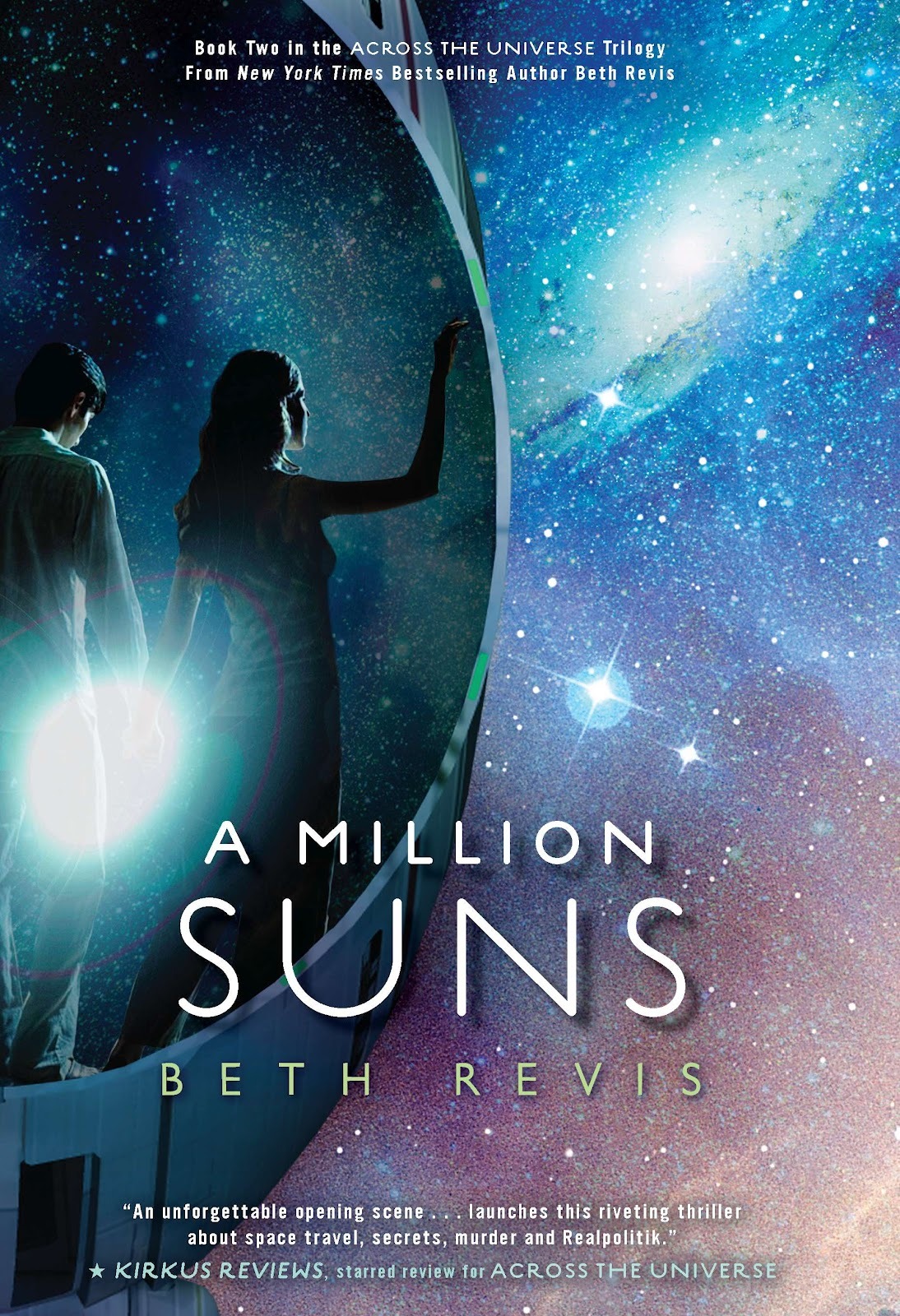
I don’t want to say too much about it, since it’s the second book in a trilogy and thus discussing its plot will require somewhat spoiling the first one, but the story from that first book (of the ‘generation ship’ that’s not what it seems, and the teenage boy and girl who plumb its secrets) continues in interesting and effective ways. We learn more about the ship and the nature of its mission, and the villain from the first book turns out to have left clues behind about something that he discovered before things went awry for him. It’s a very good read that left me waiting enthusiastically for the third one, which is due in January. (And I have a few guesses as to what revelations will come in that last book that I’m excited to see either confirmed or disproved!)
(So I read Lance Mannion’s review of this book, and I wanted to refer to mine…only to discover that I wrote it but never posted it. Oops.)

Any serious reader has, I suppose, an honor roll of authors whose work is so worshipfully and reverently awaited that matters of economics do not factor into the decision to buy the new book – in other words, an “Authors To Buy In Hardcover Immediately Upon Release” list. Now, my list of these has been terrifically short for a long time: it’s basically Guy Gavriel Kay, and…that’s about it. Except that I think it’s time I put Christopher Moore on the list as well. I haven’t found Moore’s work as consistently good as GGK’s, but Moore hits heights that, for comedy, are for me as sublime as GGK’s best fantasy work. So Moore is officially one of my “Buy in hardcover” authors. I’m sure this news will thrill him deeply. (Or it won’t affect him in any way whatsoever because he won’t know about it because he’s a successful author and I’m a blogger who gets two hundred hits a day and a lot of those are people searching for photos of Melissa Rauch.)
All of this brings me to Moore’s newest book, Sacre Bleu.This is a novel about…the color blue. I kid you not; Moore decided that he wanted to write a book about a color, so he did just that. So, how does one write a book about a color? Well, if you’re Moore, you delve into the inner world of the French Impressionist painters, and you posit that there’s a certain kind of blue paint that they can only procure from a certain, mysterious individual who travels around with a woman who sometimes seems to be…someone else. And if you’re Moore, you add in supernatural goings-on, gonzo explanations for things that happened in real history. And if you’re really fortunate, you get to have your book on the color blue printed with a blue cover and with the body in blue ink, and you get to have many of the paintings you mention in the course of the book depicted right in the text.
Yes, they really pulled out all the stops for Sacre Bleu. It’s a fine physical specimen of a book to begin with. But is it worth reading? Well, we’re talking about Christopher Moore here, who as far as I can recall hasn’t yet really had a dud (although I wasn’t entirely thrilled with You Suck or The Stupidest Angel, and I have yet to read Bite Me).
The book opens with one of the seminal events in the history of human art: Vincent Van Gogh’s suicide. Although, for Moore, it actually isn’t a suicide; it’s an attempt by Van Gogh to procure more of the special blue paint that goes awry. All the rest of the book’s shenanigans descend from this event. And, as we’re talking Moore, there are a lot of shenanigans.
What I’ve found most thrilling in the best of Moore’s recent books is his willingness to move beyond his early, California Coast-centric work for more ambitious subject matter to mine for madcap comedy. Here he takes on one of the most fruitful eras in the history of Western art, and it’s clear that Moore has done his homework. He spices the book with an amazing degree of period detail, not just in the setting of late 19th century Paris, but in the specifics pertaining to the art itself and the community of painters that lived and worked at that time. Even as Moore’s unique brand of lunacy unfolds, the period details are totally convincing.
What helps here is the design of the book itself: it is printed in blue ink, and the text actually includes – very helpfully – actual images of the paintings themselves which are mentioned in the story. This one aspect of the book really helps ground the visuals of the book for me, as a reader.
This is Christopher Moore, of course, so there are also familiar tropes to be found as well. Our hero is a likable, earnest young man who is also at times slightly clueless, who is drawn into a somewhat strange tale involving a woman who seems far older and wiser than he. He is surrounded by a cast of characters that is idiosyncratically memorable, and all this is treated in the usual Moore way, with more than a few laugh-out-loud moments to be found along the way. My only complaint about Sacre Bleu is that it takes a bit longer to get a hold on things with this book than usual, but as he almost always does, Moore won me over.
And by the way: I read Sacre Bleu immediately following George RR Martin’s A Dance with Dragons. As I noted back then, Martin’s approach to writing sex scenes is, well, not my cup of tea. Here, by contrast, is how Christopher Moore does it. (Writes about sex, that is. I have no idea how he…well, you know.)
He stepped up to her, took her in his arms, and kissed her. And off came the chemise, off came the pantaloons, then his shirt, then the rest, and they were on each other, on the fainting lounge, completely lost in one another. There may have been pounding on the door at one point, but they didn’t hear it and didn’t care. Where they were, no one else mattered. When, at last, she looked down from the lounge, at him, lying on his back on the floor, the light from the skylight had gone orange, and the sweat sheen on their bodies looked like slick fire.
It’s night and day, isn’t it? Moore writes simple, elegant sex scenes that include a smattering of detail: the fact that Lucien is on the floor after, while she is not, and the orange glow of late afternoon through the skylight on their bodies. Contrast that with George RR Martin’s apparent bonus he gets from the publisher for each use of the C-word.
Long live Christopher Moore!

Grief is an odd emotion. It’s deeply unpleasant at first, and it pretty much stays unpleasant the longer it’s there. But you eventually reach a point where even though it’s unpleasant, you don’t mind grief all that much, because at least it means that you’re remembering. It just becomes a part of the deal, the cost of doing business. It’s either accept the grief or force yourself to never, ever indulge the happy memories. Grief is the price of admission to memory.
And besides, what’s the alternative? I suppose you could live a life where you never have to grieve – but in order to do that, you have to live a life where you never love, where you never open yourself up to something so much that it hurts forevermore when you lose it. There are lives, I suppose, that are grief-free, but they are either too short to feel anything or too stunted to feel anything. A life that was worth living, a life that was lived well, involves grief.
Obviously I’ve had to deal with grief a lot over the last seven years (or eight, really – Little Quinn’s life brought grief of its own, as soon as it began). One thing I’ve found is a certain kinship with those others who are visited by grief; it’s almost as if, having encountered grief myself, other people somehow become more real to me when I learn that they, too, have encountered it. That seems a bit silly, frankly, but there is a certain ‘club’ feeling when it comes to loss. You meet people who are grieving, and they become more than other people. They are fellow travelers on a sad road that you’re traveling yourself.
One such person is Beth Howard, the blogger behind The World Needs More Pie. I discovered her blog, of all ways, by looking not for fellow travelers in grief but for fellow travelers in overalls. Reading her blog quickly made clear that she had taken on a fairly Quixotic mission for herself: she was an evangelist for the power of pie to heal and to forge connections between people and to just generally make the world a better place. She makes pie constantly, and she teaches people of all walks how to make pie, and she sells or gives away pie. About the only she doesn’t do with pie is throw it, but as she blogged once, I’ve got her covered there, anyway! She does all this in a trusty pair of overalls whilst living in the American Gothic house in Eldon, IA.

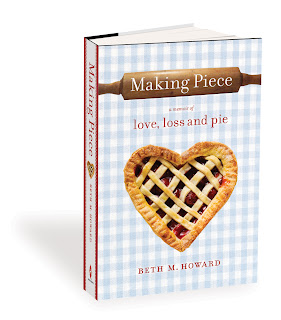
Reading her blog, I soon learned that she was also grieving. Her husband had died, very suddenly, of a heart ailment, just a couple of years ago. It was all very raw for her, and she was still processing it all. She was processing it through making and sharing pie, through caretaking the house in the background of one of the most famous paintings of the last 150 years, and, eventually, through writing a book: Making Piece: A Memoir of Love, Loss, and Pie. I’ve been lucky enough to get to know Beth Howard a little not just through blogging, but through Facebook and Twitter; I was able to follow her adventure of getting her book published, and it was truly exciting to see it finally come out. (I’m honored to have received a shout-out in her acknowledgments.) It took me a little while to get to reading it myself, but I do recall that I was rather nonplussed by the book’s review in the Buffalo News. The reviewer took the book to task for being too much about grief and not enough about pie. But the book’s very subtitle puts pie third, behind love and loss. What did that reviewer expect?
It’s really very proper that a book that deals with grief should be, to some extent, dominated by grief, because grief dominates. It just does. When grief comes, it comes hard, and it doesn’t just demand attention – it commands it. Grief is the only thing you feel, and even as it’s awful and unpleasant, there’s a strange guilt that sets in when you suddenly realize, for one second, that you’re feeling something else. It’s almost as if your mind says, “Oh my God, I’ve stopped grieving for a moment!”
Ultimately, the specific details of any one person’s grief are utterly different from any other person’s. It’s the quality of the experience of grief that is universal. It’s in the thousand little ways that grief seems, for a time, to take over one’s life. Beth’s book captures this very effectively.
The other half of the equation is, of course, dealing with grief. How does one ‘move on’? Well, you don’t, but that’s a story for another time. What you do is find a way to channel the grief into a positive use of energy. In Beth Howard’s life, that turns out to be pie: and not just the baking of pie at home, but making a life mission out of pie. She teaches people how to make it, how it brings people together, how many memories can be shared over the making and eating of it. Beth spent quite a lot of time trying to figure out how to best execute her new mission in life: a bakery? A TV show about pie? Her life eventually brings her to Iowa, where she finally comes to live in the American Gothic house. She bakes pie there, runs her little pie stand, and judges pies at county and state fairs, where her attempts to describe her reaction to a French Silk pie in erotic terms doesn’t quite make the other ladies on the judging panel happy.
Making Piece is not really a food book. It’s a personal narrative, much of which centers on food. It’s about injury and healing, and the way food plays a role. There’s a zen quality to Beth’s writing, and in her approach to her life, in following passions and ideas and interests, and in finding a way through pain by taking pleasure in doing a certain task, over and over again. It’s almost as if pie serves the role of a mantra in her life. Making Piece is her confessional: sometimes warm, sometimes raw, sometimes uncomfortable, and always honest and compelling.
True confession time: I have never made my own pie from scratch. This winter, I think it’s time to scratch that from my list.
One theme I see a lot in various science fiction commentary sites and blogs I read is that the genre itself is lagging in readership behind fantasy and horror to a pretty significant degree, and that one of the reasons for this is a comparative lack of ‘gateway books’ to the genre. Generally the idea of a ‘gateway book’ is a book that’s solidly in the genre, but not so solidly as to be inaccessible to people who have been reading it for a while. And yes, this is a definite problem; I found it myself, back when I really started reading SF on a regular basis in the late 1990s. Sometimes the standard tropes of SF can be a bit hard to penetrate, and the genre tends toward terminology that can often be used from one book to the next, so that if you know what it means or indicates, you’re fine, but the first time or two…it can be a bit hard to get into it.
Another problem is that there just don’t seem to be terribly many SF books for young readers these days, be it schoolkids or young adults. Why is this? I honestly don’t know. But when I look through the shelves at bookstores for books for The Daughter, I can find tons of fantasy, dark fantasy, and outright horror. SF is harder to come by, and it usually tends to be future dystopia stuff or steampunk. That’s not a complaint, just a summation of the state of things. But what I’ve always considered to be the heart of SF, the space adventure (whether it’s outright space opera or not), just isn’t around all the much anymore. The usual complaint is that no one is writing today’s equivalent of Robert A. Heinlein’s novels for juvenile readers, and for the most part, this seems to be true.
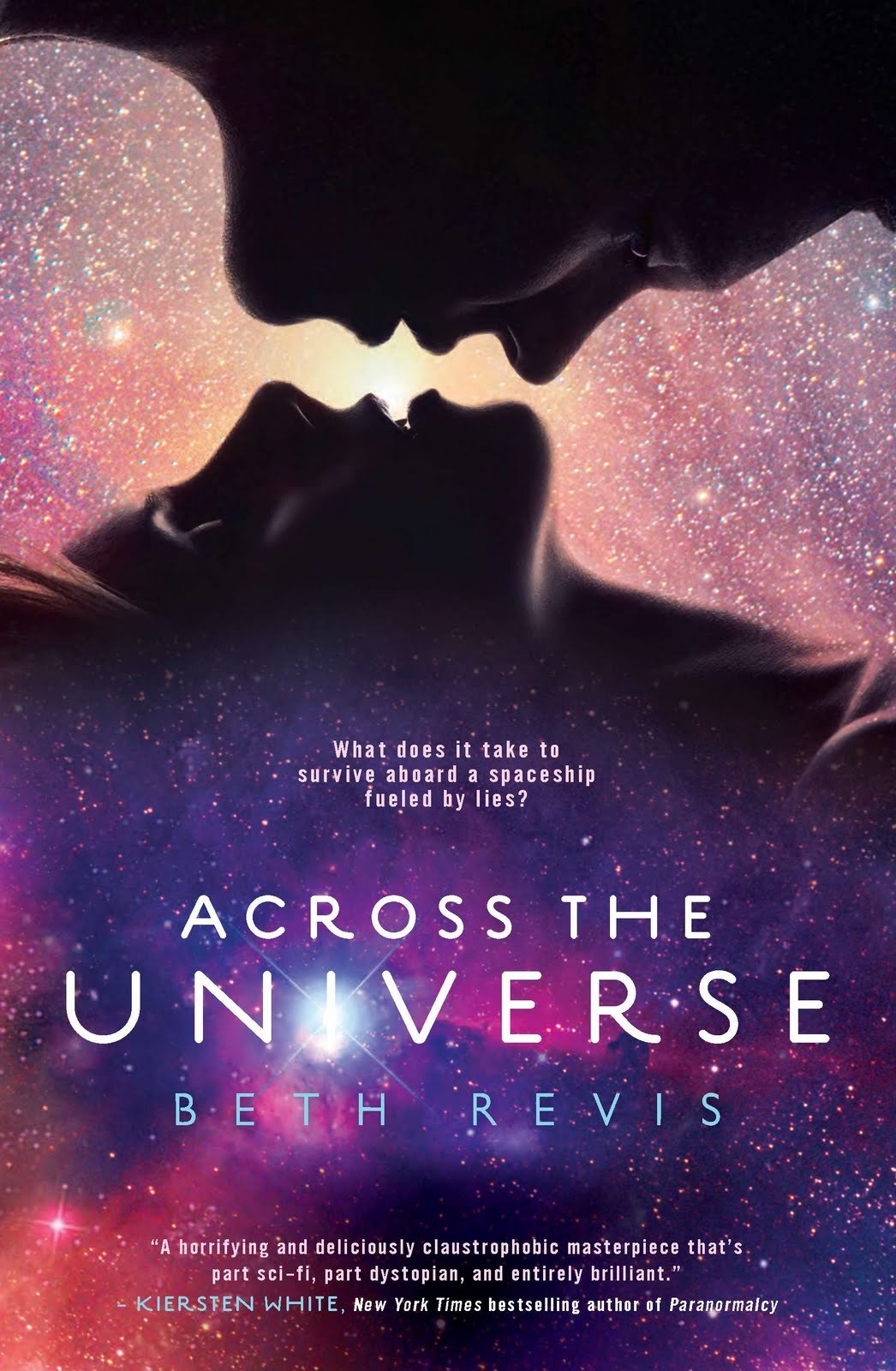
Which brings me to Beth Revis’s novel Across the Universe, which is the first book in a trilogy (the second, A Million Suns, is already out, while the last, Shades of Earth, is forthcoming). Across the Universe tells a good, old-school science fiction story, with two young adults at its heart. I loved it.
We open on Earth as a girl named Amy is being placed into suspended animation alongside her parents for a several-hundred-year journey aboard a starship called the Godspeed for the settlement of what is hoped will be a new Earth. Then we meet a boy named Elder, who is so named because he is being groomed to eventually be the leader of the ship. The Godspeed is well underway, and Elder is receiving his lessons from the ship’s current leader, Eldest, who is something of a stern taskmaster. (Or so he seems at first, before things start getting a lot darker.) But down in the hold, Amy awakens from her cryogenic sleep. She’s been thawed out, after an attempt on her life. Halfway through the ship’s journey. When she is told this, she realizes that when they arrive and her parents are revived, she will be in her 60s or 70s.
So, Amy is awake on the ship when she shouldn’t be, there is a murderer on the loose, and it turns out that life aboard the Godspeed isn’t quite what it should be, because the Godspeed herself may not be what she should be. Amy is alone on this ship which is run by a tyrannical leader. As the book progresses, several mysteries are resolved, but even more are unmasked, in this first volume of a trilogy.
The idea of a story set entirely on board a generation ship is not new, of course. But in Revis’s hands, it’s an interesting and effective use of a classic SF trope. None of this works without sharply drawn characters, and Revis does an excellent job of putting us into both Amy’s and Elder’s heads, as one tries to adjust to a terrifying situation that is unfair and nothing she ever deserved or envisioned, and the other finds himself rebelling against his longtime father figure as he starts to realize that things in his world are not what he has always thought them to be.
So if you’re looking to introduce a certain young adult reader to SF, this is a good place to start.

