Places I don’t want to live

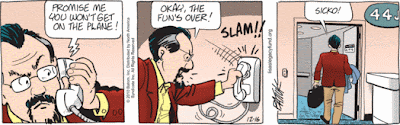
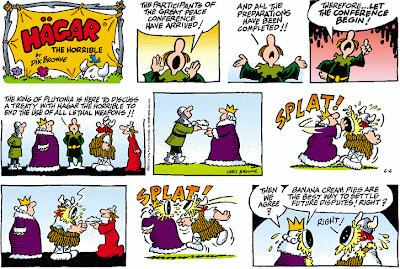
I don’t want to live in Westdale, the town where Funky Winkerbean takes place. Boy howdy, is that comic strip depressing…and in a car-wreck kind of way, I can’t stop reading. The current storyline has Les Moore ignoring a phone call in which his dead wife warns him not to get on a certain airplane. Gee, I wonder what will happen next!

Share This Post

Lovin’ the Lantern

I just saw this article about the Green Lantern movie that is currently in production. It’s sounding like a pretty nifty production:

See, here’s the the thing – I can’t tell you how Green Lantern will be as a movie, but after visiting the New Orleans set of the film I can tell you that director Martin Campbell and company are working to make the biggest, most epic, most sweeping, most cosmic superhero film yet. Forget Hal Jordan versus muggers in an alley, Green Lantern is really about Hal Jordan battling to save not himself, not his girlfriend, not even just his city but the entire planet Earth. Green Lantern is a huge movie, with set pieces that will be unlike anything you’ve ever seen before. I can’t spoil where the final battle takes place, but it’s an INSANE location – it certainly isn’t your standard issue end-of-the-movie warehouse, bridge or warehouse-like supervillain lair.

And it’s not just Hal Jordan. Green Lantern will feature the entire Green Lantern Corps; while visiting I saw life-sized cardboard cut outs of Tomar-Re and Kilowogg, the alien GLs who help train Hal Jordan. I saw mock ups of Oa, the planet at the center of the galaxy where the Guardians of the Universe oversee the galactic police force that is the Corps. And I saw much, much more – stuff that will make not just GL fans but hardcore space fantasy nerds salivate with excitment. I’m talking massive planetary and space vistas, incredible alien life forms and crazy space ship designs.

Yeah, this better not suck. I’d hate for something to sound so completely made for me and turn out to be a turd in the punchbowl. I am pleased to learn that Martin Campbell is directing; he is very good at directing action sequences that are highly kinetic and yet easily followed by the viewer. I’m looking forward to this.

(If you click through the article, make sure to click all the way through to the large versions of the two pieces of concept art they have posted. The Lantern cemetery is a beautiful, haunting space-opera type of image.)

Share This Post

Tanj!

Time for some notes on a bit of recent reading!

:: As much as I love science fiction, I’m the first to admit that my reading history with it is full of holes, and that there are many, many authors who are pillars of the genre whom I have yet to read. I can scratch one off now, because I’ve finally read some Larry Niven. Specifically, the novel Ringworld.

I really don’t know anything about Niven at all, except that he’s done lots of work with Jerry Pournelle, and that he’s mainly known for a series of books or stories called “Known Space”. I’m not even sure if Ringworld is part of “Known Space”, but the book does stand on its own, somewhat – although it is clearly intended to establish a ground-floor of sorts for a possible series. And now I see, according to Wikipedia, that Ringworld is certainly part of “Known Space”, and boasts a number of direct sequels. It also won the Hugo and Nebula awards.

Ringworld is your archetypal “Team goes to investigate an anomaly” tale, and parts of it reminded me, in terms of mood, of Arthur C. Clarke’s Rendezvous with Rama. The Ringworld is a very strange object indeed: an enormous construct built around a far-off star, that basically looks like an impossibly long band of metal (or something) running completely around the star, with the side of the band facing the star terraformed into something akin to a planet surface. The result is a planetscape that is thousands of times roomier than, say, the surface of the Earth. Circadian cycles on the Ringworld are approximated by enormous black panels that likewise orbit the star farther in, which block out the star’s light from points on the surface of Ringworld at regular intervals.

So our expedition quickly forms, consisting of four individuals: humans Louis Wu (a 200-year old man looking for some new solution to his boredom) and Teela Brown (a young woman with no particularly notable qualities, except her extraordinary luck); Nessus (a three-legged alien from a race called the Puppeteers); and Speaker-to-Animals of the warlike kzin race. How these individuals come together, and why, I’ll leave to anyone who wants to read the book, but in just about any story like this, the main source of conflict arises from the differences between the main members of our cast. That is certainly true here.

I won’t give anything away, except to note that the story unfolds in a lot of expected ways; the landing on Ringworld isn’t quite according to plan, and our heroes find a lot on Ringworld that they couldn’t have possibly expected. Niven does a good job of creating and sustaining mysteries on this world, and he also does a great job of conveying what the distances must be like on an object that is literally the size of Earth’s orbit. The immensity of the Ringworld is its dominant characteristic, and as we internalize how huge the thing is, the more mysterious it becomes – especially its relative lack of inhabitants. The mystery becomes, if some alien race surely built the Ringworld so they would have enough room, then why is there almost no sign of them? Niven’s possible answers to this question involve some interesting speculations on the psychology that would result in a species living on such a construct.

The four main characters are fairly interesting, but not tremendously so, and I found the whole notion of the Puppeteers genetically engineering people to select for their luck strained my credulity a bit. The biggest flaw in the book for me, though, was a linguistic tic: since Ringworld dates from an era when characters in SF weren’t allowed to use actual swear words, authors had to either resort to just telling us that their characters had sworn, inventing their own new metaphors for expletives, or – as Niven does here – making up his own swear words. Sometimes in a series this can work, but other times it’s almost nonsensical. In short, I had a very hard time with the word tanj, which is an acronym for “There ain’t no justice”. Every time someone would say “Tanj”, or “Tanjing”, or “Tanjit”, or some variant thereof, I found myself momentarily ejected from the book.

Still, this was an entertaining and intriguing read. Will I read further into Niven, the Ringworld, and Known Space? I’m not sure. But I won’t rule it out.

:: While I love to read comics, I find that I have almost no appetite for superhero comics anymore. At least, not the ones apparently being produced today, to judge by the collections I get from the library. It seems as though every title now, every hero, and every story about every hero, has to be some kind of depressing descent into the tremendous angst at that hero’s heart. And frankly…all that superheroic angst gets a bit boring. I almost want to say, “Yeah, I get it. Loads of pressure on you. You feel responsible for the world but can’t tell anyone because your identity is secret. You’re terrified of a horrible fate befalling your loved ones when your enemies find out. And since you’re a superhero, you’re likely to outlive every one you love, anyway. Buck up and get over it! Have fun!” Where the heck is the spirit of fun adventure that used to be the dominant characteristic of superhero comics?

I’m not claiming that some angsty stuff isn’t welcome. You can go too far the other way, too, and you need some inner conflict to keep the heroes interesting as characters. That’s why Spiderman’s always been one of my favorite superheroes: the very best Spidey stories always managed to blend that sense of fun with just the right amount of angst for Peter Parker. There are very dark things in Parker’s life story, but they’re not dominant and they don’t color his view of the entire world and they don’t cast his stories themselves into depressing light, as Batman’s tend to do.

I think this all started, maybe, with Frank Miller’s The Dark Knight Returns, which I didn’t like nearly as much as I think I was supposed to. Batman, in his current incarnations, tends to be a deeply depressing character. He’s the ultimate wet blanket on the superhero party. And I hate it when I read other titles that seem cut from that cloth. Hence, Spiderman: Reign. I was all prepared to be “Meh” on this book, but now I realize…I hated it.

Like Dark Knight Returns, Reign takes us forward in time, to Spiderman’s elder years, when he’s a white-haired, bearded Peter Parker whose personal life is every bit as much a wreck as it’s ever been. For one reason or another, Parker takes on the Spidey suit again, all the while subjecting us to depressing monologue after depressing monologue about how much he misses Mary Jane, his wife, who is now dead. (I assume this was before Marvel’s awful “Turning back of the clock” to before their marriage.) Why is she dead? I won’t spoil it here, but suffice it to say that it’s perfectly in keeping with the notion that the act of knowing Peter Parker is to commit oneself to an awful fate that’s supposed to be ironic or something.

In Reign, about the only sense of any fun at all comes from Spiderman’s never-ending habit of wisecracking with the people he’s fighting. Other than that, the book is dank and depressing. It reads like if the guy who does Funky Winkerbean wrote a superhero comic.

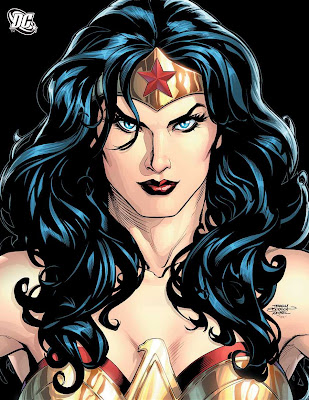
:: I didn’t hate Justice League: A League of One; I just found it kind of dull. Which is disappointing, because it’s a Wonder Woman story. Sure, the title says “Justice League”, but when Wonder Woman receives a prophecy that sounds like it’s foretelling the death of whoever fights an ancient evil that has just returned to life, she incapacitates all of her Justice League friends, one by one, until she’s left alone to face the threat. It was an interesting conceit, but it kind of illustrates another problem with these kinds of stories: if you want to tell a story about one hero in the DC Universe, you have to at some point explain why the other heroes who are all over the place, including the Man of Steel himself, either can’t or won’t pitch in to help.

This tale pits Wonder Woman against the most ancient of dragons, who had been slumbering beneath a mountain in Europe for centuries but who has now been awakened by some gnome-like creatures. The whole story feels a bit strange, really – as if Wonder Woman has been shoehorned into a tale from Teutonic myth. It doesn’t really work all that well, and in fact, its resolution feels almost perfunctory. The book seems to spend more pages dealing with Wonder Woman’s “betrayals” of her teammates than on her battle with the threat in the story.

:: Somewhat more successful, although still a bit less than the sum of its parts, is Wolverine: The Brotherhood. After Spiderman, Wolverine’s probably my second favorite superhero, mainly because he’s a bloodthirsty redneck with a sardonic sense of humor. I like that. He’s deeply intelligent but nobody realizes it at first, so in addition to his extreme skill at combat and his unbreakable claws, he’s got the built-in advantage in always being underestimated. When he’s well-written, Wolverine is as entertaining as they come.

This story, apparently from a six-issue run of one of the comics titled Wolverine (I’ve utterly lost track of the publication history of these titles and where the solo Wolvie stories fit in with X-Men continuity), has Wolverine living in a crappy apartment in Portland, OR, where he spends his days sitting in a local diner, reading and drinking coffee. He makes a connection with his waitress, a seventeen-year-old girl who keeps a journal in which she refers to Wolvie as “Mean man”. Before this friendship can blossom, Lucy (the girl) is murdered by a couple of machine-gun wielding hoodlums, who also riddle Wolvie with bullets when he comes out of his apartment to see what’s going on. (Lucy had lived next door to Wolvie.) Of course, filling Wolverine with bullets is never a good idea, and now Wolvie’s on the hunt.

His journey takes him into a world of illegal gun dealers and then to a compound somewhere in the mountains of Oregon, where a cultish figure is keeping a harem of kidnapped girls. This is all actually pretty intriguing stuff, and I like Wolverine’s solo stories like this. It always seems a bit more believable than Wolvie squaring off against supervillains, for some reason. My favorite Wolverine story is the Wolverine limited series from the 1980s, written by Chris Claremont and drawn by Frank Miller, which delves into Wolvie’s interactions with the Japanese culture and the idea of Wolvie as fallen Samurai; that tale doesn’t even pit Wolvie against any kind of supervillain at all. Same with this one, although it’s not as well written as the earlier series. The villain turns out to be simply garden variety, and the story seems to be set-up for a following plotline involving the Federal agent who is tailing Wolverine. The collected graphic novel comprises six issues of the series, of which the last consists of Wolverine sitting in a bar, talking with X-buddy Nightcrawler about…what else…his angsty issues. (With Wolverine, it’s his balancing of his human and animal natures.) It’s probably a bit unfair to judge this story on the basis that it’s simply not a complete story, but the talk-over-a-beer-with-Elf issue pretty much brings the story’s forward momentum to a halt. Kind of a shame.

Share This Post

Al Williamson

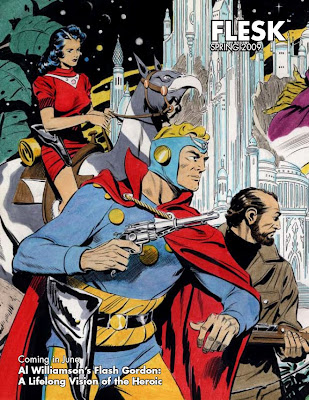
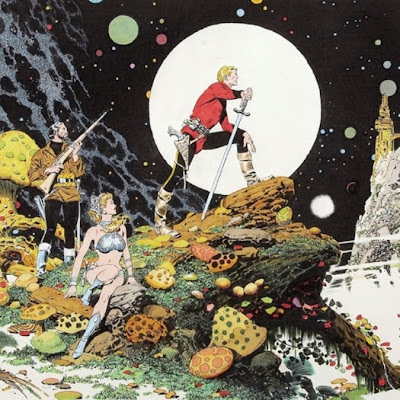
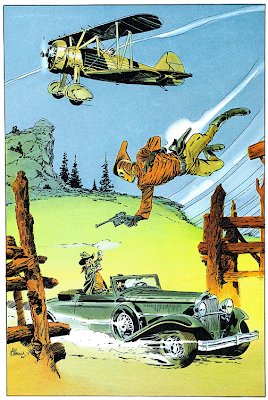
One of my favorite comics artists, Al Williamson, has died. I first encountered his work, as you might expect, in the context of a Star Wars comic book. His work is exceptionally detailed, and he especially excels at suggesting texture. Here are a few examples I grabbed from around the Interweb.

From Byzantium's Shores: chronicling the misadventures of an overalls-clad hippie

Share This Post

Of Matters Comical

Cal and SamuraiFrog both did this quiz, so now I will, too:

1 Did you read comics as a kid?

Yes. I didn’t read a whole lot of comics as a young kid, but I did read them. I got heavier into comics in junior high and then high school. When I was a young kid, my favorite comics weren’t superhero comics, but Richie Rich ones. I loved the Richie Rich stuff — not just Richie, but his girlfriend Gloria; his buddies Freckles and Pee Wee; his butler, Cadbury; his parents, Richard and Regina; his science teacher and resident inventor, Professor Keenbean, and all the rest. Those stories were a lot of fun for me. I eventually stopped getting those and left off comics for a few years, until seventh grade, when I started back into comics with Marvel’s Star Wars series (just beginning post-Return of the Jedi tales) and gradually exploring other Marvel series.

2 Who bought you your first comic?

My father. I’m pretty sure it was a Bugs Bunny comic, and I’m pretty sure this was when I was in kindergarten.

3 Did you take any time away from comics? Why?

Well, the few years between third grade (or thereabouts) and seventh grade, and then I stopped buying comics during my senior year of high school, because money was just getting too tight and I was heading off to college anyway. In truth, I had just got my first CD player for Christmas that year, and I wanted to buy CDs. So I made the decision that it was time to give up on comics. I was all about the music at the time.

4 What brought you back into comics?

If you mean “Back into comics” as in, “Back to going to the store every Wednesday to get the new ones”, I’ve never come back to it. But I have bought a number of trade paperback collections of comics, and a lot of graphic novels, over the years. I still love the comics medium, but monthly buying is just too expensive for me.

5 Do you prefer getting comics monthly or in trades?

Well, I just answered that, didn’t I? Trades and collections. A lot of comics I read via the library, because even trades and collections tend to be too expensive for me. I know I’ve said this many times in this space, but I continue to be convinced that the simple matter of price point is a big part of what keeps comics from really going mainstream in this country as a storytelling medium. Yes, comics are continuing to gain more and more acceptance and I don’t see this process ending at all, as the creative powers in comics just continue to get better and better, but still: the high price of comics, especially the trades and collections, has to hurt the simple browsing aspect of comics acquiring new readership. How many people are going to buy the giant omnibus of Bone when they haven’t read much by way of comics, knowing that the thing is $40? Only someone who has already internalized that comics are great, that’s who.

6 Do you know the name of your Local Comic Shop (LCS)?

Sadly, the little store in my town that had comics closed recently. I’m not sure to what degree it was due to economics, but the place had been around forever, so it’s entirely possible the owners decided to retire and move to Florida. Anyway, this sucks because as far as I know, all of the other comics stores in the Buffalo area are a long enough drive away to be fairly inconvenient to get to as a regular destination.

7 Does your LCS know your name?

Nope.

8 Do you own any old number 1 comics (must date before 1980)?

Marvel’s Star Wars #1. That’s it.

9 Do you own any original comic art?

No.

10 Do you bag and board your comics?

When I was a monthly buyer, I bagged them (but not boarded). I don’t bag my trades and graphic novels.

11 Where do you store your comics?

They’re in my parents’ garage right now. When we get a place with more space, they’ll come to live with me forever. Oh yes!

12 How many comics do you read right now, in either floppy or trade format?

I don’t read any comics “regularly”, but there are creators whose work is kind-of permanently on my radar — Jeff Smith, Craig Thompson, Bryan Talbot, et cetera.

13 What would be your number one, all-time desert island, favourite comic series?

Hmmmm, that’s tough. Maybe the entire Marvel run of Star Wars. There was a lot of great stuff in that old, underrated series.

14 Do you follow comic creators on Twitter?

No. But I barely ever get on Twitter. (My answer is exactly SamuraiFrog’s, so I just kept his.)

15 Do you have a favourite comic creator?

The ones I mentioned above, I suppose. I also love Doug Moench and Paul Gulacy’s collaborations. (BTW, here’s a page from one of their works, revealing the source of my Net moniker.)

16 Do you harbour any aspirations to create your own comics?

I can’t draw to save my life, but if someone who can wanted to test my scripting abilities, I’d absolutely give it a go!

17 Do you access comic news online, if so where?

Nope, aside from what I see in blogs that I read that talk about comics a lot.

Time to pick sides…

Marvel or DC?

Back in the day, I was an exclusive Marvel reader, until Crisis on Infinite Earths came along, which I thought was just an amazing tale. (My impression is that serious fans saw Crisis as flawed, but since I didn’t know anything about the DC universe when it came out, I had no idea of the flaws and just enjoyed the story.) After that I started reading a few DC books — their late-80s relaunches of Superman and Wonder Woman, for the most part. I loved the Wonder Woman relaunch, and I enjoyed it again when I recently got some collections out of the library.

Superman or Batman?

Superman. I’ve enjoyed a few Batman tales here and there, and I like the movies that they’re making now, but for the most part, the whole “Dark Knight” thing doesn’t do a whole lot for me. When I finally read Frank Miller’s The Dark Knight Returns a few years ago, after hearing it spoken of so reverently ever since it came out, my reaction was “That’s it?”

Spider-Man or Wolverine?

Oh, wow. That’s very close, actually. Spiderman is my default answer whenever someone asks me to name my favorite superhero, but Wolverine is right up there, too.

Iron Fist or Luke Cage?

I don’t know the first thing about either one, to be honest.

Nick Fury normal or Nick Fury Sam Jackson?

Don’t really care. I wasn’t much of an Avengers fan, so Nick Fury was never really on my radar as a comics fan.

Spandex or real life stories?

Either, as long as the story is told well.

Golden Age or Silver Age or Modern Age?

There are great comics in all eras. I’ve read the fewest Golden Age comics in general, though.

Digital or paper?

Paper, but aside from the comic strips I read daily, I haven’t read too many comics online.

Gotham or New York?

New York.

Hero or villain?

Heroes, but they need good villains, otherwise they’re lame.

Cape or no cape?

Doesn’t matter, really. Some characters need one, others don’t.

Cowl or domino mask?

Again, I don’t really have an opinion here. I am always amused by the notion that masks are as protective of secret identities as they are in the superhero universes.

Nothing in this quiz about manga, I notice. That’s interesting.

Share This Post
The Colors of Earth, Water, and Heaven

I recently found a graphic novel on the shelves at the library called The Color of Earth. It turned out to be the first book in a trilogy (the other volumes being The Color of Water and The Color of Heaven), so I put in my request for the other two volumes and read the entire trilogy. And am I glad I did.

The Color Trilogy (as I’m calling it here) is written and drawn by Kim Dong Hwa, a Korean comics creator; the term for Korean comics, which I’d never encountered before, is “manhwa”, and The Color Trilogy is apparently the first work by Kim to be translated and published in the United States.

The idea of romance comics is appealing to me, but the ones I’ve tried reading have, for the most part, been a mixed batch, so I was a bit apprehensive about this series. It turned out, fortunately, that The Color Trilogy is much more than a romance comic. It’s a coming-of-age story, a picture of life in small village Korea many years ago, a meditation on the meaning of love, and a wonderful character study of two compelling women.

As The Color of Earth opens, we meet a widow who runs a tavern in a small farming village somewhere in Korea, with her daughter, Ehwa, who is on the cusp of puberty and just starting to wonder about things like boys. Over the course of three volumes, Kim chronicles the lives of these two women, the older and the younger, as both begin to find love again, the older with a wandering artist who comes through town every few months, and Ehwa with several young men in the area before she settles on the one whom she loves.

Along the way, Ehwa wonders about the changes her own body is undergoing, so a great deal of the trilogy consists of discussions between her and her mother about the nature of female maturity and the nature of a woman’s heart and how women approach love as opposed to how men do. Occasionally there are long monologues, such as this, by the widow:

The heart of a woman is really strange.

There are days we long for a fireplace where we can warm our hearts through the night. If we don’t have one, we grumble, but we take solace in the company of family and friends.

Yet through it all, we yearn for that fiery hearth that we can tend to all through the night.

Though summer is already here and the summer solstice is just around the corner, my heart aches and I feel cold. I long for that someone and I feel cold…For no apparent reason, I feel cold.

The pacing in these books is slow and bucolic, reflecting the turning of seasons and the passing of time as Ehwa grows from pre-pubescent girl to young woman on the verge of marriage herself. I liked the slow pacing a lot; the books take their time not only to take the emotional drama of Ehwa and her mother seriously, but they also allow the village to take on a life of its own, through additional characters such as the raunchy-tongued men who frequent the tavern and Ehwa’s best friend, who is a lot more open about sexual experimentation than Ehwa is, both to Ehwa’s partial distaste and partial envy.

The books have a number of motifs wound throughout its narrative, foremost among them being discussions of native Korean flowers and how their own reproductive life cycles illustrate truths about men and women. I also appreciated how the book’s translator doesn’t substitute English metaphors for Korean ones, but simply uses the Korean ones and then provides an asterisked footnote explaining what each metaphor means. (Much of this, admittedly, has to do with Korean slang for sexual organs or situations.)

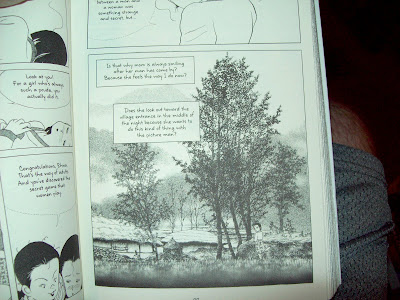
The art of the books is simply wonderful; beautiful compositions abound, and it sometimes feels as though every other page consists of a panorama of the Korean rural countryside. Some pages are dense with so much detail that the work almost resembles a woodcut; others are clean and sparse in the best way of traditional Asian art. Characters are drawn in a less-stylized way than in manga, so readers acquainted with Asian comics primarily through manga (or anime) may be surprised by the expressiveness given the characters’ faces. The Color Trilogy is a beautiful work. Here are a couple of art samples:

This series is highly recommended.

Share This Post

I hope it tingles and tangles and prangles my transistors!

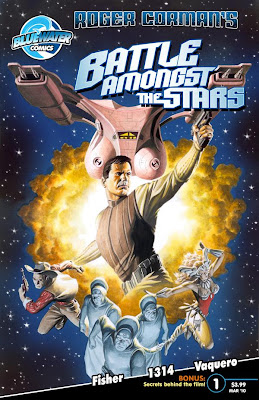
Remember my post a short while ago about the goofy 1980 B-movie space western Battle Beyond the Stars? I just figured that post represented a pleasant trip down geek memory lane for me and maybe a few others who recalled that obscure film. I certainly never figured that Battle was any kind of going concern.

Well, guess what: Battle actually is a going concern. It’s being revisited, in the form of a prequel comic book!

I am so going to read this.

Details here. The world needs more space opera comic books!

Share This Post

With great power….

As part of “Instead of the Buffalo Bills Theater”, The Daughter and I watched, on three successive Sundays, the Spiderman movies. And in digging through my archives, I found my original post on Spiderman, and my original post on Spiderman 3, but I apparently never posted anything about Spiderman 2! So here, I will rectify that.

(Before I begin, I have nothing really to add to my original posts on the first and third films.)

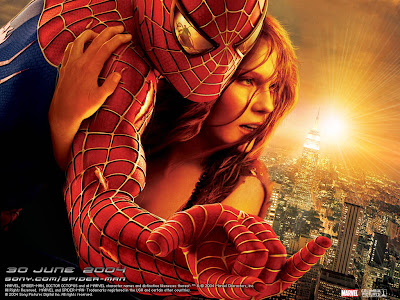
OK, Spiderman 2. This is, simply, one of the best superhero movies I’ve ever seen. It’s almost right up there with Superman. It’s good because, like the best superhero movies, it inherently gets what its hero is all about. Now, that wasn’t a problem with Spiderman, but where the first film seemed a bit hesitant to allow its hero to really get anywhere, Spiderman 2 had no such problems.

The key to understanding Spiderman, as is the case with all great superheroes, is understanding his regular life alter-ego, Peter Parker. Superhero alter-egos often tended to be people with good and productive lives as civilians in addition to their superhero antics; the central brilliance of Spiderman has always been that about the only part of Peter Parker’s life that is not a slowly unfolding train wreck is his life as Spiderman, and even then we’re not always sure. Peter’s a guy with problems. He’s brilliant and motivated, but somehow he can’t put those two things together into a life that doesn’t involve constantly scraping the bottom of the money barrel, desperately clutching on to – and failing to keep – a job as a pizza delivery guy, failing to keep simple promises like “Sure, Mary Jane, I’ll be there at eight.” Peter Parker’s life is a total, complete mess, and it’s the kind of mess we can easily relate to – well, aside from the spider-powers and being hunted by deranged supervillains stuff.

Spiderman 2 gets all of this. Take its wonderful opening sequence, which has Peter trying to keep the afore-mentioned pizza delivery job. He has to go some clearly absurd distance in some clearly absurd amount of time – something like fifty New York City blocks in twenty minutes with eight pizzas – and he’s on his last chance. Off he goes on his motor scooter, and he’s doing pretty well for a while, until something happens that makes the scooter trip impossible. What’s a guy to do? Why, have Spiderman deliver the pizzas! Of course Peter can traverse the remaining distance in mere minutes, right?

Well…wrong. Even as he web-slings his way across town in minutes, he fails to make the delivery guarantee, the receptionist rolls her eyes and says “I’m not paying for those,” and Peter gets fired. Ouch. And of course, as everyone well-versed in the comics remembers, Peter is brilliant and yet has a hard time in school; he’s ambitious and yet can only find semi-reliable money in selling photos of himself as Spiderman to the Daily Bugle; he somehow can’t manage to get any kind of relationship going with a girl; his best friend has sworn to kill Spiderman; and to top all of that off, Peter makes the acquaintance of another in what will be a long line of brilliant scientist-types who miscalculate in an experiment that goes so awry as to turn them into supervillains. This time, it’s Otto Octavius, whose brain ends up fused with the mechanical arms he’s invented for himself, thus making himself into…Dr. Octopus!

One of the film’s masterstrokes is in how it creates its villain. Whereas in the first film Norman Osborne was something of a loon even before he went all the way around the bend as the Green Goblin, in the second film, Octavius is depicted as not just brilliant, but also warm and very likable. His fall into horrible villainy is a tragic one, even as we can somehow understand his motives after he becomes Dr. Octopus. The first two Spiderman movies really handled their villains well, which is a huge reason as to why they both worked.

So why did I like Spiderman 2 more than the first one? As I noted years ago, Spiderman bothered me not so much in the shortcuts in took in the Spiderman story but in the way it took them. Spiderman 2 commits no such errors along the way. Yes, we’re in movies, so we can’t have everything we’d want in a Spiderman movie, but the film gets all of its little touches right, along the way.

The most important detail to get right in a good Spiderman story is that things never go quite Spiderman’s way. Ever. Things go wrong for Peter Parker most of the time, and on the infrequent occasions when they actually go right, they do so in such a way that not only does it look to everyone else that Peter’s screwed up again, but he can’t even set the record straight without revealing himself as Spiderman. So we have Peter ending up late to Mary Jane’s big acting debut because he had to stop and save some random pedestrian from getting run over by a car along the way. Or, in one of the best tiny moments in the film, in the pizza delivery scene early on, Peter realizes he’s not going to make it. So he ducks into an alley and pops out seconds later as Spiderman, with the pizzas! Yay! Except some random passerby saw him go into the alley and saw Spiderman exit, so he yells out, “Hey! Spiderman stole that guy’s pizzas!” A throwaway moment that illustrates the fact that Peter can never get the credit for anything.

Spiderman 2 also works because it doesn’t commit the somewhat vexing errors with regard to Spiderman canon that the first and third films commit, primarily with respect to Gwen Stacy. Basically, there was almost nothing in Spiderman 2 to distract me from the business at hand. (Well, maybe one thing – the scene where Spidey literally unmasks himself in front of an entire crowd of people. That strained things a bit for me, but I could forgive it.)

Spiderman 3 would go on to commit a pretty impressive number of errors, even though I’ve never been as down on it as most people seemingly are. Nor have I ever been as down on Kirsten Dunst as many people seem to be, either. So basically, I wish the original creative team could come back and continue the work they started.

(BTW, in watching the three Spiderman movies again, I was more favorably impressed with Danny Elfman’s scores with the first two films than I was originally. They’re actually fairly subtle scores, but not as themeless as I had first thought. They’re still not favorite scores of mine, but they’re not bad.)

Share This Post