Tone Poem Tuesday (oops, it’s Wednesday edition)

EDITOR’S NOTE: This post was cued up and ready to go and then the person responsible for clicking “publish” did not execute. Unfortunately that person cannot be sacked, as that person is also the person writing this and the content and everything else here. Requests for full refund will be ignored.

I’ve noticed an uptick in mentions of the movie Contact lately on social media. I’m not entirely sure why it’s come up, as this isn’t a notable anniversary year for the movie, but I suppose it is a pretty popular movie among science fiction fans, so I don’t grudge it being brought up. It’s never been a movie that I love, for reasons outlined below. I was going to write about the movie anew but then I realized I’ve already said what I need to say about the movie, so I’m just reposting. But first, music: the movie’s end credits suite, composed by Alan Silvestri, who may not be the most profound composer out there but who always turns in well-crafted and highly-listenable work.


And now, a post I wrote a few years back, which in turn includes a post I wrote ten years before that. I’m nesting posts! It’s posts within posts within posts!

—

The movie Contact, based on Carl Sagan’s one and only one novel, came out this month in 1997. Almost ten years ago I posted the following piece about the movie, a film that I’ve always liked and admired but not quite crossed over into loving. I’m not sure I totally agree anymore with what I write below, but thinking does shift and evolve, and I appreciate Contact more now than I used to; it remains one of the few major pop culture artifacts that endorses the Saganesque view that science should be our guiding philosophy as humans, and not spirituality. But I still think the movie hedges its bets too much, it drives its points home with too little subtlety (a fault often found in Robert Zemeckis films), and I think it undermines the feminist subplots by surrounding its main character with men without whose help and influence she would not succeed.

And yet…Contact is still a movie that says the right things about science and about the universe. It’s a movie that confirms that the proper response to this universe is curiosity and wonder, and my favorite moment is when Ellie Arroway (Jodie Foster) is discussing the voyage into the Cosmos that is at the heart of the movie’s narrative and she describes the required quality as “a sense of adventure”.

(Oh, Contact‘s score, by Alan Silvestri, is really good–for all the film’s lack of subtlety, Silvestri brings the goods here. Here’s one cue, called “The Primer”, scoring a scene in which the secret of an alien transmission is revealed. This is really good stuff, excellent suspense music, and it shows why Silvestri ended up being the composer for the recent sequels to the original Cosmos series.)

Here is my old post:


As much as I love Carl Sagan, I have to admit that I never warmed to his one and only novel, a science-fiction first contact story he called Contact. I tried reading it a couple of times, and each time I only got about a hundred pages in before I stopped. I just don’t think that Sagan was really cut out for novel writing, no matter how great his gifts may have been for science writing. But in 1997, a movie adaptation of the book arrived in theaters, starring Jodie Foster and Matthew McConnaughey and directed by Robert Zemeckis. The movie was six months too late for Sagan to have seen it, alas.

I’ve had a somewhat uneasy relationship with Contact ever since it came out. On balance I like it a lot…but I don’t love it, and in truth, I never really have. I’ve never been entirely successful in putting my finger on what it is about Contact that vexes me, but after recently watching the film again on NetFlix, I think I have it: the movie is too unfocused. When the film is concentrated on telling its story and attending to that central story, it is a fine, fine piece of work. But too often I get the impression that Robert Zemeckis got distracted, often by something shiny, and there are way too many times in the movie that the story gets lost so we can follow something shiny.

Contact tells the story of Ellie Arroway, an astronomer whom we meet as a young child, operating her HAM radio under the guidance of her father. They have a wall map of the United States, on which she marks her radio contacts with push pins; after talking to someone in Pensacola, Dad comments that it’s her farthest contact yet. Ellie asks if a radio could talk to the Moon, or to Mars…or to her mother, who is apparently dead. Dad responds, “I don’t think they’ll ever make a radio that can reach that far.”

Grown-up Ellie (Jodie Foster) turns out to be an astronomer, as noted, who is using her research time at the Arecibo Radio Telescope to look for, as she says, “little green men”: she is dedicating her career and scientific energies to SETI (Search for Extra-Terrestrial Intelligence). This leads to her meeting a former priest (Palmer Joss, played by Matthew McConnaughey), who despite being religious and spiritual where she is not, attracts her on a number of levels, and it also leads to run-ins with an older male scientist named David Drumlin (Tom Skeritt) who is snide and condescending to Ellie as he regards her chosen field of specialty as an utter waste of time. After a number of obstacles to her career – mostly owing to funding difficulties, as convincing people to part with money for something like SETI tends to be difficult – Ellie finally has a breakthrough when, while working at the Very Large Array in New Mexico, her radio telescopes detect an unmistakable alien signal. The rest of the film follows the implications of such a discovery.

Or, rather, the rest of the film should do that, and when it does, it’s incredibly effective and thought-provoking and loaded with the grand “sensawunda” of all the best science fiction. The problem with the movie is that it too often wanders into less interesting stuff, or its steps away from subtlety to drive its points home with a jackhammer, or it does things that forcibly eject me from the world of the film.

Taking the less interesting stuff first: Ellie Arroway is too often portrayed in the film as the feminine voice of reason in a crowd of over-bearing, pompous, or downright dim men. Science and engineering are male-dominated fields, and it’s a well-established fact that women in those fields tend to have a tougher going just to overcome gender biases. The problem with Contact‘s approach isn’t so much that it points this out, but that it’s about other things, and thus it can’t really delve too intelligently into those topics which really do deserve higher scrutiny. Thus we have Ellie being treated like an outsider on her own project, or Drumlin stepping up to claim ownership over a project he’s derided consistently up until the moment it proved fruitful. Ellie is constantly on the defensive in the movie, and I think it hurts the narrative because the film can’t just gear up and take us where it wants to go. Instead we have to keep talking about God.

EDITOR’S NOTE, 8/6/24: Re-reading the above now, 13 or so years after I wrote it, I think I’d back off from this a bit. My objection is not to the film pointing out how women are marginalized in science and tech, but rather that the movie doesn’t really do anything other then use that marginalization to craft a few plot points along the way. It’s kind of a reverse of the frankly dishonest complaint that some people make about diversity in movies: “I don’t mind seeing X in a movie, but it has to serve the story!” Here, ALL it does is serve the story. Moving on:

And God is where subtlety just isn’t something that interests Robert Zemeckis. Contact is full of discussions of religion versus science, but the feeling is never that anything is really being debated; what happens is that opposite sides’ viewpoints are stated, and restated, and stated again. Ellie goes to a reception in Washington, where her first order of business upon approaching Palmer Joss is to immediately launch into a discussion on religion, without any preamble or preliminary; more than that, though, the script treats all such conversations – and many that aren’t on the topic of religion at all – as though Ellie has a sizable axe to grind, while everyone else (just about all of whom are male) is calm and collected in their disagreement. Coupling that with the several instances in the film where Ellie is betrayed by men – Drumlin’s taking of the credit, Joss’s posing of a question at the hearings when he knows that the answer is going to doom Ellie’s chances of being the one selected to go in ‘the machine’ – and the film seems to depict Ellie as someone who doesn’t so much achieve a lot but whom is given things, table-scrap like, by the men in her life. It’s an odd kind of feeling.

It also bothers me that the film ends right when it gets most interesting, and it feels to me like it takes the easy way out. To me, the most interesting thing is, What would human society be like once we know that we are not alone in this Universe? We may know next to nothing about who is out there, but surely knowing once and for all, without speculation, that there is someone or something living out there would be a staggering revelation for the human species. Unfortunately, the film doesn’t do much with this notion – in fact, it backs away from it. We get lots of intrigue involving the contents of the message that is received from space, and then the construction of the transport “machine”, and so on. And this is all very compelling and entertaining…but at the end, the film gives us the old “Did it really happen?” gambit, reducing a momentous scientific discovery to something that will appeal to some people and not to others. Not unlike, say, the belief in God.

(Again, I don’t know to what degree the film’s story tracks that of the novel.)

I always find that the film deflates in its last fifteen minutes or so, after Ellie returns from her journey only to learn that, so far as anyone here knows, she never went anywhere. This leads to a Congressional hearing (which really drives home the film’s theme of “one woman versus a whole bunch of mean men”), at the end of which one Representative says, “Are we supposed to take your story…on faith?” And yes, he really pauses and puts big emphasis on those last two words, just in case we missed the irony of a scientist committed to objective observation being forced to admit the necessity of faith. Again, subtle, this is not. The movie does try to have it both ways by showing two government folks discussion the fact that the machine’s video recorder recorded eighteen hours of static (had nothing happened at all, there would have been about two seconds’ worth). But this is to be kept secret, apparently. They might as well seal all this information in a crate and store it in the warehouse next to the Ark of the Covenant.

EDITOR’S NOTE, 8/6/24: It continues to bother me that the big lessons are really only learned by Dr. Arroway in CONTACT. She’s the one who is basically forced to admit to a degree of faith underpinning her rational approach to the universe. I wish the movie had found a way to show Palmer Joss also learning a similar lesson in reverse, showing a way in which his own faith-based viewpoint is shaken or informed by the scientific discoveries depicted in the movie.

And the movie ends, on this state of affairs. What happens now, though? Does some kind of new religion start to accrete around Ellie and her scientific beliefs? Does Ellie somehow become an evangelist for a new blossoming of a scientific worldview? Does her experience have any effect on the human tension between science and religion? We never get any suggestions or speculations. All we get is the rolling of the credits. Contact tells a good story, but it stops just as its important story is just beginning.

Finally, I just have to note that all the cameos in the movie annoy the crap out of me. This was when Robert Zemeckis had just discovered that he could put people into lots of interesting situations, digitally; remember, he’d had Forrest Gump consorting with Presidents Kennedy, Johnson, and Nixon. So here we get loads of real-life CNN personalities, and even President Bill Clinton, with the film taking quotes from actual Clinton newscasts and editing them so that it sounds like he’s discussing the events of the movie. It’s incredibly distracting. Instead of being drawn further into the story, I find myself trying to think of what event Clinton was actually discussing in the speeches that were repurposed for this movie. Things like having Rob Lowe play a Christian conservative leader named “Richard Rank” are incredibly distracting, because of course it makes me think of Ralph Reed. Shoehorning in mention of the mass suicide of the Heaven’s Gate cult, which had happened just months before the movie came out, is another example. Zemeckis seems to want his movie to seem ‘real’ and relevant, but all this stuff has the exact opposite effect on me: it forces me to keep the story at arm’s length.

Ultimately, I want to love Contact, because of my love and admiration for Carl Sagan, for the subject matter of the story, and for the view of the Universe as a place of wonder and of science as humanity’s greatest achievement. And there really is a lot to love about Contact. But the movie spends so much time getting in its own way that I inevitably end up just admiring it a lot.

Share This Post

2024 in movies, 5 sentences each (January through June)

OK, I’m going to try this! I’m starting this post on December 31, 2023, and if all goes according to plan, I’ll publish at the very end of 2024. [UPDATE! You can see right now that this is dawning six months early. I’m doing this because the post has become awfully long already, and I figure nobody’s going to scroll through this entire thing if I wait until December 31 or so. I’m splitting it in two, basically.] This is a roster of the movies we end up watching this year, with a capsule review for each. Some movies will warrant more than that, depending on how I feel, so if I do an actual full post on a film, I’ll just link it from here. And these will be in the order that we watch them, starting with last night’s final film of 2023, which I’m doing on the 2024 post because as I write this I’ve already closed the blog on 2023. Does that make sense? Maybe, maybe not. But anyway:

::  The Feast of Seven Fishes. Slice-of-life drama-slash-romantic comedy about an Italian family living in an old town upstream of Pittsburgh, someplace. (The movie was filmed in two towns on the Monongahela River in West Virginia.) The focus is the youngest in the family who wants to go to art school but is expected to take over the family grocery. He is also deeply concerned about his ex-girlfriend, on the same night that he meets a new girl. Complications ensue. Warmly made, delightfully written with excellent characters, and as the film’s events center on a traditional Italian night of feasting, this movie will leave you hungry.

::  Love Hard. Cheesy rom-com in which a big-city woman (Los Angeles) goes to a snowy mountain town (Lake Placid) at Christmas to find love. Misunderstandings and hilarity ensue. And at one point, our heroine (Nina Dobrev) needs to fit in with the local crowd, so she eschews her normal attire and dons a pair of overalls. (I shit you not!) Frankly, there’s room in my life for cheesy Christmas movies in which the big-city woman goes to a small snowy mountain town for love and at one wears overalls to fit in. I liked this one a lot. It’s pure schmaltz cheese.

::  Moonraker. For more thoughts on Moonraker, check out my Ultimate Definitive Ranking of James Bond Movies. On this particular night, it was my week to pick a movie and I needed a comfort watch, so Moonraker it was–back to my personal beginning with James Bond, eh? And it was still a fun movie. Moonraker will forever hold a special place in my heart.

::  Lucy. The Wife picked this one out. Based on the first few scenes, I expected a crime drama about a drug deal gone wrong. And the movie is that…but not long in, it takes a strange sci-fi turn…and then…it leans hard into that turn the rest of the way through. The result is one of the trippiest and interesting thrillers I’ve ever seen, even if the central concept (a riff on the idea that humans only use ten percent of their brains) has long since been classified as nonsense. Excellent acting by Scarlett Johansson and Morgan Freeman.

::  Eurovision Song Contest: The Story of Fire Saga and La La Land warranted discussion in their own post, here.

::  The Wonderful Story of Henry Sugar is a short film by Wes Anderson. The Wife picked it one week when it was her turn to pick a movie; unbeknownst to her, it’s only 40 minutes long, so she ended up picking another movie (see the next one). This was my first ever Wes Anderson movie! I loved the visual invention, the constant spoken-word dialog as the entire text of the Roald Dahl story was acted out, and the sheer panache of this production. This film made me incredibly happy.

::  The Imitation Game: Benedict Cumberbatch as Alan Turing, the wildly eccentric mathematical genius whose work developing code-breaking machines in World War II anticipated what eventually became the modern computer…and whose treatment by the British government, as a homosexual, eventually led to his suicide. It’s a moving and involving character study with a terribly sad ending. Western civilization’s treatment of gays is historically awful, but the British managed to do even worse by Turing than many.

::  The Fugitive showed up in January for free on YouTube, so I watched it on my lunch breaks over several days. Not the best way to watch a movie, but it still works! In fact, I wonder if The Fugitive has become more overlooked in recent years than it should be, given how good it is. The cat-and-mouse game between Kimble (Harrison Ford) and Gerard (Tommy Lee Jones), who end up being two protagonists revolving around each other ever closer while the real antagonist is still out there, is as riveting as ever. The movie’s central mystery isn’t all that great, admittedly, but it really doesn’t matter a whole lot. One thing, though: in the scene on the El, why would Richard sit directly across from a guy who is reading the newspaper with Richard’s picture on the front page? And if the guy sat there, why didn’t Richard move? There’s nobody else on the car! Anyway….

By the way, it should be clear by now that the “No more than five sentences” thing is more a guideline than an actual rule for this post.

::  Indiana Jones and the Dial of Destiny was fun, and it had some interesting follow-ups on the previous film’s thoughts on the aging of old heroes. Here, Indy isn’t just old, he has pretty much aged out of the world entirely. I’m fine with an old Indy, a reluctant Indy…but this movie gives us a grumpy and embittered Indy whose life went to shit, and I had trouble with that. (See this old post quoting William Goldman for more on this point.) I also thought Dial went on way too long. I’m not sure where exactly I started being super-conscious of how long the movie was taking, but aware of it, I became. Did I like it? Sure, but as with Crystal Skull, I don’t think it worked as well as it might have.

::  This Is Where I Leave You is an entry in a genre that I tend to like a lot: a group of people who have known each other for years but drifted apart when they were younger are brought back together again after a traumatic event (in this case, a large family reunites after Dad dies in old age), and what results is a lot of dredging up of old stuff, reopening old wounds, fanning old flames, and so on. I love these kinds of movies when they’re done with heart and underlying warmth, as this one is. Jason Bateman, Tina Fey, Adam Driver (pre-Kylo Ren!), and Jane Fonda headline a really good cast. I really enjoyed this movie. It’s not surprising at all, but it doesn’t have to be.

::  The Sting showed up on Netflix (or, at least I was made aware of it) in February, and I had somehow never seen it before! I’m always one to love a good con artist/heist story, and this is a good one, with one of the sharpest, wittiest scripts I’ve ever seen/heard. Wonderfully made, terrifically acted–this movie deserved every one of the Oscars it won, and I wonder if it’s not an overlooked classic by this point. I did find the ending a bit easy and pat, and the way the movie wraps up its story and gets out of Dodge is interesting…but still, this thing is wonderful. Loved it.

::  Step Brothers. We watched this instead of the Super Bowl. I love this movie, but I fully grant that if you’re not attuned to Will Ferrell, you’re not going to like this one. Subtle, it ain’t: this is Ferrell and John C. Reilly in full-on raunchy, gross-out mode. I love the moxie of this movie, though: the state of affairs depicted in this movie couldn’t exist in real life for one second, but nobody cares, they just go with it. “Did we just become best friends?” “Yup!” “Do you wanna go do karate in the garage?” “Yup!”

::  Queenpins is an enjoyable diversion of a “dramedy” type about two young women who are struggling for money for different reasons who form a friendship, and then a partnership in crime when they escalate their “professional couponing” to levels that involve mail fraud, theft, and various other activities of a less-than-savory nature. It’s hard not to root for them because their money struggles are relatable and because they’re ripping off the Proctor-and-Gambles of the world, and nobody feels sorry for them, right? Their story is intercut with the loss-prevention specialist and the mail fraud investigator who are tracking them down, and the ending is oddly satisfying in the “they don’t get away with it…for now” kind of way. Not a great film by any means, but entertaining.

::  Apollo 13 remains one of my favorite films of all time. It is, for my money, the greatest movie about teamwork ever made. One time at work my managers solicited suggestions for movies about teamwork that could be screened at an upcoming management training event, and of course everyone tossed out sports titles–many of which are fine films!–but I got a few blank stares when I suggested Apollo 13. But think of it: it’s a movie about first of all, a crewed mission to the Moon, which is a deeply difficult thing that requires tons of teamwork just to get the mission to go off correctly; and then, quite famously, the Apollo 13 mission does not go off correctly, and the teamwork becomes even more critical as groups of engineers work with the small team of astronauts in the ship to get them home safely at all. This movie is nothing but teamwork from the first frame to the last, and I will shout it from the rooftops until I can’t reach the rooftops anymore because I’m actually in the ground.

::  Something’s Gotta Give is a romantic comedy featuring Jack Nicholson and Diane Keaton as the main couple, with helpful supporting work by Amanda Peet and Keanu Reeves. I’ve heard the film recommended many times by people I trust, but somehow it’s always eluded us, until finally I pulled it up on The Wife’s birthday. I was a bit surprised that it was made in 2003; somehow I thought it was a mid-90s movie, but it’s not. It’s probably the last real shot Nicholson had to be believable in a rom-com, too. It was also really good, a lovely look at two older people who aren’t terribly compatible but aren’t terribly incompatible either, finding each other despite not looking for one another and in fact spending a chunk of the film actively looking away from each other. Nicholson’s character is, well, a pure Nicholson character, one of those crusty guys with a dark side concealing the heart of…well, maybe not gold, but silver, anyway. And Keaton is the older woman who is happy where she is in life and isn’t much interested in romance. The romance doesn’t even so much happen in this movie as it emerges, which is a nice touch. I liked this one a lot. Oh, and Nicholson has one of the great movie lines: “I have always told you some version of the truth!”

::  If you’re wondering “Hey! Maybe the humor in Blazing Saddles isn’t that questionable, is it?” Let me assure you: it is. It most gloriously is. This movie’s raucous send-up of prejudice across the board is still hilarious, and you can’t help thinking–many times throughout it, actually–that “This movie couldn’t possibly get made today!” I still wonder about its ending, which not only breaks the “Fourth Wall” but basically stomps it into oblivion; I like to think that they were making this movie with no end in mind and just landed on the sudden shift into surreal absurdity that is the film’s climax. Oh, and special commendation for having a terrific pie fight! I especially like when the tour group on the movie studio heads inside because it’s next on the list, unaware that a pie fight is going on, and when they come back out to go to the next place on the tour, they’ve all been pied. Nice touch!

::  A struggling singer-songwriter in England is about to give it all up when a weird world-wide blackout happens, causing him to get hit by a bus on his way home. When he wakes up in the hospital, banged up but on the mend, he discovers that he and he alone remembers the music of The Beatles. So he proceeds to reconstruct The Beatles’ entire catalog from memory, thus achieving stardom. That’s the conceit of Yesterday, a delightful if “safe” musical fantasy. I can’t help thinking that a novel might have given this idea a much deeper look: when you really start thinking about pop culture since the 1960s, just subtracting The Beatles from that would leave a giant hole, not just of music but of influence and shaping what came after. But maybe it’s asking too much of this movie, which is more a rom-com fable than anything else, to delve that deeply into its big idea, and the movie does at least have the guts to not hit a cosmic reset button toward the end, restoring the rightful history of music. The movie is terrifically well-made and witty and the music is fantastic. Yes, it plays it safe, but that’s not the worst thing in the world.

::  How did I not see Mamma Mia until just this year? I’ve no idea, really…it’s been on my radar forever, what with loving the music of ABBA and having nursed a crush on Meryl Streep for equally forever and especially for this movie, half of which she spends rocking a hippie-like top under a pair of wonderful overalls. The movie is famously an adaptation of a Broadway show that scotch-taped the songs of ABBA into a story about a young woman getting married in Greece and inviting the three men who might be her father. The songs aren’t always totally convincing in their use in the story, but that happens in this kind of musical that uses pre-existing songs. The movie is a sunlit confection, and it’s a delight.

::  Also a delight? Barbie. I thought the conceit here might be terribly silly when I learned they were making this movie–the beloved doll lives in a Doll World but crosses over to our world!–but then the movie came out and everyone started finding it hilarious and moving and deeply affecting in how it argues against The Patriarchy. It took me all of about four minutes into the movie before I was pretty much in total agreement. I loved it.

::  “Hey, I haven’t seen that movie in…oh wow…at least 25 years!” The movie? Animal House. Which I had not, in fact, seen since watching it on TBS way back when we had cable. And there it was, on Netflix! So we watched it. And then, about 20 minutes in, I realized that I had only ever seen Animal House in its edited-for-teevee version, so this was my first viewing of the film in its uncut version. It’s still hilarious, though maybe not quite as much as it was when it was filmed, nearly (gulp) 50 years ago. You know what’s weird, though? I remember the food fight being a pretty lengthy scene! It actually ends almost immediately after Bluto shouts “FOOD FIGHT!”

::  Wanderlust is a frustrating movie because it has one of the best casts I’ve seen in a long time, and it’s beautifully shot, and its story is basically a long sitcom. Paul Rudd and Jennifer Aniston are a couple forced by economic reality to ditch their dreams in NYC and move in with family in Atlanta…but on the way down there they somehow end up spending a night at a hippie commune, and then they decide to live there. Hilarity ensues. There’s some nice character work here and the cast is terrific and to the film’s credit it doesn’t make the commune seem entirely lunatic–some of their beliefs are deeply odd, but others make total sense–but for all the warmth and terrific acting, the story doesn’t have a single surprising beat in it. If they set out to make a pleasant movie, they did! But it really could have been something special.

::  The 1993 version of The Three Musketeers isn’t what I would call good, honestly. But it’s fun and watchable and everybody in it seems to be having a good time making a somewhat watered-down swashbuckler, it’s a very nice looking movie, and the most beautiful swords in film history are to be found in this movie. And where it’s top-notch? Michael Kamen’s score, which is quite honestly one of the best adventure-swashbuckler scores ever written. Moreso because Kamen manages to avoid aping Korngold throughout.

::  The Holiday is an absolute delight. It’s a thoughtful rom-com, written and directed by Nancy Meyers (her follow-up to Something’s Gotta Give, which we had already previously watched!). The idea here is that Kate Winslet and Cameron Diaz are women, living in London and LA respectively, whose love lives implode right around Christmas. They connect via the internet, both looking for a getaway, and they decide to swap homes: Winslet goes to LA and Diaz goes to London, and some fish-out-of-water stuff ensues before both meet intriguing men from the other’s circle of loved ones. This movie is wonderfully shot, beautifully acted, intelligently and wittily scripted, and it even boasts a lovely rom-com score by Hans Zimmer, whose rom-com music chops tend to be very underrated. And since this is technically a Christmas movie, I may make it part of our Christmas regimen moving forward.

::  I don’t have much to say about Tower Heist. If you like heist movies in which a group of people who don’t trust each other for various reasons (some of them good) get together to steal a whole bunch of money from someone who deserves to have a whole bunch of money stolen from them, then you’ll probably like this. There is nothing new here, structurally; Act One intros the players and establishes their need for money and who has it; Act Two has the forming of the group and the hatching of the plan; Act Three has the heist where nothing goes right and the plan changes on the fly. This ticks all the boxes, and it does so very well. If that’s what you want, check this out. (Oh, and it has a great cast: Ben Stiller, Eddie Murphy, Alan Alda, Tea Leoni, and Judd Hirsch, and that’s just the ones I remember off the top of my head the day after.)

::  My God, I can’t believe how badly Falling for Figaro faceplants at the end. It’s a rom-com about a woman with a successful finance career who rejects a lucrative promotion so she can go to a tiny village in Scotland (the pub is the village) and learn to sing opera from a cranky has-been singer. Of course, she has a boyfriend to start the movie; of course she incurs the enmity of the local young lad in Scotland, who of course happens to be a really gifted baritone who is also studying to sing and whose “career” is mired in the doldrums until his inspiration arrives in the form of this naive wanna-be. Of course they fall in love along the way, of course they have to sing against one another at the big vocal competition, and so on, and so forth. I love the cast, the music is heavenly, it’s gorgeously shot (it’s the damned Scottish Highlands, I could shoot a gorgeous movie there on my phone). But for one thing, the movie relies on the music too heavily to sell its story, and I can’t believe I’m saying that, but these characters get very few actual conversations to talk about music and why they want it and so on; for another, this is one of those movies that can’t figure out how to get to its desired ending organically so it just…cuts to the ending with a “Three years later” title card. Falling for Figaro could have been really lovely. Alas!

::  The Judge is really well-made. It has a fantastic cast, everyone in it is terrific, and it’s beautifully shot. I just wish it was better written. It’s a mash-up of several genres: the one where “Our hero who escaped the small town for big city success has to go back because of family reasons”, and it’s also a courtroom drama where Our Hero is a defense attorney and the defendant really really really looks pretty damned guilty. In this case, the accused is Our Hero’s father (Robert Duvall), who has been the court judge in this small town for 40 years, and his almost-estranged son, Chicago attorney Robert Downey Jr., has to represent him. Now, the court case does play out not quite in the way one expects, but much of the movie does play out exactly the way one expects: the run-ins with old girlfriends, the family secrets that have been town whispers for decades, and so on and so forth. The Judge is good and certainly worth watching, but it could have been great.

::  Wow, the critics and the Internet were really not into Jerry Seinfeld’s directorial debut, Unfrosted. I actually enjoyed it! I found it mostly entertaining and occasionally downright funny. This fictionalized story of the invention of the Pop Tart has a fantastical, “Willy Wonka” air to it, and I think it might have been hurt by some of Seinfeld’s own weird moves during the movie’s publicity phase, in which he did an interview where he trotted out the tired “you can’t be a comedian now because of woke” stuff, and he also indicated that he wanted this movie to be the “anti-Barbie“, whatever that might have meant. If Seinfeld had just let the movie come out and be what it is–a charming little movie riff on pop culture–it might have been better served.

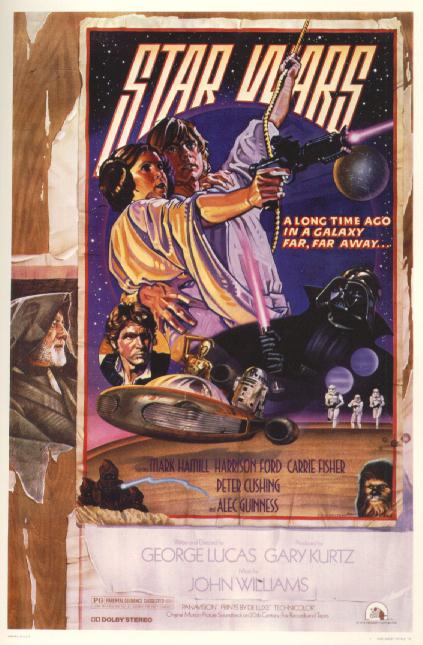
::  May 25 was a Saturday. So we watched Star Wars, as one does.

::  A Simple Favor is aptly titled: a woman asks a simple favor of her neighbor–“Hey, I’m stuck at work, can you pick my kid up from school for me and I’ll come get him when I get home?”–and from this “simple favor” spins a story of hidden identities, faked deaths, decades-old murders, family secrets, and all sorts of fun whatnot. The movie stars Anna Kendrick (whom I adore) as the naive housewife and cooking vlogger who makes friends with a very high-maintenance power-lawyer type (Blake Lively, who is also fantastic). This story has twists a-plenty and is a pretty fun entry in the “trashy thriller” genre.

::  Irish Wish is a romance starring Lindsay Lohan, who is on her way to Ireland to take part in her friend’s wedding to a guy she has a crush on. Along the way she has a Meet-Cute with a photographer, and then she ends up making a wish at a magic spot: she wishes she was marrying the guy, not her friend. Along comes an Irish wizardress or trickster spirit or something; our heroine mistakes her for a colorful local, but the next morning she wakes up to finding that guy in her shower. Because he’s now her fiance. Is this movie good? Not really. But it’s pretty to look at, so there’s that. And it does have a few amusing moments along the way, and there’s a fun guest-turn by Jane Seymour, believe it or not. (I don’t know why you wouldn’t, actually…Jane Seymour is a perfectly fine actress.)

::  The Fundamentals of Caring gives us Paul Rudd as a guy whose personal life is falling apart: his marriage is failing after a personal tragedy (which isn’t initially spelled out, but is clarified throughout the film in flashback snippets that we have to slowly put together), and whose approach to his own problems seems to be to run away from them. Seeking to make a change in his life, he decides to change careers and become a personal caregiver. His first job is to care for an 18-year-old kid with muscular dystrophy who is possessed of a deeply sarcastic and dark sense of humor and whose main ambition in life is being able to pee standing up. (This actually becomes a plot point.) These two have a rough relationship, so of course the next thing is a sightseeing road trip during which two wounded people who barely get along bond at places both amazing and mundane. It’s the same formula as Rain Man, but again it works pretty well here. Part of that is Paul Rudd playing the usual Paul Rudd kind of character–the nice guy with a sad past who is willing to be mean occasionally if he has to–but it’s a well-written version of this familiar story

::  Slap Shot was never a movie that I wanted to see all that badly, though it’s always been on my list of “Sports movies I should watch someday”. Well, one night I spotted it on Netflix, just a few weeks before the third season of Shoresy was to debut, so I thought, “Might as well check this one off the list now!” And wow, what a movie. Now, even as I write this I’m not exactly much of a hockey fan. I don’t dislike hockey, I just don’t know much about it and as long as the local team is mired in year after year of being crappy, the incentive to learn more about hockey isn’t much there…except for these fiction properties involving hockey. Letterkenny, Shoresy, and now the granddaddy of all fictional hockey stories, Slap Shot. I loved this movie, and to my surprise, The Wife was laughing harder than I was, especially in one scene where our “heroes”, the gritty team from a fading steel town in Pennsylvania, drop their gloves and start fighting the other team during the anthem. I suppose if you’re looking for the kind of hockey that’s grace and speed on ice, this isn’t for you; this is the kind of hockey that gave rise to the joke “I went to a fight, and a hockey game broke out,” and where all the players are battered bloody by the end of every game and more than a few teeth are lost along the way. Paul Newman is gold in this, but of course he is; he’s Paul Newman. Too bad they couldn’t figure a way to get Robert Redford in this.

::  Hitman is a sneakily delightful black comedy about a nerdy college teacher who moonlights for the New Orleans Police, when he’s suddenly asked to do something he’s never done: pretend to be a hitman for hire so that when people hire him (actually giving him the money and saying something direct like “Kill the bitch!”), they can be arrested on the spot. This starts to pose problems when he actually finds himself attracted to one of the potential clients, a young woman who is stuck in an abusive marriage and reaches out to a “hitman” in utter irrational desperation. After this, things go awry in a series of ways that are both expected and unexpected. And of course, along the way our initially nerdy teacher starts reflecting new self-confidence, prompting one student to whisper to the other, “When did he become hot?” Anyway, a fun movie.

::  You know, I really wish that Vinny Gambini, genius car mechanic-turned-attorney, had returned in a series of movies along the lines of the Knives Out series featuring Benoit Blanc. Alas, that wasn’t to be…but at least we have My Cousin Vinny, which I hadn’t actually seen in its entirety in many years. Clips a-plenty on YouTube, sure–who doesn’t like watching the “Two yutes” scene?–but never the entire movie. I remember being surprised to learn that actual trial lawyers love this movie for its actual accurate portrayal of the procedures of a criminal trial, and it’s a really effective courtroom movie, as involving as any great courtroom “drama” I’ve ever seen. What I especially liked this time is that the “fish out of water” stuff–the movie features a foul-mouthed rookie attorney from Brooklyn being sent to the Deep South to defend his first murder case–doesn’t make the “country bumpkins” endlessly the source of jokes. The humor arises from Vinny’s complete unfamiliarity with what he is experiencing down there and his efforts to deal with things he doesn’t get, but never does the movie feel like it’s mocking those people. That’s a tough line to walk, but My Cousin Vinny does it.

::  Crazy Rich Asians is a rom-com about a young, not-so-rich Asian woman who gets engaged to a very rich Asian guy and all the expected complications that ensue, including her entry into his social world (which involve first-class flights home to Singapore) and class-based disapproval from his family. Entertaining, emotional, and also an utterly gorgeous film to behold. It’s visually stunning. If you’ve never wanted to visit Southeast Asia, this will get you wanting to do just that.

::  Netflix recommended Hunt for the Wilderpeople, a 2016 comedy-drama written and directed by Taika Waititi. It’s a unique film, certainly: a teenage boy in New Zealand who has bounced from foster home to foster home is given his last chance, with an older couple who live on a farm in the mountains. The farmwife works hard to make the kid feel at home, but the farmer himself wants very little to do with the kid…and then circumstances arise which force the farmer himself to help the kid, and get to know the kid, and ultimately rely heavily on the kid. I don’t want to say more than that because this is the kind of movie where it’s best you don’t know what’s about to happen–and that being the case, some of the emotional beats in this movie hit hard–but it’s also wonderfully written, beautifully acted, and stunningly filmed. Yes, I know, you remember all the sweeping shots of the New Zealand landscape in The Lord of the Rings, but here you get more of the same…but they’re different landscapes entirely. There’s a lot going on in New Zealand, I assure you! Highly recommended.

And that’s all the movies for the first half of 2024! Tune in in six months for the second half! Well, tune in before that, for other stuff.

Share This Post

Thoughts while watching ST ELMO’S FIRE (a repost)

I wrote this post over twelve years ago, but right now there’s a documentary about The Brat Pack on Netflix that’s getting some talk on Teh Socials, and that’s leading to people re-watching Brat Pack movies, including this one. Reaction I’m seeing to people revisiting (or visiting for the first time) St. Elmo’s Fire is pretty amusing, because I’ve seen nobody enjoying it. Almost uniformly, people seem to be reacting the way I did back when I decided to re-watch the movie on a whim.

But before I get to the actual text, St. Elmo’s Fire did give us two good things, at least: the theme song (which is just a rock-solid 80s banger) and the Love Theme (which is a rock-solid 80s instrumental that I’m sure played at many a high school dance). The rest of the movie? Umm….

OK, and now, the post:

I decided to watch St. Elmo’s Fire, the coming-of-age flick from 1985 starring quite a bit of that group of actors known as “the Brat Pack”. I vaguely remember watching the movie way, way, way back in the late 80s or maybe early 90s. And by ‘watching’, I mean, ‘being in the room reading comic books while the movie was on the teevee’. So my recollection is, shall we say, rather hazy.

Turns out I shouldn’t have investigated those memories, because…well, that movie is Crap On Toast. Seriously. What garbage. I decided to try to make it bearable by mocking it on Facebook. Here are the things I posted:

So I’m watching “St Elmo’s Fire”, which I may well have never seen in its entirety. I’m about half an hour in. My plan is to watch until I encounter a character who isn’t an asshole. I’m gonna have to watch the whole movie, aren’t I?

(This was answered almost immediately by two friends saying, ‘Yes’. Ouch.)

Oh god…a scene with a welfare queen. This isn’t a movie about actual young people in the 80s, it’s about what William F. Buckley thought young people in the 80s were like.

(Few things have the ability to INSTANTLY piss me off like the whole ‘Welfare Queen’ stereotype, and this was it, in spades. A white woman with her five kids with her, all of different races, who keeps responding to her case worker’s attempts to interest her in job training with “Just gimme my check.”)

Obviously my memories of the 80s may not be entirely reliable, but I don’t recall women dressing either like streetwalkers or underneath at least four layers and buttoned up to the lower lip.

(Seriously, just look at the Mare Winningham character. She dresses like an cast extra on Little House: The Ever More Chaste Edition.)

If ever there was a person who just can’t wear an earring, it’s Rob Lowe.

(It’s an awful earring.)

Rob Lowe tries to get his hand under her (the Mare Winningham character) skirt…but he has to pull up about eight yards of fabric to get there!

(This just cracked me up. He literally has to move his hand back down like three times to get the skirt far enough up that he can get a hand under there. It’s like she has to walk around on stilts, just so her skirt isn’t dragging on the ground. And this is seconds after she reacts to Rob touching her breast as though he’s just zapped her with a cattle prod.)

Sweaty Rob Lowe is faking the hell out of that sax solo, I tell you! I keep waiting for CJ to walk up to him and say, “Sam, get your ass back to the office. Toby’s pissed at you.”

(A Georgetown bar is full of people rocking out to Rob Lowe on the sax as though he’s Kenny G Van Halen or something.)

This movie is dragging my lifelong crush on Ally Sheedy outside, where it plans to beat my poor crush to death with a tire iron.

(Every time Sheedy was onscreen, I was reminded of Harrison Ford’s great line from Working Girl, which he says to Melanie Griffith when she shows up at a function in a gorgeous dress: “You’re the first woman I’ve seen at one of these things who dressed like a woman, not how a woman thinks a man would dress if he were a woman.”)

Ahhh, the 80s…when eyeglasses were large enough to cover the vision span of four people!

(Holy shit, this movie has the Biggest Eyeglasses EVER.)

I have to think that anybody who has ever seen, oh, any movies at all takes one look at the city block that St Elmo’s Bar is on and immediately yelps out, “Hey! The Universal backlot!”

(Ayup. This really broke the illusion for me. All that location shooting, and they couldn’t do a couple of establishing shots someplace real?!)

Rob gets fired from his lucrative bar gig. Probably shouldn’t have attacked the guy who showed up with his wife.

But it’s all good, because he lets out a massive rant outside, gets kicked to the ground, and is well on his way to make-up sex within thirty seconds! Yay, him!

(This scene made no sense.)

Clearly the place to have a heart-to-heart with your friend is at the homeless shelter where she’s doing volunteer work. WHILE she’s doing volunteer work.

(Another really odd scene, with Demi Moore and Ally Sheedy showing up at Mare Winningham’s homeless shelter to give her life advice, which is basically, ‘Give in and make love to your boyfriend.’ OK then. Winningham is wearing a long skirt with a bib and shoulder straps, not unlike overalls, over a button-down shirt which is over a turtleneck. Were the entire 80s a study in layers?)

In this scene, Ally Sheedy is wearing a frilly bow tie under the incredibly frilly collar of a blouse that is in turn under a jacket that has a really frilly collar. Were the 80s the frill decade?

Rob’s having sex in a hot tub. Or at least he was. House owner got home early. Whoops. Hate when that happens.

(I thought that the producers had cast a Latino actor, named Mario Machado, as an Asian character. Turns out he’s of Chinese and Portuguese ancestry. So I was wrong.)

Emilio Estevez apparently believes, as do all movie men, that turning up the collar of their suit jacket has the same effect as opening an umbrella.

(I never understand this.)

Stalking Andie MacDowell is creepy on two levels. Because it’s stalking, and because it’s Andie MacDowell.

(Cheap shot, I know, but there’s just always been something about Andie MacDowell that’s just a bit ‘off’ for me. I have a terrible time with Four Weddings and a Funeral on that basis.

Wow…as Emilio goes in to confront Andie, we get the “Person who shot JR” POV shot, complete with people stopping and staring at him! Every movie should include a shot like that.

(Here’s what I’m talking about. This seemed a very odd stylistic choice for this movie.)

And for this she lets him go home with her?!

(I guess obsessive stalking wasn’t deemed creepy until that guy killed Rebecca Schaefer.)

Rob is starting to realize what a loser he is. Took him half the movie. Took me thirty seconds of the movie. Yay, me!

THIS is Emilio’s plan to win the heart of Andie MacDowell? Pretending to be rich?! Did we wander into a “Three’s Company” episode?

(Apparently she’s also stupid and will think that he’s become rich overnight. Great plan, this.)

I’d forgotten how in the 80s, all men wore neckties, but the men who weren’t to be taken seriously wore their ties so loose that the knot is eight inches below their collar.

(I hate neckties. They’re stupid.)

Ooh, I gotta stop. This movie is terrible. Ye Gods. I’m just gonna read the WikiPedia plot summary and call it a night on this one.

For the record, I gave up just after the party scene where Ally Sheedy accuses Judd Nelson of cheating on her. I just couldn’t even muster up enough emotional investment to make fun of the thing any more after that.

I really don’t have anything insightful to add about St. Elmo’s Fire. It just isn’t good. It’s annoying 80s fluff, the kind of thing that makes me wonder why so many people seem to fetishize that decade. I do like that title song and the synthesizer love theme, though. That’s good. But the movie? The Breakfast Club it ain’t.

Share This Post

“The Force will be with you. Always.” (a repost)

Today marks the 47th anniversary of the release of George Lucas’s “little space movie”, which wasn’t even 20th Century Fox’s projected “Big Movie” of that year. Little did the world know what was about to happen…and certainly a five-year-old kid in LaCrosse, Wisconsin had no idea how his world was about to be shaped forever. I wrote this post in 2017 for the 40th anniversary of Star Wars, and I wouldn’t change anything. I’ll probably write something completely new for the 50th, though…my God, we’re almost at fifty years of Star Wars….


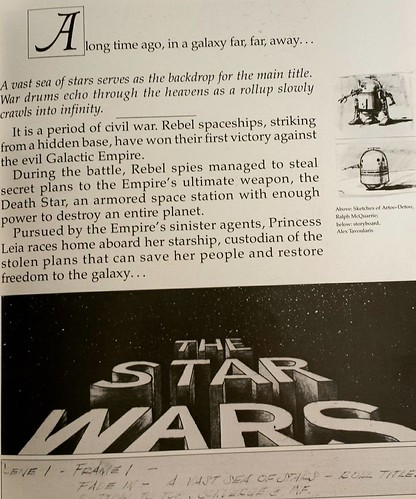
D19 of #IGWritersMay: Novel aesthetics. I make no secret that at its heart, THE SONG OF FORGOTTEN STARS is really my love letter to STAR WARS. (This is a page from the book THE ART OF STAR WARS.) #amwriting #starwars #sciencefiction #spaceopera #Forgotten


I didn’t see Star Wars on opening day. In truth I don’t even remember exactly when I saw it, but it was later in the summer of 1977. We had just moved from Wisconsin to Oregon, and in that time I was not even aware of this enormous movie phenomenon whose popularity was sweeping the nation.

I finally saw it, though, with my sister, who is six years older than me.

I didn’t like it.

It was very loud. It opened with big words flying through space and then there was loud spaceships and talking robots (one of whom only talked in beeps and whistles). There was a girl in white and a bad guy in black whose breath sounded weird. There was a desert planet with weird dwarf-creatures and a kid named Luke who lived with his aunt and uncle. (The uncle could be pretty gruff if Luke was goofing off, to which I could relate.) There were more loud spaceships and one really really big spaceship shaped like a giant ball. There was a guy dressed in black and white who helped the farm kid, and this guy had a giant ape-man friend. There were swords made of light and even more spaceships and a big battle in space.

All of that, and I didn’t understand a lick of it.

In my defense, I was all of five years old at the time.

Until Star Wars, my movie experience was pretty much limited to stuff like Bugs Bunny Superstar and Disney live-actions like The Shaggy DA (which contained a hoot of a pie fight). Then there was this movie with loud spaceships and robots and a farm kid and a bad guy in black and…well, I had no idea what to make of this movie.

Luckily for me I had my sister, who is six years older than me.

She went all-in for Star Wars. She ate it, drank it, breathed it. She talked about it a lot, and gradually her enthusiasm began to win me over. She explained the story to me because I hadn’t understood it all that well, and I decided that I wanted a part of her enthusiasm for my own. So I went with her to see the movie a second time.

I have never ever ever recovered.

I’ve been thinking a lot about Star Wars as it nears and achieves 40 years, and I find myself relating to it most as a storyteller myself. As a writer I tend most to look at Star Wars through the prism of story. Many stories have had a deep effect on me, on the stories I want to tell, and the way I go about telling them, but none moreso than Star Wars, even as the Star Wars story itself has changed over the course of its four decades. Most of the core ideas are still there, though, as Star Wars is now no longer in the hands of its creator, George Lucas. Star Wars is still a tale of heroic adventure unfolding in the sky. It is still a tale not just of the wars but more well-focused on the people fighting that war. It is a tale of improbably redeemable villains, of the way our paths mirror those of our parents, and of finding love in the face of desperation. It is a tale of family.

I can’t help thinking in most, if not all, of these terms every time I write a story, no matter which genre it’s in. Star Wars made me want to be a storyteller (what is playing with action figures, if not storytelling?). It also taught me that stories can focus at times on more mystical matters, and it taught me that story is an excellent way of addressing the challenges people face in their hearts. Most importantly, though, Star Wars taught me about heroes and quests and the wise elders who try to guide the heroes on their way.

Other stories have come since Star Wars arrived, and many have come to places almost as near to my heart. It’s not only stories, either; it’s all of creative art, really:

Lloyd Alexander’s Prydain Chronicles
The Lord of the Rings
Casablanca
On Her Majesty’s Secret Service
My Fair Lady
Cosmos
Much Ado About Nothing
The House with a Clock in its Walls
The Lions of Al-Rassan
Mary Stewart’s Arthurian trilogy (plus The Wicked Day)
Berlioz’s Symphonie fantastique
Rachmaninov’s Symphony No. 2 in E minor
Invisible Touch by Genesis
Once and Again
Princess Mononoke

These are all things — and there are more — that are at the center of my creative life, but none has ever quite dislodged Star Wars as my Prime Mover. Star Wars is, and continues to be, my Platonic Ideal of what story is.

Even so, I haven’t always kept as close an eye on Star Wars as a massive universe as many. I’ve read only a small handful of all the many novels and comics written over the years, and I haven’t played any of the video games. For me, my appreciation focuses pretty exclusively on the movies themselves, and not just the wonderful Original Trilogy but also the admittedly uneven — but still, in my eyes, uniquely compelling — Prequel Trilogy and even to a smaller extent the recent “Rebirth” movies, The Force Awakens and Rogue One. Those form the core.

Star Wars is as strong now as it ever was, and it is very likely even stronger. It has more fans than ever, and it is now in the hands of a corporate power whose pockets are deep enough to maintain it at a very high level for decades to come. More fans are created every day, it seems, and yet…I do have to admit to feeling a certain level of possibly grumpy oldsterism. Sure, you kids can love Star Wars and in fact I hope that you will, and that your love for Star Wars will lead you to other things. But I came in on the ground level. My memories may be hazy, but I do remember a time before Star Wars.

I believe that every story one writes — or rather, every story that I write — should be, in one way or another, a love letter, either to someone or something. The Song of Forgotten Stars has many influences, but it is ultimately my love letter to Star Wars. If not for Star Wars, there’s no way I would be writing this story. It’s not just about the internals of Star Wars, though: it’s about the way Star Wars impacted me and shaped my life and helped reflected certain relationships in my life. Put it this way: There’s a reason why the two main characters in my Forgotten Stars books are two Princesses, one of whom is six years older than the other. It’s a dynamic that makes sense to me on a lot of different levels.

I also know, from reading a lot about the making of Star Wars over the years and about the life of George Lucas in particular, that the way by which a creative work comes into existence is often a messy one. Lucas’s manner of creation is eerily similar to my own, or maybe vice versa. Lucas is someone who starts out by following ideas in any direction they might go, and only gradually whittles things down and discards this notion or that idea until a streamlined story starts to emerge. I work the same way, at least in part. My rough drafts are often very messy and they always contain entire ideas that I remove entirely, for one reason or another. Lucas has done so much mixing and matching of ideas over the decades (remember that for him, Star Wars is 47 or 48 years old, depending on where he dates The Beginning) that he at times seems to be misremembering his own history. I know how he feels. There are times when an idea seems so organic that it’s hard to claim it for my own. Even if it is.

So thank you for forty years, Star Wars! And may the Force be with you, forevermore.


Share This Post

“I have come to conquer you!” A repost in honor of the great Roger Corman

Filmmaker Roger Corman died the other day. It was always easy to poke fun at Corman’s films, but he strove to make them as good as he could, and on his own terms. Corman’s studio was not only prolific but also a starting point for many filmmakers who later went on to great careers of their own.

Below is the text of a post I wrote a number of years ago, praising my favorite Corman film, the 1980 obviously-STAR WARS-inspired “Magnificent Seven In Space” flick, Battle Beyond the Stars. I stand by every word of this. Is the movie good? Yes, because while its objective qualities may be debatable, what cannot be debated is that it’s a freaking delight.


Battle Beyond the Stars is a movie that seems to confound expectations. If you watch it expecting a good movie, you’ll be disappointed. But on the other hand, if you watch it expecting a bad movie, you may be disappointed in the other direction.


Battle came out in 1980, one of a string of flicks to come out in the years after something happened in 1977 to suddenly make the entertainment industry think that there was a market out there for science fiction, especially in the form of explodey-spaceshippy-goodness. Battle was produced by Roger Corman, the king of the low-budget movie who nevertheless also served as a talent scout for later Hollywood geniuses, the most notable being a special effects artist who designed the spaceships for this movie and who later went on to bigger things. His name? James Cameron.


I saw Battle when I was in fourth grade. It was part of a double feature at the local movie house, the first film being a flick called Starcrash. I’ve never seen Starcrash since [UPDATE: After writing this post, I did in fact watch Starcrash again, the results of which you can read about here. Is Starcrash bad? Oh Gods, yes. Have I seen it once or twice even since then, because it’s lovably bad? Oh Gods, yes! –Ed.], although I do have a downloaded copy on one of my hard drives. Starcrash is legendary for being a bad movie, although I recall liking it when I saw it. Battle was the main event of the feature, though, and I was really looking forward to it, mainly because the nine-year-old me had thought that this trailer just looked awesome:


That trailer had run on a bunch of movies leading up to the release of Battle so I was really stoked when it came out. And when I saw it? Well, I was nine. I loved it. It had aliens and spaceships and lasers and things exploding and a cute girl. I got the soundtrack album, featuring music by a composer named James Horner, and I played that album a lot over the years, wearing it out and grooving to what I thought was the best explodey-spaceshippy movie music I’d heard outside of a Star Wars film. (Of course, my sample size was very small, I didn’t know film music enough to hear Horner’s huge debt to Jerry Goldsmith in the score, and I didn’t know enough about orchestration or performance to recognize a score that was recorded on a shoestring budget and which featured some really bad orchestrations, such as the track “Cowboy and the Jackers” which does things to the trumpet section that may be in violation of several international treaties.)


I saw Battle once more when it showed up on network teevee a few years later, and still liked it, and then I didn’t see it again for many years. I may have caught it in a cable broadcast sometime in the 1990s, but I’m not sure. I didn’t see it again in its entirety until just last week. How does it hold up? Well, movies like this don’t really “hold up” – that’s the wrong way to look at them. I had no illusions that it was some unheralded gem of SF moviemaking, but I was pleasantly surprised that it’s not that bad, either.


So, what about Battle Beyond the Stars, anyway? What’s it about? It’s very simple: The Magnificent Seven in space. That’s it. Literally.


We open with a giant enemy ship traveling through space (at a very slow pace, even though it has six enormous thrusters that are constantly firing).


The ship is ruled by our villain, Sador of the Malmori. Who are the Malmori? Are they a race of aliens? An empire? A family? We’re never told. Anyway, his ship approaches a planet called Akyyr (that’s how I’m spelling it, anyway), which, seeing that it is inhabited by peaceloving folk who only own one spaceship (which is a weather station), decides that he’s going to conquer it. So he hovers his enormous ship over them, projects his enormous face over their heads, and says, “I have come to conquer you.” (This he does after destroying the weather ship, just because he’s evil. The weather ship had been occupied by two guys who display the Akyyrian attitude by greeting an enormous and malevolent-looking spaceship by grinning, saying “Look! Visitors!”, and then contacting it by asking, “Could you identify yourself, please?”)


Anyway, Sador gives the Akyyrians seven days (“risings of your red giant”) before he’ll come back and finish conquering them. Why the delay? Who knows, but it gives the Akyyrians time to send one of their local young men, a boy named Shad (played by Richard Thomas as John-Boy Walton in space), off in the other ship they own, the secret one once piloted by the old blind guy who used to be an adventurer, to round up some help in the form of mercenaries.


The ship Shad flies is probably the single most famous thing from Battle Beyond the Stars. The ship is simply named “Nell”, and sure enough, it’s run by a computer by that name who speaks with the voice of a cranky lady. What’s most memorable about the ship, though, isn’t her personality; it’s her shape:


This ship is one of the more famed B-movie spaceships in movie history. You know you’re talking to a knowledgeable geek when the mention of the movie Battle Beyond the Stars draws the rejoinder, “Oh yeah, the movie with the ship that’s shaped like a pair of breasts!” The ship is more than that, though – it looks like a feline body with female breasts and then a couple of wings where the ship’s guns are, which sweep up and out, spread out to look like…well, it’s a very feminine ship. (And it was designed by a young filmmaker who was cutting his chops with Corman’s production crew, the afore-mentioned James Cameron.)


Anyway, Shad goes off in search of mercenaries he can hire to fight off Sador. On the way he meets a taciturn fellow named Gelt (Robert Vaughn), who only wants a meal and a place to hide from the apparent galaxy’s worth of folks who are after him:


He meets a ship commanded by a group of aliens who have third eyes on their foreheads and who use telepathy to do stuff:


He meets a “Warrior Valkyrie” named “St. Exmin”, played by Sybil Danning:


Given that her screentime involves her looking like this, it’s almost a crime that Danning doesn’t get more of it. She does, however, have one of the goofiest lines in movie history, and boy, does she deliver the hell out of it:


The other girl there is Nanelia (Darlanne Fluegel), who is every bit as naïve about people as Shad is, which makes her a perfect fit for him. She, too, gets far too little screentime, because she’s really cute. I remember her being one of the first females onscreen to impress me with her cuteness. I mean, look how cute she is in that clip, when she giggles at the prospect of learning how to “tingle, tangle, prangle” her new love interest from this warrior in the goofy headdress! Yeah, Nanelia is really, really cute:


Most memorable, probably, is the Space Cowboy Shad recruits who goes by the name “Space Cowboy”, played by George Peppard:


Cowboy is an arms runner who ends up leading the Akyyrian planet defense with the weapons he’d been running to a planet that Sador has just wiped out. Cowboy is extremely cool, although it’s hard not to expect him to grin and say, “I love it when a plan comes together!” But he does have one of the niftiest gadgets I’ve ever seen in a skiffy movie: he has a gizmo on his belt that dispenses Scotch and ice. (Why a Space Cowboy is drinking Scotch and not bourbon is never explained.)


And there are some aliens who are basically actors in rubber suits. You know how it is. Anyway, a big battle ensues (the Battle beyond the stars!), in which quite a few of the recruited mercenaries die heroically before Shad and Nanelia finally figure out how to do Sador in. I know, I just spoiled the movie, but what of it? Who would watch a movie like this and even consider the possibility of a bummer ending?


The clip above aside, there’s some witty stuff in the course of the flick, and one nicely done moment after Gelt (Robert Vaughn) dies, involving Shad’s bargain with him (a meal and a place to hide). There are also some exceedingly goofy moments, and like all B-movies, some of the stuff that happens isn’t explained very well at all (such as a scene in which the telepathic-collective aliens make their own stealth attack on Sador that involves sacrificing one of their own and a transplant of arms, believe it or not).


Of course, we have to have a romance between Shad and Nanelia, and it’s your typical awkward stuff (“Do they have kissing on your planet?”), but at the end, when victory has been won and all that are left are our hero and heroine returning to Akyyr, instead of ending with some neat dialog and some delightful snogging, we get Shad quoting at length from the “Varda”, the sacred text that the denizens of Akyyr are constantly quoting throughout the film. Weird stuff – the kid should be finally taking his big step into manhood, and instead he wants to recite from the holy book of a pacifist planet that sounds like The Art of War.


Battle Beyond the Stars is not a good movie. Nor is it a bad one. If you’re attuned to it and willing to go where it wants to go, it’s a fun little flick, if you’re into movies where the villain who is trying to conquer the planet Akyyr gets to shout in triumph at the end, shortly before his unimagined demise, “Akyyr is mine!”, followed by leading his entire bridge crew in sinister bad-guy-who’s-just-won-the-lottery laughter.


In other words, it’s the kind of movie that can only appeal to your inner nine-year-old. And that’s not a bad thing to be, is it?

Share This Post

Something for Thursday

There was news this week on the TRON front: Jeff Bridges is returning to the franchise for the third film that is apparently getting made soon. I’m a longtime TRON fan, all the way back to the original film in 1982, and I enjoyed the eventual follow-up, TRON LEGACY, which doesn’t seem to have been received terribly well, but who cares about those people, anyway.

The 1982 film featured a “futuristic” (for 1982) score, dominated by synthesizers, by  composer Wendy Carlos. Carlos is a noted pioneer of electronic and synth music, and her work for TRON at this point in time sounds both groundbreaking in its approach to scoring a mainstream film with electronic music, and dated because of the state of the electronic gear at the time. But never mind the dated qualities; Carlos did an amazing job at suggesting the otherworldly nature of the World Inside the Computer, but she also composed music of genuine wonder and excitement.

I’ve just read that most of Carlos’s recorded music is unavailable for listening, in any format. This seems to me something of a cultural crime.

Share This Post

“Dick, sometimes I understand why they hate you.” Nixon, 30 years gone

A few days after Richard Nixon died (on this date, 1994), I was out riding around with my father as he did some errands. We stopped at the post office in the town where we lived, and Dad noticed that the flag was at half-staff. He asked why, and I said something like, “Well, a former President died–“

At that my father sputtered and said, “The flag’s down for Nixon? That piece of shit?!”

Dad hated Richard Nixon. Hated him. Mom did too. Dad hated Nixon so much that he was angry at Gerald Ford for the rest of his politically-aware life (“Nixon should have gone to jail,” he would often say), and in his office at St. Bonaventure he had on the wall a poster (or maybe it was something he trimmed from a magazine or newspaper) that was a fairly unflattering picture of Nixon, captioned with “Everything he is today, he owes to a free press.”

When I went to college in Iowa, I met people who thought Nixon was just A-OK in their book. He did the same kind of shady shit they all do, you see! Nixon just got caught! That was my first real encounter with the deep cynicism of the American right.

Nixon was President when I was born, and he was gone from the scene before I even turned three, so I was never aware of Nixon as a political figure in any real capacity. I remember seeing him in interviews and wondering how that guy, with his gravely voice and complete lack of any real charisma, not only got elected but then reelected in one of the biggest victories ever. But Nixon was never a reality for me. Nixon was an abstract thing, to be honest.

Nixon was the first President of my lifetime, and he was also the third to die in my lifetime; Truman and Johnson were the first two. His passing in 1994 was a surprisingly big story, as I recall.

My main feeling on Nixon is shaped by, of all things, a film: Nixon, by Oliver Stone. I was excited when the film came out, as I already counted JFK among my favorites (I still admire it greatly, as paranoid and insane as its history actually is). I had to see Nixon by myself, as The Girlfriend (now The Wife) was not interested in another three-hour Oliver Stone political potboiler, and my mother scoffed at the concept, too: “I lived through that bastard once, I don’t need to sit through a goddamned movie about him.”

Nixon remains for me something of a classic. Here is a post I wrote back in 2010 after I rewatched it. I wouldn’t change a word of this.

Oliver Stone’s Nixon is an amazing film. I kind of wish Stone was still making movies like this: densely packed films that overwhelm the audiences with information and tell their tales in complex, non-linear ways. Well, maybe Stone still is making movies like this; in truth, I haven’t kept up with his career much over the last ten years.

It’s easy to see Nixon as a companion piece to the earlier JFK, and in many ways, it almost is. But it’s also a very different film, even while using many of the same techniques of the earlier film. Nixon is more meditative, more of a character study, than a film interested in posing a particular hypothesis, as was JFK. (To a certain extent, anyhow – people often refer to “Oliver Stone’s conpiracy theory” regarding the JFK assassination, but when you actually watch the film, no real, concrete hypothesis is ever actually advanced.)

Nixon seems generally focused on the way that the very strengths, or gifts, or skills that allowed Richard Nixon to ascend to the highest political office in the United States were the ones that brought about his downfall. A “tragic hero” will often have a bunch of good qualities, and one not-so-good quality that causes everything to fall apart. Nixon, however? His power came via his paranoia, and deserted him by the same route.

The film opens with a brief educational film about salesmanship (“What you’ve got to remember, Bob, is that you’re selling yourself!”), and then we’re into the story proper. The overall device of the film is Nixon, alone in his study during a series of nights toward the end of his Presidency, reflecting on the events of his past, most often by listening to his infamous tapes of his Oval Office conversations. The film is told in a series of flashbacks, then, and not always in the real order of events, but in the more real way in which we tend to remember things: the memories that surface as they seem relevant to the events of our present-day lives. At times, Nixon is remembering past political events, and at others, he is remembering past personal moments with Pat, the love of his life.

To me, the question of authenticity with regard to a film like this misses the point. I remember watching discussions of the film on news shows when it came out, back in 1995, and the topic always seemed to revolve around the extent to which Stone captured the “real Nixon”. Some folks attacked the film on that basis, others praised it; I remember one commentator – I think it may have been Bryant Gumbel – who said, “I don’t think it’s the Nixon, but rather a Nixon”. That seems pretty astute to me. Those closest to Richard Nixon seemed fairly adamant that Stone did not depict the “real Nixon”, but even those closest to us don’t know our real selves as well as they might think. Is Stone’s Nixon a “real” Nixon? I suspect that he captures some of Nixon’s qualities well, others not so well. I also suspect that Stone emphasizes some of Nixon’s qualities a bit in the interest of making a better movie. I think that Nixon is to Richard Nixon as Henry V is to King Henry the Fifth.

Of special interest to me when I watched Nixon a couple of weeks ago was the way no one ever really spells anything out directly. Nixon himself seems to be talking in code with his assistants much of the time, and at no point does anyone say, “Hey, we should break into the DNC offices at the Watergate and see what we can find out.” At no point does Nixon say, “We need to cover this up!” Everything is happening, or has already happened. This plays into one of Stone’s themes of the film, which is stated outright in the scene of the odd moment (which really happened) when Nixon left the White House in the middle of the night, went to the Lincoln Memorial, and ended up interacting with the protesting kids there. Referring to the war, one girl says: “You can’t stop it, can you? You’re powerless.”

Stone conveys this as well with a lot of fascinating cinematography. As in JFK< he employs a lot of different looks and styles throughout the film, sometimes shooting things “straight”, while other times using black-and-white, or making the film very grainy in spots, or using lots of fades and superimpositions of stock footage to convey the magnitude of the issues Richard Nixon faced or the hugeness of his character. In many “Presidential” films or teevee shows, such as The American President or The West Wing, the White House is shot as a beautiful place where our patriotism and commitment to democracy is literally made physical. No so in Nixon; the White House here is an ominous place, and place of fear and dread in the face of historical forces that cannot be tamed.

Stone often frames scenes from odd angles, and many scenes depict dark shadows contrasting with brilliant light streaming in through windows. An early scene shows Nixon in his personal study, sitting beside a roaring fireplace while the air conditioning is on at full blast.

Nixon seems increasingly shocked, over the course of the film, to learn just how little control even a President gets to have over the forces around him, and by the time he really comes to grips with this, he is on the brink of ending his Presidency. Even late in that particular game, though, he continues to assert that a lack of control was what got them, in the end: “We never got our story out,” he says to Alexander Haig. Nixon relishes the moments, all too few, when he gets to feel as though he is in control, such as when he puts a wealthy donor in his place or chews out Henry Kissinger. But he also reacts with increasing anger when his efforts at control fail, such as when a press conference goes awry or when his own wife tries to criticize him over dinner.

That brings me to the film’s central relationship, that of the marriage of Richard and Pat Nixon. It’s really an amazing relationship, as movie marriages go; it is not depicted as a relationship of blind love that is independent of everything else in Richard Nixon’s life, nor is it depicted as Pat’s Lady Macbeth to Richard’s Macbeth, with Pat being ambitious and desiring of power all her own and only being in the marriage because it’s the best route for a woman to real power in mid-20th century America. Pat Nixon is shown as being literally the only person in Richard’s life who is ever willing to criticize him or tell him when he’s wrong, but she is also there for him through everything, except for one brief period when she considers divorce. Even then, however, Richard brings her back from the brink, and even after all of her disgust during the long unfolding of Watergate, when Richard at last stands alone in the White House on that last night of his Presidency, ruined and emotionally drained and devastated, it’s Pat who comes to him and gives him the only consistent shoulder he’s ever known on which to lean.

Nothing in this movie would work without some great performances by the cast, and there isn’t a single weak link among them. Stone assembles an astonishing supporting cast here; so much so that if this movie had been made in the 1970s, the posters would have included one of those rows of thumbnail photos of the stars along the bottom. James Woods, Bob Hoskins, M. Emmet Walsh, Saul Rubinek, EG Marshall, Madeleine Kahn, Tony Goldwyn, Mary Steenburgen, David Hyde Pierce, Ed Harris, and the like – Nixon might be the single most star-studded film of the 1990s to not feature Kevin Bacon in any role at all. But the two performances that center the film, that absolutely ground it, are Joan Allen as Pat Nixon, and Anthony Hopkins as Richard.

The film made a pretty wise choice as regards the “look” of Richard Nixon. They didn’t go overboard in trying to make Hopkins look like the genuine article; they gave him roughly the same haircut and I assume some prosthetic teeth to make his smile look more Nixonian, but after that, they relied on Hopkins to do it all through the magic of acting. He plays Nixon as a somewhat hunched-over, physically awkward, gravelly-voiced man who never seems to exude much by way of charisma, but rather gets what he wants from others because he simply won’t accept anything else. Nixon is a bundle of nervous energy, and Hopkins plays him as a man who sweats too much, grins at odd moments, and can’t figure out what to do with his own hands.

Hopkins’s performance is endlessly fascinating to me, coming as it does in the same period as a number of other performances by him that are all unique: there is nothing of Hannibal Lecter to be found in Hopkins’s Richard Nixon; nor is there to found any of Mr. Ludlow from Legends of the Fall, CS Lewis from Shadowlands, or anyone else. Hopkins’s Nixon is really a singular creation, so much so that the spell is actually broken twice over the course of the film, both involving Oliver Stone’s use of archival footage from the Nixon years. One is of a Nixon mask, being paraded about at a protest rally; the features are distorted, but we can still see that it’s a mask of the real Nixon; the other is at the very end of the movie, when Stone shows us footage of the real Mr. And Mrs. Nixon walking to Marine One for their final departure from the White House.

Joan Allen’s Pat Nixon is equally remarkable, because hers is a quieter performance as the only person who gets to talk back to Dick Nixon and not only get away with it but be able to stick around afterwards. She is, by turns, thrilled by him, devoted to him, angered by him, disgusted with him, and in the end, deeply empathetic to him. We can see the pain on her face when she sees him, alone in the White House, talking to the portrait of John F. Kennedy, in one of the film’s finest moments (“When they look at you, they see what they want to be. When they look at me, they see what they are.”) The keenest moment of insight as to Nixon’s character – as the film depicts it – comes when Dick is gearing up for his 1968 run for President, six years after he’s sworn to Pat that he’s done running for office. She is angry that he has been making plans without telling her, but she still feels the old hunger and the pain from the last two losing campaigns has mostly faded, so she is willing to stand with him once again – in fact, she even hungers for it herself, telling him “This time, we’re gonna win. I can feel it.” And Dick takes her in his arms and dances, in the best Nixonian fashion: awkwardly and gracelessly.

John Williams’s score for Nixon is, to my mind, one of his more underrated efforts. He juxtaposes a cheerfully optimistic Americana sound with more downbeat and dark music as Nixon begins to spiral out of control. Stone closes the film with a musical choice that seems odd, at first, but is really amazingly fitting: the Mormon Tabernacle Choir’s a capella rendition of Shenandoah. There isn’t much in the film by way of period popular music, as instead Stone relies on Williams’s sound world to help immerse us in the world of Dick Nixon.

As with JFK, a companion book was released for Nixon, containing the film’s screenplay, a number of archival documents (including transcriptions of the Nixon tapes), and essays by the filmmakers, historians, and figures from the Nixon administration (John Dean and E. Howard Hunt). Here is an excerpt from an essay by Christopher Wilkinson, one of the film’s writers:

The more we got to know Nixon, the more it struck us how odd he was. He was a man who referred to himself in the third person and called his wife “Buddy”. He was physically awkward, socially graceless, and sexually repressed. Other than Bebe Rebozo, he had no real friends. When he needed to relax, he would just sit silently with Rebozo. For hours. Bob Haldeman was with him for nearly twenty years and never shook his hand.

The was a strange man, an extremely strange and mysterious man.

I cannot remember the precise moment when we started to empathize with Nixon. To begin to understand the tragedy of his life. To appreciate the true dimensions of his character.

Nixon came from nothing – the wrong schools, the wrong clothes, the wrong parents – and, by dint of hard work and self-sacrifice, rose to the heights. In many ways he is the American Dream incarnate, the self-made man who tortured himself to be a Somebody. And he never gave up. He came off the canvas again and again, rehabilitating himself, reinventing himself. Admittedly, the notion of Nixon the Indestructible is often trotted out to evoke sympathy for him.

But it’s true.

There are other poignant and peculiar details that reached us, that slowly eroded our contempt. The emotionally distant mother who rarely touched him. The brutish father who directed fits of blind rage at him. The lonely, clumsy boy who was sure that no matter what he did, he would never be good enough.

And the dead brothers. First his beloved little Arthur. Then Harold, outgoing, attractive, a boy Richard idolized. A boy whose lingering death allowed the family to afford Richard’s tuition to law school.

The guilt.

When Nixon fell in love with Pat, he drove her on dates with other boys to prove himself to her. He wore her down with a barrage of flowers and letters. He would do whatever it took to win her and he never let up until she was his.

Classic Nixon.

The only clean campaign he ever ran was 1960. Kennedy (like Harold) was everything Nixon was not – handsome, charming, articulate, witty. Nixon could have used any number of smear tactics against him; the religion, the Mob connections, the women. But he didn’t. He respected Jack Kennedy more than any opponent he had ever faced. So, for the only time in his political life, Nixon played it straight.

And Kennedy stole the election from him.

The fact that he didn’t completely come apart during the crushing pressure of the final days of Watergate is a testament to his bullheaded resolve. To his perverse brand of courage. Everyone was against him. The country wanted his head on a pike and he wouldn’t give it to them. A lesser man might have run screaming and drooling down Pennsylvania Avenue. Or had a stroke. Or committed suicide. But not Nixon. He wouldn’t give them the satisfaction.

As President, he did more to desegregate the schools than any of his predecessors. He created the first and most effective Environmental Protection Agency. He has few (if any) Presidential peers in foreign policy: the spectacular opening of China, achieving detente with the Russians. Accomplishments that Nixon, the quintessential Commie hunter, was uniquely suited for. If a liberal Democratic President had tried it, he would have been crucified.

And Nixon would have brought the nails.

Nixon stretched our idea of what greatness is. He is a huge character who embraces the entire American landscape from its loftiest ambitions to its most malignant schemes. To understand Nixon is to understand what we have been. To understand Nixon’s destiny is to understand what has happened to us. To understand Nixon’s life is to understand the history of our times.

What strikes me now, on reflection, is the way the Nixon political playbook has come to dominate American politics in our day, forty years after Nixon held office, with its dirty tricks and coded appeals to our baser instincts. But Nixon’s actual policy goals now form the farthest boundary to the left that our politics are willing to allow voice. It’s amazing to me that if a Republican candidate came along now, espousing Richard Nixon’s policy goals, that candidate wouldn’t even make it out of the primaries. Things that a Republican President did forty years ago would be labeled as unforgivably liberal — Socialist, even — if a Democrat did them today.

What a great, disturbing film this is. Just like Richard Nixon himself.

Share This Post

Streaming Killed the Cinema Star

This is a topic that just keeps coming up, and up, and up on social media: seeing movies in the theater versus waiting to stream at home. The latest go-round of this topic came up just in the last day or two, via this news report:

A new poll by HarrisX, exclusive to IndieWire, found that 34 percent of U.S. adults prefer to watch movies in theaters, which means a solid two-thirds would rather wait for them to be released on streaming.

“The competition continues between streaming services and the Hollywood engine. While we still see evidence of loyal movie-goers in recent box office numbers, our study shows that 2 in 3 movie watchers prefer to stream movies at home,” Alli Brady, VP at HarrisX, told IndieWire. “Despite this causing some upheaval for the industry, it also means that the demand for content is only increasing – nearly half of consumers say they stream movies weekly, more than 7x as frequently as those who do so in theaters.”

Brady’s pollsters also found that 30 percent of us stream a movie two or more times per week — the same percentage of respondents said they go to movie theaters “a few times a year.”

I have to admit that I have become one of the people who is more likely to wait for a movie to be able to stream at home than see it in a theater, though I’m not totally sure I’d call it a preference. If going to the movies was an experience similar to what I used to enjoy in the late 90s (before we entered the world of parenthood, after which movies became for a time a luxury in which we had to have the worlds of money and available time actually align), then I’d probably still prefer seeing movies at the theater.

Now, certain aspects have actually improved, or at least not got worse. The screens are still fine, and the sound may have actually improved, though the movies have certainly gotten louder, and not just action movies with explosions, either. When we attended a Fathom Events screening of Casablanca last year, I was rather put out by how blaringly loud the volume was, to the point that the movie’s mono audio mix really suffered and finer details of Max Steiner’s score were lost. I’ve noticed this for years; I’ve never forgotten when we went to see Notting Hill way back when and I was thinking throughout, “This is a rom-com! It does not need to be this loud!“

And visually, the movies seem to suffer a lot less now…at least presentationally. I remember Roger Ebert’s frequent rants about how many theater owners years ago tried to skimp on costs by outfitting their projectors with bulbs of lower wattage, supposedly saving some electricity cost, which also made the movies themselves look dim and dingy. One theater I used to frequent in Olean did this, I am certain; that particular theater made the movie-going experience so bad, in fact, that eventually I refused to see movies there and if something arrived there that I wanted to see, we would road-trip to Buffalo for it.

But at the same time, screens and sound at home have improved in leaps and bounds. Does my home set-up rival the theater in terms of technical quality? Maybe not…but the difference is hardly so great that the movie itself suffers, either.

Another big factor cited by those who prefer streaming at home is cost, and for me, this is a huge factor indeed. Ticket prices are higher than ever, and so are concessions. I like to snack during a movie, and sure, I could just forego the popcorn–but I’ll get back to that. Time is also a factor, with movies frequently preceded by at least twenty minutes of previews and, deeply annoyingly, commercial advertisements. Apparently the high costs of attending the theaters are not even sufficient to keep them afloat, so they have to inflict ads upon the viewers prior to the movies. Ugh.

The responses when I point these factors out are typical: Just arrive twenty minutes late! Sneak in your snacks or just do without! Well, I honestly don’t much feel like picking my way through the darkened theater during the previews, and I also can’t smuggle in a large popcorn. And if you tell me to just “do without”, well then, you’re running into the last big argument the folks who still love the theaters have: it’s the experience, you see.

Seeing a movie in the theater, with an audience that is also into the story, is the real attraction of the theater. It’s the magic of the lights going down, and the giant screen enveloping you, and feeling the people around you rise and fall with the story in the same way you are. And look, that can be real; I wouldn’t deny that it is. I’ve had some wonderful experiences in theaters because of that communal aspect: a Nickel City con screening of Flash Gordon leaps to mind, or a recent film festival screening of a movie a friend of mine from work made. And I do have to admit that I wish I’d been able to attend a screening of Avengers Endgame in its first week out.

But, it’s generally my experience that those kinds of theatrical experiences, where everyone is into it and we’re all feeling it, are increasingly the exception than the rule. Instead nowadays it’s more common to catch glimpses of the light from someone’s phone, or having to shift to let someone get up to go refill their 64oz cup of Coke or go to the bathroom, or catch the whispers of conversations around. If you live in a place where the audiences still sit in the theater with reverent silence, awesome; I do not. And anyway, as an introvert, I tend to put less premium on the alchemy of the “communal experience” anymore. (And when the “But it’s the experience!” people tell me to go without popcorn or whatever, well…for me that’s part of the experience. That comment reveals an odd belief that I should cheapen my experience so I can be there to somehow enhance their experience, or some such thing.)

Many people do manage to stop arguing at this point, seeing that it’s really a matter of preference…but some really do look down on the very notion that seeing a movie in one’s own home is a perfectly acceptable thing to do. They’re only slightly pacified if you assure them that yes, obviously the theater is the best place to see a movie and it’s only because of these few factors that you just can’t get there as often as you’d like. The idea that the theater is simply not essential to the movie-seeing experience is never given the time of day, and this results in a not-uncommon accusation, one version of which was just leveled at me yesterday on Threads:

“You just don’t really love the movies, then.”

That is, quite simply, bullshit. One hundred percent grade-A bullshit. No aspect of that notion is not bullshit.

Take the simple fact that the majority of the movies I’ve seen on my life have either been seen on teevee, or on a computer screen, or projected onto a small screen in a small setting like a classroom, or even–gasp!–my tablet or–gasper!–my phone. Most of the classic films that I love, I have never had the opportunity to see theatrically, and if I did have a chance to see them theatrically, it was a one-time affair. I think it’s a conservative estimate to say that if I struck from my memory every film I have not seen theatrically, my roster of films seen would be reduced by at least seventy-five percent.

I’ve noticed similar arguments come up in regard to music: what is better, live music or recordings? And the arguments usually go the same way, ultimately referring to some undefined “electricity” or some other mystical element that takes place in a live setting. And sure, maybe. But then I think about books, and these arguments vanish, really. Once in a while someone will say that “audiobooks aren’t really reading”, and just about all of Bookish Social Media will rise up to laugh that person out of the room. Now, I don’t personally use audiobooks for my own reasons (basically: I can’t focus on them and I lose track of the story), but I certainly grant that audiobooks are reading. So are Kindles, e-book apps on your phone, and Braille. Nobody except a churlish weirdo ever maintains that it’s only reading if it’s, say, a first-edition hardcover. In this chair, underneath that light.

“You’re just not a movie person,” said the gatekeeping weirdo to me last night…and what am I supposed to do with that? Delete all the words I’ve poured into this space and elsewhere about Star Wars, Casablanca, Princess Mononoke, My Fair Lady, and On Her Majesty’s Secret Service? Shall I forever recuse myself from conversations about Fred Astaire versus Gene Kelly? Am I unallowed forevermore to wax poetic about Harrison Ford in Witness and Jodie Foster in The Silence of the Lambs? 

I’m not a “movie person”, because I no longer see theaters as essential parts of the entire movie-viewing experience. Sure, OK. You can think that if you want to, and you can look down on my thoughts on film on that basis if you want to. That’s a you problem, not a me problem. I’ll just ignore you and keep seeing movies, once in a while at the theater but more often right here at home, with my own drinks and my own snacks and possibly a dog snoring next to me on this very couch.

Share This Post

On Character: SCHINDLER’S LIST

I love a great bit of character writing, and this is terrific.

By way of set-up: at this point we’re probably, oh, two hours into the movie. Oskar Schindler started the film by using Jewish investors’ money to buy a factory and he staffed it with Jews after the crackdowns resulted in Jews being forced to give up property and ownership and move into ghettos. Throughout the film, as the crackdowns become more and more severe, Schindler deftly spreads money around to many Nazi officials–including, most prominently, labor camp commandant Amon Goeth (Ralph Fiennes)–to keep his factory running with more or less the same group of Jewish workers he’s been using all along. This makes Schindler an enormous amount of money.

But eventually, as Germany’s fortunes in the war are going south, the Germans decide it’s time to step things up. They shut down the labor camps and send everyone off to Auschwitz, a process that will probably take, as Goeth indicates, a month, maybe two, to get all the logistics right. (One of the fascinating things about Schindler’s List is that it depicts the developing Holocaust through the prism of it was all just work that needed done, which is probably one big reason it ended up being so easy a pill to swallow for the German citizenry…but I digress.) Schindler, horrified at the prospect of his workers going off to their deaths, decides to make one last big gambit: he’s going to launch a new factory near his hometown, and he wants his own workers to be sent to him to staff it.

But he has to convince Amon Goeth, who is a spectacularly evil and small-minded man, to make it happen.

That’s when this short scene takes place:

Now, the scene as filmed is fascinating: we’re looking at these two men, talking on the balcony, but we’re watching them through windows and doors. The key dialog is this:

GOETH: You’re probably scamming me somehow…if I’m making a hundred, you’ve got to be making three. Hmmm? And if you admit to making three, then it’s four, actually. But how?

SCHINDLER: I’ve just told you.

GOETH: You did, but you didn’t. [grumbles] Yeah, all right, don’t tell me. I’ll go along with it. It’s just irritating that I can’t work it out.

By this point, Schindler’s bona fides as a war profiteer who makes money hand over fist is so well established that he’s become something of a mythical figure to the very Nazis whom he’s spent years bribing. So when he lands on the idea that he’s going to have to spend an enormous amount of money on an operation that obviously will bring him little profit if any, he barely has to expend any effort at all to convince the Amon Goeths of his world, because he knows they will assume the exact opposite and that Schindler has put together another scheme that will line his pockets all the more. That he’s intentionally going to spend himself broke to keep this small group of Jews safe never enters their minds.

That’s just amazing writing: Goeth’s frustration that he can’t put the scam together because he knows there’s no profit in what Schindler is proposing, but because it’s Schindler, there has to be profit in it. It’s a great scene, and it unfolds in just about a minute of screentime.

Share This Post

Two Musicals

Last week I watched not one but two musical movies. These two movies are about as different from one another as you can imagine; in fact, about the only thing they have in common is that they are musical movies. One is a “traditional” style of musical in which the characters do the “break into song and dance” thing, a la the old classic musicals of the MGM and Warners era, while the other is a kind of mashup of a rockumentary and romance film about a performing duo, so the music is a part of the movie in terms of performance.

I adored both movies. They were La La Land and Eurovision Song Contest: The Story of Fire Saga.

I’ll start with Eurovision. It opens in an Iceland household, sometime a few decades ago, when Lars, the son of a local fisherman (played by Pierce Brosnan in a craggy, growling performance that will remind no one of James Bond) forms his lifelong dream: to perform in the Eurovision Song Contest for Iceland, with his best friend, local girl Sigrit, as his duet partner. The film shifts to these two in adulthood as they are still pursuing this dream, even while they perform nonsense songs for the local bar crowd. Events ensue that lead them to that very Eurovision stage, with some of those events being much more improbable than others. If you’ve seen any version of the “Young musicians from the backwater try to make it big” story, you can see virtually every plot turn in his movie coming from a mile away…but there are surprises, as the way the movie gets the plot to unfold is, at times, surprising in the most delightful way. For instance–and I will say no more about it than this–the famous Icelandic Huldufolk, the “hidden people” who live in a magical parallel world and are said to occasionally visit our world to delve briefly into the affairs of humans, may or may not end up playing a role in a particularly sticky point in the story.

It doesn’t really matter if this movie’s twists and turns are obvious. You know Lars and Sigrit are going to make it to Eurovision, and you know that they are going to get closer and closer–maybe closer than they should. You know that they’ll suffer a major setback right when it seems they are on the cusp of victory, and you know that they’ll have to break up but then meet again when events somehow conspire to get them back on the Eurovision stage. This is one of those movies where you’re not seeing what happens next, but rather how the next thing happens.

And you’re also watching for the music. At least, I hope you are. This movie is chock-a-block with some of the most delightfully, zanily weird music I’ve ever heard in a movie. Imagine Icelandic pop songs given the prog rock treatment, with stage productions that are as over the top as you might imagine–and that’s just what you’d imagine in a movie with this plot description. But it’s also a Will Ferrell movie, and even if you don’t like Will Ferrell (I love him, personally), you can never accuse him of not giving himself entirely to the task at hand. And the task here is to play an almost endlessly optimistic dreamer of an aspiring Icelandic rock star whose dreams and vision might exceed his talent. Maybe.

Eurovision Song Contest: The Story of Fire Saga is a gorgeous film to watch and hear, and the acting is really top-notch, given how pretty much everyone is required to be over-the-top throughout. Did I mention Brosnan’s growling, snarling Icelandic fisherman? I did? Well, I’m mentioning him again. And Rachel McAdams as Sigrit is a perfect foil for Ferrell’s Lars; both are weirdly naive, but they’re weirdly naive in different ways, resulting in a couple that’s two adorkably clueless people trying to navigate a world they don’t really understand but desperately want to inhabit.

Oh, and Sigrit spends much of the movie rocking a cute pair of overalls. I report, folks.

Some critics think this movie was overlong, with too much music or whatnot. For me, it was perfect. I loved it.

Next:

Then there’s La La Land, which I though came out much more recently than it did. I honestly thought it came out either during COVID or just shortly before, but it actually arrived in 2016. Netflix kept suggesting La La Land to me, but I kept resisting, until the suggestion was accompanied by the warning: “Leaving Soon”. So, one night last week when I was home alone, I decided to finally watch it.

A few days after that, when I was not home alone, I asked The Wife if she wanted to watch a movie, and I cued up La La Land again.

I absolutely loved this movie. Loved loved loved this movie.

La La Land is a full-on musical in the grand old fashion. It even starts with a “vintage”-style animation for the studio logo, and when the film’s title finally appears onscreen, also in the “grand old style”, it takes up the entire screen, with a copyright notice in small print down at the bottom. The movie opens with a Big Ensemble Number, which unfolds during an LA traffic jam. Then we meet our protagonists: Mia (Emma Stone), who is on her way to work but isn’t focused on driving as much as her phone call, and Seb (Ryan Gosling), who is also on his way to work but is stuck behind Mia. He lays on the horn, she gives him the one-finger salute. That would be the end of it, if this weren’t an old-school Hollywood musical being made in 2016. Of course Mia and Seb are going to meet again. Of course they are going to make bad impressions on each other, which will culminate in a song-and-dance number about the fact that they have made bad impressions on each other. And of course that very song and dance number will be when their impressions of each other start to shift the other way.

Mia is an aspiring actress who works at the coffee shop on the Warners lot, so she gets to serve the Big Stars who come in for coffee before she goes off to an audition, still in her coffee shop uniform of a white blouse and black pants. (Of course she’s going to plow into a customer and end up with coffee all over her white blouse and of course she’s not going to have time to change so of course she’ll audition with the coffee stained shirt, not get the part, and end up walking down the hallway from the talent office back to the elevator, passing a dozen other white-shirted baristas hoping to land the same role.

Meanwhile, Seb is a chronically behind-on-his-bills jazz pianist, so of course his apartment is a spartan mess and of course his car is the one good thing he owns. Of course his current job is being the piano player in a local lounge, and of course he chafes against playing the set list as written (it’s December, so it’s Christmas tunes). Of course he veers off course in the middle of a Christmas carol and instead goes on an improvisational tear, which leads to his firing. Of course his next gig is playing synth for an 80s cover band. (A scene where Mia is at the same party he’s playing, recognizes him, and tweaks him by requesting that the band play “I Ran” is one of the movie’s biggest laughs.)

La La Land‘s first hour isn’t surprising at all, but that’s not the point. These two characters are sympathetic and likeable, even if they don’t like each other just yet, and the musical numbers are really catchy and well-shot and excellently choreographed. Neither Gosling nor Stone is really endowed with a singer’s voice, but both do very well with what they’ve got, and the dancing is the real star here, anyway. As they segue from not liking one another to wooing one another, often in the backdrop of great music and great movies, the courtship culminates in a magical number set at the Griffith Observatory. This number is when I committed to loving this movie. (This movie makes me want to go to Los Angeles, which is saying something. I’ve nothing against LA, particularly, but it’s never been a place I want to visit, either.)

Stone and Gosling have considerable chemistry together, and it’s never hard to believe either of them, either separately as an aspiring actress and an aspiring jazz club owner, or together as a couple trying to enable each others’ passions and dreams while recognizing along the way that each is at times backing away from those dreams and settling for a life of unsatisfying comfort over a life of never backing down. Their relationship develops in a logical way and takes them to places that make sense.

It’s no surprise that their relationship is tested more and more as both Mia and Seb get closer to their dreams, in ways that seem to be costing them in terms of themselves and each other. The film’s ultimate resolution of their love story is bittersweetly satisfying, culminating in a long montage-like dance number that is so clearly modeled on the “Broadway Melody” ballet from Singin’ in the Rain that I was almost expecting a young hoofer to enter from stage right, singing “Gotta dance!” This is absolutely a homage and not a theft, though; ultimately La La Land is a modern love letter to the great musicals of Hollywood’s studio era. And this, I suppose, is a love letter to La La Land. What a wonderful movie.

Share This Post