
Shiny in the Black: A “Firefly” Christmas (part one)

I feel a little bit dirty doing this…but only a little bit. I have no idea, had Firefly lived, if there ever would have been a Christmas-themed episode. Maybe, maybe not. But I got to thinking recently, that if Firefly actually had lived, and if it actually had done a Christmas-themed episode, what on Earth would a Firefly Christmas-themed episode even look like?

Well, at the risk of committing an act of fanfic…I like to think that such an episode would look a little bit like this.

Take my love, take my land
Take me where I cannot stand
I don’t care, I’m still free
You can’t take the sky from me
Take me out to the black
Tell them I ain’t comin’ back
Burn the land and boil the sea
You can’t take the sky from me
There’s no place I can be
Since I found Serenity
But you can’t take the sky from me…

Captain Malcolm Reynolds was usually the first one to exit his bunk in the morning, which, coupled with the fact that he was also usually the last one to retire to his bunk at night, went a long way to making him the way he was. Even on mornings like this one, when the night before he and the rest of his crew had been up abnormally late celebrating a score on Persephone, he was up before anyone else, no matter how much his head throbbed and the metallic taste of too much bad whiskey filled his mouth. But on this morning, as he climbed up the ladder to the hallway and shuffled toward the mess, he slowly realized that he wasn’t the first one up this time. Someone was in the mess already, and they were singing. Mal could make out the words – “God rest ye, merry gentlemen…” — and he inwardly sighed. On a typical day, Mal needed at least three cups of green tea before he was ready to deal with Shepherd Book. Today he figured to need six cups before he felt ready to talk to anyone.

“Ah! Good morning, Captain! There’s water on the stove, just off the boil, if you’re looking for tea.” The Shepherd beamed.

“Yeah,” Mal said. “I’ll get to the tea in just a moment, Shepherd, but just now I’m a bit flummoxed as to why there’s a tree in the corner of my mess.”

“Oh, that,” said the Shepherd. “I hoped you wouldn’t mind. Just a little something I picked up before we left Persephone yesterday.”

“I didn’t notice you bringing a tree on board?”

“Yes, I was worried about how to sneak it onto the ship, when I realized that God had provided me a perfect way to get it past your eyes.”

“And that was….”

“You and Jayne were ripping drunk. Zoe and Wash and the Doctor carried you on board. You weren’t noticing anything last night.”

“I wasn’t that drunk!”

“Maybe, Captain, but you got out of bed and came all the way to the mess wearing your gun, your slippers, and a pair of women’s underwear.”

“Oh.” Mal staggered over to the stove. “I think I’m gonna have that tea now, while you explain why there’s a gorram tree on my gorram boat.”

“There’s no need for language, Captain.” The Shepherd folded his hands in front of his chest, in that prayerful stance that Mal hated. Of course, Book well knew that the Captain hated it when he took that tone, which is why he did it so much more often now. Mal just grunted as he fumbled in the cupboard for his favorite mug and the tea leaves.

“Hand me the kitchen robe,” Mal said.

“Certainly.” Book opened another cupboard and pulled out a bundle of cloth, which he tossed to the Captain. This was the ‘kitchen robe’, a bathrobe that Mal kept stashed in the mess just for situations like this. He put on the robe as his tea steeped, and just in time, too, because that’s when Zoe and Wash arrived. Zoe looked all cleaned up and ready to go, as did Wash, even if no one could tell because Wash generally looked all cattawumpus, with his unbuttoned shirt over a tank top, shorts, and sandals.

“Well, this is very nice,” Zoe said. “Care to let us know what you’re wearing underneath the kitchen robe, sir?”

“I do not,” said Mal. “And you can stop laughing. We’ve all had mornings like this.”

“Not laughing, sir.”

“You laugh on the inside,” Mal countered.

“It’s true, honey,” said Wash. “You do. I, on the other hand, plan to laugh joyously out loud at our Captain and his self-induced plight.”

“I hold my liquor better than you,” Mal said.

“I never get much chance to develop my skills in that regard,” Wash replied, “seeing as how somebody‘s gotta be sober enough to fly the ship. Speaking of which, do we have a destination, Captain?”

“Can I drink my tea first before I think about business?”

“Certainly, sir.”

Shepherd Book took a step forward. “I actually have a few thoughts as to that–“

“Ooooh, pretty!” And with that, everyone turned to greet Kaylee, who had just arrived in the mess as well, wearing a freshly cleaned pair of overalls over a shirt with little red hearts all over it. “I didn’t know we could grow trees on board!”

“We can’t grow trees on board,” Mal said. “This here is a flight of fancy by the good Shepherd, who I’m sure will be explaining himself momentarily.”

“Well, I like it,” said Kaylee. “It’s shiny.”

“It’s not shiny yet, actually,” said Book. “It will be, after we decorate it.”

“Decorating?” Mal said. “A tree?”

“Yes sir,” said Book.

“So just the fact that there’s a tree on my boat isn’t even the strangest part of this whole business?”

“It’s not strange, Captain,” said Book. “It’s a tradition.”

“Preacher, you got any notion as to how many weird things people do are explained by casual use of the word ‘tradition’?” Mal sipped his tea. “That explains a lot of your whole ‘Shepherding’ job, you know.”

“Traditions become traditions because they mean something to people,” Book said. “You’ve got some traditions yourself, Captain.”

“Name one.”

“For one, your finding of an Alliance-friendly bar every year on Unification Day. And also your overindulgence every time we get a little more money for a job than you’d planned.” He smiled. “At least this tradition doesn’t involve a headache and the burning of another set of clothes.”

“Yeah, well, I’ll be taking that explanation now, if you don’t mind.”

“Certainly, Captain. It all began on–“

He was interrupted by a loud burst of raspy Chinese as Jayne Cobb staggered into the mess. “Smells like a ruttin’ forest in here,” Jayne said when he’d finished cursing in Chinese.”I hate forests. They remind me of my grandmother.”

This, as did many things Jayne said, made everyone stop talking and stare at him.

“What? Oh, I suppose you all think that forests are nice places filled with happy little creatures. Like one of Kaylee’s storybooks.”

“I don’t read ‘storybooks’,” Kaylee protested. “I’m not a child, Jayne. I’m an engineer and I’m a woman with all the needs of a woman, like—”

“Stop! Please!” Mal burst out. “You know I don’t want to hear about that, Kaylee.”

“Sorry, Captain.”

“Wash, can you just get us in the air, please?”

“I wanted to hear about this tree first,” Wash said. “I mean, since you haven’t given us a destination yet for our next job and all.”

More silence, until Zoe cleared her throat.

“By any chance, Captain, did you think to line us up a new job when we finished the old one?”

Mal shrugged. “I had other things on my mind last night,” he said.

“I’ll say,” said the newest arrival into the mess. “Although I don’t think he was exactly thinking with his mind last night.” It was Inara, who looked typically resplendent in her kimono-like morning robe. “Was she memorable, Mal?”

“Well, she–“

“You don’t remember her, do you?”

“You know, I think we’ve all got off the main topic here, which is why there’s a gorram tree on my boat!”

“Well, Captain,” said Book, “as I tried to start explaining–“

“A Christmas tree,” said yet someone else. Tensions went up as the voice of the ever-enigmatic River Tam cut through. “We had a Christmas tree at the institute. The men there said there would be presents. That was before they started the mental probes.”

River stood there in the doorway, with her brother, Simon the good doctor, standing behind her.

“River?” Simon said. “Do you remember something?”

“I remember everything,” River said. “I just choose when to talk about it.”

“So,” Simon said, “you know what the tree is?”

“I just said so,” River replied. “It’s a Christmas tree. But it’s naked. It needs decorations to make it shiny.”

“Ah,” said Book. “You see, Kaylee? That’s what I was getting at. We’ll decorate it.”

“With what?” Kaylee asked.

“Oh, all sorts of things,” said Book. “Ornaments made of painted glass. Little lights. Popcorn that we put on strings. And I even have a figurine of an angel for the very top of the tree.”

Jayne cleared his throat. “Anybody else here havin’ a hard time figurin’ out who’s crazier here, the Shepherd or the Doc’s sister?”

“I don’t think it sounds crazy,” said Kaylee. “I think it sounds nice.”

“It kind of does,” said Wash. Noticing Zoe giving him a skeptical glance, he went on, “What? I’ve been saying for years that this boat could use some more color on it.”

“My boat’s got all the color it needs,” said Mal. “Look, people, next person other than the Shepherd who talks is on mess patrol for a month. Shepherd, explain this. You’ve got until I finish my cup of tea, and if your explanation ain’t convincing, you’re the one on mess patrol.”

“A hard bargain as always, Captain,” said Book. “It’s an Old Earth tradition. The Bible tells us that one day, God decided to come into the world in the form of an infant, so he could save his people. Ever since then, believers have celebrated that night by doing things like exchanging gifts, and bringing trees into their homes to decorate. That’s what I’m doing here.”

“Shepherd,” Mal said, “didn’t I once tell you that God ain’t welcome on the Serenity?”

“You did, Captain. But it’s my belief that God is here, whether you consider him welcome or not.”

“Well, be that as it may, you’ve brought a tree onto my ship without asking me.”

“Would you have said ‘yes’?”

“No, but that ain’t the point. I like to be asked anyway. It’s my ship.”

“I just thought…it might be a source of pleasure for us,” Book said. “You don’t have to believe to celebrate.”

“You said somethin’ about exchangin’ gifts,” Jayne said. “What’s that?”

“Well,” Book said, “we could each randomly select a member of the crew and get that person a gift.” He noticed the scowl on Mal’s face. “Or not.”

“We should,” Kaylee said. “We don’t do enough nice things for one another.”

“I let you all stay on board,” Mal said. “That’s nice of me.”

“And your hospitality is known throughout the ‘Verse,” Inara said. “That’s why so many people flock to us to give us money.”

“Yeah,” Mal said, “I’m a loving man. But as to the money thing, you said something about a job, preacher? You got a lead for us?”

“I do,” said Book. “Of a sort.”

“Of a sort? The paying sort?”

“Not as such, no.”

“Then what is it?”

“There’s an orphanage on Haven,” Book said.

“Lot of orphanages on Haven,” Jayne pointed out.

“Yes, but as it happens, I know this orphanage particularly well.” Book looked like he was remembering something…but then he snapped back to the moment. “I would simply like for us to take some of our recently abundant bounty – not all of which was obtained through means the authorities would entirely smile upon – and use it to purchase supplies for the orphanage. We would then deliver said items to the orphanage in time for an upcoming festival.”

“Supplies?” Mal asked.

Book nodded. “Food, clothing, and…toys.”

“Toys?” Mal repeated.

Jayne frowned. “And we’re doin’ this in exchange for what?”

Book just smiled.

“No way,” Jayne said. “No way, uh-uh. No way I’m givin’ some of my ruttin’ money to some bunch of orphans. Ain’t my fault they ain’t got no home. Let ’em grow up, find work, and make an honest livin’.”

“Is anyone besides me,” Simon said, “unusually touched by Jayne’s newfound belief in making an honest living?”

“Shut up, Doc,” Jayne said. “Least I ain’t hidin’ behind a slip of a girl.”

“No,” River said. “You hide behind a gun that you gave a girl’s name.”

Jayne’s only response to that was a grumbled growl.

“Let me get this straight, preacher,” Mal said. “You want us to spend some of the money we’ve fought and scrimped for and use it to give stuff to children? And you want us to do this on a time frame of…what?”

“Three days, Captain.”

“Three days. And we’re doing all this with no reward for us?”

“Not all rewards come in the form of money, Captain.”

“The ones that keep this boat in the air do,” Mal said.

“Come on, Captain!” Kaylee said. “I, for one, would like to do a job for once that don’t make me feel like I need a shower after.”

“Maybe we put it to a vote of the crew?” Simon offered.

Mal glared at him. “My ship ain’t a democracy,” he said. “But…Jayne?”

“Can’t decide, Mal,” he said. “Normally I’d be against this sort of stuff, but I’m thinkin’ that if we don’t do it, Kaylee here’ll be complaining about it for months. Might well be worth doin’ to keep her quiet.”

“Thanks, Jayne,” Kaylee said. “But really, it’ll feel good. Don’t you all want to feel good about something for once? I mean, feel good about something other than stealin’ from the Alliance?”

“There’s other things to feel good about?” Jayne asked.

Mal turned to his second in command for help. “Zoe?”

“I don’t know, Captain,” Zoe replied. “Normally I’m siding with you, but right now, I find myself a bit swayed by Kaylee’s youthful exuberance.”

“I can’t believe I’m even considering this,” Mal said.

Shepherd Book put a hand on Mal’s shoulder. “I think that maybe some part of you is seeking redemption,” Book said.

Mal glared at him.

“Not really helping your cause there, preacher,” Zoe said.

Book removed his hand.

“If we do this,” Mal said, “I’ve got some conditions. Kaylee, you are not allowed to badger me for an optional ship’s part for one month. Shepherd, you will do all cooking and mess duty for the same month. Jayne, one word that this job makes me soft, and I’m shooting you out the airlock.”

“What about me, Captain?” Inara asked, purposely blinking her beautiful eyelashes as she did so.

“Uh…I’ll think of something,” Mal said. “All right, Shepherd, where are we going first?”

“To buy some toys,” Book said. “Which means a trip to Ariel.”

“Wash, you heard the man. Let’s get in the air. I’m gonna go clean up. Can’t believe I’m doing this….” And with that, Mal left the mess to return to his bunk. Wash and Zoe headed for the bridge, and Kaylee left for the engine room. River gave Shepherd Book a look of reproach.

“You didn’t tell him the part about the elfin-man dressed in red who flies through the sky to give the children their presents,” she said.

“On the whole,” Book replied, “I figured it best to leave that part out of it.”

“Yeah,” Simon said. “That was…probably wise.”

Minutes later, Serenity lifted off and flew away from Persephone and toward Ariel.

End Part One
Part Two

Share This Post

If only Shakespeare had written about exploding spaceships….

I’ll be taking a bit of a break from reading space opera, since I may well have OD’d on the genre over the last few months. Here are notes on the most recent books of explodey-spaceshippy goodness that I’ve read.

:: Thumbing through my increasingly-bulky space opera collection, I found a book called Legends of Santiago by Mike Resnick. I know just by looking at the book that it’s something I bought from the Science Fiction Book Club, during one of my various periods of membership, but I have no recollection of actually doing so, which leads me to believe it’s one of those books I ended up with because I forgot to send in that stupid reply card. Obviously I opened the box when it showed up and decided to keep it, because it’s space opera.

Legends of Santiago is actually an omnibus containing two novels by Resnick, Santiago and The Return of Santiago. I only read the first, opting to save the other for a later time if I liked the first book. The short verdict? Next time I decide to have a space opera binge, The Return of Santiago will be near the top of the list.

Santiago (apparently subtitled A Myth of the Far Future in other editions, but not in mine) tells the story of a bounty hunter named Sebastian Cain, at some indeterminate point in the future when much of the Galaxy has been colonized and humans have created a wide-ranging interstellar government called “the Democracy”. In meeting with a fellow bounty hunter, Cain receives an interesting tidbit of information that could possibly lead him to the whereabouts of the most wanted outlaw in the entire galaxy, a mysterious figure known only as…Santiago.

Cain sets out after Santiago, pretty much for no other reason than the fact that Santiago represents the greatest single challenge possible to a person in his line of work. Along the way he meets other criminals, joining some and running afoul of others, and in some cases both joining and running afoul of them, as he slowly closes in on his goal.

Santiago is written rather like a space Western, and is told almost entirely from the point of view of various outlaw characters. The general feel of the book is – and I mean this as high praise – similar to that of Firefly, to cite the current reigning champion of space westerns. The main device of having everybody chasing after a particular Maguffin is executed by Resnick to perfection; Resnick sets the stage by establishing Santiago’s legend in the book’s prologue. Here’s how that starts:

They say his father was a comet and his mother a cosmic wind, that he juggles planets as if they were feathers and wrestles with black holes just to work up an appetite. They say he never sleeps, and that his eyes burn brighter than a nva, and that his shout can level mountains.

They call him Santiago.

*

Far out on the Galactic Rim, at the very edge of the Outer Frontier, there is a world called Silverblue. It is a water world, with just a handful of islands dotting the placid ocean that overs its surface. If you stand on the very largest island and look into the night sky, you can see almost all fo the Milky Way, a huge twinkling river of stars that seems to flow through half the universe.

And if you stand on the western shore of an island during the daytime, with your back to the water, you will see a grass-covered knoll. Atop the knoll are seventeen white crosses, each bearing the name of a good man or woman who thought to colonize this gentle world.

And beneath each name is the same legend, repeated seventeen times:

Killed by Santiago.

I don’t know how you stop reading a book that starts like that.

Resnick’s creation of a criminal subculture is the best part of the book; he even gives the outlaws of the Galaxy their very own historian who is collecting their adventures into an epic poem. As the book went on, I started to figure that there were two major possibilities as to the actual identity of Santiago. I’m happy that one of these turned out to be correct.

I highly recommend Santiago.

:: Continuing to work my way through the adventures of Miles Vorkosigan, I finished the omnibus volume Young Miles with the novella The Mountains of Mourning and the novel The Vor Game. I’m rapidly discovering that these are some of the best character-driven stories around, and Miles Vorkosigan – the diminutive, birth-defected officer in the military of the highly-miliaristic society of the planet Barrayar – is a very compelling character. When we left him at the end of The Warrior’s Apprentice, Miles had managed to finagle his way into the Barrayaran Academy at the behest of the Emperor.

The Mountains of Mourning sends Miles into the rural mountain country near his family estate on Barrayar, where he is tasked with investigating an infanticide. Miles’s father, Count Aral Vorkosigan, gives him the assignment for reasons of his own, reasons which Miles gradually figures out as he delves into the backward mindsets of the rural mountain-dwellers and tries to figure out not just who murdered the child, but why.

In The Vor Game, Miles graduates from the Academy and enters active service. He, along with all of his cadet friends, is hoping for ship duty – but he is assigned instead to serve as Meteorological Officer on an icy island in the Barrayaran north. In typical Miles fashion, he ends up making enemies and friends up there, and also in typical Miles fashion, despite his best efforts, things go seriously awry and Miles finds himself allied with a failed mutiny and under arrest.

One thing I’m quickly learning about the Vorkosigan Saga is that everything is always twisting and turning. What starts off as a “young upstart sent to a dead-end military assignment” story soon becomes a war-intrigue story, delving into the politics surrounding star systems with control over wormholes to other systems. Bujold has an amazing way with all of this stuff, seamlessly blending the politics into the character stuff and back again, so we never get the feeling that the politics exists in a totally separate realm from the actions of our characters. I look forward to continuing the Vorkosigan Saga!

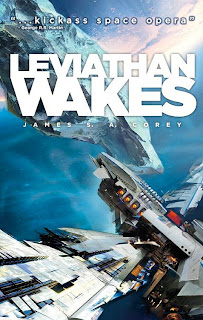
:: And finally, we have Leviathan Wakes, by James S.A. Corey, which is a composite pseudonym for authors Daniel Abraham and Ty Franck. I find it kind of odd that they felt the need to create a pseudonym for their collaboration; I’m sure this has been done before, though, so I suppose it’s not all that odd. I am confused as to why they just couldn’t go with their actual names. Although I do know that sometimes when authors gain success in one genre, they have difficulty breaking into another genre under their own names, or that publishers decide to have authors use different names to make it easier to track such things. Such as Iain M. Banks, who writes SF under that name but omits the middle initial for his fantasy novels.

But anyway, none of that really matters. What matters is that Leviathan Wakes is just terrific. It’s one of the most entertaining novels I’ve read in years. It’s pure entertainment. It’s a “large popcorn and a Coke” novel that screams out for a score by John Williams or Jerry Goldsmith or Basil Poledouris. There’s a blurb by George RR Martin on the cover that refers to the book as “a kick-ass space opera”, and that is exactly what it is.

What’s interesting about Leviathan Wakes is that it is set in our own solar system, and nowhere else. This is a space opera with no FTL drive, and the first attempt at a Generation Ship has yet to be launched. Despite this, there is tension galore, action a-plenty, and a good amount of explodey-spaceshippy goodness. There are revolutionaries and government agents, there’s a down-on-his-luck detective who is as hard-boiled as they come, there’s a noir-ish search for a missing girl, there is war between Earth and Mars, and, believe it or not, there are SF-nally plausible zombies. This book is a heady mix.

The book begins with a young woman finding herself the only survivor of a vicious attack on her spaceship; soon after, her parents lean on an asteroid belt detective to find out why she has disappeared, while another innocent industrial ship happens on the wreck of the ship from the first scene. From these two threads, the authors put together an impressive show that gradually becomes bigger and bigger in scope until, at the end of the book, there are startling implications for all humanity. Best of all, the book leaves a lot of places where the sequels can go.

Leviathan Wakes is terrific storytelling, aided and abetted by a lot of snappy dialogue and interesting characters for whom we both root and wince when they take the wrong turn. If you’re looking for an extremely well-crafted entertainment, Leviathan Wakes is it.

And that, folks, will probably finish me up for space opera for a little while, aside from a couple of short stories. I’m actually taking a month to not read any novels at all; just short fiction and poetry. After that, my plan is to spend a good chunk of the winter OD’ing on fantasy, possibly to the extent of doing a complete re-read of George RR Martin’s A Song of Ice and Fire to this point. As tends to be my case, my mood tends to go from “spaceships and blasters, ahoy!” to “Castles and swords and maidens, swoon!” when the weather starts to go cold.

Share This Post

Charting the Progress


Charting the Progress, originally uploaded by Jaquandor.

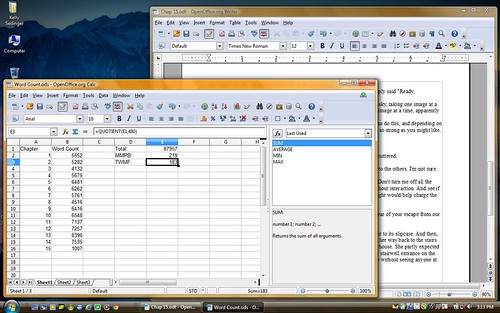
It’s been a long time since I wrote about my progress (or lack thereof) on the fiction writing front, so here’s an update. This photo is a screengrab of the spreadsheet I use to track the word count of the Novel-in-Progress (code-named, Princesses In SPACE!). I’ve been trying to hit a personal quota of 500 words a day, which has produced close to 90,000 words as of this writing.

I generally try to aim for chapters that aren’t too terribly long, but aren’t ridiculously short, either. I’ve read a few books that had over a hundred chapters that were two or three pages each, and that always bugs me, for some reason — it just makes the book feel herky-jerky. But the other way — really long chapters — doesn’t do it for me, either. I’m trying to stick in the middle.

I also had an original goal of keeping my chapters roughly in the same ballpark, in terms of length, but that hasn’t worked out quite so well. The early chapters are fairly brief, but they get longer after chapter ten. Maybe this isn’t a problem; I don’t end chapters for length specifically, but I do try to end them on logical breaking points.

So: I have almost 88,000 words in. Right under that total, I have an entry labeled MMPB and another labeled TWMF. What’s this about?

Well, MMPB stands for “Mass Market Paper Back”. The publishing industry uses word count as its standard measure for book length, for many good reasons; but sometimes I just find it nice to be able to figure where I am, roughly, if the book was to actually be printed. Now, this can vary a lot with considerations such as the font used and the print size, but I generally assume that a mass-market paperback novel will have roughly 400 words a page. So, that entry is simply the total word count divided by 400.

TWMF? Well…this is purely a conceit of mine, just an effort to try to remind myself not to get too long-winded in telling this tale. This bit of division yields to me the rough whereabouts of my story as compared with Patrick Rothfuss’s The Wise Man’s Fear, which is a really long book. TWMF, then, refers to the page I would be on if my book were printed like the Advance Review Copy I have of Rothfuss’s doorstop of a novel. Luckily I’m nowhere near where he ended up for length, and I’m unlikely to get there. I hope to have the first draft, when it’s complete, somewhere between 160,000 and 180,000 words. Maybe less, if that’s the way the story unfolds.

So, there we go. Hooray for Space Princesses!

Share This Post

Is the space opera over when the fat alien lady sings?

MD Jackson links this IO9 piece by Charlie Jane Anders about the fact that space opera has all but disappeared from filmed entertainment these days. It’s really a shame, I think, and I hate to think its partly reflective of a general slackening of interest in space, but I think there’s something to that.

Two depressing facts became apparent the other day: 1) NASA is so desperate to get people excited about space travel, they were willing to consider collaborating on the horror mockumentary Apollo 18. 2) The fall 2011 season is the first time there’s been no TV show, on any network, featuring people on spaceships, since probably the mid-1980s.
What’s happened to us? We haven’t just lost our space shuttle program, we’ve lost our zest for space adventure altogether, at least in TV and movies. How can we get our love for space opera back?

How do we get it back? I have no idea, unfortunately. This is because I’m just not sure where the love of space opera initially came from. Space opera was a staple in science fiction well before rocket launches became commonplace, but did space opera as a serious going concern in mass entertainment really exist much before Star Trek or Star Wars? I’m not sure they did. I’m just glad that space opera continues to be big in SF books.

I suspect a number of factors, not the least of which is our fairly lame space program right now. But manned space travel isn’t going to stop, and if private outfits like the SpaceShipX people or that crazy Virgin guy who likes to spend huge amounts of money on stuff (like spaceships) make headway, I think we may see a resurgence of interest. I remember that line in Apollo 13: “You guys have made going to the Moon about as exciting as a trip to Pittsburgh.”

Now, I actually like Pittsburgh and taking trips there, but that’s beside the point. One big reason that the space program hasn’t done much for firing imaginations over the last batch of years is that the ships haven’t been going anyplace new. The spaceships keep going to Low Earth Orbit, and the pictures they send back all look the same. The planet’s always the same size, the astronauts floating in zero-grav look the same, it’s all the same. Anything new is coming from the robots. Which is fine…it’s great, actually…but every time a robot goes someplace new and sends back gigabytes upon gigabytes of fascinating information, it can’t help but psychologically pose the question, “Why do we need spaceships at all?”

And without any real reason for people to be there, there’s no real reason to tell stories about them, is there?

Another part of the problem is that imaginative storytelling in filmed entertainment seems to be the exclusive province of Fantasy these days, which again is fine, but for every fantasy flick that gets made and becomes a hit, that’s a SF movie that’s not getting made. Even the resurgence of interest in Star Wars, over the course of the Prequel trilogy, wasn’t enough to lead to a Space Opera rebirth in film, because (a) reaction to the Prequels was mixed and (b) folks are starting to see Star Wars as mainly fantasy, anyway.

It seems to me that there is also the Hollywood “copycat” syndrome to blame for all of this. Starting in the late 1990s, the Harry Potter books exploded onto the scene, which then, in 2001, showed up as successful movies. At the same time, The Lord of the Rings arrived onscreen, and the success of both these high quality franchises really primed the fantasy pump. At the same time, the superhero movie became big doings, with Spiderman finally reaching the big screen and Batman returning. I think a part of space opera’s fade in Hollywood is partly just because some other stuff came along.

Will space opera come back in a big way? Maybe, maybe not. I don’t think it’ll ever be gone forever, though, from filmed entertainment. And there’s a big bright side here, as well: we know that Hollywood is increasingly unwilling to come up with ideas of its own. Well, when they do want to tackle space opera again, they will find a lot of space opera books waiting to be optioned and turned into movies. What will goose Hollywood into getting back in the space opera mood, however? That, unfortunately, is something I’m not sure of. It might take a space opera equivalent of Harry Potter to do it. Therefore, someone needs to write that. I wonder who might be crazy enough to give that mission a whirl….

Anyway, I don’t have any major answers here…but the article is interesting. Check it out, those of you with any passing interest in SF in general or space opera in particular.

Share This Post

“No fate but what we make”

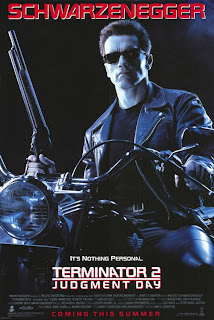
I hadn’t watched Terminator 2: Judgment Day in quite a long time, so I picked it up from the library and gave it a whirl. I’ve only seen the first two Terminator flicks, but I’ve long counted them among my favorite sci-fi action thrillers, and watching T2 again does nothing to make me think otherwise. This is, simply, a very finely made film.

I discovered a “Special Edition” on the DVD, which I assumed included extra footage. I’m always a sucker for those kinds of things, so that’s the version I watched. The additional footage is, altogether, under ten minutes of total screentime. None of it is really essential, but for the most part, the new footage does add some texture and character moments to the movie.

Here are some random thoughts on Terminator 2:

::  I’ve always wished that the film’s publicity campaign had not been so overt about Robert Patrick’s T-1000 being the main villain. I remember zero effort being made during the film’s original release to conceal this, which is a shame, because the film is clearly constructed to keep you guessing during the first half hour or so. We know that two individuals have been sent back in time, one to kill John Connor and another to protect him. Having seen the original, we’d naturally expect that the one that looks like Arnold Schwarzenegger is the one trying to kill John, so it would come as a surprise when, in the mall scene where the two meet, it turns out that the Schwarzenegger Terminator is actually here to protect John this time.

No such luck, though; the publicity campaign had the T-1000 as the bad guy and the Terminator as the good guy this time out. Oh well.

::  Additional scenes that work well include a reveal that Sarah Connor has been having her “nuclear holocaust” dream repeatedly, at the asylum. We see the dream, right up to the blast, and Connor tells the psychiatrist that the dream is the same every night. This implies that later on in the film, when we see the nuclear holocaust itself, it’s also the first time that Sarah Connor is seeing it. Pretty powerful. (This is still one of the most effective “nuclear destruction” sequences ever filmed.)

::  There’s another scene where John and Sarah remove the brain chip from the Terminator, and Sarah goes to smash it with a mallet, but John stops her, saying, “If I’m growing up to be a great military leader, then maybe you should listen to my ideas once in a while”. The extended bits flesh out the troubled relationship John has had with his mother.

::  That said, there’s a goofy scene that has John trying to teach the Terminator to smile. This probably should have remained in someone’s archives.

::  T2 originally had a more upbeat ending, with Sarah Connor sitting on a park bench in Washington while John went off to Congress, or something like that. I’m glad that the special edition doesn’t restore that ending, choosing instead to keep the ambiguous and haunting final scene of Sarah’s narration over the footage of a highway at night speeding by.

::  I’m of mixed mind on Brad Fidel’s music. On the one hand, the main theme is pretty iconic and mechanical-sounding. And the growling motif that we hear every time the T-1000 shows up is great stuff. But a lot of the underscore, especially in the action sequences, is just adequate.

::  Boy, is Dr. Dyson’s family in for a rough time, huh? Their husband and father is dead, and he’s involved in a plot to destroy Cyberdyne Systems. Ouch.

::  T2 is a great example of why pacing and length are not always dependent qualities. T2 is not a short movie — it’s around two-and-a-half hours — but it is so well paced and so well constructed that there really aren’t any spots where it feels as though it’s lagging. James Cameron really is one of the best at keeping things going, even over a fairly long haul.

I guess the next thing to do would be to watch Terminator 3, but…I don’t know. Anybody seen it? Is it worth the time?

Share This Post

“Dead or alive, you’re coming with me.”

Robocop the romance novel

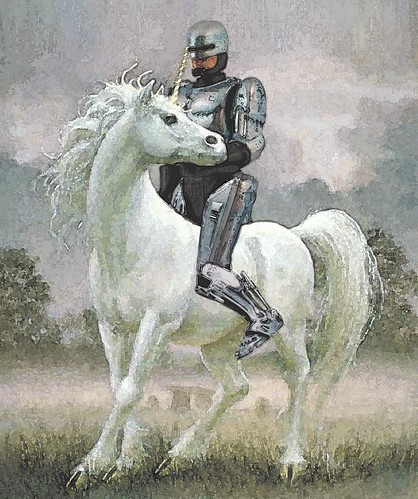
I swear, I have no idea why Robocop is riding a unicorn. No idea at all. But anyway:

Funny story about the first time I saw Robocop: I watched it on VHS with my parents because a coworker of my father’s told him how good it was. I found that highly amusing, because from what I knew of Robocop, I knew that my father was exceedingly unlikely to enjoy it much at all. I have never known my father to have the least inclination toward science fiction in any way, and he’s not terribly big on violence. And back then, I seem to recall he didn’t much care for use of the word ‘F***’ in his movies. Robocop had three strikes against it, going in, and no, it didn’t recover. Not his cup of tea at all. But I liked it.

The movie was a staple of our action-movie watching in college, but since then, I hadn’t watched Robocop in a really long time (I don’t honestly know if I’ve ever watched it in its entirety, uncut, since college), until the other day I saw it streaming on Netflix, so I decided to watch a little bit of it. Which turned into the whole thing. Go figure. Only problem was that I was doing this on a whim and I’d already had an afternoon snack, so I didn’t make popcorn. And really, Robocop is one of the popcorniest movies ever made.

So I’ve always liked Robocop. The sequel was meh, but the original has always been a good flick. However, in my head I’ve always kind of viewed Robocop as a prep film for some of the better stuff director Paul Verhoeven would do later on — Total Recall, Starship Troopers. I remember Robocop being perfectly good, but not extraordinary. Turns out that Robocop is a lot better than I recall.

The story is, I assume, familiar to anyone who is still reading this post. At some point in the future, things in Detroit have become so bad that the police force has been privatized by a company called OCP, which is looking for new, technological approaches to law enforcement. The first such approach involves big robots called ED-209’s, which turn out to be a bit…overzealous. (During a demonstration at a board meeting, the ED-209 machine-guns a young executive to death, leading the CEO to do a facepalm as this young fellow’s corpse is oozing blood from a hundred bullet holes all over the boardroom floor.) Enter another young up-and-coming executive, who wants to show up the guy whose pet project just splattered some guy’s guts all over the board room. His notion is to turn a cop who has been fatally wounded into a robotic police officer.

He almost immediately gets his wish, when our hero, Officer Murphy (Peter Weller), is brutally shot a number of times by a very bad man named Boddicker (Kurtwood Smith) and then left for dead. Murphy is somehow ‘saved’ by doctors, but when he ‘awakens’, he has been turned into a robot. Robocop.

Now, why they need a human for this is never really explained, since the idea is basically the same as ED-209 – turn police work over to a robot. Presumably ‘Robocop’ is better because of the addition of human instincts and thought patterns, but without memories, which have been wiped clean. Nothing of Murphy remains inside Robocop.

Except, well, turns out that quite of Murphy actually is knocking around in there, and as the rest of the movie goes on, Robocop tries to put together who he really is all the while trying to capture the bad guys, who have powerful allies in OCP itself. Much mayhem ensues, with Verhoeven establishing his reputation in this movie as a fairly creative director of gore-filled action.

I was struck this time, after not having seen the movie in so long, by the pacing. In the first place, Robocop just doesn’t waste any time at all. We meet Murphy in the first five minutes, and he’s been fatally mutilated and wounded about ten minutes later after an action sequence. We’re told almost nothing about him – he has a wife and kid, he started twirling his pistol before holstering it because his son saw a guy do it on teevee – and yet, the film somehow is able to make us think we know more about him than we do. Since we know so very little about Murphy, Robocop’s frustration as he tries to recover his memories is all the more engaging. It’s a brilliant device, and in a lesser movie, there would be about fifteen minutes of stuff letting us “get to know” Murphy before his killing. We don’t really feel a sense of loss until Robocop himself feels a sense of loss.

The pacing also keeps the film focused on events and actions, and only in passing mentions the various moral issues behind its story. Verhoeven’s suspicions of corporate capitalism are clear, but there are no big speeches about it in Robocop, just rapid-fire angry conversations between rival executives. (“Who cares if it works? Military contracts! Selling spare parts for twenty years!”) The Robocop seems cool in itself, and it’s chilling in retrospect that no one ever questions the morality of a project that is just waiting for some poor cop to get killed in the line…and worse than that is the fact that OCP has maneuvered cops around in order to ensure that one of them will get killed in the line, sooner rather than later. Risks and personality assessments are cited as methods for determining where to put the cops who may die, but again, in keeping with the film generally keeping us in the dark with respect to Murphy, we are not told exactly what it is about Murphy that makes OCP determine that he’s likely to get killed in his new assignment.

In terms of design, Robocop himself is iconic, with his helmet that conceals everything except his jaw. I always find this a bit interesting – why not just cover his entire face? Of course, it’s because we need some reason to still see him as a human being, and for most of the time he’s onscreen, that jaw is it. He doesn’t do much of anything else with his mouth except speak, leaving Robocop to show his growing frustration mainly through body language, such as when he is exploring his old house and experiencing bits of old memory and puts his fist through the teevee screen realtor.

We do get to look at Robocop without his helmet late in the film, and it’s not the prettiest sight, but that’s when we really know that Murphy-the-person really is inside there, and he hasn’t been entirely erased. There’s a moment prior to that, though, that hints that this is the case. It’s blink-and-you-miss-it stuff: when the bad guy sics ED-209 on him, Robocop’s visor is broken in a couple of places, and Verhoeven throws in a couple of quick closeups of his fear-filled eyes. It’s enormously effective, and it really cements Robocop as a character in this movie, as opposed to…well, whatever he’d be otherwise. A prop, perhaps.

Robocop‘s prognostications of the future are mainly hit-or-miss. The world of the “clean future” is one of antiseptic concrete; wood and metal are mainly used to depict Old Detroit, the run-down place where chaos still reigns. There are newscasts which give a bit of “future news”, telling us a bit of what’s going on in the world. I’m not sure why they bothered; none of this really adds much to the film, except for the bits that deal specifically with Detroit, and in any case, the prognostications seem to take the various strifes of the 1980s and project them forward forty years or so. Thus we have wars in South Africa and Central America.

I also am of mixed mind on how the movie ends: Robocop dispatches the main bad guy, there are about two lines of dialogue, and then, smash cut to credits. I always find the ending vaguely unsatisfying – but then, I’m not entirely sure how to better wrap things up. The film certainly leaves open a lot to be explored in possible sequels, particularly, Robocop’s explorations of whether he’s a person or not. It’s too bad only one relatively lackluster sequel was made.

Basil Poledouris’s score is a highly-regarded piece of SF-action film music, and deservedly so; it’s appropriately futuristic sounding without being otherworldly. I realized that the main theme, the Robocop theme, isn’t heard until we’ve first met Robocop and he’s gone out onto the street to do cop stuff. Of course, that main theme is one of the great earworms of film music history. Just try watching this movie and then not end up humming that tune for days.

It’s too bad that Robocop didn’t lead to anything more than what it already is, but one good film is more than a lot of franchises get, right?

Share This Post

Geekin’

Just a few pop-cultural items knockin’ round my head….

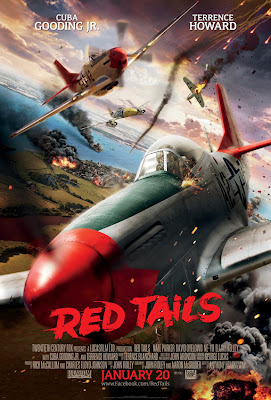
:: I love this poster, for the upcoming film Red Tails, which tells the story of the Tuskegee Airmen and is backed by executive producer George Lucas:

Of course, I look at that poster and I see that Lucas is only the executive producer. He’s not the actual producer, nor did he write the screenplay or the story on which the film is based, nor did he direct the movie. But anyone want to lay odds on whose name gets mentioned exclusively if the film flops?

:: I think that the existence of this is frakking hysterical:

1970 Imaginative Sex

Why? Well, if you know anything about Norman’s somewhat infamous series of sci-fi novels set on the world of Gor, you can imagine just what his sexual recommendations are like (i.e., great if you’re a man and you’re into dominance, not so much if you’re, well, not).

:: I really am starting to get an appreciation for cosplay.

She’s makin’ it up as she goes along, folks!

Share This Post

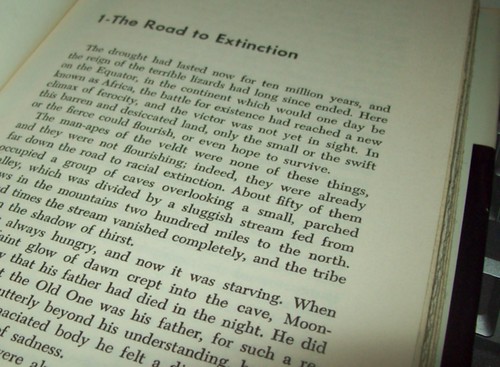
Page One: 2001 – A Space Odyssey

I mentioned this book in yesterday’s NPR 100 SF Books list, so it seemed right to use it today for Page One. I actually think I prefer the book to the movie, as amazing as the movie is.

Share This Post

Top 100 SF Books!

NPR has come up with a list of The Top 100 F&SF Books, although it’s not a list of 100 books per se, as it includes a number of entire series. But as usual…I’ll bold the ones I’ve read and italicize the ones I’d like to read at some point. And I’ll add occasional comment.

Here’s the list:

(Oh wait, complaint the first: there is no GGK on this list. WTF!!!)

(And yes, I voted.)

1. The Lord Of The Rings Trilogy, by J.R.R. Tolkien (Probably my single favorite book of all time. I re-read it this past spring.)

2. The Hitchhiker’s Guide To The Galaxy, by Douglas Adams (Own it; haven’t read it yet. Maybe one of the next few books.)

3. Ender’s Game, by Orson Scott Card (I started this once and didn’t get into it, decided to save it for another time. Since then, I’ve discovered that OSC is a lout to the degree that I will not read him again, ever. I dumped my copy of Ender.)

4. The Dune Chronicles, by Frank Herbert (Just the first one, and recently, too.)

5. A Song Of Ice And Fire Series, by George R. R. Martin (All except A Dance with Dragons, which I own but will need to re-read the entire series before tackling this one. I’m not as enthusiastic about this series as many — the bloat of the books is off-putting.)

6. 1984, by George Orwell

7. Fahrenheit 451, by Ray Bradbury

8. The Foundation Trilogy, by Isaac Asimov (Probably should re-read sometime. Read them in college and liked them a lot.)

9. Brave New World, by Aldous Huxley

10. American Gods, by Neil Gaiman (Wonderful book, as I recall. Maybe a candidate for re-read.)

11. The Princess Bride, by William Goldman (Fantastic book, and quite different from the movie…which is still fairly faithful in its adaptation. You have to read the book to see what I mean.)

12. The Wheel Of Time Series, by Robert Jordan (Just the first one. Gave up a hundred pages into the second. Not my cuppa joe.)

13. Animal Farm, by George Orwell

14. Neuromancer, by William Gibson (Cheating here…I’m counting having started this book a dozen times as ‘reading’ it. I really tried to get into cyberpunk, I really wanted to like cyberpunk…and yet, ultimately, I had to admit to myself that I just didn’t care for cyberpunk.)

15. Watchmen, by Alan Moore (So frakking brilliant. Just astonishingly good.)

16. I, Robot, by Isaac Asimov (I haven’t read Asimov in a long time.)

17. Stranger In A Strange Land, by Robert Heinlein (Just because. I generally find Heinlein kinda weird.)

18. The Kingkiller Chronicles, by Patrick Rothfuss (Great stuff. Love this series.)

19. Slaughterhouse-Five, by Kurt Vonnegut

20. Frankenstein, by Mary Shelley

21. Do Androids Dream Of Electric Sheep?, by Philip K. Dick (All titles I need to read.)

22. The Handmaid’s Tale, by Margaret Atwood (Wait, isn’t this the one that Atwood swore up and down was NOT science fiction, because she doesn’t want to be one of those writers?)

23. The Dark Tower Series, by Stephen King (Started it, bounced off. Maybe another time.)

24. 2001: A Space Odyssey, by Arthur C. Clarke (This is one of the first ‘pure’ science fiction books I read, if not THE first one that wasn’t a Star Wars or Star Trek tie-in book. A truly great book — I love Clarke at the top of his powers. 2010 was also very good. 2063 was decent. 3001? That one I could have done without.)

25. The Stand, by Stephen King (This is one of the all-time horror classics, as far as I’m concerned. I’m due to re-read it.)

26. Snow Crash, by Neal Stephenson (Really good. Liked it a lot. I haven’t read Stephenson at all since Cryptonomicon, though.)

27. The Martian Chronicles, by Ray Bradbury (A classic.)

28. Cat’s Cradle, by Kurt Vonnegut

29. The Sandman Series, by Neil Gaiman (I really need to read this. I own the first three of the TPBs, for Crom’s sake.)

30. A Clockwork Orange, by Anthony Burgess

31. Starship Troopers, by Robert Heinlein

32. Watership Down, by Richard Adams (I read half of it. Don’t tell my mother.)

33. Dragonflight, by Anne McCaffrey (Tried her in junior high, and never again. McCaffrey just didn’t do it for me, and I have little interest in trying again.)

34. The Moon Is A Harsh Mistress, by Robert Heinlein (Bounced off this one some years ago. I have a feeling that Heinlein and I will never be ‘besties’.)

35. A Canticle For Leibowitz, by Walter M. Miller (Own a copy, right here. I can even touch my copy from my desk. Should read it.)

36. The Time Machine, by H.G. Wells (Oh yeah, memo to self: write blog entry about the movie Time After Time.)

37. 20,000 Leagues Under The Sea, by Jules Verne (I read this in grade school, so I think I understood damned little of it.)

38. Flowers For Algernon, by Daniel Keys

39. The War Of The Worlds, by H.G. Wells

40. The Chronicles Of Amber, by Roger Zelazny (Just the first one.)

41. The Belgariad, by David Eddings (Wow, really? Is this actually good? I always figured it was your standard 1980s-era Tolkien clone fantasy series.)

42. The Mists Of Avalon, by Marion Zimmer Bradley (Lots of folks have told me how amazing this is, but I didn’t care for it. I’m open-minded about a lot of stuff, but this book seemed so gleefully hostile toward Christianity that it turned me off.)

43. The Mistborn Series, by Brandon Sanderson (I might have read this…but Sanderson’s recent nauseating comments about gay marriage have plunked him in the “Authors I’m almost certainly never going to read” list. Maybe I’m denying myself some good stuff, but way I see it, I’m never going to be able to read all the books I want to read anyway, so what’s the occasion political filter going to hurt?)

44. Ringworld, by Larry Niven (Didn’t like it as much as I wanted to.)

45. The Left Hand Of Darkness, by Ursula K. LeGuin

46. The Silmarillion, by J.R.R. Tolkien (Well, I’ve dipped into it a lot.)

47. The Once And Future King, by T.H. White (Wonderfully wonderful.)

48. Neverwhere, by Neil Gaiman

49. Childhood’s End, by Arthur C. Clarke

50. Contact, by Carl Sagan (Well, the first fifty pages or so. I was not terribly impressed with Sagan’s voice as a fiction writer.)

51. The Hyperion Cantos, by Dan Simmons (Really need to read this one.)

52. Stardust, by Neil Gaiman

53. Cryptonomicon, by Neal Stephenson (I loved this book for all the wild, wooly fun of it. I’m sure I didn’t understand a lot of it.)

54. World War Z, by Max Brooks

55. The Last Unicorn, by Peter S. Beagle

56. The Forever War, by Joe Haldeman (Fine, fine book.)

57. Small Gods, by Terry Pratchett

58. The Chronicles Of Thomas Covenant, The Unbeliever, by Stephen R. Donaldson (The first two trilogies. I haven’t gone near the current series yet, though. I’d like to.)

59. The Vorkosigan Saga, by Lois McMaster Bujold (The first three books only. I absolutely plan to read the rest!)

60. Going Postal, by Terry Pratchett

61. The Mote In God’s Eye, by Larry Niven & Jerry Pournelle

62. The Sword Of Truth, by Terry Goodkind

63. The Road, by Cormac McCarthy

64. Jonathan Strange & Mr Norrell, by Susanna Clarke (Wonderful prose, fascinating story, but it’s also something of a slog in parts.)

65. I Am Legend, by Richard Matheson

66. The Riftwar Saga, by Raymond E. Feist

67. The Shannara Trilogy, by Terry Brooks (This, the most blatantly blatant of all Tolkien rip-offs, makes this list. Nothing by Guy Gavriel Kay does. Ugh.)

68. The Conan The Barbarian Series, by R.E. Howard (Some of the stories, nowhere near all of them.)

69. The Farseer Trilogy, by Robin Hobb

70. The Time Traveler’s Wife, by Audrey Niffenegger

71. The Way Of Kings, by Brandon Sanderson (OK, I’m sorry, but this has been out less than a year. Give me a break, even if it is really good.)

72. A Journey To The Center Of The Earth, by Jules Verne

73. The Legend Of Drizzt Series, by R.A. Salvatore

74. Old Man’s War, by John Scalzi (Good book…but one of the best F&SF books of all time? I’m really not sure of that.)

75. The Diamond Age, by Neil Stephenson

76. Rendezvous With Rama, by Arthur C. Clarke (I loved this book. Never read the sequels, though.)

77. The Kushiel’s Legacy Series, by Jacqueline Carey (The first two, and I’ll tackle the third one this winter. I love this series. It’s amazing.)

78. The Dispossessed, by Ursula K. LeGuin (I read this in junior high. I didn’t understand it at all.)

79. Something Wicked This Way Comes, by Ray Bradbury

80. Wicked, by Gregory Maguire

81. The Malazan Book Of The Fallen Series, by Steven Erikson (Just the first one. What a commitment, this series is.)

82. The Eyre Affair, by Jasper Fforde

83. The Culture Series, by Iain M. Banks (Several of them, anyway…and I need to blog about the most recent one that I read, come to that. Very good, cerebral space opera.)

84. The Crystal Cave, by Mary Stewart (I’m definitely re-reading this series — a trilogy with a fourth novel added later on — this winter. It’s a gorgeous telling of the Arthur saga that strikes the best balance, I’ve found, between the “magical” versions of the tale and the “post-Roman Britain” versions of it.)

85. Anathem, by Neal Stephenson

86. The Codex Alera Series, by Jim Butcher

87. The Book Of The New Sun, by Gene Wolfe

88. The Thrawn Trilogy, by Timothy Zahn (Yes, they’re media tie-ins. But they’re so good they really deserve to be seen as terrific space opera books on their own.)

89. The Outlander Series, by Diana Gabaldan (Wait, what?)

90. The Elric Saga, by Michael Moorcock

91. The Illustrated Man, by Ray Bradbury

92. Sunshine, by Robin McKinley

93. A Fire Upon The Deep, by Vernor Vinge (I’ll be re-reading this sometime soon…and there’s a sequel coming out this fall, too.)

94. The Caves Of Steel, by Isaac Asimov

95. The Mars Trilogy, by Kim Stanley Robinson (Wow, I’m due to re-read this one, too! This trilogy made a powerful impression on me fifteen years ago. I wonder how it holds up.)

96. Lucifer’s Hammer, by Larry Niven & Jerry Pournelle

97. Doomsday Book, by Connie Willis

98. Perdido Street Station, by China Mieville

99. The Xanth Series, by Piers Anthony (Oh, come now. I’m not as down on Anthony as many F&SF fans are, but inclusion on this list? Really?!)

100. The Space Trilogy, by C.S. Lewis

So there you have it. Always fun to rant about book lists!

Share This Post

Blasters and spaceships, oh my!

I don’t know what it is, but for some reason, in the warmer months my reading tastes gravitate strongly toward science fiction (and the occasional horror book). I associate fantasy with the cooler months. Why this is, I’ve never really figured out; I’ve read many a fantasy novel set in warm locales, so it’s not as if the cooling weather puts me in mind of the snowy journeys through the Misty Mountains in The Lord of the Rings. This isn’t to say that I won’t read any fantasy at all during the warm periods, but…well, summer is when I want lots of exploding spaceships.

So, here’s the skinny on three space opera books I’ve read of late!

:: The first was, technically, a re-read of The Warrior’s Apprentice by Lois McMaster Bujold. This is the first novel in the ongoing saga of Miles Vorkosigan, one of the most famous characters in contemporary SF. I read this book before, several years ago, and I enjoyed it, but for one reason or another I never continued with the Vorkosigan series. No real reason why, really; I just never got around to it until I’d reached a point where I figured that if I was going to continue with the series, I should just start over.

The Warrior’s Apprentice starts with Miles Vorkosigan undergoing the final physical trial he needs to complete before he can enter the military service of Barrayar, his homeworld. Barrayar places supreme importance on its military, but getting in will be difficult for Miles, because he is physically disabled. He is barely five feet tall, and his bones are extremely brittle and prone to breaking. Sure enough, he breaks both his legs in the first minutes of the trial, and Miles is forced to take on the life of a mercenary.

He actually isn’t really forced into that life, per se, so much as he just kind of steps into one situation after another that causes a mercenary crew to just naturally gravitate toward him. It’s a fascinating thing that Bujold does here: she depicts a character with enormous personal magnetism who uses it to his advantage without ever really seeming totally aware of it.

The Miles Vorkosigan tales aren’t “sensawunda” space operas; they’re as character-driven as just about any story can be. I look forward to reading more of them.

:: Starpilot’s Grave, by Debra Doyle and James MacDonald, is the second book in their “Mageworlds” series. The adventures of Beka Rosselin-Metadi continue, along with her various friends from the first book, The Price of the Stars. The earlier book established a galaxy that is post-war, a war against a group of villains hailing from ‘the Mageworlds’. Here, Doyle and MacDonald set up the resumption of those hostilities, and by the end of the book, war has broken out again, with our heroine, Beka Rosselin-Metadi, assuming a leadership rule. Not a whole lot that happens in this book is a surprise, as it is clearly setting up the third act in the trilogy. It’s all somewhat Star Wars-like, in general feel, and it’s a fun read that isn’t terribly demanding. My main complaint, as with Price of the Stars, is that there is still little explanation as to who the Mages actually are or why they are to be feared. I hope this is explained more in the final volume.

:: Finally, John Scalzi’s The Last Colony was the third and final book in his Old Man’s War trilogy, until he went and added a fourth book, making it not a trilogy anymore. Oh well. As with the first two books, this is a fast-paced and involving read that suggests a whole bunch of nifty Sfnal questions without slowing the pace enough to delve into answers. We rejoin our heroes from the first novel, John Perry and his wife Jane Sagan, who have adopted a girl named Zoe from the second book. They are asked by the Colonial government to head up a secret colony whose location is to be kept secret…because, it turns out, an alliance of aliens is systematically destroying colonies they deem to be “unauthorized”. Lots of hilarity ensues: resistance against the aliens, coupled with the fact that they can no longer rely on their own government to be honest with them or give them aid.

Some of my key questions about this whole universe, dating back to Old Man’s War, are finally explained, which is nice, and Scalzi gets a pot boiling quite nicely, creating a definite sense of tension as he depicts on the one hand an alien force that seems well nigh unstoppable and on the other depicts a group of colonists struggling to find an answer to a problem that is seemingly unsolvable. My main issue with the book lies with the nature of the final solution itself; in all honesty, it kind of seems to come out of left field and only barely manages to avoid feeling like an outright deus ex machina. But it’s my understanding that some of this background is explained in a fourth book in the series, which focuses on the Perrys’ daughter, Zoe.

More space opera to come!

Share This Post