Something for Thursday (Wakanda Forever edition)

 It’s strange about comets. Except for a few notable exceptions, the vast majority of comets come quickly, brighten our sky, and then disappear forever (or for so long it’s functionally forever). For the brief time they are in the sky, they are a wonder…and then they are gone, leaving us with only the memory of this wonderful thing that blazed amongst the stars for a short time.

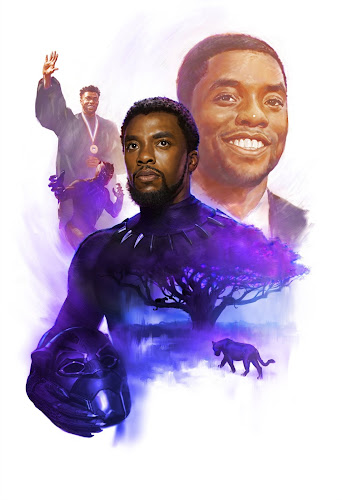
That is how I keep thinking of Chadwick Boseman, a man of incandescent talent who blazed across movies and teevee for a few years…and now is gone.

Here is the End Credits suite from Black Panther, written by Swedish composer Ludwig Goransson.

Farewell, Mr. Boseman. You won’t be forgotten. How could you be? You shone too bright in the sky to be forgotten.

(image credit)

Share This Post

Something for Thursday

 It’s funny about “one-hit wonders”: sometimes the hit is a genuinely enduring song, but other times the hit somehow endures despite being a very clear time-capsule piece that could only have come at a certain point in time. “Come On Eileen” by Dexys Midnight Runners is clearly an 80s song, but there’s nothing about it other than its general sound that ties it to the 80s. But is there any other time than 1974 when “Kung Fu Fighting” by Carl Douglas could have come out? I very much doubt it.

Here’s “Kung Fu Fighting”. Such a catchy tune that you couldn’t begin to get past the culturally-aware producers of today!

Share This Post

Something for Thursday (Farewell, Leon Fleischer)

Pianist Leon Fleischer has died, at the age of 92.

Fleischer was one of the greatest American musicians of the twentieth century (and a chunk of the 21st!), and his story is one of consummate musicianship along with triumph to overcome and live with disability. Fleischer was already a pianist and teacher of great renown by 1964, when a neurological condition made playing with his right hand impossible. Fleischer didn’t lose a step, though: because one-armed pianists are hardly unheard of, there is a substantial amount of repertoire for them, including today’s feature piece.
Maurice Ravel, the great French Impressionist composer, was commissioned by an Austrian pianist named Paul Wittgenstein to write a concerto for him. Wittgenstein had lost his right arm in World War I, however, so Ravel wrote his Concerto in D for Left Hand. It’s an amazing, bravura work, with such impressive piano writing that it is never obvious that only one hand is playing.
Wittgenstein appears to have been a rather prickly individual; he clashed with Ravel about the Concerto, revising it himself before playing it, to Ravel’s displeasure. Later he commissioned another Concerto for Left Hand from composer Paul Hindemith, but Wittgenstein decided he didn’t like the piece, so he refused to play it–but he also owned the rights to it, so he never let anyone else play it, either…until long after his death, when Hindemith’s score was found in Wittgenstein’s papers. The work was finally premiered in 2004, more than 40 years after Hindemith’s death. The pianist who premiered it?
Leon Fleischer.
In the 2000s, even though he had a long career of left-hand piano playing, conducting, and teaching, Fleischer began undergoing experimental treatments in hopes of regaining control of his right hand. These treatments proved somewhat successful, enough for him to resume two-handed piano performance. In 2007 Fleischer was a Kennedy Center Honoree, inducted by President George W. Bush.
Here is Leon Fleischer performing Ravel’s Concerto for Left Hand in D Major.

Share This Post

Something for Thursday (Friday edition)

Yeah, the usual disclaimer: a busy week full of activity has led to a day’s delay. I don’t have a great deal to say about this song, so just listen to it. This is one of those songs that takes you places, which is fitting given its title and lyrics. Here is “Midnight Train to Georgia”, by Gladys Knight and the Pips.

Share This Post

Something for Thursday

I have to admit something: it took me years to warm back up to this song, after a college professor ruined it for me. She used a cover of it as the background song to a video she had put together showing photographs of homeless people. I cannot for the life of me remember the point of that video or what she was trying to convey to us, but it was a class about politics or society or…something. The class was called “Person and Society”, and I really couldn’t tell you what the point of the class was at all, these many years later. It was one of three classes Wartburg College had at the time that were required of every student, summed up under the label “Foundational Studies”. This class might have been about political expression…or…hell, I don’t know. All I really recall from this class is this godawful video, and the fact that one of our textbooks was a ranty volume by a guy named Dinesh D’Souza. (Yeah…I know.)
So yeah, it took me quite a long time to warm up to this song again, and when I did, it was to the original, by Bill Withers. It really is quite a good song, after all — too good to be ruined by a weird A/V presentation in a college class.
Here’s “Lean On Me” by Bill Withers.

Share This Post

Something for Thursday (Friday edition)

Yesterday was a pretty busy day in my world, as I was getting ready for a nice long weekend. Ahhhhhh!!!

It’s Independence Day Weekend, when we’re supposed to be celebrating America. In 2020 that’s…well, frankly, it’s a pretty tall order. The American brand is not having one of its best years, but it can at least be hoped that perhaps this year is something of an acceleration year as the country starts to again pivot toward the country it should be.
Anyway, here’s something purely American: Wynton Marsalis playing some jazz. It’s a piece called “Perdido”. Written by trombonist Juan Tizol, it’s a jazz standard that goes all the way back to Duke Ellington. I’m not always the best jazz listener, but the big band stuff from that era usually makes me happy, and Wynton Marsalis is, of course, a genius.

Share This Post

Something for Thursday

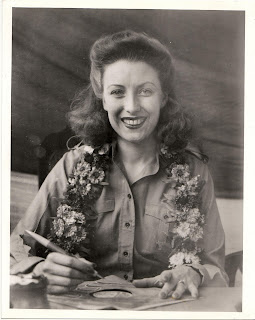
Dame Vera Lynn has died at the age of 103.

Lynn was a singer, songwriter, and entertainer whose stardom was brightest during World War II, when she was a big part of maintaining morale within the British forces. After the war she had a long recording career and became an icon of popular culture, even to the point of being referenced, in all places, in a song on the Pink Floyd album The Wall.
I spent some time today at work listening to Vera Lynn, and hearing her songs from the distance of almost eighty years, it’s not hard to hear why she was such a star. Her voice in those songs is radiant, carrying the melodies with amazing ease and sonority. She had a nearly perfect voice for the kind of songs that were…well, at the risk of betraying a bit too much bias, I tend to be increasingly of the view that the 1930s and 1940s were the Golden Age of the popular love song.
Here are a few selections I found, including Lynn’s best known song, “We’ll Meet Again”. It’s an incredibly effective song, but the one here that really hits me between the eyes is one of my absolute favorite songs of all time, “A Nightingale Sang in Berkeley Square.”
Here is Dame Vera Lynn.

Share This Post