
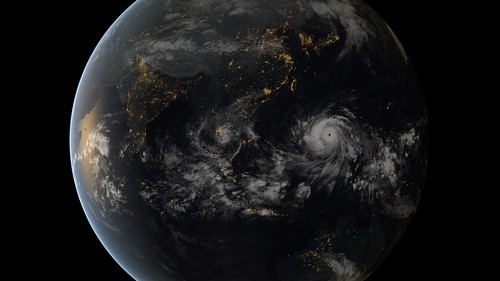
Stunning photo…almost beautiful, except for the storm about to wreak so much death upon the Philippines….
A Random Wednesday Conversation Starter
A brief writing update
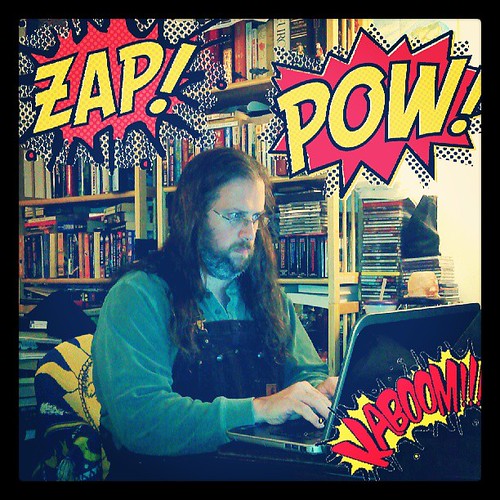
I’ve finally reached the point in writing GhostCop (not the actual title) where the story takes over and the rest of the thing is pretty much writing itself. I love when a story gets to this point, but it’s also a dangerous time, as the thought-train becomes this giant lumbering thing on a runaway course, gathering speed, and…well, you complete the metaphor. Suffice it to say that this level of focus leads to the tuning out of the entire world!
I expect to finish the draft by the end of this week, so yay, me! The next step will be to stick the manuscript in a drawer and fuhgeddaboudit until sometime in late winter or early spring, at which time the editing will begin.
And after the completion of this book? I plan to move right into my second attack on Lighthouse Boy (not the actual title), and in December, I’ll lower the daily “new words” quota to accommodate the first pass-through of the Princesses II manuscript.
Someday, this is all going to pay off. Maybe not big, maybe not for a while, but I’m going somewhere with all of this. I am writer, hear me roar! Zap! Pow!
Share This Post
Thank you

Sunday Burst of Weird and Awesome
Oddities and Awesome abound….
:: Director Steven Soderbergh on On Her Majesty’s Secret Service
For me there’s no question that cinematically ON HER MAJESTY’S SECRET SERVICE is the best Bond film and the only one worth watching repeatedly for reasons other than pure entertainment (certainly it’s the only Bond film I look at and think: I’m stealing that shit). Shot to shot, this movie is beautiful in a way none of the other Bond films are—the anamorphic compositions are relentlessly arresting—and the editing patterns of the action sequences are totally bananas; it’s like Peter Hunt (who cut the first five Bond films) took all the ideas of the French new wave and blended them with Eisenstein in a Cuisinart to create a grammar that still tops today’s how fast can you cut aesthetic, because the difference here is that each of the shots—no matter how short—are real shots, not just additional coverage from the hosing-it-down school of action, so there is a unification of the aesthetic of the first unit and the second unit that doesn’t exist in any other Bond film. And, speaking of action, there are as many big set pieces in OHMSS as any Bond film ever made, and if that weren’t enough, there’s a great score by John Barry, some really striking sound work, and what can you say about Diana Rigg that doesn’t start with the word WOW?
Of course, regular readers will know that I am absolutely unyielding in my opinion that OHMSS isn’t just the best Bond movie, but a great movie in itself.
:: The Karate Kid 3 really isn’t a good movie — they really really really went to the well a few too many times with this concept — but there’s something kinda awesome about watching that movie’s final fight dubbed in German.
All for this week!
Share This Post
Happy birthday, Dr. Sagan!
Carl Sagan was born this day, in 1934. Today we honor him, and the Cosmos from which he sprang!

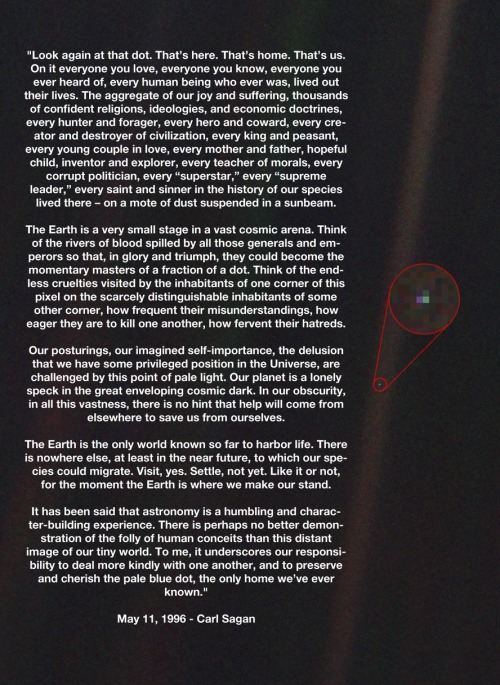
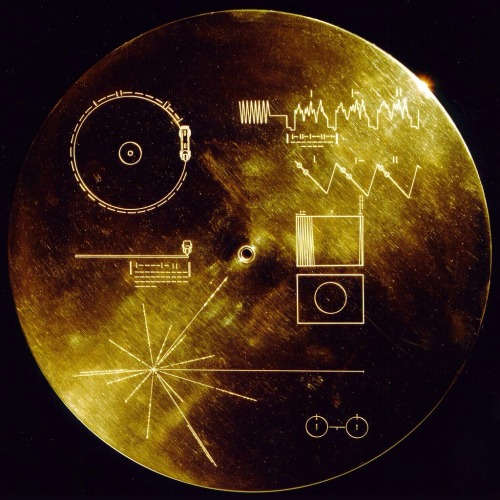
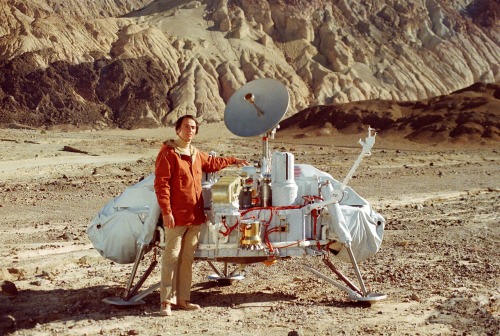
And this old post of mine, in which I excerpt Dr. Sagan’s book Pale Blue Dot, as he discusses the legacy of the Apollo moon missions.
Share This Post
Something for…sometime
A Random Wednesday Conversation Starter
What do you think of self-published, or “Indie”, authors? Do you feel there’s something “less” about a book that didn’t go through the traditional route to the marketplace, or are they just books that followed another route to said marketplace?
(I’m not asking because I’m considering self-publishing in the near future, although I am considering it in the slightly-more-distant future. There is something admittedly thrilling to knowing that my work doesn’t necessarily face the fate of being stuffed in a drawer and later considered “practice novels”!)
Share This Post
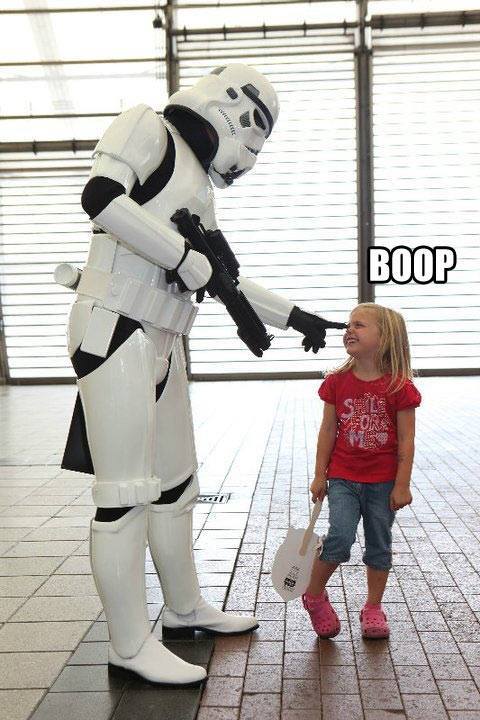
The cutest photo on the Internet that does not feature a cat
My Rules for Writing
Here are my rules for writing. Like it says in the post title.
1. Write every day.
This is the most important one. I know that there are always exceptions – and I know one personally – but the “I gotta wait for The Muse to inspire me and then I write like a demon!” approach simply tends to produce nothing more than a whole lot of days during which I thought at some point, “It would be nice to write someday.”
We like to think that writing is special, and it is, but it’s also a job that needs doing. Which means that it’s pretty much just like any other job, in that you have to actually do the work. I have a hard time even considering plotting, outlining, character sketching, and all that kind of activity real ‘writing time’, because in the end, what matters is the existence or non-existence of a manuscript. So yes, I insist on actual writing every single day.
Now, there ARE days when the outside world imposes restrictions that make writing impossible. But I have to be on guard against that sort of thinking, and I set the bar for acceptable reasons for not writing very high. It’s just too easy for me to say things like “Meh, it’s just not happening today. Get ’em again tomorrow.”
2. Write a certain number of words every day.
I also strongly believe in quotas. I’m not so rigorous about meeting them, so I’m a bit more flexible about the effects the outside world has on quotas than I am about the outside world allowing me to write at all. But quotas are important, because I also believe strongly in momentum. A story is a force of nature, and the first place it musters its strength is in my brain. If I don’t keep the momentum going, I lose sense of forward progress, and as the sense of forward progress diminishes, so do my senses of the story itself. I lose sight of the tale, the characters, the mood. Ironically, if I combine the First Law with too low a number in the Second, the book or story starts to feel like a lifeless lump of boring verbiage. Who wants that?
The main thing about a quota is that on the one hand, it has to be realistic to your writing abilities and opportunities; but on the other, it has to be high enough to keep the story’s forward motion going. I don’t like to be working on the same story for too long; eventually I start getting this weird, almost-claustrophobic sensation as I begin to despair of all the other stories that are waiting their turn because I’m taking too long with this one. I tend to think that the less time one takes to write a particular story, the better it is for that story. Thus, setting the quota at something like 100 words serves absolutely no use. At that rate, it would have taken me almost five years to write the first draft of Princesses In SPACE!!! (not the actual title). The job’s gotta get done; just doing the job is no good if it takes so long to get done.
On the other hand, I have things in life to do besides writing. I know, I know: Shocking, but true! I have family obligations and a job and other stuff. Reading, watching movies and fine teevee shows, just living life in the way that one must if one wants to have enough grist for one’s creative mill. At this point, 2000 words a day is just not realistic. If I was lucky enough to be able to write full-time, sure – and that day may come! – but for now, I have to be honest and admit that I just can’t work eight hours, write eight hours, sleep eight hours. I also have to fit in stuff like being with The Wife and The Daughter, and since I actually want to do those things, it doesn’t feel like a giant trade-off of any sort.
So, right now I’m trying a quota of 1500 words a day. I haven’t made it in a while, but that’s where I currently stand. And that quota is itself changeable: the only reason it’s that high, right now, is that I’m well into the third act of Princesses II, and I’ve got a really solid idea now of where things are going and how it’s shaping up. When I finish this one and move onto the next one, I’ll probably drop the quota back down to 1000 words a day as I start the new project.
Ultimately, when it comes to the actual work of writing, I’m very unromantic and very Captain Malcolm Reynolds-like in my focus on doing the job.
3. Trust the Muse.
Now, I’ve written before about how my Muse operates. And the thing is…I’m fine with that. He drops by often enough, and I’ve learned that he drops by more often the more work I’m doing. But there’s no predictability to what he’s going to toss out his window at me as he drives by; while working on the current book I’ve had a number of ideas pop at me about the next two (neither of which are in this series), and then he’s thrown ideas at me regarding this book. And he has yet to give me a single solitary hint about what’s going to happen in Princesses III. I couldn’t begin to tell you what happens in that book.
But I trust that the Muse will tell me when I get there. That’ll be a while, anyway – likely at least a year. So why worry about it? I didn’t have any idea what was going to happen in Princesses II until I was going through the manuscript of Princesses I for the third time. Now I’m very close to a complete first draft.
I had a very real object lesson in trusting the Muse as I got to this book’s climax, because I found myself in a very serious problem. I knew what needed to happen, but the why was giving me fits. It was quite serious, actually, because unless I figured out a logical why, I’d be staring a “Hey, dummy!” situation in the face. That’s when the characters are doing their thing, and struggling to accomplish the task set for them, when it suddenly becomes insanely obvious to everyone watching this story what’s going on, so you start wishing for someone to grab the main character by the lapel and scream “Hey, dummy!” in his face until he listens. My output slowed to nothing while I mulled this whole problem over.
But, inevitably, the Muse arrived and showed me the way through, for which I am eternally grateful.
4. Brutal editing feels good.
The oft-cited phrase is, “Kill your darlings”. But when I shift into editor mode, I tend to have very little mercy on my work. It has to be this way. If it’s not, if I fall in love with the sound of my own voice, then…well, that way, madness lies.
There are times when a piece of writing simply does not work. Either it’s because it clashes with the tone, or because it brings the pace to a crashing halt, or it seriously goes against a particular character’s nature, or…whatever. Usually these kinds of passages are easy to see, but sometimes, for whatever reason, they have set up camp in the writer’s heart, and it’s damned hard to cut something out when it’s growing out of your own heart. So, we makes excuses. We bargain with ourselves: “It’s not that bad! It doesn’t harm the pacing that much, it’s just a couple of pages!” And so on.
It’s generally my experience that if I have to supply myself with more than one reason a particular bit should not be cut, then it should be cut.
In truth, I haven’t yet run into this too much. For me, the hesitation to pull the trigger comes when I’m in the course of writing a first draft, as opposed to editing. That’s when, in an example I’ve used a lot, I suddenly realized while writing chapter 13 or 14 of Princesses I that I’d made a serious misstep in chapter 10. Ouch. That was quite a chunk of material that got cut, but it had to go. My excuse there? “But I’ve done all this work!”
My ultimate reply? “So what? It sucks.”
Cut cut cut.
5. Outlining is for knaves, half-wits, and people of low character. (Exceptions to this are many.)
I don’t outline. I hate outlines, they bug me, I hate writing them, and I always always always find that I end up diverging wildly from the outline, anyway. So no outlining for me. I’m a seat-of-the-pants writer, always have been, likely always will be.
Except for when I need to do a little outlining, in which case…I outline.
I know, I know…but as in all things, I am large. I contain multitudes.
In the case of my upcoming NaNoWriMo project – the second attempt on/attack of Lighthouse Boy – I found that what tripped me up the last time was that the backstory became much more complicated than I could manage in my head, so I had to stop while I let the whole thing gestate a bit. Princesses In SPACE!!! worked differently – the backstory reveals itself much more slowly in that book, being as it is intended as a kick-off to a long series, and I generally believe that backstory should be revealed in tiny increments, as needed. But Lighthouse Boy is meant as a one-shot novel, so the backstory’s got to be there and functional right from the get-go. So I’ve done a lot of work on that backstory, figuring things out and coming up with a brief outline of the book’s first few chapters.
What I never do is outline an entire story or book. I’ve done this in the past, and every single time, something cooler has happened along the way, so now I figure, why not just skip that step? I will do a bit of outlining if I find that I’m stuck in a spot or if I’m entering a fairly complex bit of the story and I’m not entirely sure how the moving parts all fit together. In that case, I’ll do a brief outline of the next chapter or two, but that’s it.
I had a vicious slump on GhostCop a month or so ago, but I eventually plowed my way through it by just plowing my way through it. As always, the characters took on their lives and showed me the way to the end. What’s really cool is that there are things happening in that book that are really surprising to me, things I never thought about when the original idea popped into my head. I love when that happens.
6. Associate with other writers.
Seriously, this is why the Internet is the Official Best Thing Ever. Few things make me feel better than discussing the shared headaches and trials and tribulations and little victories and major victories with other people who have been there, or who are there, or who hope to be there soon. The World of Writing is a big one indeed, and it’s nice to find fellow travelers.
7. READ READ READ READ READ READ READ READ.
Self-explanatory, I think, and it’s a rule that isn’t just good for writers. Read a lot. Read from a wide variety of things. Read novels, short stories, poetry. Read good nonfiction. Read good long-form journalism. Read good blogs, and read good comics.
Read.
8. Do other stuff.
Watch movies and good teevee shows. Go for walks. Cook. Go for short drives. Take pictures. Talk about sports and other stuff with your friends. Live.
As Lester Bangs wrote:
In a way, Jim Morrison’s life and death could be written off as simply one of the more pathetic episodes in the history of the star system, or that offensive myth we all persist in believing which holds that artists are somehow a race apart and thus entitled to piss on my wife, throw you out the window, smash up the joint, and generally do whatever they want. I’ve seen a lot of this over the years, and what’s most ironic is that it always goes under the assumption that to deny them these outbursts would somehow be curbing their creativity, when the reality, as far as I can see, is that it’s exactly such insane tolerance of another insanity that also contributes to them drying up as artists. Because how can you finally create anything real or beautiful when you have absolutely zero input from the real world, because everyone around you is catering to and sheltering you? You can’t, and this system is I’d submit why we’ve seen almost all our rock ‘n’ roll heroes who, unlike Morrison, did manage to survive the Sixties, end up having nothing to say.
And as Stephen King wrote:
It starts with this: put your desk in the corner, and every time you sit down there to write, remind yourself why it isn’t in the middle of the room. Life isn’t a support system for art. It’s the other way around.
9. Find your own rules.
Of course, none of the above may work for you; if not, you may need to find your own way through the wilderness….