Pics or it didn’t happen!

 I haven’t done a grab-bag of recent photos from my adventures of late, so…here we go!

Sky last night. #sky #clouds #sunset

Green tea is now part of my daily life and this makes me happy. #yum #tea #GreenTea

Hollowed #stump #ChestnutRidge #wny #orchardpark #autumn #fall #nature #hiking #trees

Attentive #Cane #dogsofinstagram #greyhound #greyhoundsofinstagram #ChestnutRidge #wny #orchardpark #autumn #fall #nature #hiking #trees

A manufactured pose while my coffee steeps. #ootd #overalls #dungarees #biboveralls #vintage #lee #leeoveralls #hickorystripe #denimoveralls #overallsarelife #vintageoveralls #doubledenim #denimondenim

Another. She was trying to fall asleep on my lap SO hard.... #Carla #dogsofinstagram #pitbullsofinstagram #pitbullmix #pittie #staffordshirebullterrier #staffiesofinstagram

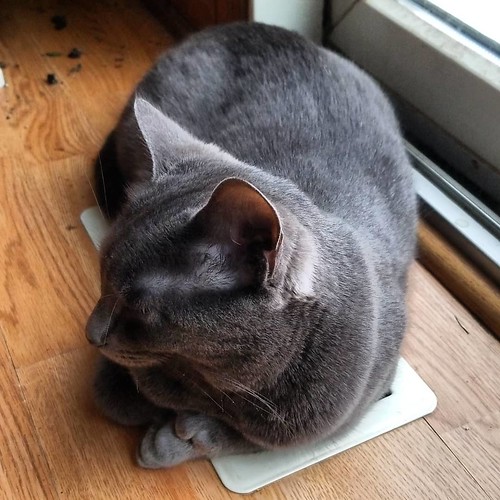
ALL YOUR WARM ARE BELONG TO ME #catsofinstagram #graycat

In the cold....

Our occasional night-time entertainment companion #Carla #dogsofinstagram #pitbullsofinstagram #pitbullmix #pittie #staffordshirebullterrier #staffiesofinstagram

Christmas book haul. HEAVY stuff, both physically and mentally! I'm already hoping for a massive snowstorm so I can bag my shift at work and bury myself in SANDMAN. #ChristmasBooks #books #bookstagram #fantasy #history #science

Shoveling: ✅ One pair of overalls encrusted with ice: ✅ First cup of coffee: ✅ Next: shower, get dressed in a non-icy pair of overalls, read, write, nap! And listen to some Beethoven. #ahhhhh #snow #wny #


These next few are in a special category, because they’re photos I took with my phone and then processed through a cool app called Prisma. I don’t use the app all that often, but sometimes I get effects from it I like. (Two of these, which will be obvious, I took while I was waiting for my coffee water to boil in the morning.)

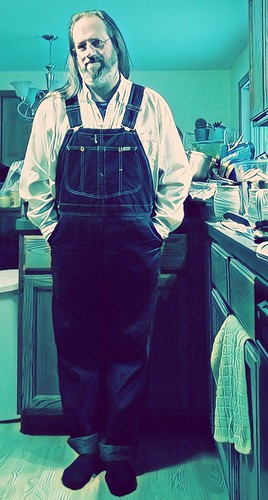
Prismafied overalls

Old bathhouse. Something about this vantage point struck me as...Miyazakian. #ChestnutRidge #wny #orchardpark #autumn #fall #nature #hiking #trees #prisma

Quiet reflection (as I wait for the kettle to boil the water) #overalls #dungarees #biboveralls #vintage #gap #gapoveralls #denimoveralls #overallsarelife #vintageoveralls #prisma


Share This Post

Beethoven: Piano Concerto No. 3 in C minor

 Beethoven wrote five piano concertos, and only one of these is in a minor key. I don’t want to reduce these things to the easily-refuted notion that “major key equals happy music, minor key equals sad music”, but there does often seem to be a degree to which a minor key brings out Beethoven’s brooding side more than the major keys do. This concerto is certainly the most inward-looking, the most introspective, off the five.


Where the previous two concertos opened with genial major themes, Beethoven’s Third opens with a generally low-key statement of the main march-like theme in the strings, and we actually spend what feels like a surprisingly long time awaiting the arrival of our piano soloist; if one listens to a recording without video, one might trick oneself into thinking they are listening to a symphony instead of a concerto at all. But once the soloist arrives, Beethoven’s great way of integrating the soloist and the orchestra together into a cohesive whole takes over.

The real magic of this concerto, for me, comes in the second movement, which opens with the solo piano playing a major-key theme that is romance-like. The transition from the first movement to the second always puts me in mind of Mozart’s Piano Concerto No. 20 in D minor, with its famous Romanze in its second movement. Then, the third movement arrives in one of Beethoven’s wonderful rondos, propelling us toward the end of the concerto with typical energy and verve, after starting on a quick motif, played softly and climbing upward throughout. This mysterious opening gives way to a sequence of chords that feel like Beethoven is calling a halt to the darker mood as he starts to segue into a cheerier one, though he isn’t quite done with the brooding introduction just yet.

Apparently the Third Concerto wasn’t even finished when Beethoven premiered it; according to the student who served as Beethoven’s page-turned at the concert (which had only had a single rehearsal for a concert which premiered not only the Third Concerto but the Second Symphony and an oratorio), the score from which Beethoven performed sometimes had blank pages and weird notations that the pupil later described as “hieroglyphics”–presumably some sort of shorthand meant by Beethoven to jog his own memory. Here is how author John Clubbe, author of Beethoven: The Relentless Revolutionary, describes that primiere:


In his Akademies [concerts Beethoven arranged for his own benefit], Beethoven would premiere his first four concertos with himself as soloist. Only the fifth and last, the so-called “Emperor” Concerto, dating from 1809, did he not play in public. By then his fading hearing did not permit a nuanced performance. Once Beethoven realized fully that his time as a piano virtuoso was over, he wrote no more piano concertos.


Although scholars usually date the Third Piano Concerto to 1800, Beethoven had likely worked on it already for several years. He employed his favored key of C minor. As was his wont, he continued to revise it right up to the hour of its first performance. Even then he still had not finished it. For the piano part he had only his erratically pencil-scrawled manuscript. Ignaz von Seyfried, who turned pages for him, recalled how the first performance went:


I saw almost nothing but empty leaves; at the most, on one page or the other a few Egyptian hieroglyphics wholly unintelligible to me scribbled down to serve as clues for him, for he played nearly all of the solo part from memory, since, as so often the case, he had not had time to put it all down on paper. He gave me a secret glance whenever he was at the end of one of the invisible passages, and my scarcely concealable anxiety not to miss the decisive moment amused him greatly.


Not finishing a work on time was not unusual for Beethoven. Nor did it overly bother him. He had lodged the concerto’s piano part deep in memory. He wasted nothing. Soloists then, unlike most today, did not play from memory. Audiences would have regarded doing so as eccentric. Only decades later did Franz Liszt begin the practice of playing from memory.

I often think that I wish I could go back in history and hear inaugural performances of some of the great works of the classical canon, but it’s worth remembering that performance standards now are honestly the highest in history. I suspect that could we truly hear what music sounded like in the early 1800s, we might well be shocked–and not in a good way. But still–to go back and hear Beethoven? Knowing that the score on his piano was simply for show?

Here is Beethoven’s Piano Concerto No. 3.


Share This Post

On Jeff Smith, problematic people, food, and memory


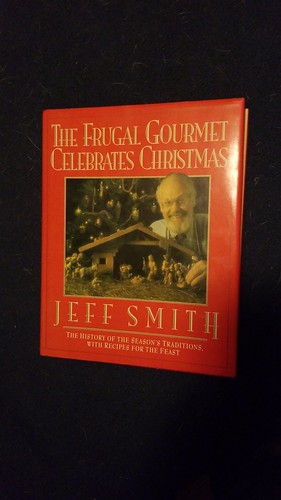
A favorite cookbook

 Back when I was in college, I decided that I needed to start learning to cook. One of the cornerstones of that effort was to buy all the cookbooks by Jeff Smith, also known by his PBS brand name “The Frugal Gourmet”, and read them cover to cover while also cooking quite a few of the recipes. I learned a hell of a lot about cooking in that way (“Hot wok, cold oil, foods won’t stick!), and while I think Smith’s notions about food and peacekeeping were a bit out there (one of his last cookbooks has a very odd passage in which he envisions Bill Clinton and Saddam Hussein cooking together), I very much agree with his insights about food and memory. There’s a reason why, when a beloved elder dies, a lot of times those left behind despair over being able to replicate their best dishes. “It’s good,” we say. “I’ve got it pretty close, but there was something she did that I can’t quite get my finger on.”

I still own most of Smith’s output to this day, and a few of his recipes are in my permanent rotation. I have never stopped reading them or even watching some of his shows which have shown up on YouTube, even though…

Sigh.

Smith, it turned out, was really not the kindly pastoral gentleman he portrayed on his shows. I don’t really want to get into that here, but suffice it to say that there were accusations of sexual improprieties in the late 90s that brought his career to a slamming, screeching halt. If you search around the Internet, you can find other testimonials about Smith that are, shall we say, less than flattering. He may have spent many years not even living with his wife (speculations as to why that may have been abound), and he seems to have been an unpleasant fixture in the Seattle food scene toward the end of his life. Again, I don’t want to get into that.

It all comes back as we have discussions in society today, quite repeatedly, about what we do when people we admire, especially the creative folks whose works have touched and shaped us, turn out to not only be very human, but very disappointingly human, at that. JK Rowling turns out to be transphobic to a deeply creepy degree. Isaac Asimov…well, rumors abounded about his conduct at science fiction conventions for years, and they don’t seem to have gone away despite his being dead for nearly thirty years. Marion Zimmer Bradley’s private life was appalling, and Orson Scott Card turns out to be deeply homophobic. Michael Jackson.

We all have to struggle with to what degree our artistic heroes were real people who committed acts ranging from missteps to simply awful deeds. I’ve known this for years, since I obsessively read about music history as a kid. My favorite composer, Hector Berlioz, was an addict and a manipulative stalker weirdo. Robert Schumann obsessively pursued a girl who today would be a minor and basically forced her to give up almost all of her own musical career outside of helping to perform and advance his works. (Clara Schumann was, by all accounts, an amazingly talented woman who might well have become a beloved composer in her own right, had husband Robert not dominated her so completely.) Richard Wagner? Well, as David Dubal writes in The Essential Canon of Classical Music, in reference to Wagner’s “Siegfried Idyll”, a gorgeous piece he wrote as a wedding gift for his wife, “That this man, capable of such emotion, was enraged at Bismarck for not burning Paris to the ground will always tantalize and disturb.”

So…back to Jeff Smith, among whose cookbooks is the one pictured above, a quite wonderful volume of Christmas recipes and ruminations about our modern Christmas. (Well, not quite our modern Christmas! This book is almost thirty years old.) Smith presents an entire Christmas menu, based on those present at the Nativity: dishes for Joseph, for Mary, for the Innkeeper (whom Smith believed has gotten kind of a bum rap over the years) and the tax collector. There are dishes for the Wise Men, for the angels, and even for the donkey (who gets “Straw and Hay”, which is now one of my best pasta dishes). The book has cookie recipes, recipes for mincemeat pie and two kinds of fruitcake–I want to like fruitcake but I can never get there!–and more. He finally presents several complete Christmas dinner menus…and the photographs throughout are wonderfully colorful, as well. There’s a reason I love this cookbook: it’s the kind of cookbook you can thumb through with pleasure, in addition to having good insights on food.

In the middle of the book comes this section, about Christmas traditions. This has been one of my favorite pieces of Christmas writing ever since I bought this book in the 90s, and if it is coming from someone who would later turn out to be quite a lot less than the sum of his parts, well…that’s frankly the case with most art, isn’t it? It’s up to us to decide how much these things bother us, and which things are our personal dealbreakers.

Our Family Christmas

From THE FRUGAL GOURMET CELEBRATES CHRISTMAS


Our family traditions came about in much the same way as did your family traditions…they just sort of happened.

Patty and I originally made a prime rib of beef for Christmas, and then the boys came along. Somehow Patty got into the roast goose routine, and we enjoyed that for years. As the boys grew, we began to celebrate one of the Christmas menus that follow, and then on Christmas Day I would prepare a full Norwegian smorgasbord with baked beans, potato salad, several different kinds of herring, luncheon meats, special breads, fish balls in cream sauce, cold salmon or lox, lefse, Christmas bread, and, of course, the leftover roast beef or goose from the night before. We still do that.

Last year I did a Swedish meal of pickled pork. The Paulina Market in Chicago makes a Swedish pickled fresh ham that is just terrific. So, now we all have a new favorite dinner. The boys side with the goose, Patty with the roast beef, and I go for the pickled ham. Now what do we do?

One year I suggested to Jason that we make some changes in our Christmas dinners. Try something new. He was quite young at the time, but his response meant that we had established some family traditions that he wanted to maintain. I was so touched by his insight that I wrote the following letter to him, a letter that was circulated by the Roman Catholic parish in Chicago. You will probably recognize your own family in this letter.

My dear Jason,

I probably came very close to violating the meaning of tradition when I suggested that we try something a bit different this year. You are happily bound up in memories of Christmases past, and I expect that I will hear you say, “Dad, can’t we have real dressing? I mean the old kind. After all, it is Christmas!”

You are right, son, it is Christmas. And on the day of the Mass, the feast of Christ, I should not go around breaking family traditions.

But I must consider anew the meaning of the Feast of the Christmas, and I think you and I should think about it together.

The term feast is very much involved with the meaning of memory. We feast because we remember certain events in our lives; sometimes wonderful events, sometimes painful events. That seems to be the way it has been with man- and womankind for a long time.

Christmas for me as a child was very different from our Christmas now. We would travel to greet my father’s family at his mother’s house, your great-grandmother, Nettie Smith. Oh how sad I feel that you did not know this tough old girl. She was a member of the state legislature and she was a left-winger from the start. But in the kitchen she was just terrible. She cooked turkey in the Old Testament style, burning the poor thing on the altar until smoke drifted up to heaven. Then, to the table it would come, though it was so dessicated, so dried out, so tasteless, that I could not understand why someone else in the family did not cook the bird instead. You know why they did not? Because it was job traditionally reserved for Gramma. To this day, when I eat dried-out turkey, I think of her…and how much I miss her.

Christmas morning in my family was wonderful. World War II was in the midst of every event, and candy and sugar were hard to find. One Yule morning my mother, your Grandma Smith, brought us to the table and presented us with marzipan candy shaped like eggs and bacon. My brother, Greg, sister, Judy, and I were amazed that Mom could find such things.

Some of our Christmas traditions are a bit strange, I will admit. But they are our traditions, our family. Each year we carefully unpack the papier-mache manger figures we made together when you and Channing were tiny children. And each year we spend precious time gluing the poor shepherd boy back together. Would it not be much more practical simply to go out and buy a new creche, a new king, a new Christ child? Ah, now, my boy, we are speaking of utter heresy, of violations against the meaning of our past…and I suppose therefore, our future.

A true feast actually has nothing to do with what you eat…but with what you remember. Many families in this nation have no traditions at all, few roots, and thus, few feasts. I am for feasting and celebrating in such a way that we will always remember we are a family. Sometimes I know that it is tough having me for a father, since I always want to add sherry to a gravy that you find perfectly in order already. Or I want to put mushrooms in a dressing, and you claim that they taste like dirt.

So, now, back to the kitchen. We have much to prepare before the star grows bright over the manger and you and I come to the creche, dazed by what we find, but carrying two gravies. One with mushrooms, and one without.

I love you,

Dad

Christmas is as much a time of memory as it is of anything else, and food is memory.

Share This Post
Your Daily Dose of Christmas

 The Polar Express is rather a polarizing movie, mostly because of the style of animation Robert Zemeckis used in making it. The landscapes and a whole lot of the film’s compositions are frankly gorgeous, and the story is (for me, anyway) fun, fleshing out what is a classic picture book in which not a whole lot happens. (This is not a criticism of the book, by the way! It’s a picture book that’s about 30 pages long, and the main attraction there is the amazing art.)

What turns people off Polar Express seems to be one big factor, but it’s not one you can really escape if it does bother you: the characters’ eyes, which in this style of digital-capture animation tend to look…glassy, lifeless, dead. The eyes look unblinking and like what you’d see in a doll. This never impedes my enjoyment of the movie, but I can’t argue with people who react strongly against the movie on that basis, either.

And all of that has nothing to do with the music, which is wonderful and amazing. This is one of the best scores Alan Silvestri has written, and for me it’s absolutely a Christmas classic. Silvestri blends engaging action music with quotes of traditional material and his own gorgeously sweeping melody that’s all about the magic of this time of year.

It’s almost here! Can you still hear the ringing of that bell?

Share This Post

How he sounded back then….

Beethoven’s Symphony No 7 in A Major, op. 92, isn’t just one of Beethoven’s personal greatest works. It’s one of the greatest works of music ever composed, and its stature is such that it even rises beyond the history of music and into the history of art. Beethoven’s Seventh is in the same rarefied air as Michelengelo’s Sistine Chapel, Da Vinci’s The Last Supper, Wagner’s Ring Cycle, the Tale of Genji, the terra cotta warriors of China, Hamlet, and…you get the idea. When we engage with the Seventh Symphony, we’re engaging with one of the great works of human art.

But for today, let’s set aside the superlatives. I’m not really the best person to talk about the how and why of what makes this symphony so great, beyond its near perfection in its proportions, its emotional sweep from the sunny optimism of the first movement to the soul-rending meditation of the second, or the way the work culminates in a movement that has been described as “the apotheosis of the dance”. Instead, let’s try to hear the Seventh as it might well have sounded to those hearing it for the first time.

Though his hearing loss was progressing inexorably in December of 1813, Beethoven was still able to perform and conduct at this point in his life, although not for very much longer. Beethoven himself led the orchestra in the very first performance of the Seventh Symphony at a charity concert for victims of the Napoleonic Wars. (The same concert would also see the premiere of Beethoven’s strange potboiler, Wellington’s Victory.) The Seventh was an acclaimed success right from the very first hearing, and it has always been a beloved work, often showing up near or at the very top of lists of Beethoven’s greatest works. For me, I for many years ranked it second, just behind the monumental Ninth Symphony–but in recent years, I have reversed that view.

Over the last few decades, trends in classical music performance have led away from the kinds of excesses that were normal in the middle of the 20th century as orchestras have reduced their sizes and striven to perform works in something resembling the kind of air and style of their times. Some have gone even farther with this, though, leading to the rise of “period instrument” ensembles. These groups perform on instruments either directly dating to the Baroque or Classical periods, or on instruments carefully made to those standards. Strings instruments with strings made of genuine materials, flutes of wood instead of brass, trumpets with no valves, and even percussion instruments with heads and mallets made the same way they would have been made in the 1700s or 1800s.

It’s not just about the instruments themselves, either. It’s in the way they are played. Vibrato in the strings is greatly reduced, percussion sounds sharper, and the woodwinds often more piercing. The conductors, too, adhere as much as they can to the standards of music when it was composed. Tempi are often faster, and interpretive flashes tend to be kept to a minimum. All of this is in an effort to present as authentic to the music’s time a performance as possible. Of course, since recordings didn’t exist, all of this hinges on our knowledge of the instruments themselves and on our knowledge of performance standards of the time, based on writings left by people in attendance back then: accounts of concerts, pedagogical materials, and so on.

The ensemble in the performance of the Seventh Symphony below is the Orchestra Revolutionnaire et Romantique, founded in 1989 by conductor John Eliot Gardiner (who also conducts this performance). This recording is part of a cycle of Beethoven’s nine symphonies, which I happen to own on compact disc someplace in the archives. Gardiner and his orchestra are among the leading performing groups in the historically-informed performance movement, and I love his Beethoven cycle a great deal. Some listeners avoid historically-informed performance (which I’ve just now, as I researched this piece, is the preferred term now for “period performance”!) because they may expect a rather clinical and unemotional, and thus unmoving, approach to the music-making.

But look! If it’s true that Gardiner and the ORR have, in fact, managed to reproduce Beethoven’s Symphony No. 7 in something approaching what those first audiences heard…well, how could that possibly be clinical or unmoving? The Seventh was, as I have indicated, virtually beloved from its first hearing. Beethoven knew what he was doing, after all. Great music can’t be suppressed entirely, and it certainly isn’t suppressed here. Instead, it shines.

Here is the Symphony No. 7 in A Major, op 92, by Beethoven, performed by John Eliot Gardiner conducting the Orchestra Revolutionnaire et Romantique. Imagine hearing this in a concert hall in Vienna on December 8, 1813. Imagine hearing this along with musicians such as Louis Spohr, Johann Nepomuk Hummel, Giacomo Meyerbeer, and Antonio Salieri (who, in real life, had a long and successful career in music after the death of Mozart, whom he did not poison or manipulate into drinking himself to death as he composed a Requiem).

If I ever get my hands on Doc Brown’s Delorean, I will probably use it to travel back to the premieres of some of the great masterworks of music history, starting here.

Share This Post

Your Daily Dose of Christmas

 Here’s an album I grew up with…or maybe it wasn’t quite this album, but it was certainly this guy singing. I most definitely remember this version of “We Three Kings”, but I don’t know if this is actually the original record or if this selection is a repackaging. Anyway, it’s the Christmas stylings of American tenor Mario Lanza.

This music is really a throwback to a style of operatic singing that isn’t much in vogue anymore. Born Alfredo Arnold Cocozza, and taking the name “Mario Lanza” as a stage name later on, Lanza started out as a classical tenor before his big voice and good looks carried him straight to Hollywood, where stardom beckoned. After World War II he ended up with MGM, where he made several films before various difficulties led to him being dismissed from MGM, spending a year as a recluse, returning to film but with less success, and finally to planning a return to the opera stage in 1959. By this time Lanza had a number of health problems owing to his weight and probably alcoholism, and he died in 1959 of an aneurysm.

His personal life seems to have been a mess, and his family didn’t really life happily ever after, either. His wife died of a drug overdose just months after he did; his son died of a heart attack when he was just 37 (younger than Lanza himself had been at his death), his daughter was killed when she was hit by a car while crossing a street, and his other son died in 2008 at just 55 years of age.

Setting aside the sadness of Mario Lanza’s life, his voice is something to hear. No, he’s not Pavarotti or Domingo, but he had a big and golden-sounding voice, and listening to this record now, I’m struck by his command of phrasing and his superb diction. He’s not just a big-voice, big-chested tenor belting out high C’s from the sky, and like many things I remember from my youth, I appreciate this sound a lot more now than I did then.

Here’s Mario Lanza.

Share This Post

Your Daily Dose of Christmas

 Do you have any musical items on your lifelong wish list? Something you’d be sad if you reached the end of your days and never got to hear? I do! I’d love to attend a performance of Tchaikovsky’s The Nutcracker, the full ballet, with full-on Russian choreography and a live orchestra (sometimes, in smaller venues, ballet companies perform to recorded music). Here is the Bolshoi in 2011, performing a wonderfully arresting version of the great ballet. This is some amazing stuff!

And if you don’t have time for the entire thing (make time!), you can always enjoy the condensed Suite that Tchaikovsky put together. I’ve written before of what this suite means to me on a personal level, as one of my fondest musical memories.

Share This Post

Your Daily Dose of Christmas

 I had a music teacher in third and fourth grade, when I was going to an elementary school in Hillsboro, OR, who at one point taught us a song from an opera based on the old fairy tale of “Hansel and Gretel”, called, appropriately enough, Hansel und Gretel. The song is a cheery thing near the beginning of the story when Gretel is teaching Hansel a dance. I remember the teacher, Mrs. Sturdevant (I think that was her name), telling us about the opera that had been written a hundred years or so before, by a composer named “Englebert Humperdinck”. I hate to admit that this particular name had a predictable effect on a room full of nine-year-old children, and I seem to recall Mrs. Sturdevant being a bit irritated that we giggled.

Sorry, Mrs. Sturdevant.

Anyway, I actually bought a recording of Humperdinck’s opera many years ago. It was a pretty nifty CD box that in addition to the 3 CDs and the booklet containing notes and the libretto, also had a little jigsaw puzzle depicting a scene from the opera. There was a period when sometimes CD box sets would come with little things like that, especially if they were recordings of music that might appeal to young listeners. Humperdinck’s Hansel und Gretel is often considered a children’s opera, because it is not terribly long, it’s full of folk tunes and dances, and its story is loaded with magic and wonder and an evil witch who wants to back the kids in her oven. Hansel und Gretel has become something of a Christmastime staple, even though it doesn’t exactly have anything specifically to do with Christmas. I haven’t heard it more than once or twice and those many years ago, so I addressed that this weekend.

Hansel und Gretel is like Wagner-lite: the orchestration and the drama are pure Wagner (Humperdinck himself was a committed Wagnerian), as is a lot of the imagery in the show. But because the story is lighter and free of Wagner’s heavier tendencies, the opera is a pretty good bridge between the Wagner-parody of Carl Stalling’s work on the Loony Tunes shorts and, well, actual Wagner. As for the opera’s Christmas associations, there’s the story of two children who get into trouble, and the magic of a life-size gingerbread house; also, the opera was premiered very near Christmas in 1893. When you think about it, a lot of our Christmas trappings don’t really have anything to do with Christmas specifically. The Sound of Music song “My Favorite Things” is a good example.

Having freshly heard Hansel und Gretel, I certainly plan to make it a part of my annual listening from now on. The performance I’m featuring here is especially nifty, because it’s actually a film made out of the opera, with Sir Georg Solti conducting (and this type of repertoire was Solti’s wheelhouse, so it’s a treat on that score as well). Live action is combined with animation to create the requisite sense of magic, and the performances are thrilling throughout. This film was intended for television, and aired on PBS’s Great Performances in 1981–not long after Mrs. Sturdevant was dealing with a bunch of kids laughing at the name “Engelbert Humperdinck”.

If you have a spare hour and forty-five minutes, give this a listen! It really is something of a delight. And look at the screen once in a while, because there’s actually usually something neat going on.

Share This Post

ForgottenStars.net

The official site of Kelly Sedinger: Reader, writer, photographer, and dreamer

Skip to content ↓