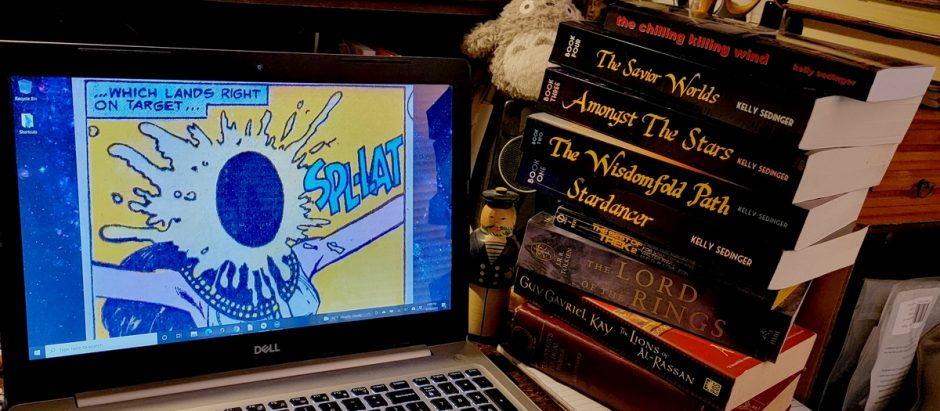

That is all.
Photos from the Erie County Fair, 2016


Now, of course, with the Fair being over (for us, anyway), I am mentally shifting gears already into Fall Mode. This is usually helped along by August in Buffalo generally being cooler and less humid than July, but that certainly hasn’t turned out to be the case this year; instead it’s been just as hot and humid in August as in July, and our region is actually in the midst of a pretty severe drought. We’ve actually had measurable rainfall over the last few days, but earlier we went something like 80 days without a drop, so things are pretty parched ’round here. Hopefully it’ll rebound.
Anyway, that’s the Fair for this year. The next big things? Buffalo Comic-con, then our annual trek to Ithaca for the Apple Harvest Festival, and then…who knows! The sky’s the limit, folks!
After “Show, don’t tell!”, “Read a lot and write a lot”, and “Never fight a land war in Asia”, the most common bit of writing advice may well be “Kill your darlings.” This means that sometimes there will be things in your writing that you really really really love, passages that sing to you every time you read them, passages which make you think that maybe you’re actually good enough for this writing business after all…but which you must remove from your book or story because the story itself is better without it.
That’s what it means: Kill your darlings. If the book is improved by killing something you see as a darling, then you have to smother it in its sleep. Poison its coffee. Push it off the bridge. You get the idea.
Sometimes when writers kill their darlings, the darlings resurface in another way – perhaps as a short story, or the idea gets recycled, or so on. Years ago, fantasy author Stephen R. Donaldson issued an anthology of short stories, but it also included a fallen darling of his: a chapter from his book The Illearth War, which he ended up cutting for sound reasons but which he also didn’t want to see gone forever. So darlings don’t have to stay dead.
But how do you know when it’s time to kill a darling?
Well, here’s the thing, for me: All darlings are suspect, and some of them are impostors. So the task isn’t to kill darlings, it’s to kill the things that are not darlings, so that the things that are can shine in all their darling glory. Your darlings are awesome. You don’t want to kill your darlings! You have to lure the non-darlings out into the open, and then you have to strangle them and toss them overboard. No mercy for the non-darlings, folks!
This requires a pretty hard-nosed and blunt approach to one’s own story. You have to see story errors for what they are, and ruthlessly eliminate them. Killing darlings is painful, but killing false darlings? Dragging the impostors outside by their hair and pushing them into a deep pit? That feels great! But since false darlings almost always look like real darlings, what’s a writer to do?
Well, sooner or later, every false darling will start to stand out like a sore thumb. If you have doubts about a certain thing in your story – a character, a subplot, a scene, whatever – then that’s a red flag that the thing you’re looking at is a false darling.
There’s an entire plotline in the first draft of Forgotten Stars III that will never see the light of day, because I recognized it for what it was – a false darling – very soon after I finished writing the first draft. It might have even been within a day or two of writing the words “The End”, and I wrote in my editing notes to delete it. And delete it I have.
Another problem with false darlings isn’t even that they’re disguised as real darlings, it’s that we’re trying desperately not to see them as false darlings, because we’re invested for whatever reason in their survival. These ones are the hardest. That plotline in Forgotten Stars III that I deleted? I tried valiantly to convince myself that it could stay, that it wasn’t too damaging, that I could make it work with some good editing…but eventually I had to come to terms with the fact that the thing had to go.
False darlings don’t want to go. They want to stay. They want to live off the energy of your story. They want to suck down that good energy and live on, ruining things for all time. And if you let them, they will. So kill them.
“But what if I kill an actual darling?” You’ll probably realize it. What can be removed, can be put back. A story isn’t like a game of Jenga…and if you have to put it back, maybe it’ll be even better. I’ve edited out actual darlings only to have to re-insert them before, and when I do, I usually just rewrite tham, and they come out better. So don’t worry about this.
Truthfully, I have yet to find a false darling that I feel bad about excising, and neither should you. And if you’re worried about a “wasted idea”? Don’t! If the idea is that good, it’ll work itself in someplace else. And if not, well…you’ll forget about it eventually, anyway.
Is there a more Me thing to do, blogging-wise, than announce a new series, post the first post in that new series, and then promptly forget about that series a week later? Oops! I completely forgot about Tone Poem Tuesday last week. Now, I did have a lot of different stuff going on, but Ye Gods, I gotta do better than that.
So this week we attend upon a work by Sir Arnold Bax (Great Britain, 1883-1953). In fact, this might be Bax’s most well-known work, although I personally have only heard it a handful of times. Bax’s music tends to be earthy and rustic, almost to the point of being rough-hewn. In addition, Bax’s music is atmospheric and clearly molded in the spirit of Romanticism, which is almost certainly why, to a large extent, his music fell into neglect after his death: his particular musical idiom was simply not in fashion anymore. Couple that with the fact that his scores tend to require large numbers of performers, and it all adds up to music that spent several decades languishing, except for occasional dustings-off of his tone poems, the most famous of which is apparently this one: Tintagel.
Bax was also heavily influenced by Celtic lore, and the castle of Tintagel in Cornwall is of major import in such lore, seeing as how it’s traditionally held as the birthplace of King Arthur. Bax’s tone poem is meant to convey some of the emotions of the location and give a sense of its character, through music. Bax eschewed any specific program for this work, intending it to be mainly suggestive of the ruined castle on the tiny spit of land that is constantly being pounded by the sea.
Here is Tintagel by Sir Arnold Bax.
Great sports photography is always a joy. Take, for example, this wonderful shot of Usain Bolt, enjoying himself while his competitors…don’t.

Man, all that photo needs is a twinkle in his 1000-watt smile.
A couple other nifty photos from the Olympics:


OK, last week didn’t happen (we were out of town and I just didn’t get the post written), and this week’s supposed to be Tchaikovsky’s Fifth but I still didn’t get the post written (because it’s one of my favorite pieces ever and I want to do it right), so this week, a placeholder, and a particularly fascinating one. Years ago — we’re talking, when I was in high school — I checked this record out from the library. It’s a performance of Mozart’s Symphony No. 36 in C Major. Mozart wrote this piece in four days, when he was traveling with his wife. They arrived at a town called Linz, and the local Count learned that Mozart was in town and announced a concert, so suddenly Mozart found himself in need of a symphony. Out came this work.
What’s interesting about this recording is that it begins not with the symphony itself, but with a recording of the rehearsals! You get to hear conductor Bruno Walter addressing his musicians on the finer points of how he wants to get his musical vision across to the audience. This is always fascinating stuff to hear, when you realize how nuts-and-bolts it is. Walter doesn’t go in for long and lyrical digressions of what the music means and what it suggests to him in terms of imagery and whatnot; instead he obsesses over how long the introductory notes are and how the strings are accenting things that should be accented and so on. (Try to overlook the obvious lack of women in the group, when Maestro Walter says “All right, gentlemen, let’s rehearse!”)
What happens to nitrogen when the sun rises?
It becomes daytrogen!
Ack! Sorry, folks. This week has been really screwed up, because of usual stuff: a big weekend trip with the family last weekend, lots of writing, and an overnight shift at work that has me wondering what day it is. Well, I suppose none of that’s usual other than lots of writing, but there it is. Anyway, here’s something that I feature for obvious reasons: Henry Mancini’s “Pie in the Face Polka”, from the movie The Great Race. Enjoy!
Some stuff!
:: Oh my, I forgot about my new feature, Tone Poem Tuesday. Ugh! I’ll really try to remember next week. In fact, I think I’ll write some in advance. Meantime, here’s an oft-featured favorite of mine, the gorgeous choral setting of Shenandoah.
:: Kevin Drum thinks we should stop complaining about the Olympics being tape-delayed for prime time viewing. I agree. In fact, as I write this I was just listening to the local sportstalk guy complaining about this.
:: SamuraiFrog begins telling the story of his own life. I look forward to this.
:: Sheila O’Malley on the Baz Luhrmann film of The Great Gatsby. I haven’t seen the film, and I haven’t read the book in many years (despite the fact that I loved it), but I’ll generally read Sheila O’Malley write about nearly anything.
:: One of my favorite vloggers with a poem for women with a broken heart:
:: Bill Clinton really loves balloons.

:: A cat takes to the rugby field. The Internet provides the hilarity.
:: Finally, I recently did a favor for a friend who has enjoyed some of the “fantasy”-looking locales of parks in this region. She is a cosplayer, and she wanted some photos taken in costume in the fantasy-like setting of Chestnut Ridge Park, so I cheerfully obliged. The payment? A couple of pies in my face! Huzzah!
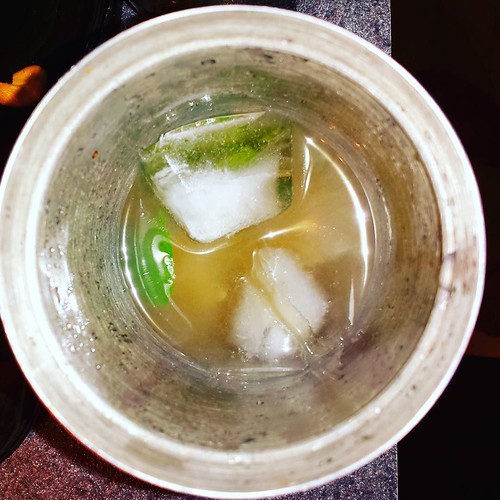
My favorite cocktail is undoubtedly the Dark And Stormy, but the wonderful Mojito runs a very close second. Here’s how I make them!
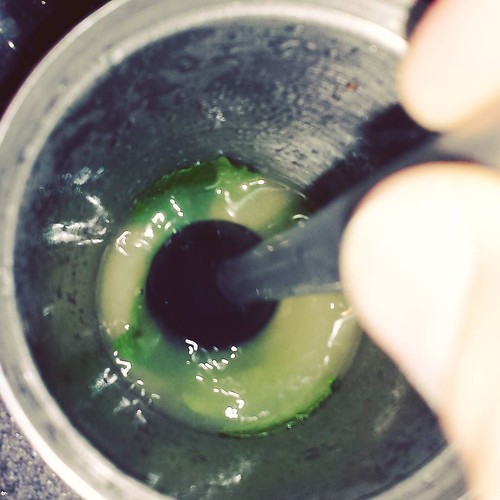
We start with some mint. Here I have eight smallish leaves, lightly crushed between my fingers and thrown into the mixing cup.


Next, a tea spoon of fine sugar! The finer the better, really. I use a fine-grind turbinado sugar. Some recipes call for simple syrup instead, but I find that the granular sugar helps with the muddling.