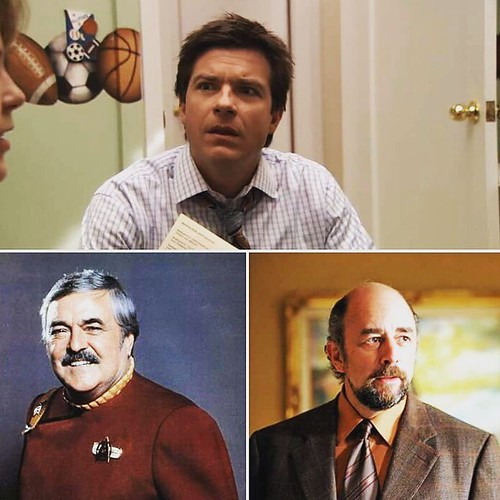
Hey, I’m 45.
Ayup.
But I had cake, so…ayup.

That’s all I got. Off to do stuff!


The official site of Kelly Sedinger: Reader, writer, photographer, and dreamer
Alexander Borodin only wrote two complete symphonies and fragments of a third. In discovering this wonderful composer of late, I’m at the same time heartbroken at his relatively small output, but also amazed at its quality. This is a man who seems to have pulled in so many different directions in his life of only 54 years that he’s lucky to have got any work done at all, much less work this good.
Borodin’s Symphony No. 1 in E-flat was premiered in 1867, after Borodin spent nearly five years working on it, after his initial training by Mily Balakirev. The resulting work shows the seams of an inexperienced artist at work, and various critics have noted a debt to Robert Schumann in terms of style, but Borodin’s melodic gifts and knack for exotic color in his orchestrations is already evident.
Here is Borodin’s Symphony No. 1.


Here’s some math. An NFL game takes roughly three hours to play. So if you watch every single play of each of your team’s sixteen regular-season NFL games, at season’s end you will have watched 48 hours of football. That’s two entire days of your year, spent watching the games.
And if you are a Buffalo Bills fan, and if you have been faithful enough over these sixteen years to watch every Bills game even while they’ve been mostly stinking the whole time, that’s two days spent per year for sixteen years. That’s thirty-two days of watching mostly bad football. Which is more than a month.
Hey, it’s your time. Far be it from me to suggest that you might consider spending it doing something that doesn’t bring more annoyance than joy.
One of the most beautiful songs I know: “Scythe Song” by Dougie Maclean. The song is about the long work involved in learning to do a thing and do it well, and the way you need to ideally spend time in the company of a master of the thing you’re trying to learn, and how when you know how to do a thing well, it becomes something you feel rather than something you do.
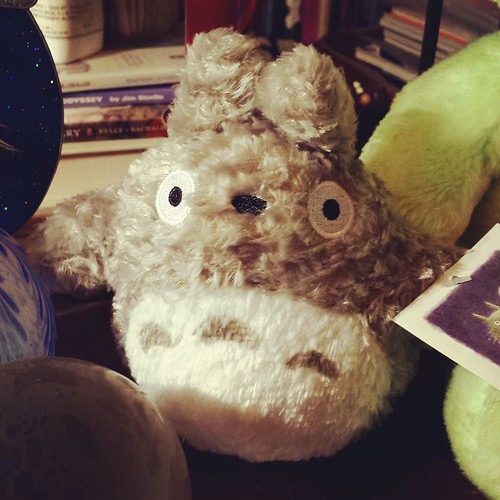
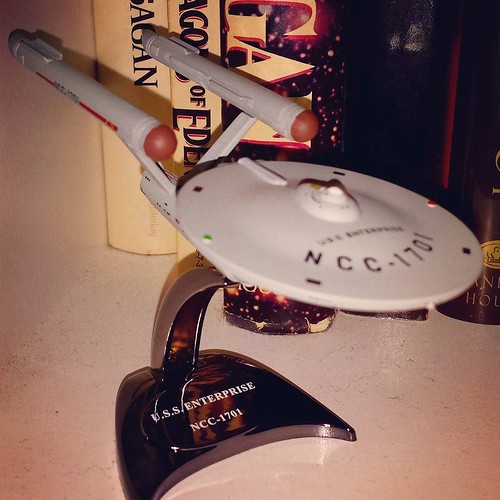
This past weekend was Buffalo Comicon! And yes, we attended. Lots of fun was had by all, and some geeky stuff was acquired, as you might expect. My haul included the following items:



I’d like to have my own vendor table at a future con, once I have enough books available to make it work. I’m probably a year or two away, but I’ll get there! As for other Cons in Buffalo…well, I’m wondering if the local con market isn’t getting oversaturated. A new Comicon just launched to compete with Buffalo Comicon, and there are several other cons as well (Eeriecon, UB Con, et cetera). Of course, I’d love to see Buffalo gear up and host a Worldcon. They held Worldcon in Spokane two years ago, so Buffalo has got to be able to do it!
I hated Debussy for years, but I started coming around a decade or so ago, when I began to appreciate his atmospherics more than I had before. La mer is, quite simply, a musical depiction of the sea, in three parts:
“From dawn to noon on the sea” or “From dawn to midday on the sea” – very slow – animate little by little (B minor)
“Play of the Waves” – allegro (with a very versatile rhythm) – animated (C sharp minor)
“Dialogue of the wind and the sea” or “Dialogue between wind and waves” – animated and tumultuous – give up very slightly (C sharp minor)
Debussy’s intent is not at all to meditate on humans and their relationship with the sea, but on the sea itself. Like a lot of Debussy, the work is haunting and evocative, sweeping the listener along on a series of orchestral “images”.
Here is La mer.
Let’s back up in time a little bit, shall we? I just heard this captivating piece a week or two ago on the radio. Luigi Boccherini was a cellist and composer during the Classical period, roughly contemporary with Franz Joseph Haydn. He was highly prolific, but his music was neglected for many, many years, overshadowed by the likes of Haydn and Mozart. In all honestly, I’m not sure if I’ve ever heard anything by Boccherini aside from this piece. He composed when the orchestra was still very small and evolving into something more than a large chamber ensemble, which gives this symphony the chamber-like air that it has. In fact, when I joined the work in progress, I wasn’t even sure if it was a symphony at all, or a guitar concerto, or some other chamber hybrid work. It is, however, like all fine works of the classical era, a beguiling and even refreshing listen.
The official site of Kelly Sedinger: Reader, writer, photographer, and dreamer