Something for Thursday

It’s not much of a secret that my musical tastes sometimes run to the more obscure, and this band is no exception. They’re not unheard of — you still hear a couple of their songs on “Greatest Hits of the 1980s” things — but The Hooters never really cracked into the mainstream, alas. I loved their blues-influenced sound and their singers’ voices, both of which sounded like they’d smoked just enough Marlboros in their lives to get a little character.

Anyway, this song is off their album One Way Home, and it’s easily my favorite off that album (which is, in turn, one of my favorite albums from the 1980s). It’s an eerie song with supernatural undertones, and I eventually ended up writing a short story based on it. That story ended up being the first tale I ever submitted for publication anywhere. It was rejected, of course, but the editor wrote a note in the margin that she’d come this close to buying it. Oh well…funny thing was, that first rejection slip felt pretty good. It felt like I was in the game, you know? (Every rejection slip since then, though? F*** those editors!)

Here are The Hooters, with “Graveyard Waltz”.


Oh yeah, and here’s the story I wrote. Maybe I’ll re-read it one of these days…but I’m a bit afraid of what I’ll think, given that it was written by the Me-of-fourteen-years-ago….

Share This Post

Answers, the fifth!


Oy…yeah, I suck. This month has been very hectic, folks and I lost track of this. Ugh! But, let’s get it done, shall we? (Not in one post, though. I think.)

Anyway, from Roger:

Still thinking football: what are the 2nd, 3rd, 4th, etc. favorite game you’ve ever watched? I assume I know #1.

Well, I’m not sure what #1 might be, although I assume it’s the Buffalo Bills’ “comeback game” against the Houston Oilers in the playoffs after the 1992 season, in which the Bills were down 35-3 in the third quarter before eventually winning, 41-38, in overtime.

Here’s the bummer part of that: I didn’t watch most of the comeback.

That game took place on the weekend I got back to college for the second semester. I watched the first half, and figured that the Bills’ collective geese were cooked, so I decided to go with The Girlfriend (now The Wife) to the grocery store to pick up some provisions. When we got back, the Bills were mysteriously only down 35-24, and immediately made it 35-31. Yes, I missed most of the furious comeback. But hey, at least I admit it; in the Buffalo area you’ll find about 200,000 people who claim to have been there that day. The stadium only held about 80000 people at the time and the game wasn’t even sold out! (Ha ha, no blackout for me since I went to school 800 miles away…and then I didn’t watch.)

I don’t know if I can rank the games in general, but here are a few that I really got a kick out of watching:

Bills def. 49ers in 1992: This game, early in the season, was awesome. It was played at Candlestick, and it was the first time in NFL history that neither team punted. Just a great game.

Bills def. Raiders, AFC Championship, Jan 1991: The famous 51-3 throttling. For one day, the best football team on the planet played in Buffalo. Nobody was beating the Bills that day, in that stadium.

Super Bowl XLII: Giants 17, Patriots 14. An astonishing game, an astonishing result, and so so so worth it to see St. Tommy and his hooded master come up short.

Super Bowl XLI: Colts 29, Bears 17. This is one of the weirdest games I’ve ever seen. It was just strange. At halftime the score was Colts 16, Bears 14 — and yet, the announcers were saying things like, “Geez, what do the Bears need to do to get back in this game?” It was either the closest blowout in football history, or the most lopsided close game in football history. It was easily the weirdest football game I can remember.

Super Bowl XLIII: Steelers 27, Cardinals 23. I rooted for the Steelers in this game, but it was really hard even despite the fact that the Steelers are my second favorite team, because Kurt Warner was the Arizone quarterback, and he’s one of my favorite sports figures ever. I hated seeing him lose a second Super Bowl, and he played pretty heroically. That game was full of amazing plays and individual performances; Cardinals receiver Larry Fitzgerald put up numbers in the fourth quarter that most times would be great numbers for an entire game.

Vikings def. Bears, 1992 season. This was a regular season game that I taped on the VCR for my college roommate, because he was off doing something with the college choir. The fourth quarter began with the Bears up, 20-0, and when he finally got home to watch the game, I had cued the tape to that moment, telling him that he didn’t need to watch anything other than the fourth quarter. He turned pretty green when he saw that 20-0 score…and then he watched the Vikes’ comeback for a 21-20 victory, a comeback that was sparked when Bears quarterback Jim Harbaugh decided to call an audible at the line with disastrous results. (Guess what? You can actually watch the ESPN NFL Primetime highlights for this game on YouTube. God, I love the Internet!)

That’s a pretty good representation of games I loved watching.

Woody/Mia/Dylan – thoughts on whether it will, or should affect Oscar voting, seeing Allen’s films, being in Allen’s films.

I don’t really know what any of this was about. I’ve never been a huge Woody Allen fan, so I don’t usually bother to see his movies on that basis alone. I have no problem with someone deciding that Allen’s “squick factor” now looms to large to really enjoy his work. From what little I heard of this there was an awful lot of “He said, she said”, but the things getting said seem kind of bad….

OK, more to come. I promise. I also promise that I won’t screw up the August edition this badly! A lot of things in real life are in motion right now, though. Good stuff — I should probably blog about it all at some point….

Share This Post

The revolution will be incentivized.

(I’ve changed the wording below a little since my first posting.)


I actually donated to a Kickstarter project recently: Mercado Revolution, a new venture in Buffalo that will…well, here’s how Mercado’s visionaries describe it:

Mercado will kickstart the Buffalo/Niagara region by assembling 15 different, excellent restaurants under one “market” roof – a centralized hub where anyone can sample products from Western New York’s top food artisans, watching from counter seating as dishes are made. The market will also serve as an incubator and lab for the next generation of Buffalo culinary success stories. Thanks to culinary director Scott Kollig, Mercado will bring the latest techniques and world-class ingredients to WNY from Washington, D.C., where Scott has worked for celebrity chefs as a chef de partie and sommelier. Working together, we will create an incredible culinary bazaar – a one-stop shop to experience the future of food and drinking.

When it comes to food, I’ve always felt of two minds in this region. I’ve never been down on the food that’s here, but at the same time, it’s impossible to not realize that there’s a great deal of exciting things happening in the food world that just don’t make their way here for years and years and years. The Buffalo Niagara region tends to be oddly resistant to new things, but the time just may be right for something like this, as a lot of small and independently-driven projects are underway in this region that seem to signify a terminal frustration with business-as-usual. I suspect a lot of it is the younger generation, which has had the chance to go elsewhere and see different things and come back with new ideas.

So what is Mercado? I was a bit fuzzy at first as to how this project will be different from, say, the wonderful St. Lawrence Market in Toronto (one of my favorite places on Earth). The Mercado people have been releasing little bits of information here and small tidbits of their vision there since they announced their project, and it seems that Mercado will be something halfway between a market and a restaurant, with the best features of both. Their focus will be on locally-sourced (as much as possible) and locally-prepared foods, as well as (I believe) foods that have never been seen here before. They are also pledging to be as affordable as possible (a major consideration for my family and I, as we aren’t generally in a position to spend more than $100 on meal very often). My general sense is of a hybrid between a restaurant and a fine public market. Either way, it’s exciting stuff, and I look forward to visiting once they’re up and running. There will be many options under one roof, with — it is to be hoped — the kind of vitality that the best such places in the world offer.

I don’t consider myself a “foodie”, but I am curious about food and while I enjoy a cheap meal from Mighty Taco or a pizza from Imperial as much as anyone, I do also want more variety and international flavor to choose from in this region. There’s room here for a lot of different approaches to food, after all, and a locally funded business like this seems to me an idea so obviously good that I’m not sure why more people aren’t rushing to fund it.

Heck, I’m looking forward to the coffee.

Follow Mercado on Twitter, if you’re so inclined. They’re not backing off their ideas of community engagement.

Share This Post

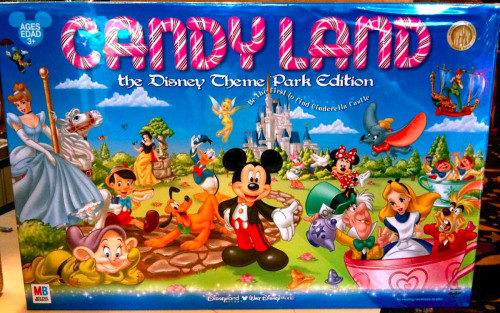
Candyland? Again???

Patrick Rothfuss on the game Candyland:

He’s bored because the game is tedious. And it’s tedious because there is no skill involved. You draw a card, you look at a card, you match a color, you move your piece.

Games that involve no skill are not good games.

Yesterday, after months of not playing, we brought out the game again and took another crack at it. Because he wanted to, and he asked nicely. And I can deal with some tedium if it makes him happy.

But we changed the game a little bit. We added a house rule where you drew two cards and got to pick which one you wanted.

With this small change, Candy Land became an actual game.

Sure there was still a huge random element to it, but now there was some skill as well. You had to make decisions.

Oh, why the hell didn’t I ever think of that?

You see, the problem with Candyland is that, aside from shuffling the cards, there is no random element to it at all.

It’s a “start here and first one to get there wins” game. But instead of rolling a die or spinning a spinner, you draw cards. The cards have colors on them, and the game board is a path laid out in blocks the same colors as are on the cards. So if you draw a red card, you advance your piece to the next red square. There are a couple “double” cards, which move you forward two squares of that color. And there are a couple of spaces where you lose your turn.

The problem is that once you shuffle the deck and start game play, literally all you are doing is playing out the sequence of cards. There are no choices to make, no element of chance whatsoever. Your route through the game board is already determined, and all you’re doing is unveiling it, one card at a time. It may seem like there’s chance involved, but that’s an illusion, simply because you don’t know what’s going to happen. It’s like seeing a movie: you may have no idea at all what the story is, but there is exactly one scene that can be happening at, say, the fifty-five minute mark. It’s the same thing in Candyland. The only way for the game to include an element of chance is for the first arrangement of the deck to line up in such a way that it doesn’t bring any of the players to the end, in which case you have to reshuffle. But that’s it: as soon as you start drawing cards again, you’re right back to simply playing out a drama.

But here, Mr. Rothfuss has made one teeny-tiny change that introduces a whole new element to the game. It might have actually been fun, as such.

Damn. I wish I’d thought of that.

Share This Post

Sentential Links

Links!

:: So yes, I sing. I’d rather sing harmony than melody. I’m a baritone and can generally find the bass line to any song, even those without one. I sing in the shower. I sing inside my head when singing out loud would be inappropriate.

I do sing.

:: You know, I believe you. You work hard for the money. Harder than people know.

But the question is still: How hard?

:: Casper is a GHOST and by definition that means he’s is a transparent spirit that everything can pass through, light, RAIN and even that gun you will throw at the ghost after you waste your bullets trying to kill it.

:: What passes for joy in the Funkyverse: He’s Not Really Dead, Part IV.

:: It’s also to the point that culture is not static and that every generation wants their own music, books and movies. (Odd thing: Aside from a few short stories, I’ve never really read Heinlein. I bounced off The Moon Is a Harsh Mistress years ago, but I’ve never really tried to get into him outside of that.)

:: It’s a trend that comes and goes. Forty years ago we loved Archie Bunker and those kooky Corleones, and thirty years ago we cheered on J.R. Ewing. I suspect the trend really reignited with debut of THE SOPRANOS. Tony Soprano was clearly a monster, but he was so fascinating and complex that he drew us all into his world. Don Draper on MAD MEN was another. Walter White became America’s chemist. Vic Mackey brought new meaning to good cop/bad cop. And who can forget everybody’s favorite serial killer, DEXTER? (I don’t know…to me, evil is only interesting to a point….)

:: The use of drones as a tool to study wildlife is a marvelous idea. We all like the various animal cams. My mother-in-law is absolutely obsessed right now with a camera that’s fixed on a bald eagle’s nest. I saw this footage and was thrilled by its potential.

More next week.

Share This Post

Sunday Burst of Weird and Awesome (late Saturday edition)

Oddities and Awesome abound!

:: Trains are wonderful and people are garbage, which is in partial response to…

:: …Amtrak is running a pilot program for writers’ retreats on their trains. If accepted, I guess you literally get to ride around the country on Amtrak and write. I’d consider this, if not for family obligations and the job at The Store and whatnot.

:: Want to listen to ten hours of “sad violin music”? Sure you do.

More next week!

Share This Post

Symphony Saturday

In 1833, after a concert of his music, Berlioz was introduced to Niccolo Paganini, who was already one of the most famous figures in the musical world, owing to his unimaginable virtuosity with the violin. (Paganini is one of those figures whose performances would almost certainly be a destination were any classical musicians of today to find the keys to Doc Brown’s Delorean.) Paganini loved what he had heard at the concert, so he officially commissioned from Berlioz a work for solo viola and orchestra, so that he might have a worthy new work to perform on the Stradivarius viola he had just acquired. Berlioz set to work…but Paganini was ultimately disappointed, because he had expected a virtuoso showpiece in which he would be constantly playing, and Berlioz was simply not attuned to that style of thing.

Berlioz never wrote a proper concerto. The closest he ever got was this piece for Paganini, which turned out to be his second symphony. It’s also the only one of Berlioz’s four symphonies to follow the traditional four-movement model, but it has the extensive passages for solo viola, making it a kind-of symphony-and-concerto hybrid, and it is also deeply steeped in Berlioz’s love of literature. This time the object of literary interest is the poetry of Bryon, which led Berlioz to title the work Harold en Italie (“Harold in Italy”), after the hero of Byron’s poem, Childe Harold’s Pilgrimmage. The soloist “plays” the part of Harold as he tours Italy, witnessing such scenes as the treacherous paths in the mountains, a group of pilgrims marching to a shrine, a love-serenade, and in the final movement, a dance and revelry at a camp for outlaws. That fourth movement takes a page from Beethoven’s book by quoting the first three movements before getting down to business, but this is a literary allusion as well as a musical one: Harold, in the form of our violist, is remembering his previous journeys before the revelry begins.

Harold in Italy is, for me, a delightful listen. It’s loaded with Berliozian drama, his weirdly asymmetrical approach to melody is on full display, and his love of interesting orchestral effects shines through (the wonderful moment in the last movement when he sends some musicians offstage to quote the Pilgrim’s March, for one).

Here’s Harold in Italy, performed this time on original instruments by the Orchestre Revolutionnaire et Romantique, with Gerard Causse as the soloist and John Eliot Gardiner conducting.


By the way: the very Stradivarius viola that Paganini owned, inspiring him to commission Berlioz? That viola still exists, and is currently owned by the Nippon Music Foundation.

Next week: What is, for me, Berlioz’s greatest symphony and his greatest work, and by far the strangest symphony he wrote. Maybe. (They’re all pretty strange, you know.)

Share This Post

ForgottenStars.net

The official site of Kelly Sedinger: Reader, writer, photographer, and dreamer

Skip to content ↓