Something for Thursday

Oops…how on Earth did I completely forget about last week’s installment? It just totally flew out of my mind, alas.

I’ve been listening a bit this week to John Williams’s amazing score to Close Encounters of the Third Kind, the other classic score he wrote for a sci-fi film released in 1977. (If you don’t know by now what the other one was, I can’t help you.) Williams’s CE3K music is quite different, as it is mostly by turns either atonal, or haunting, or militaristic during the “Government agency” scenes. Only gradually does a lyricism emerge from the score, becoming stronger and stronger, beginning really with the introduction of the famous five-note “Communication with the aliens” theme. Gradually Williams stitches all of this together into an amazing tapestry of emotion that is one of his more overwhelming efforts.

This is a well-produced suite of tracks from the film, edited together very convincingly into a pretty nifty listening experience.


A few annotations:

0:01: The score opens with the swirling music that plays as the teevee reports of the disaster at Devil’s Tower appear, leading Roy Neary and Jillian Guiler to separately realize that their visions of some strange mountain are of a very real place.

1:30: Roy and Jillian drive cross-country into the Wyoming back woods to try and get closer to Devil’s Tower.

2:12: Roy and Jillian see Devil’s Tower, in person, for the first time. “I can’t believe it’s real!”

What follows is some suspenseful music as they continue driving into the back woods. At about 4:15, they drive past four ‘dead’ cows. Now they’re taken by the military and processed, with Neary being questioned by Lacombe and Loughlin.

6:40: The ‘conversation’ between the electronic music synthesizer and the mother ship.

10:52: The terribly sad scene where Roy thinks he’s going insane. “This means something…this is important.” (The subtext with Roy’s family is awfully troubling, really. His wife is completely justified in thinking that he’s utterly lost it, but of course, he hasn’t. Now, it’s never established at the end of the film how long he’s going to be off with the aliens, so I don’t completely buy into the notion that he’s ditching his family forever. But what does poor Ronnie Neary think when she reads the next day’s newspaper?)

13:25: The ‘returnees’ begin emerging from the Mother Ship, abductees who have been missing, in some cases, for decades (the pilots of Flight 19). Among them is little Barry Guiler, who is reunited with Jillian at the 15:14 mark.

15:35: Back to the beginning of the film. The mysterious crescendo ending in a smash as we open in the deserts of Mexico.

16:00: And back to the film’s finale, as the ETs come down from the Mother Ship and begin interacting with the people gathered at the Devil’s Tower landing site. Roy Neary is taken away to be prepared to join the astronauts who are being allowed to go. Note “When You Wish Upon a Star” at 17:03.

17:41: The ETs choose Roy Neary. More “When You Wish Upon a Star”. Neary looks back; Lacombe urges him to go. He meets Jillian’s eye, and then goes up on board.

19:00: The main ET greets Lacombe; they exchange the hand signals at 20:20. Here Williams starts letting the “Alien Communication” theme take over; where it was strange and haunting before, now it’s plaintive and beautiful.

21:05: All the aliens go back on board. The music begins to swirl as the Mother Ship prepares to depart. We arrive on a gorgeous chord of resolution that holds as little Barry Guiler says, ever so perfectly, “Bye.”

22:17: Oh, wow. End titles over what might be the most perfectly gorgeous finale of John Williams’s career. When he lets that Alien Communication theme peal forth, complete with bells, it is one of the greatest moments in the history of movie music.

Share This Post

A Random Wednesday Conversation Starter

I read this article with some interest:

What the tropical nation of Costa Rica lacks in size, it more than makes up for in a wealth of biodiversity. Despite occupying just 0.03% of the planet’s surface, the region’s lush forests are home to an incredible 500 thousand unique organisms — representing over 4% of all the known species on Earth. For the hundreds of animals held captive in the country’s zoos, however, that hotbed of life had been replaced by the cold bars of a cage.

But now, in a remarkable push to restore natural order for all its animal inhabitants, the Costa Rican government has announced plans to close its zoos, freeing creatures from their long captivity.

“We are getting rid of the cages and reinforcing the idea of interacting with biodiversity in botanical parks in a natural way,” said Environment Minister René Castro. “We don’t want animals in captivity or enclosed in any way unless it is to rescue or save them.”

I like zoos, but I find my feelings are more and more mixed, the older I get. Plenty of zoos work hard to approximate their animals’ native living conditions as best they can, which is certainly a vast improvement over the “big cage with walls painted to look like Africa” kind of thing I remember from when I was a kid. But now I’m wondering if even that is too much by way of captivity. (Places like Seaworld and Marineland? Fuhgeddaboudit.)

And what about aquariums? I doubt I’ll ever lose my fascination with those, and I’m already really excited about a new, glittering aquarium that is set to open in Toronto later this year.

So…zoos? Aquariums? What are your thoughts on them?

Share This Post

“Come, my friends, ‘Tis not too late to seek a newer world.”

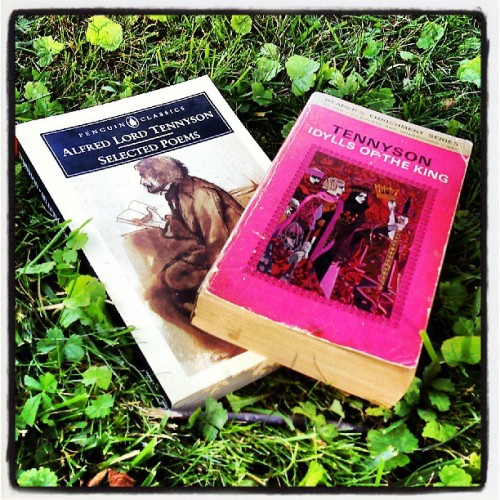
Today on Twitter, the indispensible Sheila O’Malley reminded me that today is the birthday of Alfred, Lord Tennyson. Actually, it’s a misnomer to call it a “reminder”, as I never knew Tennyson’s birthday in the first place. But I should have, I think. I’ve adored Tennyson’s poetry for years, going all the way back, most likely to my senior year of high school, which is the year I finally gave in to a suspicion that I’d been harboring going back to junior year: that my English teachers weren’t full of it, and that there really was something to all this literature they kept having us read.

I don’t recall what Tennyson poems we read that year in Mrs. Hultberg’s class, save one: “The Lady of Shalott”, which is one of those poems that caused in me the “mortal wound” that Robert Frost would later speak of*. I come back to it from time to time; in fact, I came back to it just this evening, while I sat outside in the grass while The Daughter had her string bass lesson. It seemed a good time to read a bit of Tennyson, and not just because Sheila put him on my mind. There’s always something about Tennyson that to me suggests sunsets on perfect days. Not sadness, although he can be sad; not an elegy, although he can be elegiac. But with Tennyson, one is always aware that time is passing, that things are changing, that old things are moving into memory and new things are coming to the fore.

When I read “The Lady of Shalott” in high school, I was still a year or two away from the explosion of my great passion for the Arthurian legends. This passion has admittedly cooled in recent years, but I do still get the sense that it’s a slumbering passion, waiting to be awakened one day. Perhaps it was Tennyson’s poem that planted that seed, that sad verse about the cursed lady in her tower, forbidden to look upon the world except through a mirror, until one day she sees Sir Lancelot riding by and hazards a glance, bringing about her own end.

I find that every time I read Tennyson, I end up reading him aloud, or at the very least, mouthing the words. Few authors have this effect on me, if any, but there’s just something about Tennyson’s rhythmic alliterations, and his way of using his lines to suggest the sounds of the very things he’s writing about:

The splendour falls on castle walls
And snowy summits old in story:
The long light shakes across the lakes,
And the wild cataract leaps in glory.
Blow, bugle, blow, set the wild echoes flying,
Blow, bugle; answer, echoes, dying, dying, dying.

Anyone who reads that without sounding it out is entirely, utterly, supremely, missing the point. And Tennyson always needs to be sounded out. In this he is like Shakespeare. His words are sound, and they don’t live in the page. They live on the tongue, spoken.

In my collegiate Arthurian craze, I returned to Tennyson and read his Idylls of the King, a cycle of poems he wrote which rather loosely tell the story of King Arthur and the rise and fall of Camelot. I’ve never re-read the entire thing, but I dip into it with frequency. One thing that has always stood out for me is a tiny thing, a minuscule detail, that comes at the end of his version of the tale of Sir Gareth and Lynette. Gareth is a young knight, born of low station, who goes off questing, and he meets a woman named Lynette, who derides him constantly. But through his valor he eventually wears her down and proves himself. In the original Malory, Gareth marries a woman named Lyonors. Tennyson, however, decides to make a change to the ending:

And he that told the tale in older times
Says that Sir Gareth wedded Lyonors,
But he that told it later says Lynette.

Tennyson felt the ending lacking in the original, so he changes it, presumably to suit his view on what the happy ending there should be. But he does it in so interesting a way! He breaks “the fourth wall”, so the speak, and directly implies that he’s not relating history or merely transcribing some old tale; he is recasting the stories in a way that suits his own instincts and also seems to be slyly winking at the reader, almost inviting us to decide the matter for ourselves.

Here is Loreena McKennitt’s setting of “The Lady of Shalott”.


* Frost’s quote:

It is absurd to think that the only way to tell if a poem is lasting is to wait and see if it lasts. The right reader of a good poem can tell the moment it strikes him that he has taken an immortal wound — that he will never get over it.

Truth.

Share This Post

In praise of Bugles

I have long maintained that I don’t believe in “guilty pleasures”: things that I like and yet I know they’re bad. But there are things that come really close to “guilty pleasure” status for me, and Bugles are one of them. They’re…well, they’re not “good”. For corn-flavored snacks, tortilla chips are so much better. More versatile. More authentic. And even Fritos are better.

But there’s something nifty about Bugles that defies description. Obviously it ain’t flavor, because they really don’t have much. They counteract the lack of flavor by amping up the salt. And they’re not uniquely crunchy, either. What I think they do, though, is have a specific way of crunching that’s all their own. That shape makes them crunch very easily, almost softly, at the wide end, the “bell”, as it were. But the inner end, the closed end? Ahhhh, there’s a totally different crunch there. Harder. More percussive as your teeth break through it and crush it.

So there it is: Bugles combine different textures into a single snack just by being shaped the way they are. And that’s why, once or twice a year, I’ll consume an entire bag. By myself. And not feel the slightest bit of guilt in doing so.

Share This Post

Sentential Links

Because the links Never. Stop. Coming!

:: Looks like I need a good cherry pie recipe! (Oooh, that reminds me: I got tart cherries at the farmer’s market the other day, so I gotta take some in with lunch tomorrow. And that deep dish pizza I made yesterday? The onions and peppers and sausage were all local! Yay, me! I’m responsible and stuff!)

:: It took thirty years…but when Shirley went off, she took the rest of the building with her. Some claim is was a tumor in her brain but I know it was that desk that drove Shirley crazy. (No! I love that desk! Say it ain’t so!)

:: Our human calendars, analog, digital, and virtual, on our walls and on our screens, say it’s August 1st today. But according to the floral clocks along the roadside it’s been August here for over a week. The daylilies have faded and the goldenrod, wave after feathery yellow wave, has taken over. (I love me some August, and in fact, I have just decided the other day that I will complain about hot-and-humid July nevermore, so long as August remains an absolute treat ’round these parts. It’s by far the best of the summer months. Of course, given how the seasons function in WNY, there are only two summer months. June is the better part of spring — what everyone else in the country enjoys in early May, that’s what we’re basking in when June arrives. July is usually when all the unpleasant heat and humidity rock the place, although aside from a five or six day string of it, this year didn’t see much of that at all. In August, though, temperatures and humidity tend to drop to very pleasant levels. Yes, technically, September is mostly a summer month, by definition, but let’s be honest: emotionally, once Labor Day is past, it’s Fall. Which means, soon I’ll be back into overalls full-time! Huzzah!!!)

:: And if you’re going to read books, don’t just concentrate on structure. Read books about character development. For my money, THAT’S your real starting point. Good, fresh, original, compelling characters.

:: At the ripe old age of 34 I firmly believe that I am living in the midst of the Geek Golden Era. With comic books, movies, TV shows, and everything else blurring together, I am getting everything I ever wanted in life handed down to me.

:: So, in summary: I believe what we’re seeing is a move towards the global imposition of a police state in the developed world, leveraging the xenophobia that naturally emerges during insecure times, by a ruling elite who are themselves feeling threatened by a spectre. Controls on movement, freedom of association, and speech are all key tools in the classic police state’s arsenal.

:: Neil Armstrong is a particularly refreshing idol in this regard because there’s nothing particularly exceptional about him. Well…that’s not entirely true. He tended to crash planes. A lot.

More next week!

Share This Post

Further evidence that I need to get out more

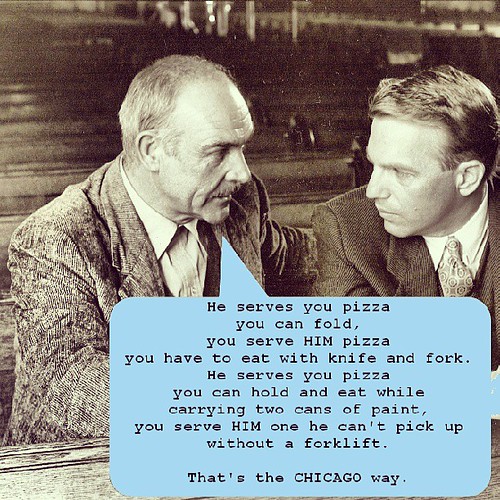
I made Chicago deep dish pizza last night. Making this meme-photo is how I occupied my time as it baked. Not reading, not writing…this.

I hang my head in shame.

(Pizza was damned tasty, though! Next, I’ll experiment with gluten-free flour. That oughta be a trip.)

Share This Post

On Death and Villainy

John Seavey, one of the regular posters at MightyGodKing, writes at length about Norman Osborn, the human alter-ego of Spider-Man villain Green Goblin. I don’t much have a dog in that fight, but I did like two different side points Seavey made along the way.

First:

I have gone on record multiple times as saying that if contrived resurrections cheapen deaths, the answer is to stop killing off characters so frequently and not to have fewer resurrections. Killing off a character in a shared universe is generally an act of colossal arrogance and short-sightedness, a statement along the lines of, “Well, I can’t think of anything more to do with this character, and I’m the Most Creative Person of All Time! The only interesting thing left to do is kill them off.” It’s never true. There are always more interesting stories to be told with a living character than a dead one, and that’s what makes resurrections so inevitable no matter how contrived they wind up being. The blame should be placed squarely on the shoulders of the killing writer, not the resurrecting one.

I think death is kind of overrated as a narrative device. It’s kind of cheap, really, an easy way of amping up the stakes — just kill someone off, to show that everything is real, that we’re playing for keeps. I find that a lot of deaths in stories feel like they’re there more for narrative effect than for any other reason, and a lot of them end up ringing false when it’s obvious they’re supposed to be incredibly shocking.

Good examples of this can be found all over the place: A Song of Ice and Fire, for instance. (Game of Thrones, for you who know it by the teevee.) George RR Martin gets heaped with praise all the time for being willing to sacrifice main characters, but I’d posit that by the point we’ve now reached, it’s clear that he’s not sacrificing main characters at all; he’s just disposing of secondary characters at surprising junctures.

More oddly, though, is the odd notion that a character should develop only so much, and then they should die. This strikes me as deeply silly, and the two best examples I know are characters who didn’t die: Han Solo, and Martin Riggs (of the Lethal Weapon movies). Harrison Ford has gone on record in the past as believing that Han should have died in Return of the Jedi, because he’d reached the end of his narrative and because it would have given the story a lot more gravitas. And Lethal Weapon writer Shane Black apparently left the series after his intention to kill off Martin Riggs at the end of Lethal Weapon 2 — pretty much for the same reasons — was shot down by the producers.

The problem here is, our lives don’t end when we reach handy points in our development as human beings. Well, for some of us they do, but that’s just the accident of timing, not some existential thing about the Universe dispensing with us upon our reaching of our inner Zen. It’s a silly reason to kill off a character, and Seavey is one hundred percent correct: a character doesn’t run out of potential stories just because one particular writer does.

And besides, “Death as route to gravitas” is…well, it’s just plain overrated anyway. How many major, named characters among the protagonists die over the course of The Lord of the Rings? Two: Boromir and Theoden. That’s it. And yet nowhere in that entire story would I ever claim that the stakes don’t feel pretty damned high, nor that a price will have to be paid for victory.

(For the record: Yes, I do think that Joss Whedon overdoes death as well, but his deaths tend to be a lot more visceral, given his skills at getting me to care about his characters in the first place.)

And second:

(W)hen you go back and read the original Green Goblin stories, he wasn’t much of a villain. He was a C-list Kingpin wannabe who failed at everything he tried, lost pretty much every fight he was in, and whose only talent was in running away. He didn’t even really have a backstory, because Stan Lee and Steve Ditko couldn’t decide who he was going to be under the mask. (Ditko wanted it to be a totally unmemorable nobody, to show that villains didn’t always have to be someone important to the hero. Lee felt like they’d spent so long building up the mystery of the Goblin’s identity that the audience would be upset if it wasn’t someone they recognized. The dispute was one of the reasons that Ditko left the title.) Basically, the Green Goblin was by no means the most important of Spider-Man’s bad guys.

Now, I’m not sure about this, and a couple commenters in the thread over there take issue with Seavey’s description of Ditko’s views and departure from the series. But Ditko’s point here, even if it wasn’t really Ditko’s point, is a good one, an interesting one.

There was a very effective episode of Magnum, PI that did this to really extraordinary effect — so much so that it’s one of my favorite episodes of that series. Magnum receives a strange telephone call from a cackling guy who promises to kill and leaves Magnum bits of nursery rhymes as clues. This pattern repeats several times, and it becomes very clear that this killer knows Magnum well and has a very specific beef with him. It’s a very well-made episode — Magnum occasionally eschewed its Rockford Files-esque tone for a kind of “Hawaii Noir” mode, usually to very good effect — but what makes it stand out is the resolution. Eventually the killer stands before Magnum, unmasked and grinning and waiting for his sick payoff…and Magnum doesn’t recognize him. Even later, after the killer has been dealt with and the whole mess is over, Magnum doesn’t remember him at all. He has to go back into his own personal records to figure out who this guy is, and it turns out that Magnum investigate the guy’s wife some years back in a possible divorce case, but the case turned up nothing at all and Magnum didn’t even take the guy’s money. I don’t recall what caused the guy to spiral into insane killing, and there’s a good chance that the episode doesn’t even fill in that detail, leaving it a complete mystery. But that’s one of the things that makes it really memorable: that the villain isn’t some significant figure from Thomas Magnum’s past; it’s just some guy with whom he had a completely mundane association for a short time years before, so mundane that he doesn’t even remember him.

Of course, I can turn this back to Star Wars. One thing that really incensed fans as the Prequel Trilogy unfolded was the idea that at the very heart of the mystery that is Darth Vader is a pathetic teenager, a guy who couldn’t get over the loss of his schoolboy crush.

It’s a hard thing, explaining villainy. Sometimes no explanation whatsoever is the most disturbing way to go.

Share This Post

Sunday Burst of Weird and Awesome!

Oddities and Awesome abound!

I wasn’t online as much this week (beating my book’s final sequence into submission, and no, it’s not done yet), but check out this car. Is that not the cutest car in the history of cars? By pure happenstance, we emerged from a store last night to find this parked next to us. How sweet is that!

More next week. And hey, don’t forget to Ask Me Anything!

Share This Post

Ask Me Anything! August 2013 edition

Ask Me Anything!

It’s that time again, folks!

Regular readers know the drill,
but in case you’re new around here,
twice a year (February and August)
I solicit questions from readers
during the first couple weeks of the month
and then I spend the last couple weeks
answering them.

Questions can be serious or silly,
profound or strange.
I reserve the right
to post silly answers
to silly questions,
but it’s all in fun!

Ask Me Anything!


(Disclaimer: Anonymous commenting is still enabled, as spam activity has fallen off somewhat. Questions may be submitted in just about any way you can get hold of me: comment here, e-mail, Tweet, Facebook, Tumblr, Instagram, or scrawled on the back of any legal tender denomination of paper currency in the United States or Canada. You can even ask things on Google Plus, but…well, if you do that, I might not see it for quite a while.)

Share This Post

ForgottenStars.net

The official site of Kelly Sedinger: Reader, writer, photographer, and dreamer

Skip to content ↓