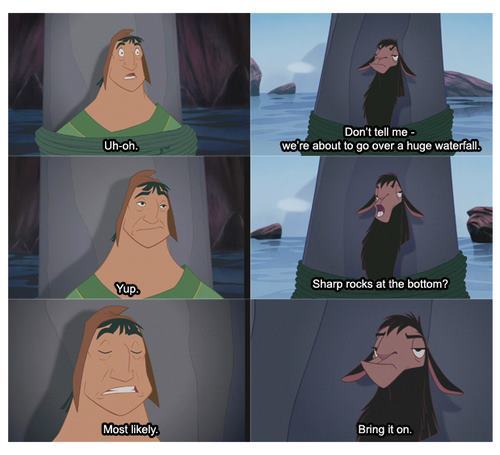
…but the latter part of last week got really busy for me. Nothing bad, but wow, did the schedule ever pack itself full of stuff. (Like seeing The Avengers…review post forthcoming….)
I should be able to get some blogging mojo going again, but for now, here’s a cute Persian kitten being fed with chopsticks.
There are people in the world who don’t think Persian kittens are cute. These people lead sad, lonely, desperate lives from which they have no escape.
Former NFL linebacker Junior Seau is dead, apparently of a self-inflicted gunshot wound.
I learned this earlier today, when I went online at work just to check my e-mail one last time before coming home. I had a few Facebook updates, a blog comment to approve, and a ‘breaking news’ message from WGR. I figured the WGR thing would be something about the fact that the Bills had a workout with quarterback Vince Young today. Instead, I read that Junior Seau had been found dead.
Seau was a great, great player. He truly was. He came to prominence in the early to mid 1990s, and he played most of his career with the San Diego Chargers, including that teams one and only Super Bowl team in 1994 (which would lose, 49-26, to a juggernaut of a San Francisco 49ers team). I always liked Seau, and his physically athletic (or athletically physical) play. He was one of the good guys, having done a great deal of charity work in San Diego during his career there. I really didn’t want to hate him in 2007, when he came out of retirement to try for the elusive championship ring with the Patriots, but a football fan has his priorities, so for one year, hate Seau I did. Although not really. You couldn’t hate Junior Seau.
Why did he apparently kill himself? I honestly don’t know, although speculation is sure leaning strongly toward side effects of concussions being a factor. Seau wouldn’t be the first formerly concussed player to commit suicide. We do know more and more these days, though, about the effects of concussions — particularly repeated concussions, on the brains of athletes, and the effects those concussions can have many years later, once the athletes have stopped playing.
I’m once again struck by the degree to which physical things affect our mental states, and I continue to wonder just to what degree we really have control over the things we think. Not everything is choice. I’m reminded of recent research that suggests a strong correlation between the decline of violent crime in America over the last few decades and the reduction of lead exposure over the same period. We don’t always have the power to think what we will. And that can be a somewhat grim realization.
AT LAST!!! Newt Gingrich drops out, so now it’s down to Romney versus RON PAUL! Let the Revolution begin!!!!!
Of course, this same fellow is a 9-11 Truther, a JFK assassination conspiracy theorist, and apparently a believer that you can somehow declare yourself a ‘sovereign citizen’ in order to get yourself out of various legal troubles. In short, your typical Ron Paul supporter!
Hey, I made it! It’s the end of the A-to-Z Challenge. Let’s look at some Zaniness, shall we?
According to this site, the word ‘zany’ was first used in English by none other than William Shakespeare, although its origins are apparently Italian:
Somebody zany is amusingly crazy or clownish. If you object to my definition, then you may be in the company of the compilers of several current dictionaries. It’s a hard word to pin down — we all think we know what we mean by it, but we may find describing it in plain English surprisingly hard.
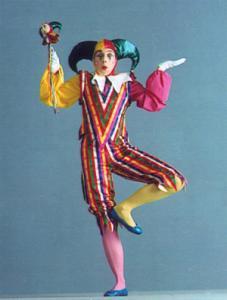
That may have something to do with the way the word has evolved. It was first a noun, to describe a performer in the commedia dell’arte, an improvised Italian comic form of the sixteenth to eighteenth centuries. The zany was a foolish servant, a buffoon, who attempted to mimic the actions of his master, himself a clown. The servant was given the generic name Giovanni (the Italian equivalent of John), much as English servants of the same period were frequently called Andrew (indeed, one English equivalent to the zany was a merry-andrew), or as a Glaswegian might call someone Jimmy as an all-purpose name. In time Giovanni turned into zannie and we imported it in that form.
. We tend to think of zany as meaning a special kind of madcap comedy, one in which questions of sanity are best left at the door. Here’s Merriam Webster on the case:
1: being or having the characteristics of a zany
2: fantastically or absurdly ludicrous (a zany movie)
However, looking at definition number one under zany as adjective, I see that zany can also be a noun. This, I did not know! y interesting word, actually. Merriam-Webster defines it thusly (same link as above, toggle a link there to switch from noun to adjective):
1: a subordinate clown or acrobat in old comedies who mimics ludicrously the tricks of the principal
2: a slavish follower
3a : one who acts the buffoon to amuse others
The noun use of zany seems to have dropped out of usage, in favor of the adjective. I’ve never, to my knowledge, heard of someone refer to a ‘zany’, but I have heard, many times, someone or something described as ‘zany’. So how about some zaniness in fantasy and SF?
Well, there’s quite a lot of comedy to be found in both genres. Fantasy isn’t all long, wordy, and ponderous tales involving plucky rural heroes making their way across a vast continent to the very stronghold of evil; there’s plenty of funny stuff be found. But not everything that is funny is also zany. I’d definitely file the books of Christopher Moore in the ‘zany’ category, and they are cheerfully zany, full of wild leaps in logic and loaded with highly eccentric characters; his books are, in the words of Merriam-Webster, “fantastically or absurdly ludicrous”. That’s part of their charm. Moore writes the kinds of books where two women in a rubber raft at sea find themselves in between two whales who are about to engage in the physical act of whale-love, or where a six-year-old Jesus causes a stir in his hometown when he makes his own face appear in the Passover bread.
Interestingly, Moore has also written a book that fits the noun use of zany, the wonderful Foole, in which Moore tells the story of King Lear from the viewpoint of the Fool…the zany, you might call it.
Lois McMaster Bujold’s “Miles Vorkosigan” books aren’t really zany, per se, but they do have moments when the humor rises to a certain level that’s almost zany. Ditto Scott Lynch’s Gentleman Bastard Sequence (comprising The Lies of Locke Lamora and Red Seas Under Red Skies. I suspect that the Hitchhiker’s Guide to the Galaxy series is pretty zany…but I wouldn’t know. I haven’t read them. (I’ll hang my head in shame.)
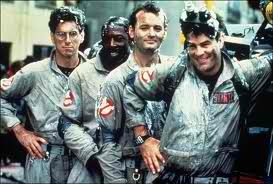
Fantasy and SF in the movies? There, it’s easier to find zaniness on display. Ghostbusters is pure zaniness, through and through. So is Back to the Future, Galaxy Quest, and most of Star Trek IV. Men in Black is zany, and amongst animated films, The Emperor’s New Groove is as zany a film as I can remember. And you have to include the films of Monty Python, which are as zany as it gets and which are often filled with fantastical content.
I’m sure it comes as no surprise that I’m a fan of zaniness, both in life and in fiction. Serious things are good, but zaniness is a part of life, is it not? Life should be a little bit zany…or a lot zany, if you can manage it. The trick is to find your preferred versions of it and incorporate them into your life. Don’t be afraid to, as Merriam-Webster defines it, “act the buffoon to amuse others”…even if it means the occasional pie in the face.
And with that, I come to a successful close of the A to Z Challenge for 2012, Huzzah! Maybe I’ll do this again next year….
Well, it’s a rough transliteration of the final death shriek of Red Leader at the Battle of Yavin in Star Wars Episode IV: A New Hope. He’s just led an unsuccessful attack run on the two-meter-wide thermal exhaust port, failing to get his proton torpedoes to go down the shaft to the reactor (“Negative! It didn’t go it. Just impacted on the surface.”). He orders Red Five (Luke) to gather the remaining pilots (Wedge and Biggs) for one last shot at the exhaust port, before his ship is struck by blaster fire from Darth Vader’s TIE Fighter. Red Leader’s ship sinks toward the surface of the Death Star, and just before he goes up in a ball of flames, he screams, “YAAAHHHHH!”.
So what are we on about here? Acts of self-sacrifice or going-bravely-into-the-night in fantasy and science fiction.
Few things in fiction are more inspiring, frankly, than some person choosing, with their full faculties about them, to undertake an action or series of actions that will result in their deaths but will also result in someone else’s survival. In fact, it’s not even in fiction that this is inspiring, because such actions are typically seen as among the very highest things one can do, and it’s the act of self-sacrifice that makes the Jesus story what it is. Noble acts of self-sacrifice, and their cousins – bravery in the face of certain death – stir our emotions like nothing else. It’s the soldier who throws himself onto the grenade that’s about to explode; it’s the person who gives up their seat in the lifeboat for someone else as the ship sinks.
It’s the man who, bearing an extremely close resemblance to a man who has been falsely imprisoned and sentenced to death, conspires to take his place in prison so that the convicted might rightly go free.
It’s the woman who offers her seat on the last helicopter to the deep underground shelter, as the asteroid nears its humanity-killing collision with Earth, to a desperate woman and her child who weren’t originally offered spots in the survival lottery.
It’s the First Officer who knows that his starship will be destroyed if he doesn’t brave the lethal radiation of the engine chamber and personally mix the matter and antimatter by hand to make the final warp jump to safety possible.
It’s the woman superhero who has realized that her powers are out of control and that she will soon forever lose her command over them, to the ill of all, unless she gives up her own life.
It’s the musicians who, knowing that their escape from the sinking ship is impossible, decide to do what they do best as the waters near: keep playing.
It’s the patriot who, with his head in the noose, states quite clearly that he wishes he could live, just so that he might do it all again.
It’s the freedom fighter on his execution table, refusing to pledge fealty to the despotic King against whom he has struggled for years, just to get the execution over with.
Self-sacrifice and courage in the face of certain death are impulses cut from the same cloth, and when such a moment is captured well in a story, it’s always a moment of power and high emotion. It need not even involve death, really; the final scene of Casablanca is pure self-sacrifice, all the way; Rick is choosing to go to a concentration camp so that Ilsa and Victor can go free. (He can’t foresee that it doesn’t quite work out that way, thanks to the ever-unknowable convictions of Captain Louis Renault.)
Having a character make a choice that brings about doom for themselves, no matter what form that doom might take, so that someone else might prosper, is about the most fool-proof way I can think of to make a character into a hero. You can have a flawed hero, as much as you want, but a true hero, deeply flawed or not, will make that choice each time.
Above I allude to Spock’s self-sacrifice in Star Trek II: The Wrath of Khan. The rest of the crew reciprocates with acts of self-sacrifice in the next film, Star Trek III: The Search for Spock, so that Spock might live. Their sacrifices are real and painful. Near the end of the film, when Kirk and crew have brought Spock back to Vulcan so that his katra (his living essence, just go with it) can be reintroduced to his regenerated body (again, just go with it), they are waiting to see how it went. Sarek (Spock’s father) comes to Kirk, and this exchange takes place:
SAREK: Kirk, I thank you. What you have done–
KIRK: What I have done…I had to do.
SAREK: But at what cost? Your ship. Your son.
[Kirk’s son, David Marcus, had been killed in the course of the film, and Kirk had to put the beloved Enterprise on self-destruct to defeat some Klingons.]
KIRK: If I hadn’t tried, the cost would have been my soul.
Trek III is often derided, and yes, it has its flaws, but it also has this amazingly succinct and wonderful statement of what heroism is all about. And for a virtual meditation on the entire theme of self-sacrifice, Guy Gavriel Kay’s Fionavar Tapestry fills the bill, with so many such acts — including a good number in the last hundred pages — that the trilogy can, for some (myself included), be emotionally overwhelming in spots.
In the end, these kinds of scenes and characters make us ask, does it matter how one falls down? And the answer, as given in The Lion in Winter, is simply this:
:: In writing yesterday’s A-to-Z post, I did a bit of looking up on stuff for the Colossal Cave game, and I found this map of the game. Great stuff (spoilers, if you’re playing or have any intention of playing it).
:: I’ve been reading Carl Sagan of late, so in that spirit, here’s some wonderful astronomy. Lots more where that came from, if you’re not checking it out regularly!
Catching up on some notes about some stuff I’ve read over the last few months, in this case, comics….
:: I recently read in its entirety the comic book series Air, by G. Willow Wilson and M.K. Perker. It’s a very strange story, much in the vein of things like LOST, with weird mysteries compounding more mysteries and lots of strange goings-on, surprising revelations, plots that start small but end up huge, characters whose loyalties and status as heroes or villains isn’t immediately obvious. For the most part, Air is well done and intriguing, although it does suffer from the fact that it quite obviously ends too soon. The story slowly unfolds, and then it suddenly becomes clear that the book had been canceled by Vertigo Comics, so instead of building over time, the book quickly starts to wrap up and then it ends.
Our heroine is a flight attendant named Blythe, who has taken this particular job despite severe phobia of heights (to the point where she has to pop pills to deal with it all). She finds herself in the midst of a highjacking in which her plane is directed toward a country that doesn’t exist, and then she is living out her worst fear: tumbling through the sky without a parachute. Except she is rescued by a tall, handsome stranger named Zeyn. We learn of a shadowy government (or not) group that has goals all its own, and then, before long, the story plunges us into lost countries that appear on no maps, ancient Aztec artifacts, a new kind of engine that will revolutionize aviation, visions of a bird-snake named Quetzalcoatl, and a lot of ruminations on the nature of terrorism.
Air is an intriguing read that held my interest most of the way, even though, as I noted before, I could sense that the air (no pun intended) was let out of it toward the end. The comic’s art is good when dealing with people, but in the flight scenes the series could have used an artist more able to suggest a feeling of ‘soaring’ and the wonder that exists in the sky. Still, Air was, for the most part, an enjoyable read – and a reasonably generous one, at 28 issues collected into four trade paperbacks.
:: The movie The Rocketeer is an entertaining little adventure flick that I enjoyed back when it came out in the early 1990s. However, I did not realize that it was based on a comic book, by a man named Dave Stevens. An omnibus edition collects the complete adventures of the Rocketeer, which were apparently serialized in several publications before at last appearing in a one-shot issue that resolved a cliffhanger. Unfortunately, that’s all that exists of The Rocketeer; Stevens died of leukemia not long after finishing The Rocketeer. I was pleased to note the degree to which the film honored the retro homage tone of the comic. There’s a lot to be fond of here.
:: I have mixed feeling about Craig Thompson’s latest work, Habibi. I honestly don’t know what to make of it. This long, sprawling tale follows two youths in a fictional Arabic land, a young woman and a boy, whose grim turns in life bring them together. They run away into the desert and make a home, of sorts, in an abandoned boat, where the woman cares for the boy, who slowly grows up and starts to notice things about the woman he lives with.
I really don’t want to say more than that about the story, which is very long and meandering and full of developments that put the characters into positions of nearly abject horror. I found large parts of the book distasteful, with a relentless focus on sexual behavior that borders on depravity and the limits to which our two heroes must endure horrible things in order to survive and find their way back to one another. It’s to Thompson’s credit that when they finally do find each other again, there are no easy, happy endings; instead, the events leading to that point continue to haunt them in ways that they will probably never completely surmount.
Still, there’s just no getting around the fact that I found long stretches of Habibi downright unpleasant, and there are parts that are nearly impossible to fathom, such as the mad man who clings to a sunny disposition on life, which would be fine were he not convinced that the objects he pulls out of a sewage-choked river are treasures.
Habibi also confounds expectations in other ways. There are times when the nature of what’s going on in the story seem to convincingly place the story in some passed time, decades or centuries ago, but then we discover that the Arabic palace that is full of concubine-slaves and the beggar-society of eunuchs are both located in a city that is also the home of modern skyscrapers. I’m not sure what statement Thompson is trying to make about the Arab world here, but the juxtaposition of a society stuck in medieval times in its sexual mores while building for the current century is unsettling.
Thompson’s art is, as ever, absolutely stunning. There are pages upon pages in Habibi that beg to be reproduced and framed. Thompson’s major recurring theme is the nature of the Arabic written language, and many of the book’s finest pages clearly draw artistic inspiration from the traditional illumination of Arabic manuscripts.
I’m just not sure what I think of Habibi as a whole. I can’t say that I liked it, but it’s certain to stick in my mind for a good while.
Share This Post
ForgottenStars.net
The official site of Kelly Sedinger: Reader, writer, photographer, and dreamer