
I haven’t seen the movie since the year it came out–1998, I believe–but Shakespeare In Love has always boasted one of my favorite filmscores, composed by Stephen Warbeck. Looking over Warbeck’s filmography, it turns out that Shakespeare In Love is the only score of his that I’ve ever heard. He takes an interesting approach to the film, mostly eschewing the kind of “Elizabethan” sound one might have expected. He also keeps the score mostly on the introspective side, but he also depicts in music a rather optimistic London, which may not exactly be accurate. Warbeck’s musical focus is on the developing, and forbidden, relationship between Shakespeare and Viola. This short suite captures a bit of the emotional heft of the music, even though the complete score is well worth a listen. (It’s actually joined my rotation of filmscores I play while I write Seaflame! Book Two.)
Tone Poem Tuesday
Wow, am I stretching the idea of a tone poem to the breaking point today. This isn’t even an entire work, just an excerpt from one…and it’s not even a complete excerpt, just a part of the excerpt! Let me sum up:
As the Covid-19 disaster has brought the arts to a standstill just as it has so many other aspects of our lives, people who work in those fields have looked for alternate ways to keep making meaningful art. One thing that’s become popular is “socially isolated” musical performances, where individual musicians record their own part, and then the entire thing is stitched together into a larger performance. I’ve seen a bunch of these over the last few weeks, ranging from performances of the Neil Diamond song “Sweet Caroline” to Ravel’s Bolero to…this.
Mahler’s Symphony No. 2, subtitled “The Resurrection,” is a gigantic work. It’s scored for a huge orchestra, full chorus, a soprano and an alto soloist. It takes around an hour and a half to perform, and it runs an astonishing emotional gamut, from stormy and angst-filled passages to meditations on mortality to mysterious passages of solemn power, until it all ends in mystical vastness that is nearly impossible to describe.
About an hour into the symphony, the entire brass section plays a chorale that marks the beginning of the symphony’s third act. The strings aren’t silenced, but this section belongs to the brass, and I can only imagine what this symphony must sound like in a concert hall with good acoustics. So here we have the brass players of the New York Philharmonic Orchestra (plus a snare drummer and a contrabassoonist) playing the chorale theme from the last movement. It’s a fascinating listen, even if it is incomplete.
Share This Post
From the books: THE HIGH KING
Today, a passage from one of many books that my mother required me to read in moments when my behavior wasn’t the best. Actually, though–this isn’t from one of those books, but a book downstream in the series that she made me start with Book One. Funny how often those books she made me read were Book One…it’s like she knew what she was doing.
This is the closing two paragraphs from Lloyd Alexander’s The High King, itself the final volume in Alexander’s series The Prydain Chronicles, which was my gateway into epic fantasy and adventure stories. I suppose there are spoilers here, but these books have been around forever, so I make no apologies.
This ending is one of the most perfect endings I know. I hope I can end at least one story half so well as Alexander ended this one.
In the waiting throng beyond the cottage, Taran glimsed Hevydd, Llassar, the folk of the Commots, Gast and Goryon side by side near the farmer Aeddan, King Smoit towering above them, his beard bright as flame. But many were the well-loved faces he saw clearly only with his heart. A sudden burst of cheering voices greeted him as he took Eilonwy’s hand tightly in his own and stepped through the door.
And so they lived many happy years, and the promised tasks were accomplished. Yet long afterward, when all had passed away into distant memory, there were many who wondered whether King Taran, Queen Eilonwy, and their companions had indeed walked the earth, or whether they had been no more than dreams in a tale set down to beguile children. And, in time, only the bards knew the truth of it.
Sigh….
Share This Post
Tone Poem Tuesday
Film music fans often notice how frequently their favorite composers are tasked with writing wonderful music for movies that really aren’t very good. Jerry Goldsmith in particular seems to have made a career of suffering this fate; the poor guy wrote a lot of amazing music for movies that were outright bad.
The phenomenon goes back a lot farther than that, however! Many operas are now rarely heard in full because the librettos aren’t very good or the stories have fallen out of favor, but the music lives on, at least in excerpt form or in the overtures. There was also another outlet for dramatic music in the ages before film: incidental music to plays. The famous march that we often hear at the end of weddings? That’s by Felix Mendelssohn, who wrote that as part of a suite of incidental music for A Midsummer Night’s Dream. Of course, the Shakespeare play has not vanished into obscurity. But virtually gone is a play called Rosamunde, which would be completely and utterly forgotten today if not for incidental music written for it by the great Franz Schubert.
Schubert is, depending on how you think about his music, either the last of the Classical composers or one of the earliest Romantics. Schubert did not live long, but in his short life music poured out of the man, including this suite of incidental music for Rosamunde, a play by Helmina von Chézy. The play, by all accounts, was not terribly successful, and in fact the original text is now lost. The story apparently involved (according to this old New York Times article): “a cursed princess, who had been brought up by sailors, a pursuer, who travels around with poisoned letters – whoever reads them, dies – and a prince, who has to live among shepherds; there is a mysterious shipwreck and, further, ghosts, hunters, and shepherds.” Frankly, all that sounds kind of fun to me, so for the play to have failed miserably must be indicative of some terrible writing.
But Schubert did able work in writing the incidental music! The overture is best known, being a suitably thrilling piece that almost evokes Rossini, but the entire suite from the play is something of a delight. Hearing this music, written by one of the greatest composers of all time, we might be tempted to think that the play must have been good, if it inspired music that good. Take the lesson we learn from Jerry Goldsmith’s career, though, to heart: This is not so.
Here’s the overture and incidental music from Rosamunde, by Franz Schubert.
Share This Post
May the Fourth, and so on and so on….
The Slow Awakening
I say it every year, and every year I’m given more evidence to back up my hypothesis: Buffalo Niagara’s winters wouldn’t be nearly so hated by people living here if our springs weren’t so godawful each and every year. The three months of winter aren’t that hard to negotiate; it’s that they are always followed by two more months of cold, muddy, grayness that makes the winters feel less like a season and more like a slog that consumes nearly half the year.
Anyway, it’s May now, and only now are the trees starting to show signs of awakening, and only now am I able to see wisps of green around the peripheries of the forests.



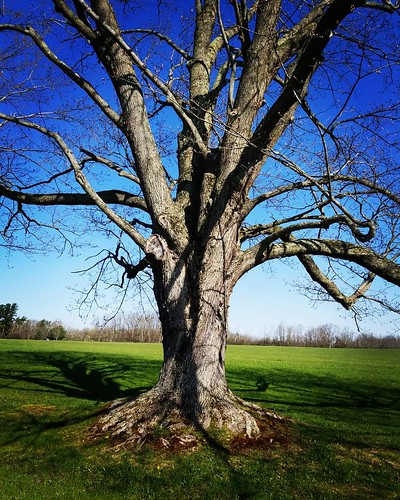
Of course, it’s still Buffalo Niagara. Today it was in the mid-60s, and it’s supposed to get colder through the week until the high temperatures next weekend are back in the 40s.
Sigh.
Share This Post
Tone Poem Tuesday (Wednesday Edition)
No excuse, I just didn’t get to it yesterday. You get what you pay for, folks!
But anyway, a repeat of a favorite work of mine. This twenty-minute concert overture by Edward Elgar is lyrical and exciting. It reminds me of the grand old film scores, in all honesty, with its muscular opening that would accompany the giant “Warner Bros.” shield, followed by a big-hearted opening them that would soar as the film’s title appears onscreen. Remember when movie titles were GIGANTIC and would take up the entire screen? They don’t do that much anymore, do they? And credit montages that set the tone…films nowadays almost never have opening credits at all anymore, saving all credits for the end.
Anyway, Elgar wrote this overture, which he called “In the South (Alassio)”, after a winter’s holiday in Italy and a village called Alassio. The piece is pure sunlight from start to finish (well, there’s a bit in the middle that might be a summer storm, if we’re pushing our musical metaphors farther than perhaps we should), and to me it’s always a wonderful delight. I don’t know why the piece isn’t better known, in all honesty; it’s one of those works that always leaves me feeling like I’ve just spent twenty minutes in the company of a master.
Here is Edward Elgar’s “In the South” overture, subtitled “Alassio”.
Share This Post
Words, and a bird
After a long period–more than a year!–in which I have been mainly focused on editing drafts of various manuscripts, I am finally back to actually drafting one. It’s Book Two of Seaflame!, which you may remember by its old not-actual-title of The Adventures of Lighthouse Boy. This one is likely to take most of the rest of the year to draft, because this one is my Alexandre Dumas-inspired doorstop of an epic fantasy (with no magic at all, because I’m weird).
More on that another time, but for now, here’s a photo I took a couple weeks ago while walking The Dee-oh-gee at Chestnut Ridge Park. I saw a big crow sitting in a nearby tree, and I went to take his picture, hoping it would turn out. Instead he took wing just as I tapped the shutter release, and…this.

Share This Post
Something for Thursday (Friday edition)
Sorry to be a day late, but I had my regular shift at work yesterday, combined with my weekly grocery shopping, combined with having to go back in to work to assist with an overtime job (installing a new refrigerated case). I didn’t get home for good until 8:30pm, by which time I figured, “Meh, wait ’til tomorrow.”
So here, without a lot of extra comment, is Jimmy Durante. Good night, Mrs. Calabash, wherever you are!
Share This Post
Tone Poem Tuesday
Baroque music hasn’t always been my cup of tea, but I’ve made strides in its direction over the years. And even when I wasn’t a big Baroque fan, I’ve always rather liked the music of George Frideric Handel. There’s a flashy ostentatiousness to his work that I find appealing, and never moreso than in this piece, which Handel literally wrote to accompany a fireworks display. King George II of Great Britain commissioned the work for a grand fireworks display that was to take place on 27 April 1749, in commemoration of the end of some war or other, and the signing of some treaty or other. The particulars don’t seem that important now, as back then some war was always starting or ending and some treaty was always being signed or something, and in any event the weather on April 27th was poor enough to make a general mess of the fireworks, with misfires aplenty, a pavilion catching fire, and several spectators actually being set ablaze. Ouch.
Handel’s music, though, provides fireworks aplenty! It starts with joyous drums and fanfares and proceeds from one flourish to another, before we arrive at the more lyrical inner movements and then come back to full-on flourish. If you need a musical boost of enthusiastic pageant in the current crisis, you can’t do much better than Handel’s Music for the Royal Fireworks.
In this particular performance, take note of the ensemble itself. This is a French ensemble called Le Concert Spirituel, and they specialize in the performance of early and Baroque music on period instruments. This is as close as we can get to what the audiences would have heard in April 1749, minus the rain and miscues from the pyrotechnicians. Note the keyed woodwinds, the valveless horns with their bells held aloft, the drums placed smack in the middle of the proceedings as opposed to being stuck in the back or off to the side. And of course, note the trumpets! Valveless natural trumpets, long and regal, and held one-handed as the trumpeters stand with their other hands on their hips.
Note, too, the flamboyant leader of all this! Herve Niquet looks like a man who just stepped out of the pages of history to conduct this work. The video is worth watching just for the ensemble…but also watch it for the music. Here is George Frideric Handel’s Music for the Royal Fireworks.